

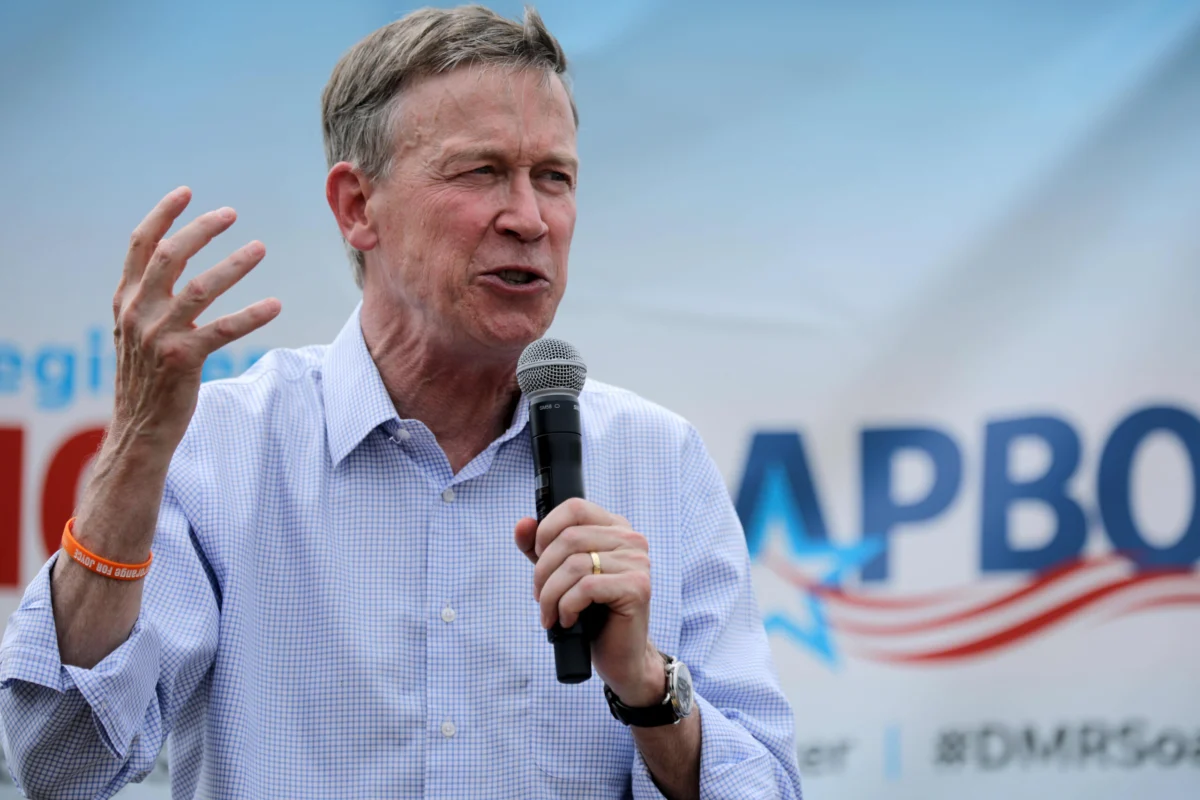
Senator John Hickenlooper, D-Colo., has voiced significant reservations about the recently enacted 21st Century Road to Housing Act, asserting that the new legislation falls short of adequately addressing the nation’s soaring housing costs. Speaking on the sidelines of an event in Denver, the former Colorado Governor emphasized the urgent need for more comprehensive action from lawmakers across all governmental tiers, not just at the federal level, to alleviate the financial strain on American households. Hickenlooper, a seasoned politician with a background spanning geology, entrepreneurship, and executive leadership, highlighted housing and healthcare as critical sectors where a fundamental re-evaluation of government interaction with industry is paramount for consumer benefit. His comments underscore a growing bipartisan concern over the affordability crisis gripping the United States, a concern echoed by recent economic surveys that identify housing costs as the paramount issue for a significant demographic of voters.
Contextualizing the Housing Crisis and Hickenlooper’s Critique
The nation’s housing market has been a crucible of economic anxiety for years, characterized by rapidly escalating prices, constrained inventory, and a widening gap between income levels and homeownership accessibility. According to data from the National Association of Realtors, the median existing-home price has seen consistent year-over-year increases, pushing homeownership out of reach for many first-time buyers and exacerbating rental market pressures. This backdrop gives weight to Senator Hickenlooper’s critique of the 21st Century Road to Housing Act, a bill he acknowledges as a step but ultimately insufficient.
The new law reportedly includes provisions aimed at limiting the influence of private equity firms in the housing market, a measure intended to curb speculative buying that can drive up prices and reduce affordable stock. However, Hickenlooper argues that such limitations, while potentially beneficial, do not tackle the foundational issues hindering housing development and affordability. His primary concern lies with the labyrinthine administrative processes and the numerous avenues available for opponents to delay or outright halt construction projects. "We’ve given anybody who wants to raise a finger all the tools they need to stop the housing development in its tracks," Hickenlooper stated, detailing how litigation and protracted procedural challenges add significant cost and time to projects, ultimately inflating home prices for consumers. This bureaucratic inertia, he contends, stifles the supply needed to meet demand, a fundamental economic imbalance at the heart of the crisis.
The Senator’s Policy Blueprint: Streamlining Development and Curbing Opposition
Hickenlooper’s prescription for the housing crisis extends beyond simply limiting financial players. He advocates for a systemic overhaul of zoning and development regulations, proposing measures that would drastically reduce administrative hurdles. A key component of his vision involves disempowering what he perceives as overly accessible tools for development opponents. This includes reforming environmental review processes, land-use appeals, and local permitting requirements that often become choke points for much-needed housing projects. The goal, he elaborated, is to foster an environment where legitimate concerns are addressed efficiently, without allowing minor objections to derail projects that could significantly contribute to housing supply.
To illustrate a potential path forward, Hickenlooper pointed to the Dallas-Fort Worth metropolitan area as a successful template for streamlining homebuilding. This region, he noted, benefits from a largely unified building code across its numerous municipalities, a stark contrast to the often-fragmented and inconsistent regulatory landscape found in other major urban centers. "If you’re going to include some affordable housing in your housing project, here’s a superfast zoning/building development setup code," he proposed, envisioning a fast-track system for developments that prioritize affordability. Such a model, he suggested, could significantly reduce the time and cost associated with obtaining approvals, thereby incentivizing developers to build more, and more affordably. The implications of such a shift are profound, potentially transforming urban planning by prioritizing regional needs over localized resistance, and fostering greater collaboration among disparate jurisdictions.
Hickenlooper’s Political Journey and Broader Economic Concerns
Senator Hickenlooper’s unique career trajectory lends a distinct perspective to his policy views. Before entering politics, he began as a geologist, a profession that demands meticulous analysis and problem-solving. He then ventured into entrepreneurship, founding a successful brewery in downtown Denver, an experience that likely instilled in him an understanding of business challenges and the impact of local regulations. His political career began as Denver’s mayor, followed by two terms as Colorado’s governor, and now as a first-term U.S. Senator. He even launched a bid for the presidency in 2020, though he withdrew before the primaries. This diverse background equips him with insights from the private sector, local governance, state leadership, and federal policymaking, allowing him to approach complex issues with a multi-faceted understanding.
Beyond housing, Hickenlooper highlighted the overarching "cost of living" as a critical concern for constituents. He estimated that "40% to 50% of people in Colorado have a hard time at the end of the month, every month," a sentiment likely echoed across the country where inflation and stagnant wages have eroded purchasing power. This broad economic strain, he argued, connects various policy areas, including healthcare costs and the impact of geopolitical events on prices, positioning it as a potent rallying cry for Democrats in upcoming elections. The CNBC All-America Economic Survey’s finding that housing costs are the top issue for voters aged 18 to 34 further underscores the urgency of addressing these economic pressures, particularly as younger generations face unprecedented financial hurdles.
Navigating Key Policy Arenas: From Healthcare to Immigration
Hickenlooper’s discussion extended to several other pressing policy areas, each reflecting his pragmatic approach to governance and his awareness of the challenges facing diverse communities.
Healthcare Affordability and Efficiency:
The Senator was particularly critical of the escalating costs within the healthcare sector, pointing to its opacity and the difficulty consumers face in comparing prices. He cited a 2019 American Medical Association (AMA) study that characterized approximately a quarter of U.S. healthcare spending—an astounding $1.35 trillion—as waste. This waste, according to the study, stems from administrative complexity, pricing failures, fraud, and unnecessary services. Hickenlooper views this as a tremendous opportunity for reform. "If we could get half of that, I mean, this is how you get to universal coverage," he asserted. His argument implies that significant cost reductions through efficiency improvements could free up substantial resources, making comprehensive healthcare coverage more attainable without necessarily requiring massive new government outlays. This perspective aligns with broader debates about value-based care and administrative simplification in the healthcare system.
Immigration Enforcement and Community Impact:
Addressing the contentious issue of immigration, Hickenlooper noted the profound impact of Immigration and Customs Enforcement (ICE) activities, particularly in Colorado. He highlighted the sensitivity surrounding ICE operations, especially in communities with large immigrant populations. "Depending on where you are in this community — we’re 30% Latino here — just mention ICE, right?" he observed, citing recent incidents involving ICE agents or employees that have caused significant distress. "People in this community are going nuts." His remarks underscore the deep divisions and anxieties surrounding immigration policy, particularly the methods of enforcement, and their resonating effects within diverse urban populations. The discussion around ICE’s conduct has been a flashpoint in national political debates, with advocates calling for reforms to ensure human rights and community trust.
The Role of Progressive Voices: Rep. Alexandria Ocasio-Cortez:
In a notable endorsement, Hickenlooper offered praise for Rep. Alexandria Ocasio-Cortez, D-N.Y., a prominent figure on the progressive wing of the Democratic Party. Despite ideological differences that often exist between centrist Democrats like Hickenlooper and more progressive members, he stated that "She’s getting things done" in Congress and characterized her as "very rational about solving problems." This assessment suggests a recognition of Ocasio-Cortez’s effectiveness and willingness to engage constructively, potentially signaling a desire for greater intra-party unity and focus on legislative achievements.
Balancing Innovation and Sustainability: Data Centers:
Hickenlooper also weighed in on the burgeoning issue of data centers, acknowledging their role as indicators of tech sector activity and economic growth. However, he articulated clear stipulations for their support. He stated he would not endorse data center projects unless they meet specific environmental and economic criteria: they must not increase electricity costs for local residents, noise pollution must be minimal or nonexistent, and concerns regarding water consumption must be definitively resolved. This position reflects a growing awareness among policymakers of the significant environmental footprint of digital infrastructure, particularly its energy and water demands, and the need to balance technological advancement with ecological sustainability and community welfare.
The Political Landscape: Midterms and the Trump Factor
Looking ahead to the upcoming midterm elections, Senator Hickenlooper outlined a strategic approach for Democrats, emphasizing the need to hold former President Donald Trump "accountable." He suggested focusing on "two or three things," with the "cost of living" serving as a primary entry point. This allows for a cohesive narrative connecting various issues: "It allows you to have a sentence about healthcare, a sentence about housing, a sentence about cost of living, and the cost of living takes you into the war" and its effect on prices. This strategy aims to leverage widespread economic anxieties to frame the Democratic platform as the solution to everyday financial struggles, implicitly contrasting it with the perceived economic management of the previous administration.
Hickenlooper also acknowledged the continued, unique influence of Donald Trump on the political landscape. He described Trump as a "mad genius" capable of selectively amplifying issues from the media, taking them "out of context and create it into a mantra, a crusade." This observation speaks to Trump’s enduring ability to shape political narratives and energize his base, making him a formidable, albeit indirect, force in elections even when not on the ballot himself. The Senator also expressed optimism about specific races, noting conversations with colleagues from Michigan and Iowa. He specifically mentioned the Iowa Senate seat, stating, "boy, there are a lot of people I know in Iowa that think we’ve got a real chance to win that Senate seat." Such assessments highlight the tight margins and intense competition expected in key swing states, where the economy and the shadow of the previous presidency are likely to be decisive factors.
In conclusion, Senator John Hickenlooper’s comprehensive remarks offer a window into the evolving policy priorities and political strategies within the Democratic Party. His call for more aggressive action on housing, coupled with his pragmatic approach to healthcare, immigration, and environmental concerns, reflects a deep engagement with the challenges facing American families. As the nation grapples with persistent economic pressures and a highly polarized political environment, Hickenlooper’s emphasis on tangible solutions and strategic messaging underscores the critical stakes for lawmakers in the coming years.
