

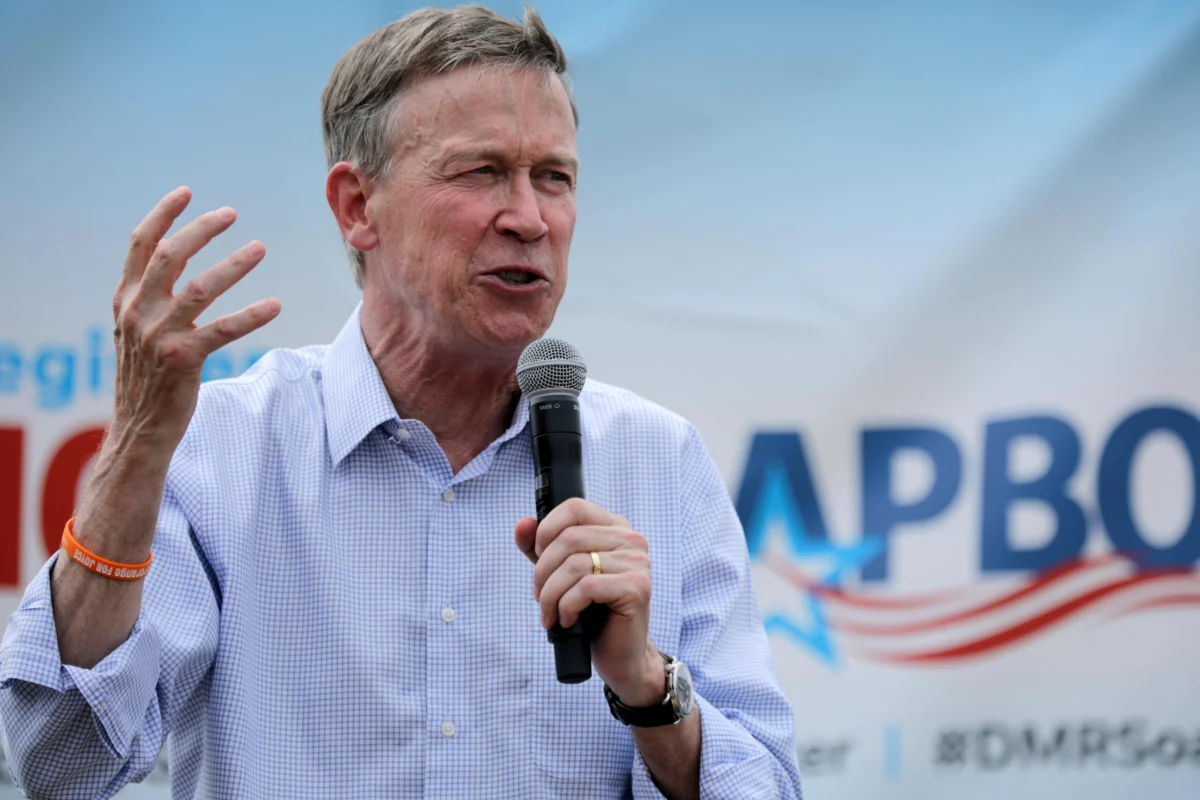
Senator John Hickenlooper, D-Colo., recently delivered a pointed critique of the nation’s efforts to curb escalating housing and healthcare costs, asserting that a newly enacted housing bill falls short and that policymakers at all levels of government must pursue more aggressive reforms. Speaking on the sidelines of an event for Su Teatro, a long-standing Chicano theater company in Denver, Hickenlooper underscored the urgent need for systemic changes in how government interacts with these critical industries, identifying them as key areas where consumers stand to benefit most from policy recalibrations.
Hickenlooper, a former Colorado Governor and one-time presidential candidate who has stated he will not seek the presidency in 2028, highlighted that while the recent housing legislation includes provisions like limits on private equity players, it does not adequately address the multifaceted issues driving up housing expenses across the United States. His remarks come amidst growing national concern over affordability, with a recent CNBC All-America Economic Survey identifying housing costs as the paramount issue for voters aged 18 to 34, a demographic crucial for future electoral outcomes.
The Unfinished Business of Housing Affordability
The core of Hickenlooper’s argument on housing centers on the pervasive administrative hurdles and the ease with which development opponents can obstruct new construction. He lamented a system that, in his view, provides "every anybody who wants to raise a finger all the tools they need to stop the housing development in its tracks." These tools, he explained, often manifest as protracted litigation and complex procedural pathways that significantly inflate development costs, ultimately passed on to homebuyers and renters. This phenomenon, often colloquially termed "NIMBYism" (Not In My Backyard), contributes to housing shortages and price increases in desirable areas.
Housing affordability has become a crisis in many parts of the country, with median home prices and rental rates reaching unprecedented highs in recent years. According to data from the National Association of Realtors, the national median existing-home price continued to climb year-over-year, exacerbating the struggle for many American families to secure stable housing. In Colorado, Hickenlooper’s home state, the situation is particularly acute. Denver, for example, has seen its housing market become one of the most competitive and expensive in the nation, pushing many long-term residents out of the urban core and into exurban areas, increasing commute times and strain on infrastructure.
Hickenlooper proposed streamlining regulatory processes as a crucial step towards mitigating these challenges. He pointed to the Dallas-Fort Worth area as a potential model, where a unified building code across the entire region simplifies construction and reduces bureaucratic red tape. This regional approach, he suggested, could be adapted elsewhere, particularly by offering expedited zoning and development codes for projects that commit to including affordable housing units. Such an incentive-based system could encourage developers to incorporate much-needed lower-cost housing options without facing the typical labyrinthine approval processes.
The newly enacted housing bill, while a step, primarily focuses on investor activity rather than the supply-side issues Hickenlooper champions. Its provisions aim to curb the practice of large institutional investors, including private equity firms, from buying up vast quantities of single-family homes, a trend that critics argue inflates prices and reduces housing stock for individual buyers. While this addresses one facet of the problem, Hickenlooper’s comments underscore a broader consensus among many policymakers and urban planners that regulatory reform, zoning adjustments, and investment in infrastructure are equally vital to genuinely tackle the housing crisis.
Tackling the Opaque World of Healthcare Costs
Beyond housing, Senator Hickenlooper directed significant attention to the relentless escalation of healthcare costs, characterizing them as a major burden on American families and the national economy. He highlighted the "opaque" nature of healthcare pricing, where consumers often find it impossible to compare costs for similar services, leading to a system ripe for inefficiencies and inflated charges. This lack of transparency, he argued, prevents market forces from driving down prices and empowers providers to set rates without sufficient competitive pressure.
Hickenlooper referenced a 2019 American Medical Association (AMA) study that estimated approximately a quarter of all U.S. healthcare spending, amounting to a staggering $1.35 trillion annually, is wasted. This waste, as detailed in various reports and studies, stems from multiple factors including administrative complexity, failures of care delivery and coordination, over-treatment, pricing failures, and fraud and abuse. Administrative complexity, for instance, involves the vast resources spent on billing, coding, and insurance claims processing, often without adding direct value to patient care. Over-treatment, driven by defensive medicine or fee-for-service models, also contributes significantly to unnecessary expenditures.
"If we could get half of that," Hickenlooper posited regarding the estimated waste, "I mean, this is how you get to universal coverage. This is how you actually can solve problems." His statement implies that significant cost reductions achieved through efficiency gains could free up substantial resources, potentially enabling broader access to healthcare services, including universal coverage models, without necessarily increasing overall spending. This perspective aligns with a growing movement within healthcare policy that emphasizes value-based care and greater transparency to control costs and improve outcomes.
Efforts to introduce price transparency, such as federal mandates requiring hospitals to disclose standard charges, have faced implementation challenges and have not yet yielded the transformative impact many hoped for. The complexities of different insurance plans, negotiated rates, and bundled services make true "shopping" for healthcare exceptionally difficult for the average consumer. Hickenlooper’s call for deeper systemic changes suggests a need to move beyond piecemeal reforms and address the fundamental structural issues that contribute to the American healthcare system’s exorbitant costs relative to other developed nations.
A Broad Policy Agenda: From Immigration to Data Centers
As a first-term senator representing a state home to one of the most competitive U.S. House races, Hickenlooper articulated a wide-ranging policy agenda that reflects both national priorities and specific concerns within his diverse constituency. His background as a geologist, successful brewery entrepreneur in downtown Denver, mayor of Denver, and then Colorado governor, informs his pragmatic and often business-oriented approach to public service.
On Representative Alexandria Ocasio-Cortez, D-N.Y.: Hickenlooper offered an unexpected commendation for Rep. Alexandria Ocasio-Cortez, a prominent progressive voice. He stated, "She’s getting things done" in Congress and characterized her as "very rational about solving problems." This perspective from a more centrist Democrat like Hickenlooper highlights the potential for cross-ideological collaboration within the Democratic party on specific legislative initiatives, focusing on practical outcomes rather than ideological divides. It also suggests an acknowledgment of Ocasio-Cortez’s effectiveness in policy advocacy and coalition building.
On Immigration and Customs Enforcement (ICE): Hickenlooper addressed the contentious issue of Immigration and Customs Enforcement, particularly its conduct under the Trump administration’s heightened focus on illegal immigration. He noted the profound impact this focus has had in Colorado, especially within the state’s significant Latino community, which constitutes approximately 30% of the population. "Depending on where you are in this community," he said, "just mention ICE, right? People in this community are going nuts." He explicitly cited "recent deaths at the hands of ICE agents or employees," underscoring the deep distrust and fear that aggressive enforcement tactics have generated within immigrant communities. This statement reflects the ongoing national debate about immigration policy, border security, and the human rights implications of enforcement actions. For communities with large immigrant populations, such as many in Colorado, the conduct of federal immigration agencies is a deeply personal and politically charged issue.
On Data Centers: Hickenlooper expressed nuanced support for data centers, acknowledging their role as indicators of tech sector activity and economic growth. However, he attached strict conditions to his backing, reflecting growing concerns about the environmental and infrastructural impact of these energy-intensive facilities. He stipulated that he would only support data center development if they "don’t increase the cost of electricity," that "noise pollution is minimal or zero," and that "water consumption concerns are settled." Modern data centers require immense amounts of electricity for operation and cooling, often drawing significant resources from local grids and potentially raising utility costs for residents. Their cooling systems can also consume vast quantities of water, especially in arid regions like parts of Colorado, raising environmental sustainability questions. Hickenlooper’s conditions underscore a broader push for sustainable tech development that balances economic benefits with ecological responsibility.
Navigating the Political Landscape: Midterms and the Trump Factor
Looking ahead to the midterm elections, Hickenlooper outlined a strategic approach for Democrats, emphasizing accountability and a focus on pocketbook issues. "We’ve got to hold Trump accountable," he asserted, suggesting that the former president’s actions and influence remain a central theme for the Democratic campaign narrative. He advised Democrats to concentrate on "two or three things," with the "cost of living" serving as an effective starting point. This overarching theme, he explained, allows for a comprehensive discussion on related issues: "It allows you to have a sentence about healthcare, a sentence about housing, a sentence about cost of living, and the cost of living takes you into the war" – likely referring to geopolitical conflicts and their ripple effects on global supply chains and inflation.
Hickenlooper’s assessment of the economic strain on his constituents paints a stark picture: "I’m estimating 40% to 50% of people in Colorado have a hard time at the end of the month, every month." This figure, whether statistically validated or an anecdotal observation, highlights the widespread economic anxiety that Democrats aim to address and leverage in the upcoming elections. The ability to connect broad economic concerns to tangible policy solutions in housing, healthcare, and other areas will be crucial for their electoral success.
Regarding former President Donald Trump’s continued influence, Hickenlooper described him as a "mad genius" who can "exaggerate and take it out of context and create it into a mantra, a crusade." This observation underscores the unique challenge Trump presents to traditional political campaigning, capable of shaping narratives quickly and powerfully. Despite this, Hickenlooper expressed optimism about Democratic prospects in key Senate races, citing conversations with colleagues from states like Michigan and Iowa. "Boy, there are a lot of people I know in Iowa that think we’ve got a real chance to win that Senate seat," he remarked, indicating a belief in the Democratic Party’s ability to compete effectively even in politically diverse or traditionally Republican-leaning states. These comments offer a glimpse into the strategic thinking within the Democratic Party as they prepare for a challenging electoral cycle, balancing the need to counter Republican narratives with a focus on core economic issues affecting everyday Americans.
In conclusion, Senator John Hickenlooper’s recent remarks reveal a comprehensive and pragmatic approach to some of the nation’s most pressing challenges. From advocating for deeper, structural reforms in housing and healthcare to articulating a nuanced stance on immigration and technological development, his insights underscore the complex interplay of economic, social, and political factors shaping contemporary American policy debates. His call for increased governmental efficiency, transparency, and targeted interventions reflects a belief that despite significant hurdles, effective governance can indeed alleviate the financial burdens on American families and foster a more equitable and prosperous society.
