

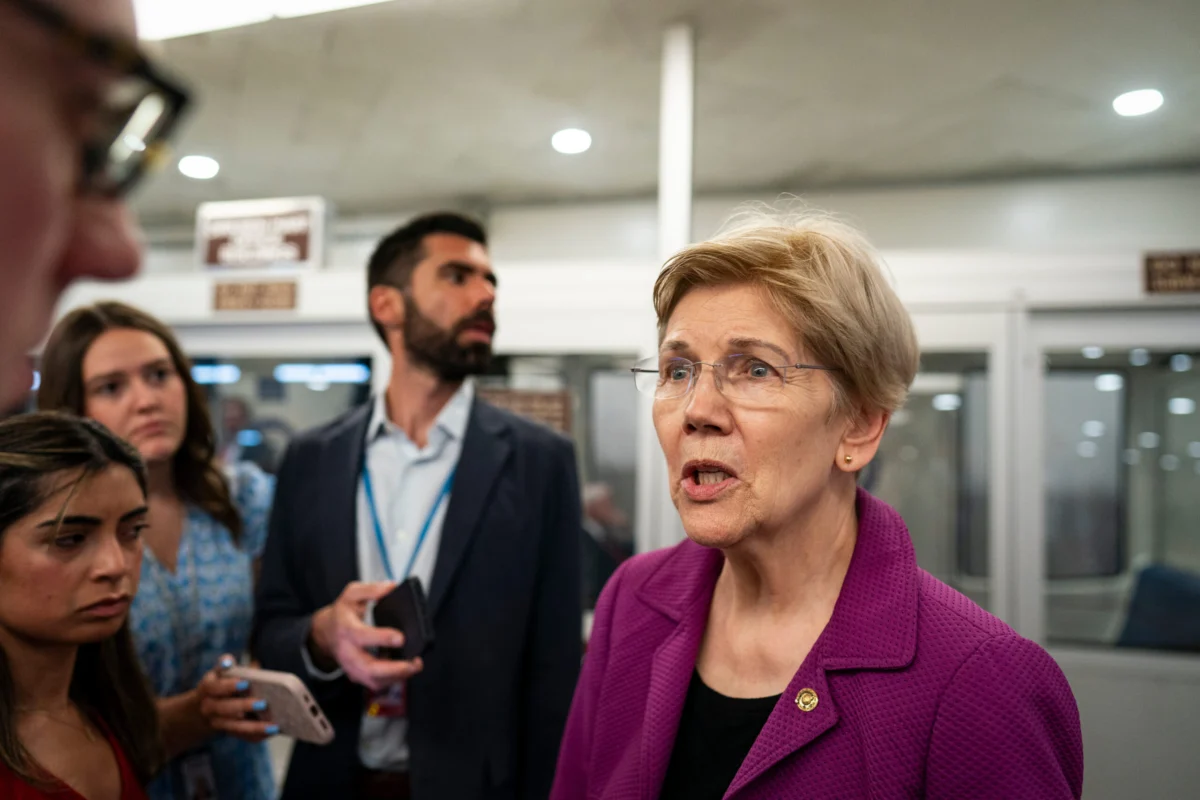
The United States Senate, in a decisive bipartisan vote of 85-5 on Monday, passed a significant affordable housing bill aimed at addressing the nation’s escalating housing crisis by limiting the acquisition of single-family homes by major institutional investors. This legislative triumph follows months of intense debate and negotiation across both chambers of Congress, culminating in a crucial agreement last week that paved the way for its passage. The landmark legislation now moves to the House of Representatives, where a vote is anticipated later this week.
The bill’s primary objectives are multifaceted: to strategically increase the overall supply of housing units nationwide and, critically, to curtail the growing influence of private equity firms and other large institutional entities in the residential housing market. This dual approach seeks to alleviate the affordability crunch that has increasingly put homeownership out of reach for millions of American families, particularly first-time buyers and younger generations.
The Genesis of a Crisis: A Nation Grapples with Affordability
The push for this legislation stems from a widely acknowledged housing crisis gripping the nation. Senator Tim Scott, a Republican from South Carolina and a key architect of the bill, articulated the severity of the situation from the Senate floor ahead of the vote. "Housing prices are too darn high and housing supply too low. Rent is too high. Starter homes — too hard to find. And that American dream slips further and further away for far too many," Scott lamented, underscoring the profound impact on aspiring homeowners. Indeed, statistics paint a stark picture: the median sales price of existing homes in the U.S. has soared dramatically over the past decades, with Senator Elizabeth Warren, D-Mass., noting a jump from an average of $150,000 in 1990 to over $500,000 today. This exponential increase, far outpacing wage growth, has rendered the traditional pathway to homeownership an insurmountable obstacle for a significant portion of the population.
The crisis is multifaceted, driven by a confluence of factors. A persistent shortage of housing units, estimated by the U.S. Chamber of Commerce to exceed 4.7 million homes, is a foundational problem. This deficit is exacerbated by restrictive zoning laws, rising construction costs for labor and materials, and a slowdown in new home construction following previous economic downturns. Into this environment, institutional investors, including private equity firms and large real estate investment trusts (REITs), have increasingly entered the single-family home market. Drawn by stable returns and the promise of rental income, these investors have acquired tens of thousands of homes, often outbidding individual homebuyers with all-cash offers. This trend has not only inflated home prices but also converted potential owner-occupied homes into rental properties, further tightening supply and driving up rental costs. The result is a market where both buying and renting have become prohibitively expensive, leading to delayed family formation, reduced wealth accumulation for middle-class families, and diminished economic mobility.
A Bipartisan Journey: Navigating Legislative Hurdles
The journey of this housing bill through Congress was marked by complex negotiations and significant legislative hurdles, reflecting the diverse economic interests and ideological perspectives within Washington. The legislation was spearheaded by a formidable bipartisan quartet: Senator Tim Scott and Senator Elizabeth Warren, serving as the top Republican and Democrat respectively on the powerful Senate Banking Committee, and Representatives French Hill, R-Ark., and Maxine Waters, D-Calif., who lead the House Financial Services Committee. Their collaborative effort was instrumental in bridging divides and finding common ground.
Initial iterations of the bill faced considerable debate, particularly concerning provisions that sought to directly limit institutional investors. The House and Senate versions of the proposal initially diverged, with the House’s draft generally perceived as more amenable to Wall Street interests, while the Senate’s version incorporated stricter regulations on institutional investors. This disparity necessitated extensive "haggling," as lawmakers sought to reconcile their differing approaches without alienating key constituencies or undermining the bill’s core objectives.
A central sticking point in earlier discussions revolved around a provision that would have mandated investors owning 350 units or more to sell any new units built beyond that cap within a seven-year timeframe. While intended to prevent perpetual accumulation of housing stock by large entities, this specific clause drew criticism from both sides of the aisle. Concerns were raised that such an aggressive sell-by requirement could inadvertently stifle the creation of new housing by disincentivizing large-scale development and investment necessary to address the supply shortage. Developers, even institutional ones, argued that the long-term commitment required for large housing projects would be jeopardized by such a strict divestment mandate, potentially leading to fewer homes being built overall.
The breakthrough came last week, when lawmakers successfully found a middle ground. The final version of the bill, the one passed by the Senate on Monday, maintains the crucial 350-unit cap on institutional investor ownership of single-family homes. However, it strategically removes the contentious seven-year sell-by provision. This compromise was vital: it addresses the concern of unchecked investor accumulation while simultaneously mitigating fears that the bill would deter new construction, a critical component of solving the supply crisis. This delicate balance demonstrates the pragmatic approach taken by lawmakers to ensure the bill’s viability and ultimate effectiveness.
Key Provisions and Expected Impact
Beyond the headline-grabbing limits on institutional investors, the affordable housing bill encompasses a range of provisions designed to holistically tackle the housing crisis. These measures aim to streamline development, incentivize construction, and provide pathways to homeownership for more Americans:
- Easing Regulatory Barriers: The legislation includes provisions to ease some of the federal regulations that have historically hindered the rapid construction of new homes. This could involve simplifying permitting processes, reducing bureaucratic red tape, and providing incentives for states and localities to adopt more flexible zoning ordinances that allow for denser housing development.
- Community Development Block Grant (CDBG) Alignment: A significant innovation in the bill is the proposal to tie Community Development Block Grant funding to increasing housing supply in communities. This mechanism would incentivize local governments, which are often recipients of CDBG funds for various community improvement projects, to prioritize policies and initiatives that directly contribute to expanding their housing stock. This could include funding for infrastructure that supports new developments, land acquisition for affordable housing projects, or programs that encourage infill development.
- Vacant Unit Redevelopment Pilot Program: The bill establishes a pilot program designed to award grants for the redevelopment of vacant units into habitable housing. Across the country, many urban and rural areas contend with abandoned or underutilized properties. This program would provide crucial funding to transform these blighted assets into much-needed housing, contributing to both supply increase and community revitalization.
- Modernizing Federal Housing Programs: The legislation is also expected to modernize existing federal housing programs, making them more efficient and responsive to current market demands. This could involve updating loan guarantee programs, recalibrating assistance programs, or enhancing data collection to better understand housing needs.
- Preserving Rental Options: While focusing on homeownership, the bill also acknowledges the importance of a healthy rental market. Provisions aimed at preserving existing residential and multifamily rental housing options suggest efforts to prevent the deterioration of affordable rental stock and ensure a balanced housing ecosystem.
- Increasing Pathways to Homeownership: Beyond supply-side measures, the bill is anticipated to include mechanisms that directly support individuals in achieving homeownership, potentially through enhanced down payment assistance programs, improved access to credit for first-time buyers, or educational resources.
Neil Bradley, Executive Vice President, Chief Policy Officer, and Head of Strategic Advocacy at the U.S. Chamber of Commerce, lauded the package for its comprehensive approach. In a statement released last week, Bradley emphasized, "With America facing a shortage of over 4.7 million homes, expanding supply remains the most effective and sustainable way to improve affordability, support workforce mobility, and strengthen local economies." He further added that "This supply-focused package would incentivize housing development by modernizing federal housing programs, reducing regulatory barriers, preserving residential and multifamily rental housing options, increasing pathways to homeownership, and encouraging much needed investment and new construction." The Chamber’s endorsement signals broad support from a significant segment of the business community, recognizing the economic drag caused by the current housing crunch.
Reactions and Political Landscape
The Senate’s passage of this bill sends a strong signal of congressional intent to tackle one of the most pressing domestic issues. The bipartisan nature of the vote, with an overwhelming 85-5 margin, underscores the widespread recognition of the housing crisis and the urgency for legislative action.
Senator Scott’s passionate advocacy highlights the Republican commitment to addressing economic anxieties, particularly among younger voters who are increasingly disenfranchised by the high cost of living. His focus on the "American dream" resonates with traditional conservative values of homeownership and individual prosperity. For the Republican party, which hopes to defend narrow majorities in both chambers in the upcoming 2026 midterm elections, demonstrating tangible efforts to bring down the cost of living is a critical campaign plank.
On the Democratic side, Senator Warren’s leadership, alongside Representative Waters, reflects a long-standing progressive commitment to housing affordability and reining in corporate power. Her comparison of home prices then and now effectively illustrates the erosion of economic opportunity over decades. For Democrats, this bill allows them to showcase their ability to deliver practical solutions to everyday financial struggles, an essential message ahead of the midterms.
The endorsement from President Donald Trump, who has "signaled its support for the bill," is a crucial development. Presidential backing significantly increases the likelihood of the bill being signed into law if it passes the House. In a politically charged environment, such bipartisan consensus on a major economic issue is a notable achievement, potentially allowing both parties to claim a legislative victory ahead of a contentious election cycle.
Beyond Washington, reactions are expected to be varied. Housing advocacy groups will likely hail the bill as a vital first step, though some may argue for even more aggressive measures. Builders and developers, particularly smaller local ones, might welcome the regulatory easing and incentives for new construction. Institutional investors, while having seen some of the stricter provisions removed, will need to adapt their strategies to the new 350-unit cap, potentially shifting focus to other real estate sectors or adjusting their acquisition models. Economists will closely watch the market for signs of the bill’s impact on supply, prices, and rental trends, offering analyses on its long-term effectiveness and any potential unintended consequences.
Broader Implications and Future Outlook
The passage of this affordable housing bill by the Senate carries significant broader implications, both economic and social. Economically, if successful, the legislation could begin to temper the rapid escalation of home prices and rental costs, making housing more accessible. An increase in housing supply, stimulated by regulatory reforms and incentives, could stabilize the market and provide more options for consumers. The limits on institutional investors might rebalance the playing field, giving individual homebuyers a fairer chance in competitive markets. This could, in turn, contribute to greater wealth creation for middle-class families, as home equity is often their largest asset.
Socially, the bill has the potential to reignite the "American dream" of homeownership for a generation that has increasingly viewed it as unattainable. It could foster greater community stability by encouraging owner-occupancy and reducing the transient nature of rental markets dominated by large corporate landlords. Furthermore, by tying CDBG funds to housing supply, the bill could empower local communities to take a more active role in shaping their housing landscapes, promoting sustainable growth and equitable development.
However, challenges remain. The housing crisis is a complex issue decades in the making, and no single piece of legislation will offer a magic bullet. The effectiveness of the bill will depend heavily on its implementation, the willingness of local governments to embrace new development, and the responsiveness of the construction industry. There is also the potential for unintended consequences, such as institutional investors shifting their focus to other types of housing (e.g., build-to-rent communities that fall outside the single-family home definition) or seeking loopholes. The removal of the seven-year sell-by provision, while a necessary compromise for passage, might be revisited in future legislative cycles if the 350-unit cap alone proves insufficient to curb investor dominance.
As the bill awaits a vote in the House, the eyes of millions of Americans struggling with housing costs will be on Washington. This bipartisan effort represents a significant legislative step, signaling a collective commitment to tackle one of the most profound economic and social challenges of the era. Its ultimate success will be measured by its ability to deliver on the promise of more affordable and accessible housing for all.
CNBC’s Emily Wilkins contributed to this story.
