

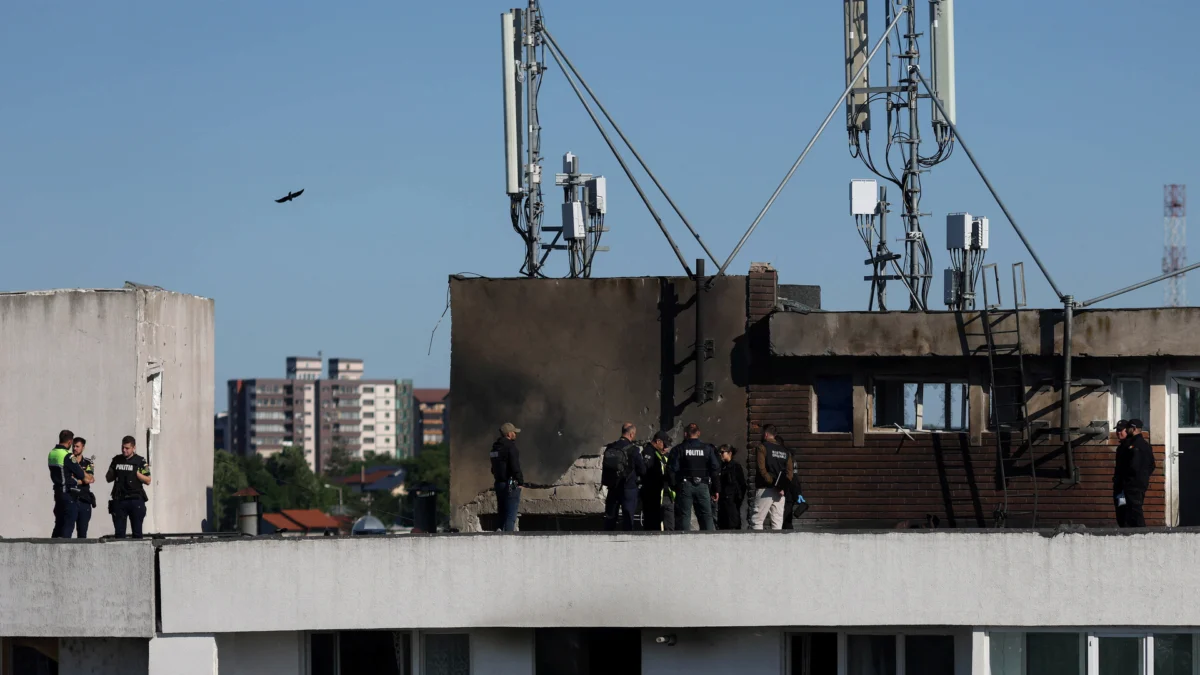
Romania has announced the expulsion of the Russian consul stationed in Constanta and the subsequent closure of the Russian consulate in the southeastern port city, following a critical incident where a drone, reportedly targeting Ukraine, veered off course and crashed into a residential apartment complex in the border town of Galati. President Nicusor Dan, in a definitive statement issued on May 29, 2026, confirmed the government’s robust response to what it views as a severe breach of national sovereignty and a direct threat to civilian safety. The incident, occurring in a densely populated urban area, marks a significant escalation in tensions between Bucharest and Moscow, demanding an immediate and unequivocal diplomatic countermeasure.
The Galati Incident: A Direct Threat to Civilian Life
The drone strike in Galati occurred in the early hours of May 29, 2026, at approximately 3:45 AM local time. Residents of a multi-story apartment building on Strada Alexandru Ioan Cuza were jolted awake by a loud explosion, followed by a fire and structural damage to the upper floors of the complex. Emergency services, including fire brigades, paramedics, and civil protection units, were immediately dispatched to the scene. Initial assessments indicated that the unmanned aerial vehicle (UAV), later identified by Romanian defense authorities as a Russian-made ‘Geran-2’ (a designation for Shahed-136 drones), had failed to reach its intended target within Ukrainian territory. Instead, it impacted the residential structure, causing significant damage to at least three apartments and injuring five civilians, none critically, but requiring hospitalization for shock and minor shrapnel wounds. The drone’s payload, while not fully detonating, caused a substantial blast and subsequent fire, highlighting the immense danger posed by such errant munitions. Debris, including engine components and fragments of the drone’s fuselage, was scattered across a wide area, prompting a thorough forensic investigation by military experts. The incident has profoundly shaken the community of Galati, a city that has long contended with its proximity to the ongoing conflict but had largely been spared direct impacts until now.
President Dan’s Decisive Response and Rationale
President Nicusor Dan, addressing the nation from Cotroceni Palace, articulated the gravity of the situation and the necessity of Romania’s firm diplomatic stance. "This is not merely an accidental deviation; it is a direct consequence of an aggressive war being waged perilously close to our borders," President Dan stated. "The safety and sovereignty of Romania are non-negotiable. The presence of a Russian consul whose government’s actions directly endanger our citizens is untenable. Therefore, we have taken the decision to expel the Russian consul in Constanta and initiate procedures for the closure of their consulate in that city." The President emphasized that this move was a proportionate response to a clear violation of Romanian airspace and a demonstrable threat to civilian life and property. The choice of Constanta for the diplomatic reprisal is particularly symbolic, given its strategic importance as Romania’s largest port on the Black Sea and a key NATO naval base, underscoring the broader security implications of the incident. The decision to expel a diplomat and close a consulate is among the strongest diplomatic measures a state can take short of severing all ties, signaling Bucharest’s profound displeasure and its commitment to defending its national interests.
A History of Tensions: Romania and Russia
The drone incident in Galati and Romania’s subsequent diplomatic action are set against a backdrop of severely strained relations between Bucharest and Moscow, exacerbated by Russia’s full-scale invasion of Ukraine in February 2022. Romania, a steadfast member of NATO and the European Union since 2004 and 2007 respectively, has been a vocal critic of Russian aggression and a staunch supporter of Ukraine’s sovereignty and territorial integrity. This support has manifested in significant military, humanitarian, and financial aid to Kyiv, as well as actively hosting NATO forces on its territory as part of the Alliance’s enhanced Forward Presence on the Eastern Flank.
Prior to this incident, Romania had experienced several near-misses and confirmed incursions by Russian drones or their debris. In September 2023, fragments of a drone, also believed to be Russian, were discovered on Romanian territory near the Danube Delta, prompting strong condemnation from Bucharest and an urgent call for consultations with NATO allies. Similar incidents, albeit less publicized or involving smaller debris, have periodically tested Romanian airspace, leading to increased vigilance and air defense patrols along the border with Ukraine. These previous events, while alarming, did not result in direct hits on residential areas or cause civilian injuries, making the Galati incident a critical turning point. The cumulative effect of these incursions has steadily eroded trust and deepened animosity between the two nations, laying the groundwork for Romania’s decisive response to the latest, most direct, and dangerous transgression.
Geopolitical Significance of Galati and Constanta
The locations central to this incident – Galati and Constanta – hold significant geopolitical importance for Romania and the broader Black Sea region.
Galati: Situated on the Danube River, approximately 10 kilometers from the Ukrainian border and the Republic of Moldova, Galati is a vital port city. Its strategic position makes it a crucial hub for trade, particularly for the transit of Ukrainian grain and other goods via the Danube, especially since the disruption of Black Sea shipping lanes. The city is also a major industrial center, home to one of Europe’s largest steelworks. Its proximity to the conflict zone has always made it vulnerable, but the direct hit on a residential building underscores the tangible risks faced by its population. The city’s role as a logistical gateway for humanitarian aid and military supplies to Ukraine further elevates its profile in the current geopolitical landscape.
Constanta: As Romania’s largest port and the fourth-largest port in Europe, Constanta is a critical maritime gateway. It serves as a major commercial hub and, crucially, hosts a significant NATO naval base. The presence of NATO forces, including U.S. troops, reinforces its strategic value as a bulwark on the Alliance’s southeastern flank. The decision to expel the consul from Constanta sends a clear message about the inviolability of this strategic area and Romania’s resolve to protect its sovereignty and its role within the NATO alliance. The closure of the consulate here signals a broader curtailment of Russian diplomatic and potentially intelligence-gathering activities in a region deemed vital for Western security.
Chronology of Events Leading to Diplomatic Rupture
- May 28, 2026, Evening (approx. 22:00 UTC+3): Russian forces initiate a wave of drone attacks primarily targeting infrastructure in southern Ukraine, particularly port facilities along the Danube and Black Sea coast.
- May 29, 2026, Early Hours (approx. 03:45 UTC+3): One of the Russian ‘Geran-2’ drones, intended for a target within Ukraine, malfunctions or is otherwise diverted from its course. It crosses into Romanian airspace and crashes into a residential apartment complex in Galati, causing an explosion, fire, and injuries to five civilians.
- May 29, 2026, Morning: Emergency services respond to the Galati site. Romanian military and forensic teams begin immediate investigation, quickly identifying the drone fragments as Russian-made.
- May 29, 2026, Late Morning: Initial reports reach Bucharest. President Nicusor Dan convenes an emergency meeting of the Supreme Council of National Defense (CSAT) to assess the incident and formulate a response.
- May 29, 2026, Afternoon: Following CSAT deliberations, President Dan issues a public statement condemning the attack, announcing the expulsion of the Russian consul in Constanta, and the closure of the consulate. The Romanian Ministry of Foreign Affairs (MFA) formally notifies the Russian Embassy in Bucharest of the decision, declaring the consul persona non grata and setting a deadline for his departure.
- May 29, 2026, Evening: NATO Secretary-General and EU officials issue statements of solidarity with Romania and condemnation of Russia’s actions.
- May 30, 2026, Morning: Russian MFA issues a preliminary response, likely denying responsibility for the drone’s trajectory, accusing Romania of an "unfriendly act," and threatening reciprocal measures.
International Reactions and Solidarity
The international community, particularly Romania’s allies within NATO and the European Union, swiftly condemned the drone incident and expressed unwavering solidarity with Bucharest.
- NATO: Secretary-General Jens Stoltenberg released a statement affirming NATO’s "full support for Romania’s territorial integrity and security." He reiterated that "NATO stands united and ready to defend every inch of Allied territory," underscoring the gravity with which the Alliance views incidents affecting member states. While not invoking Article 5 (which pertains to armed attack against a member state), the statement highlighted the ongoing consultations and enhanced vigilance on the Eastern Flank.
- European Union: High Representative for Foreign Affairs and Security Policy, Josep Borrell, echoed similar sentiments, stating that the EU "stands firmly with Romania in the face of this unacceptable violation of its sovereignty and threat to its citizens." He called for Russia to cease its reckless actions and uphold international law.
- United States: The U.S. State Department issued a press release condemning the drone strike and commending Romania’s firm response. A senior U.S. official affirmed Washington’s commitment to Romania’s defense and pledged continued support for bolstering its air defense capabilities.
- Neighboring Countries: Leaders from Moldova, Bulgaria, and other regional states also expressed concern and solidarity, highlighting the broader destabilizing impact of the conflict on regional security.
These statements collectively underscore the seriousness with which Western allies view direct threats to NATO and EU member states, reinforcing the principle of collective defense and diplomatic unity against Russian aggression.
Russia’s Expected Rebuttal
In line with its established diplomatic patterns, Russia is anticipated to issue a robust rebuttal to Romania’s actions. The Russian Ministry of Foreign Affairs is likely to:
- Deny Direct Responsibility: Claim that the drone’s deviation was accidental, a result of Ukrainian air defense, or an unavoidable consequence of military operations, rather than an intentional act against Romanian territory.
- Condemn Romania’s Actions: Label the expulsion of its consul and the closure of its consulate as an "unfriendly," "provocative," and "baseless" act, further damaging bilateral relations.
- Threaten Reciprocal Measures: Announce plans for tit-for-tat expulsions of Romanian diplomats from Russia and potentially the closure of Romanian consular offices in Russian cities, escalating the diplomatic spat.
- Accuse Romania of Russophobia: Frame Romania’s response as part of a broader anti-Russian sentiment fueled by Western powers, diverting attention from the core issue of the drone strike.
- Reiterate its ‘Special Military Operation’ Narrative: Underscore its perceived right to conduct military operations in Ukraine and dismiss concerns from neighboring states as interference.
Such a response would further entrench the diplomatic stalemate and confirm the deep chasm in relations between Bucharest and Moscow.
Implications for Regional Security and Diplomacy
The Galati drone incident and Romania’s firm reaction carry significant implications for regional security and diplomacy:
- Escalation of Bilateral Tensions: The diplomatic rupture marks a new low in Romania-Russia relations, likely leading to a prolonged period of minimal official contact and heightened distrust.
- Heightened Vigilance on NATO’s Eastern Flank: The incident will undoubtedly prompt increased scrutiny of air defense protocols and capabilities along NATO’s eastern border. It reinforces calls for further deployment of advanced anti-air systems and surveillance assets in countries like Romania, potentially accelerating defense spending and modernization efforts. Romania’s defense budget, already around 2.5% of GDP in 2025, is likely to see further allocations for air defense.
- Impact on Black Sea Security: With Constanta at the heart of the diplomatic fallout, the incident underscores the precarious security situation in the Black Sea, a critical waterway for international trade and military projection. The closure of the Russian consulate could limit Moscow’s intelligence gathering and diplomatic leverage in the region.
- Precedent for NATO Response: Romania’s decisive action sets a strong precedent for how NATO members respond to direct threats to civilian infrastructure and life, even if unintentional. It demonstrates that the Alliance’s commitment to collective defense extends beyond purely military targets to encompass the safety of its populations.
- Reinforced Western Unity: The swift and unified international condemnation of Russia’s actions and solidarity with Romania will further solidify Western unity against Russian aggression, particularly among frontline states.
Calls for Enhanced Air Defense and Border Security
Domestically, the incident has intensified public and political pressure for enhanced air defense capabilities and stricter border security measures. Local authorities in Galati and other border towns have called for immediate deployment of additional air defense systems to protect civilian areas. While Romania has been investing in its air defense, including acquiring Patriot missile systems, the incident highlights the challenges of defending against low-flying, often slow-moving drones designed to evade conventional radar.
Internationally, the incident will fuel discussions within NATO regarding the sufficiency of current air defense coverage on its eastern flank. There may be renewed calls for a more integrated and robust air and missile defense system across the Alliance, potentially involving shared intelligence, interoperable technologies, and joint exercises specifically targeting drone threats. The data on previous drone incursions, though often minor, has now culminated in a direct civilian impact, necessitating a re-evaluation of existing defensive postures.
The Future of Romania-Russia Relations
The expulsion of the Russian consul and the closure of the Constanta consulate signify a significant step towards further isolating Russia diplomatically from Romania. While a complete severing of diplomatic ties remains unlikely unless further direct aggressions occur, the incident ensures that relations will remain frozen at a hostile minimum for the foreseeable future. Bucharest has clearly signaled its intolerance for any action that directly jeopardizes its national security or the lives of its citizens, reinforcing its unwavering commitment to its Western alliances and its role as a bulwark against Russian expansionism in Eastern Europe. The path to any normalization of relations appears increasingly distant, overshadowed by the ongoing conflict in Ukraine and its perilous spillover effects.
