

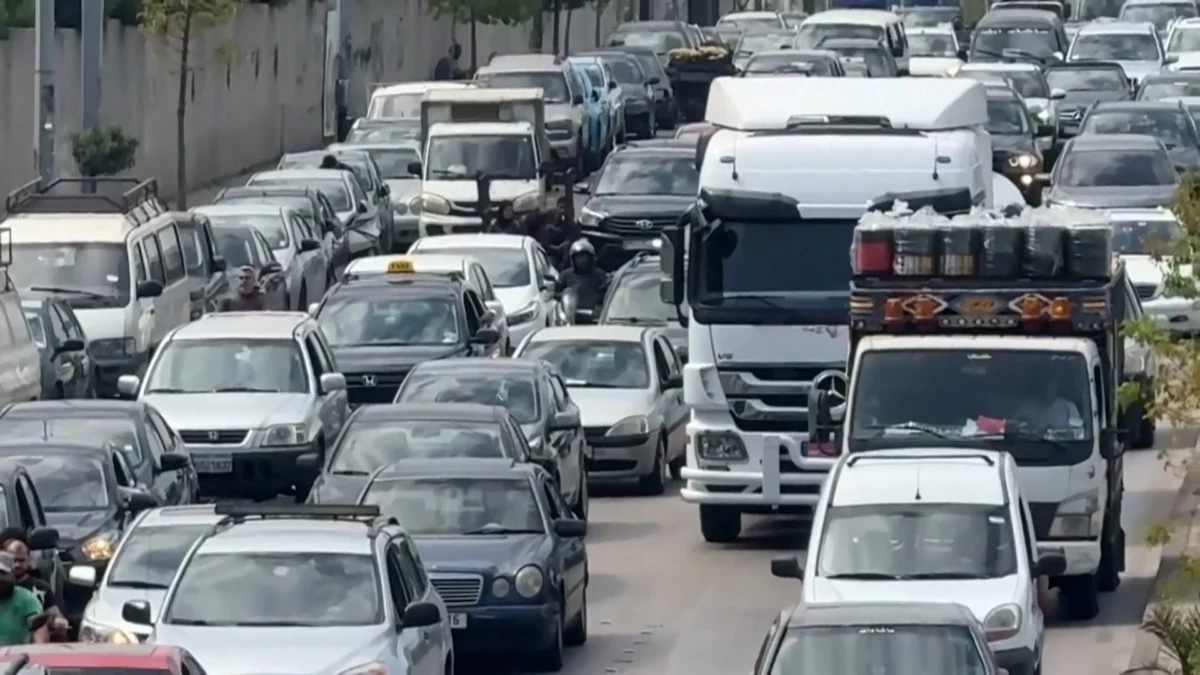
BEIRUT, Lebanon – June 1, 2026 – A mass exodus is underway from Beirut’s densely populated southern suburbs, known as Dahiyeh, following an urgent directive from Israeli Prime Minister Benjamin Netanyahu ordering the military to strike neighborhoods associated with the Iran-backed Hezbollah militant group. Videos circulating across social media platforms depict scenes of utter chaos and gridlocked traffic as tens of thousands of residents, fearing imminent airstrikes, abandon their homes in a desperate bid for safety. The sudden escalation marks a perilous turning point in the long-standing animosity between Israel and Hezbollah, threatening to plunge the already volatile region into a devastating conflict.
The order from Prime Minister Netanyahu, issued late on Saturday, June 1, 2026, reportedly came in response to what Israeli officials described as a significant increase in cross-border provocations from Hezbollah, including targeted drone attacks and rocket barrages aimed at northern Israeli communities over the preceding weeks. While specific details of the alleged provocations remain largely unconfirmed by independent sources, the Israeli government has maintained that its actions constitute a necessary measure of self-defense against what it characterizes as escalating terrorist threats. The Dahiyeh area, a sprawling, predominantly Shia district south of Beirut, has long been recognized as a strategic stronghold and operational hub for Hezbollah, housing various political, social, and military infrastructures. This history, coupled with the memory of the devastating 2006 Lebanon War, has instilled a profound sense of urgency and fear among its civilian inhabitants, many of whom are now seeking refuge in other parts of the capital or in more rural areas of Lebanon.
Background and Context: A Region on Edge
The relationship between Israel and Hezbollah has been characterized by decades of intermittent conflict and simmering tension. Hezbollah, Arabic for "Party of God," emerged in the early 1980s during Lebanon’s civil war with support from Iran, primarily to resist the Israeli occupation of southern Lebanon. Over the years, it has evolved into a powerful political party, a formidable military force, and a provider of social services within Lebanon, particularly within the Shia community. Its military wing is believed to possess a vast arsenal of rockets, missiles, and drones, making it one of the most potent non-state actors globally.
The Dahiyeh, a mosaic of residential areas, commercial centers, and narrow streets, has a population estimated to be well over 500,000 people. It has been meticulously rebuilt since the 2006 Lebanon War, during which extensive portions of the area were reduced to rubble by Israeli aerial bombardments. The memory of that 34-day conflict, which resulted in the deaths of over 1,200 Lebanese, mostly civilians, and 160 Israelis, predominantly soldiers, and displaced nearly one million Lebanese, remains fresh in the collective consciousness of the region. The sheer scale of destruction and human suffering during that period serves as a stark precedent for the current wave of evacuations, as residents anticipate a similar, if not greater, level of devastation.
Lebanon itself is grappling with an unprecedented multi-faceted crisis, encompassing severe economic collapse, political paralysis, and a struggling infrastructure. The Lebanese pound has lost more than 90% of its value since 2019, pushing a vast majority of the population into poverty. A caretaker government has been in place for years, unable to implement critical reforms. Any large-scale military confrontation would undoubtedly exacerbate these existing vulnerabilities, potentially pushing the nation beyond the brink of recovery and triggering an even more severe humanitarian catastrophe.
Chronology of Escalation Leading to June 1, 2026
The lead-up to Prime Minister Netanyahu’s order has been marked by a discernible increase in cross-border hostilities.
- Early 2026: Reports from the United Nations Interim Force in Lebanon (UNIFIL), tasked with monitoring the cessation of hostilities along the Blue Line, indicated a concerning rise in minor incursions and aggressive posturing from both sides.
- April 2026: A series of targeted drone incursions, attributed by Israel to Hezbollah, began to penetrate deeper into Israeli airspace, prompting Israel to activate its Iron Dome defense system on multiple occasions. These incidents were met with Israeli retaliatory strikes against alleged Hezbollah observation posts along the border.
- Mid-May 2026: Hezbollah claimed responsibility for several rocket attacks on Israeli military positions near the northern town of Metula, asserting they were in response to Israeli agricultural encroachment into disputed border territories. Israel responded with significant artillery fire into southern Lebanon.
- Late May 2026: A particularly damaging incident occurred when a sophisticated drone, which Israel identified as originating from Hezbollah, reportedly struck an Israeli military installation near Safed, causing material damage but no reported casualties. This incident appears to have been the immediate catalyst for the heightened Israeli rhetoric and subsequent evacuation warnings.
- May 31, 2026: Israeli defense officials publicly warned of "unacceptable provocations" and stated that Israel would "not hesitate to use all necessary force" to protect its citizens. Simultaneously, reports emerged of increased Israeli military deployments along the northern border.
- June 1, 2026 (Morning): Lebanese media reported increased Israeli reconnaissance flights over Lebanese airspace, particularly concentrated over the Dahiyeh and other southern areas.
- June 1, 2026 (Afternoon): Prime Minister Netanyahu issued the explicit order for the Israel Defense Forces (IDF) to prepare for and execute strikes on Hezbollah-associated neighborhoods in Beirut’s southern suburbs. This order was swiftly followed by widespread alerts within Lebanon, triggering the frantic evacuation.
The Immediate Impact: A City on the Move
The scenes from Dahiyeh are a stark reminder of the human cost of conflict. Highways leading out of the southern suburbs quickly became impassable, with vehicles bumper-to-bumper, filled with families carrying whatever possessions they could quickly gather. Elderly individuals, women, and children were visibly distressed, reflecting the deep-seated trauma of past wars. Makeshift shelters are already being established in schools and public buildings in safer parts of Beirut and in the Chouf mountains, placing an immediate and immense strain on local resources and humanitarian organizations.
The Lebanese Internal Security Forces have struggled to manage the unprecedented traffic congestion and maintain order amidst the panic. Hospitals in the capital have begun to activate emergency protocols, anticipating a potential influx of casualties, while aid agencies are scrambling to coordinate relief efforts for the displaced population. The sudden displacement of potentially hundreds of thousands of people in such a short timeframe poses an immediate humanitarian crisis, requiring urgent international attention and assistance.
Official Responses and International Reactions
The escalation has triggered a flurry of condemnations and calls for de-escalation from various international actors.
Israel: Prime Minister Netanyahu, in a televised address following the order, stated, "We have given Hezbollah ample warning. Our patience has run out. Israel will not tolerate a state within a state threatening our sovereignty and our citizens. Our strikes will be precise, targeting terrorist infrastructure and those who command it, while striving to minimize harm to uninvolved civilians. The responsibility for this escalation lies squarely with Hezbollah and its Iranian patrons." Israeli defense officials reiterated that the operations were defensive in nature, aimed at degrading Hezbollah’s capabilities and restoring deterrence.
Lebanese Government: The caretaker government in Beirut, through its acting Prime Minister, vehemently condemned the Israeli order as a "flagrant act of aggression and a violation of Lebanese sovereignty." The Prime Minister called on the international community, particularly the United Nations Security Council, to intervene immediately to prevent a full-scale war. "Lebanon cannot bear another conflict," he stated, "Our people are suffering, and we call on all parties to exercise maximum restraint. We urge our citizens to remain calm and cooperate with emergency services." The Lebanese Foreign Ministry dispatched urgent letters to various diplomatic missions, decrying the Israeli threats and appealing for diplomatic pressure to avert military action.
Hezbollah: In a defiant statement broadcast on Al-Manar television, a spokesperson for Hezbollah declared, "The Zionist entity will regret its aggression. Our resistance is ready, our fingers are on the trigger. Any strike on our people or our land will be met with a decisive and painful response. The Dahiyeh is the heart of the resistance, and it will not be broken. We will defend Lebanon with all our might." The statement implied that any Israeli attack would be met with retaliatory rocket fire into Israeli territory.
United Nations: UN Secretary-General António Guterres expressed "deep alarm" over the escalating tensions and called for an immediate cessation of all hostile actions. A spokesperson for the Secretary-General emphasized the urgent need for all parties to respect international humanitarian law, protect civilians, and allow humanitarian access. UNIFIL, which maintains a presence along the Blue Line, announced that it had raised its alert level and was actively engaging with both Israeli and Lebanese authorities to de-escalate the situation and prevent miscalculation.
International Community:
- United States: A statement from the U.S. State Department acknowledged Israel’s right to self-defense but urged "extreme caution and restraint" to avoid civilian casualties and a wider regional conflict. It called for diplomatic efforts to de-escalate the crisis.
- European Union: The EU High Representative for Foreign Affairs and Security Policy issued a joint statement with member states, calling for "an immediate de-escalation of tensions" and stressing the importance of protecting civilian lives. The statement underscored the humanitarian implications and the potential for destabilizing the entire Middle East.
- Arab League: The Arab League condemned the Israeli threats as a dangerous escalation and called for an emergency meeting to discuss a unified Arab response, expressing solidarity with Lebanon.
- Iran: Tehran issued a strong warning to Israel, stating that any aggression against its allies in the region would not go unanswered, reiterating its full support for the "resistance axis."
Broader Impact and Implications
The current crisis carries profound implications, not only for Lebanon and Israel but for the entire Middle East.
Humanitarian Catastrophe: The immediate and most pressing concern is the looming humanitarian crisis. The displacement of hundreds of thousands of people will strain Lebanon’s already fragile social services, healthcare system, and economy. Access to food, water, shelter, and medical care will become critical, potentially leading to a widespread humanitarian emergency. The long-term impact on mental health and social cohesion among the displaced populations will also be significant.
Regional Instability: A full-scale war between Israel and Hezbollah could easily draw in other regional actors. Iran, a key patron of Hezbollah, could be compelled to intervene more directly. Syria, still reeling from years of civil war and where Hezbollah maintains a significant presence, could become another front. This could trigger a cascade of conflicts, potentially disrupting global energy markets, increasing refugee flows to Europe, and further destabilizing an already volatile region. The security of international shipping lanes, particularly in the Mediterranean and through the Suez Canal, could also be severely impacted.
Economic Fallout: Lebanon’s economy, teetering on the brink, would be utterly devastated by another conflict. Infrastructure damage, loss of life, disruption of trade, and a collapse in tourism would plunge the country deeper into poverty and potentially trigger a complete economic collapse. The cost of reconstruction would be astronomical, far exceeding Lebanon’s capacity. Even Israel’s economy, while more robust, would face significant costs from prolonged military engagement, damage to its northern communities, and a disruption of normal life.
Political Ramifications: Within Lebanon, the conflict could exacerbate internal political divisions, weakening the state further and potentially leading to greater reliance on non-state actors for security and governance. The fragile power-sharing agreements could unravel, leading to increased internal strife. Internationally, the crisis will test the resolve and effectiveness of multilateral institutions like the United Nations, and the diplomatic capabilities of major global powers. The failure to de-escalate could lead to a significant realignment of regional alliances and a more entrenched, intractable conflict.
As the world watches with bated breath, the coming hours and days will determine whether diplomatic efforts can avert a catastrophe or if the region is once again destined to endure the devastating consequences of open warfare. The mass flight from Beirut’s southern suburbs serves as a chilling prelude to a conflict that could reshape the geopolitical landscape of the Middle East.
