


Canada stands at a pivotal crossroads in its energy evolution, possessing a grid that is already approximately 80% emissions-free but facing a monumental surge in demand that threatens to outpace current capacity. According to the 2026 levelized-cost-of-energy (LCOE) report by global accounting firm Lazard, wind and solar power have solidified their position as the most cost-effective sources of new electricity for the national grid. However, the transition toward a fully decarbonized economy requires more than just cost-effective generation; it demands a massive structural overhaul of how the nation produces, transmits, and finances power. As the Canadian government’s own projections indicate, the rapid adoption of electric vehicles (EVs), the installation of residential heat pumps, and the burgeoning energy requirements of massive data centres will necessitate a doubling of the nation’s electricity production in less than 25 years.
This industrial metamorphosis carries a staggering price tag. A comprehensive "Climate Dollars" analysis by Corporate Knights, which evaluates the capital investments required to decarbonize every sector of the Canadian economy, suggests that $2.17 trillion in capital must be deployed over the next quarter-century. Of this total, $1.26 trillion is earmarked specifically for grid infrastructure, while the remaining $915 billion must be directed toward end-use sectors. For the electrical grid alone, this translates to an average annual investment of approximately $50 billion—a significant leap from contemporary spending levels.
The Scale of the Investment Challenge
To understand the magnitude of the $50 billion annual requirement, one must look at recent fiscal trends in the Canadian energy sector. In 2024, capital investments in the grid—covering new power generation projects, battery storage solutions, and essential network upgrades—totalled $32 billion. By 2025, that figure rose to $34 billion. While this represented the largest baseline capital expenditure for the nation’s energy sector outside of oil and gas extraction (which sat at $42 billion), it still falls short of the $50 billion threshold necessary to meet net-zero targets.
The financial burden, however, is not merely a cost but an investment with significant dividends. Researchers at Corporate Knights estimate that a unified trans-Canada transmission line could yield up to $255 billion in long-term savings. Despite an estimated initial price tag of $100 billion, the efficiency gains from sharing power across time zones and provincial borders would drastically reduce the need for redundant infrastructure. Further improvements to the grid could save hundreds of billions more in fuel and maintenance costs, eventually lowering electricity rates for millions of Canadians who are currently subject to the price volatility of fossil-fuel-dependent systems.
A Chronology of Strategy and Regulation
The path to the current energy landscape has been shaped by a series of legislative and strategic milestones:
- 2009: Ontario passes the Green Energy Act, aimed at fast-tracking renewable projects. However, the Act stripped municipalities of their ability to block projects, leading to long-standing political friction in rural communities.
- 2016: A peak period for Canadian energy co-operatives ends as many provinces discontinue guaranteed, long-term fixed-price energy contracts (feed-in tariffs), leading to a decline in community-led projects.
- 2024-2025: Grid investment grows from $32 billion to $34 billion annually, as the federal government begins prioritizing "Smart Renewables and Electrification Pathways."
- May 14, 2026: The government under Mark Carney announces a comprehensive National Electricity Strategy, earmarking $13 billion annually for clean-energy initiatives and prioritizing interprovincial grid connections.
- 2026-2050: The projected window for the $2.17 trillion "Climate Dollars" investment plan to reach completion.
Despite the strategic clarity provided by the 2026 National Electricity Strategy, significant hurdles remain. Canada’s regulatory landscape is notoriously fragmented; provinces hold primary jurisdiction over their own electricity systems, often leading to a "silo" effect where energy surpluses in one province cannot easily assist a deficit in another. Furthermore, Canada’s geography presents unique challenges. More than 200 remote communities remain entirely dependent on diesel generators, isolated from the main grid by thousands of kilometres of rugged terrain.
The Role of Private Capital and Community Bonds
While government financing—through tax credits, public grants, and programs like the Smart Renewables and Electrification Pathways Program (SREPs)—is vital, it is expected to cover only 20% to 25% of the $1.26 trillion required for the grid. The vast majority of the funding, roughly $1 trillion, must come from private players, including institutional investors, pension funds, and private utilities.
A growing segment of this private investment is expected to come from "community bonds." This financial instrument allows ordinary Canadians to become stakeholders in the energy transition with relatively low barriers to entry, often starting at a minimum investment of $1,000. These bonds function as loans to local co-operatives that manage renewable energy projects. The loans are repaid with interest, often at rates that compete with or exceed government-issued bonds or Guaranteed Investment Certificates (GICs).
However, community bonds are not without risk. Unlike stocks traded on a public exchange, there is often no secondary market for these bonds, meaning investors may find it difficult to sell them before they reach maturity. There is also the inherent risk of issuer default, though many co-ops mitigate this by only purchasing projects after they have passed rigorous feasibility and construction phases.
Case Study: The Momentum of SolarShare
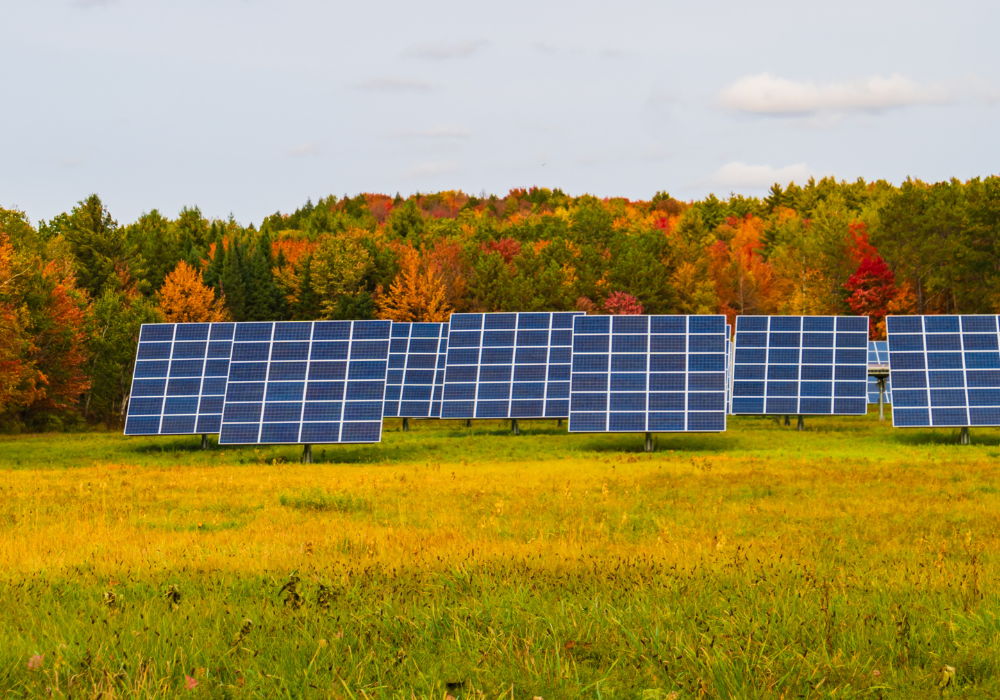
SolarShare, currently Canada’s largest renewable-energy co-operative, serves as a blueprint for this decentralized investment model. The co-op owns and operates 51 solar projects across Ontario, ranging from industrial rooftop installations in the Greater Toronto Area to the massive "Sundance" project in the non-arable fields of Timiskaming. Collectively, these projects generate enough electricity to power 2,000 homes annually and offset 560 tonnes of carbon dioxide equivalent.
Since its inception in 2010, SolarShare has grown to more than 2,000 members. These investors have collectively funneled $80 million into renewable projects and earned over $17 million in interest. Brian Chang, the co-op’s general manager, notes that while bond rates were once significantly higher due to generous government contracts, they remain competitive today at approximately 4% for three-to-seven-year terms.
The co-operative model offers a level of democratic engagement that traditional equity investments lack. "If you invest in a solar company, you don’t get much say," Chang explains. "In a co-op, every member gets one vote, regardless of whether they invested $1,000 or $100,000." This "one member, one vote" system helps build local "buy-in," which is essential for overcoming the NIMBYism (Not In My Backyard) that has historically plagued large-scale wind and solar developments.
International Comparisons and Future Outlook
Despite the success of entities like SolarShare, Canada lags behind its international peers in community-led energy. A study from Royal Roads University estimates there are only 82 active energy co-ops in Canada, managing roughly 214 projects. In contrast, Germany boasts 847 energy co-ops, and the Netherlands has 713. The disparity is largely attributed to more supportive regulatory environments in Europe, where the sale of electricity back to the grid is streamlined and legal requirements for fundraising are less burdensome.
To bridge this gap, Canadian policymakers are increasingly looking at ways to decentralize the grid. The vision for a robust, net-zero Canada involves a "hub-and-spoke" model: a massive trans-continental transmission backbone (the hub) fed by thousands of localized power-generating nodes (the spokes). These nodes—comprising community solar farms, small-scale wind arrays, and local battery storage—provide the resilience the system needs to withstand extreme weather events and peak demand periods.
The implications of this shift are profound. Decarbonizing the grid is no longer just an environmental imperative; it is an economic necessity. As industries move away from fossil fuels, the availability of clean, reliable, and affordable electricity will become the primary driver of national competitiveness. If Canada can align its provincial regulations, incentivize private and community capital, and overcome geographic barriers, the $2.17 trillion investment could catalyze a new era of industrial prosperity.
The transition requires a fundamental rethink of the relationship between citizens and their utilities. By moving from passive consumers to active "prosumers" and investors, Canadians can ensure that the profits of the green energy revolution remain within the communities that host the infrastructure. With the 2026 National Electricity Strategy now in play, the framework for this transformation exists; the challenge lies in the execution of a multi-decade, multi-trillion dollar build-out that will define Canada’s economy for the rest of the century.
