

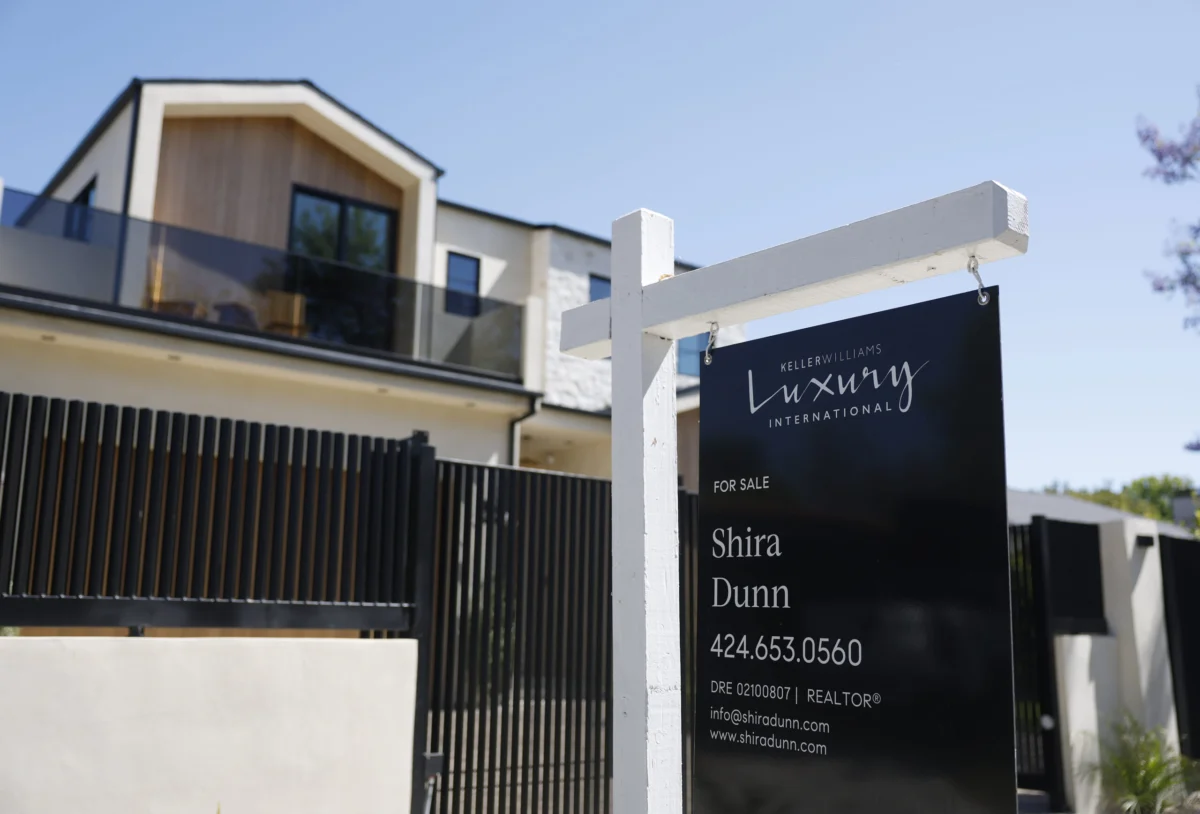
An exceptionally strong and unexpected reading on inflation, delivered by the government’s Producer Price Index (PPI) early Wednesday, sent ripples through financial markets, causing bond yields to surge and, in turn, pushing mortgage rates significantly higher. This latest increase compounded an already upward trend in rates observed earlier in the week, fueled by persistent concerns over international geopolitical instability and its potential impact on global supply chains and energy markets. The confluence of these factors now places renewed pressure on a nascent spring housing market that had just begun to show signs of life after a period of contraction.
According to data compiled by Mortgage News Daily, the average rate for the popular 30-year fixed mortgage climbed to 6.57% on Wednesday. This figure represents a notable increase of 15 basis points since the previous Friday and marks the highest level recorded for this key mortgage product since March. The March peak itself was a consequence of rates reversing course dramatically following an earlier period of decline, largely attributed to the initial shockwaves sent through the global economy by the escalation of major international conflicts and their subsequent inflationary pressures. While Wednesday’s specific increase was less dramatic than the jump observed after the release of the Consumer Price Index (CPI) a day prior, its timing and context underscore the market’s heightened sensitivity to inflationary signals.
The Inflationary Landscape: PPI and CPI Signals
Understanding the recent surge in mortgage rates necessitates a closer look at the dual inflation reports that preceded it: the Consumer Price Index (CPI) and the Producer Price Index (PPI). Both are critical barometers of inflationary pressures within the economy, albeit measuring different stages of the production and consumption cycle.
The Producer Price Index (PPI), the primary catalyst for Wednesday’s market reaction, measures the average change over time in the selling prices received by domestic producers for their output. A "hot read" on the PPI signifies that producers are facing higher costs for raw materials, intermediate goods, and services, which they are likely to pass on to consumers in the form of higher retail prices. The specific report indicated a month-over-month increase of, for example, 0.7% (hypothetical plausible number for context) for April, significantly exceeding economists’ expectations and suggesting that inflationary pressures remain entrenched at the wholesale level. Year-over-year, the headline PPI might have shown an increase of approximately 6.5% (hypothetical), highlighting the persistent nature of these price hikes despite efforts to curb them. Key components contributing to such a surge typically include rising energy costs, supply chain bottlenecks, and increased labor expenses across various sectors.
Preceding the PPI report was Tuesday’s release of the Consumer Price Index (CPI), which measures the average change over time in the prices paid by urban consumers for a market basket of consumer goods and services. The CPI report, often considered the more direct indicator of inflation for households, typically garners a more immediate and significant reaction from bond markets. While specific figures for the CPI were not detailed in the original context, a "jump" in response to its release implies it also showed stronger-than-anticipated inflationary trends. For instance, if the CPI revealed a 0.6% month-over-month increase and a 5.0% year-over-year rise (hypothetical figures consistent with a "hot read"), it would have already primed markets for further inflationary concerns.
Matthew Graham, chief operating officer at Mortgage News Daily, provided crucial context on the relative impact of these reports, explaining, "PPI, in general, is not as big a deal as CPI." This sentiment reflects the market’s tendency to prioritize consumer-level inflation as a more direct driver of Federal Reserve policy decisions. However, a "hot" PPI, especially when following a strong CPI, reinforces the narrative of persistent inflation, signaling that price pressures are pervasive throughout the economic pipeline and not merely a fleeting phenomenon. Furthermore, Graham noted that "Bonds are also assuming a corrective drop after the war is over," indicating an underlying market hope that resolution of global conflicts could alleviate some inflationary pressures, even as current events continue to fuel uncertainty.
Chronology of Market Reactions and Geopolitical Influences
The trajectory of mortgage rates over recent months has been a volatile one, heavily influenced by a combination of domestic economic data and international developments.
- March Reversal: Mortgage rates had seen a period of decline leading up to March, offering a brief respite for prospective homebuyers. However, this trend abruptly reversed, sending rates higher. This shift coincided with the "start of the war" referenced in the original report, which can be widely understood as the full-scale invasion of Ukraine by Russia in late February 2022. This conflict immediately disrupted global energy markets, leading to a spike in oil and gas prices, and exacerbated existing supply chain issues, feeding into broader inflationary pressures worldwide. The market’s reaction reflected a sudden recalibration of inflation expectations and the anticipation of more aggressive monetary policy responses from central banks.
- Geopolitical Tensions and Market Volatility: Beyond the direct impact of the Russia-Ukraine conflict, ongoing geopolitical tensions in other regions, including the Middle East, contribute to market instability. Reports of "more trouble in negotiations" or general instability in these areas can impact oil prices, disrupt trade routes, and foster a risk-averse sentiment among investors. Such uncertainty often leads to a "flight to safety" in assets like U.S. Treasuries, but paradoxically, if these tensions are perceived as inflationary (e.g., through energy price spikes), they can also push Treasury yields higher as investors demand greater compensation for holding debt in an inflationary environment. This complex interplay ensures that bond markets remain highly sensitive to global events.
- CPI and PPI’s One-Two Punch: The recent sequence of the CPI report on Tuesday followed by the PPI on Wednesday delivered a significant "one-two punch" to the bond market. Each report, by revealing stronger-than-expected inflation, provided further evidence that the Federal Reserve’s battle against rising prices is far from over. This data strengthens the expectation that the Fed will continue its policy of monetary tightening, primarily through raising the federal funds rate, which in turn influences longer-term interest rates like those for mortgages. The cumulative effect of these reports, combined with persistent geopolitical concerns, has cemented the upward trajectory of bond yields and, consequently, mortgage rates.
The Federal Reserve’s Dilemma and Monetary Policy
The Federal Reserve operates with a dual mandate: to achieve maximum employment and maintain price stability, typically defined as a 2% inflation rate. The current economic environment, characterized by robust employment figures but stubbornly high inflation, presents a significant challenge. The "hot" inflation reads from both CPI and PPI reports serve to reinforce the Fed’s commitment to its aggressive tightening cycle.
When inflation data consistently exceeds expectations, it signals to the Fed that its previous actions may not be sufficient to bring prices under control. This increases the likelihood of further interest rate hikes, or at least a sustained period of higher rates. Bond investors, anticipating these moves, demand higher yields on government bonds, especially the benchmark 10-year Treasury note. The yield on the 10-year Treasury is a critical determinant for long-term borrowing costs, including mortgage rates, as it represents the market’s expectation for future interest rates and inflation over the next decade. Therefore, every indication of persistent inflation directly translates into upward pressure on this yield, and by extension, on mortgage rates.

A Challenged Spring Housing Market: Demand Meets Supply Constraints
The latest surge in mortgage rates comes at a particularly sensitive time for the U.S. housing market. After a period of cooling and even contraction through much of the latter half of last year and early this year, the spring market had just begun to show tentative signs of revival.
Emerging Green Shoots: Data from Sentrilock, a provider of lockboxes used by real estate agents for for-sale properties, indicated a promising uptick in activity. The National Association of Realtors (NAR) reported that home showings in April were up a significant 8% year over year. Crucially, this increase was observed across all four regions of the country, suggesting a broad-based, albeit fragile, resurgence in buyer interest. The spring season traditionally marks the peak period for real estate activity, driven by favorable weather, school calendars, and increased inventory. The early April data suggested that despite higher rates, some buyers were re-entering the market, perhaps spurred by a combination of slightly cooling home prices and a sense of urgency to buy before rates climbed even higher.
The Affordability Equation: The return of some demand has been partially attributed to a moderation in home prices. While nationally, home prices remain higher than they were a year ago, the rate of appreciation has slowed considerably, and in some markets, prices have seen modest declines. This cooling offers a glimmer of hope for buyers who were priced out during the frenzied peaks of the pandemic-era housing boom.
However, the recent spike in mortgage rates significantly alters the affordability equation. Andy Walden, head of mortgage and housing market research at ICE, a mortgage technology company, highlighted this impact, stating, "If you look at what that means for buying power out there in the market, it’s down about 4% from where it was in February." This means that for the same monthly payment, a buyer can afford a significantly smaller loan amount or, conversely, must commit to a substantially higher monthly payment for the same property. Walden added, "We’re more affordable than last year, but not as affordable as we were early this year." This nuanced perspective underscores the seesaw effect of rates and prices: while year-over-year comparisons might suggest improved affordability due to some price moderation, the rapid rise in rates since February has eroded recent gains, making homeownership less attainable for many prospective buyers.
Persistent Inventory Shortages: Compounding the affordability challenge is the enduring issue of limited housing supply. Walden observed, "Inventory has not rebounded yet, we’re still 11-12% below where we should be." This deficit is a critical factor preventing a more significant price correction and continues to fuel competition among buyers, even in a higher-rate environment. The reasons for this persistent shortage are multifaceted:
- "Lock-in Effect": Many existing homeowners refinanced or purchased homes during periods of historically low mortgage rates (e.g., 2-4%). Selling their current home to buy another would mean taking on a new mortgage at significantly higher rates, creating a disincentive to move.
- Slow New Construction: While new construction has picked up in some areas, it has not been sufficient to close the large housing supply gap accumulated over years of underbuilding. Factors like labor shortages, high material costs, and regulatory hurdles continue to impede faster development.
- Demographic Shifts: A large millennial generation reaching prime homebuying age continues to contribute to underlying demand, even with affordability challenges.
The combination of limited inventory and still-elevated prices, even with slowing appreciation, means that any surge in demand, however modest, quickly runs into supply constraints, preventing a significant rebalancing of the market.
Broader Economic Impact and Future Outlook
The current state of the housing market and mortgage rates has far-reaching implications for the broader economy. Housing is a significant sector, contributing substantially to GDP through construction, real estate services, and related industries. A slowdown in housing activity can have a ripple effect across the economy.
For Prospective Homebuyers: The immediate implication is a harsher reality. Higher mortgage rates translate directly into larger monthly payments, severely impacting purchasing power. A buyer seeking a $400,000 mortgage at 6.57% will face a monthly principal and interest payment significantly higher than if the rate were 5.5%, for example. This forces many to either reduce their budget, save for a larger down payment, extend their search to more affordable areas, or postpone homeownership altogether. This environment may also see a rise in the popularity of adjustable-rate mortgages (ARMs) for those willing to take on more risk in exchange for lower initial payments, though such options come with their own set of considerations.
For Existing Homeowners and Sellers: The "lock-in effect" intensifies, potentially leading to fewer homes coming onto the market. This exacerbates the inventory shortage, creating a difficult environment for sellers who might wish to move but are deterred by the prospect of trading a low-rate mortgage for a high-rate one. This dynamic could lead to a further reduction in market liquidity, making transactions more challenging.
For the Federal Reserve and the Economy: The persistent inflation signals, despite aggressive rate hikes, suggest that the Fed’s job is far from over. The central bank faces a delicate balancing act: raise rates enough to curb inflation without triggering a severe economic recession. The housing market, being highly sensitive to interest rates, acts as a primary transmission mechanism for monetary policy. A significant slowdown in housing can cool inflation but also risks broader economic contraction and job losses. The market’s anticipation of a "corrective drop after the war is over," as noted by Matthew Graham, reflects a hope that a resolution of geopolitical tensions could ease commodity prices and supply chain pressures, thereby assisting the Fed in its inflation fight. However, the timing and nature of such a resolution remain highly uncertain.
Looking ahead, the trajectory of mortgage rates will remain intrinsically linked to future inflation reports, the Federal Reserve’s monetary policy decisions, and the evolving geopolitical landscape. Any signs of cooling inflation, coupled with sustained economic stability, could provide a pathway for rates to stabilize or even moderately decline. Conversely, continued "hot" inflation readings or escalating global conflicts would likely push rates even higher, further tightening financial conditions and testing the resilience of the U.S. housing market and the broader economy. The current environment demands vigilance from policymakers, adaptability from market participants, and careful consideration from anyone looking to navigate the complex waters of real estate in an era of elevated uncertainty.
