

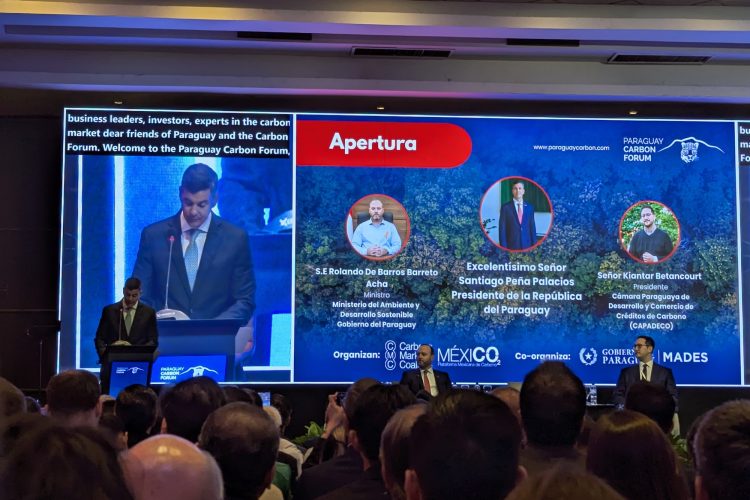
The Republic of Paraguay is strategically positioning itself to become a primary hub for the global compliance carbon market, leveraging its unique status as a nation with a 100 percent renewable electricity grid and a newly established legal framework. This move was solidified during the inaugural Paraguay Carbon Forum, held in late March 2026 in the capital city of Asunción. The event brought together a diverse assembly of government officials, international project developers, financial institutions, and climate experts to outline a roadmap for transforming Paraguay’s natural capital into a sophisticated economic engine.
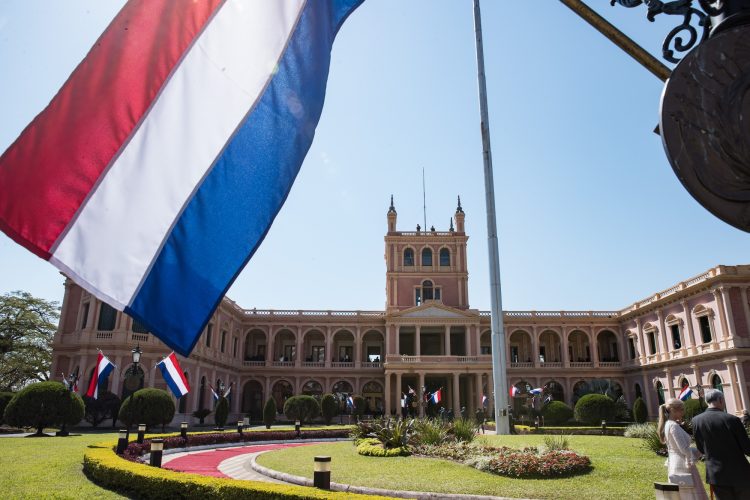
President Santiago Peña, delivering the keynote address at the Palacio de los López, emphasized that the initiative transcends environmental conservation, framing it as a cornerstone of national development. According to President Peña, the administration’s primary objectives involve the mobilization of significant foreign investment, the enhancement of national competitiveness, and the creation of concrete development opportunities for all Paraguayan citizens. The forum served as a formal declaration that Paraguay is no longer a passive observer in the climate finance space but an active architect of high-integrity carbon credit systems.
The Strategic Shift to Compliance Markets
While the voluntary carbon market (VCM) has historically been the primary vehicle for carbon offsetting, it has faced increasing scrutiny over the past several years. Critics have frequently pointed to issues regarding the integrity of credits, specifically concerning permanence—the guarantee that carbon remains sequestered—and additionality—the proof that the carbon reduction would not have occurred without the financial incentive of the credit. In contrast, compliance markets are governed by mandatory national, regional, or international carbon reduction regimes. These markets, such as the European Union’s Emissions Trading System (EU ETS) or various "cap-and-invest" programs, carry a much higher level of regulatory oversight.
Paraguay’s strategy focuses heavily on these compliance markets, specifically those aligned with Article 6 of the Paris Agreement. Article 6 provides a framework for countries to collaborate to meet their Nationally Determined Contributions (NDCs). Under Article 6.2, countries can trade Internationally Transferred Mitigation Outcomes (ITMOs), which are high-integrity carbon credits that include "corresponding adjustments" to ensure that the same emission reduction is not counted by both the selling and the buying nation.
The financial implications of this shift are substantial. While credits on the voluntary market often trade in the range of US$5 to US$10 per tonne of CO2 equivalent, credits within a strictly regulated compliance framework can command prices upwards of US$40 per tonne. Victor Gonzalez, the Director of Carbon Markets at Paraguay’s Ministry of the Environment and Sustainable Development (MADES), noted that the country’s goal is not to compete on volume alone but to lead on quality. The focus remains on selling "better credits at higher prices," ensuring that the integrity of the Paraguayan brand remains unassailable in the global marketplace.

The Renewable Energy Edge and the Itaipu Dam
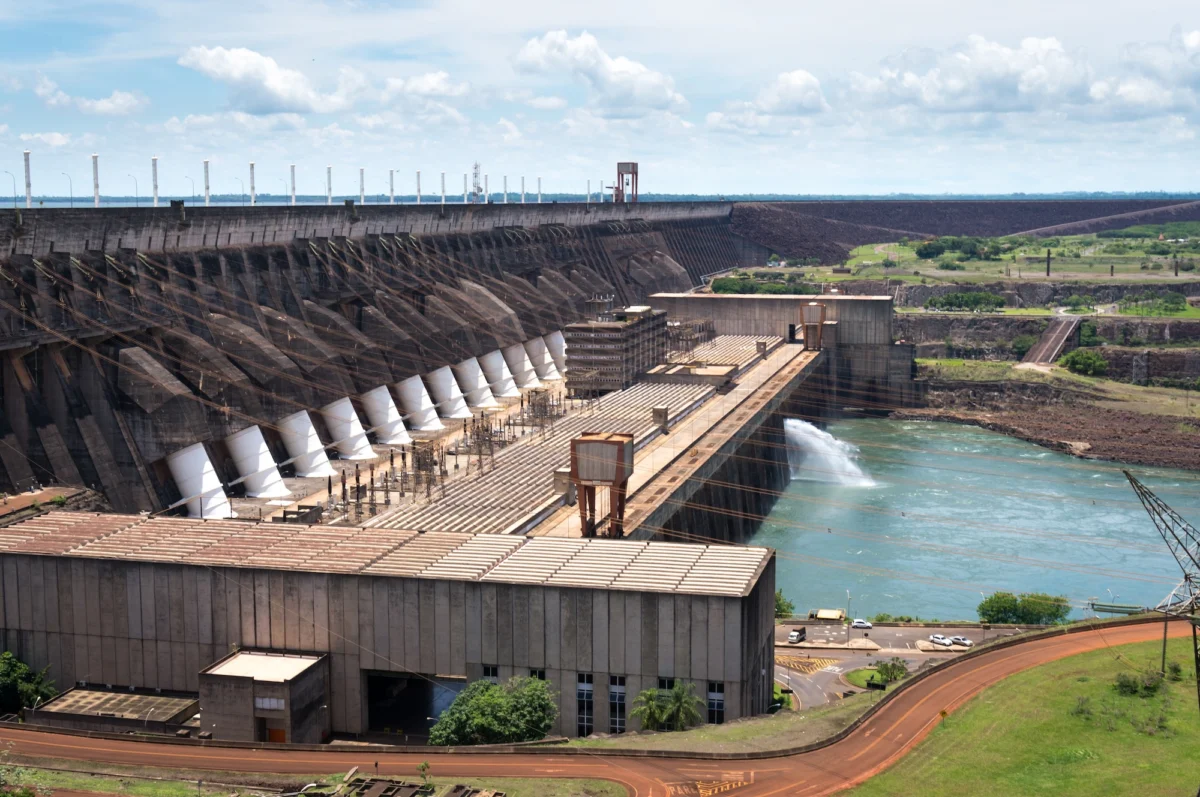
A fundamental pillar of Paraguay’s value proposition is its energy profile. Unlike many of its regional neighbors that still rely on fossil fuels for a significant portion of their industrial activity, Paraguay’s electricity supply is 100 percent renewable. This is largely due to the Itaipu Dam, a massive hydroelectric project shared with Brazil on the Paraná River. As one of the world’s largest producers of renewable energy, the dam provides Paraguay with a surplus of clean power that serves as a massive "green" subsidy for carbon credit projects.
This energy surplus allows Paraguay to diversify its carbon portfolio beyond traditional nature-based solutions like reforestation and forest conservation (REDD+). The country is exploring the electrification of industrial processes and the public transportation sector as verifiable sources of carbon credits. Furthermore, the potential for green hydrogen production—using renewable electricity to split water into hydrogen and oxygen—presents a frontier for new credit generation. By displacing fossil fuel use in heavy industry and shipping through green hydrogen, Paraguay can generate credits that are highly attractive to industrialized nations struggling to decarbonize their own hard-to-abate sectors.
Legal Framework and the "Clean Slate" Advantage
One of the most significant hurdles for many nations in the carbon market is the lack of a clear, centralized legal framework. Paraguay addressed this by moving rapidly to pass comprehensive carbon credit legislation that aligns with international standards. This legal clarity provides a level of certainty for investors that is currently lacking in larger regional players like Brazil or Mexico, where subnational regulations at the state or provincial level can often conflict with national policies.
Michael Berends, CEO of the global carbon market advisory firm ClearBlue Markets, highlighted that Paraguay’s "clean slate" is a distinct competitive advantage. Without the baggage of legacy systems or fragmented regional laws, the Paraguayan government has been able to build a streamlined, top-down regulatory environment. However, Berends also cautioned that the window of opportunity is narrow. As more countries move to implement Article 6 frameworks, the first movers will likely secure the most lucrative long-term bilateral agreements with buying nations.
Paraguay has already demonstrated significant momentum in this area. In May 2025, the country signed a landmark agreement with Singapore to collaborate on carbon credit projects under Article 6. Similar memorandums of understanding have been established with the United Arab Emirates and Taiwan. Furthermore, developed nations including New Zealand, Norway, and Sweden have entered preliminary discussions to explore carbon credit acquisition from Paraguay to assist in meeting their own stringent emission reduction targets.
Socio-Economic Considerations and Land Rights
Despite the optimism expressed by government and private sector leaders, the rapid expansion of the carbon market has raised concerns among civil society organizations and environmental NGOs. A primary point of contention is the inequality of land distribution in Paraguay. Much of the country’s land is held by a small percentage of private owners, which facilitates quick deal-making for large-scale carbon projects but risks marginalizing smallholder farmers and Indigenous communities.

Victor Vera, a board member of the Paraguayan conservation organization OPADES, pointed out that the current trajectory heavily favors international investment and large-scale capital. Vera argued that without robust public policy specifically designed to protect and include Indigenous peoples and small-scale producers, the "development opportunities" mentioned by the presidency may not reach the most vulnerable sectors of society.
The government has responded to these concerns by emphasizing the "reputational" nature of the modern carbon market. Minister Rolando De Barros Barreto Acha stated that for Paraguayan credits to maintain their high value, they must adhere to strict Social and Environmental Safeguards (SES). In the compliance market, credits that are associated with land disputes or human rights violations become "toxic assets" that buying nations will avoid to protect their own reputations. Therefore, the government argues, the market itself will mandate the inclusion and fair treatment of local communities.
Chronology of Paraguay’s Carbon Market Development
The path to the 2026 Carbon Forum was paved by several years of legislative and diplomatic groundwork:

- 2015: Paraguay signs the Paris Agreement, committing to its first set of Nationally Determined Contributions.
- Late 2023: The Paraguayan Congress passes the Carbon Credit Law, establishing the Ministry of the Environment (MADES) as the primary regulatory authority.
- Early 2024: The executive branch issues decrees clarifying the tax treatment and ownership rights of carbon credits, distinguishing them from traditional property rights to allow for easier international transfer.
- May 2025: Paraguay and Singapore sign a bilateral agreement under Article 6.2, marking one of the first such deals in South America.
- March 2026: The inaugural Paraguay Carbon Forum is held, signaling the country’s readiness to begin large-scale credit exports.
Broader Implications and Future Outlook
Paraguay’s entry into the high-integrity compliance market represents a significant shift in how developing nations view their natural resources. Rather than relying solely on the export of raw commodities like soy and beef—which have historically driven deforestation—Paraguay is attempting to monetize the preservation and sustainable management of its ecosystems.
If successful, Paraguay could serve as a blueprint for other landlocked or developing nations to bypass the volatile voluntary markets in favor of stable, high-value bilateral agreements under the UN framework. The success of this initiative will ultimately depend on the government’s ability to balance rapid industrial growth with the stringent transparency requirements of Article 6.
As the global community moves closer to the 2030 climate deadlines, the demand for high-integrity, adjusted carbon credits is expected to skyrocket. By aligning its legal system, energy infrastructure, and diplomatic efforts toward this specific niche, Paraguay is positioned not just to participate in the global carbon market, but to lead it. The coming years will determine if the country can successfully navigate the complexities of international climate finance while ensuring that the resulting economic benefits are distributed equitably across its population.
