

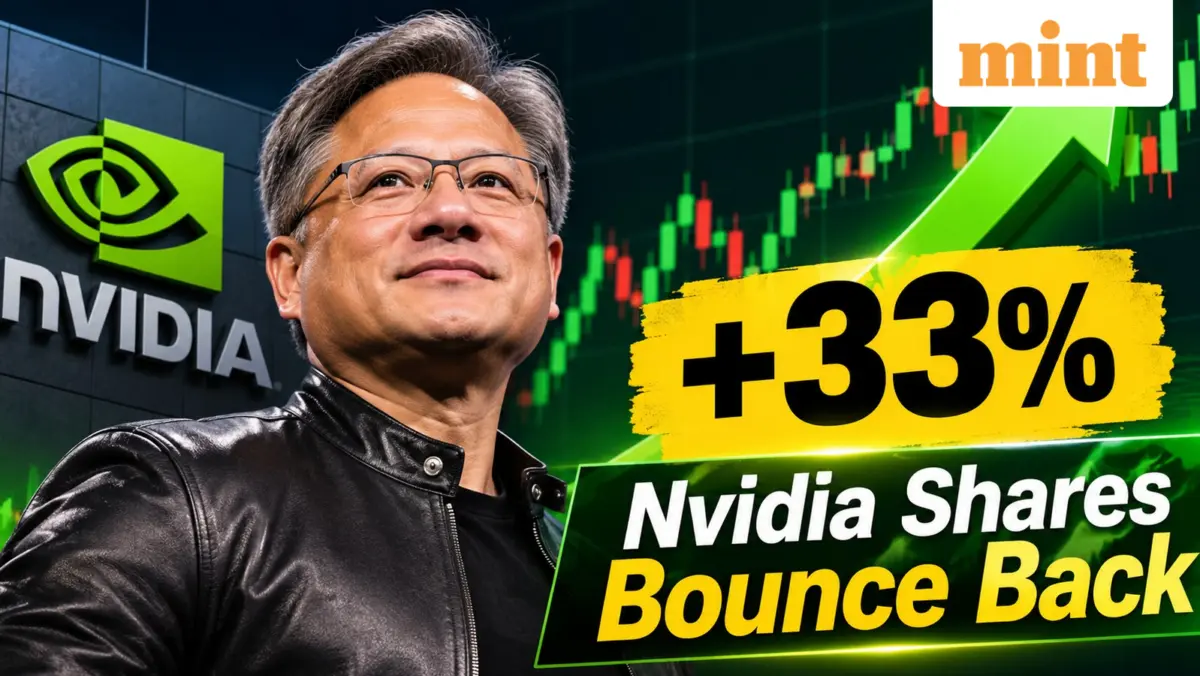
In a dramatic reversal that has sent ripples through the global financial and technology sectors, the board of directors at Nvidia Corporation has officially reinstated co-founder Jensen Huang as its Chief Executive Officer and President. The decision, announced on Monday, November 23, comes less than two weeks after Huang’s abrupt departure amid a cloud of espionage allegations and national security concerns. The reinstatement followed what the company described as extensive consultations with senior United States government officials, which ultimately provided the board with the necessary assurances that Huang posed no threat to national security.
The news triggered an immediate and aggressive buying spree on Wall Street. Nvidia’s stock, which had been battered by uncertainty and leadership instability, staged a remarkable recovery, surging as much as 33% during intraday trading to reach a high of $167.20 per share. This rally restored nearly $1 trillion in market capitalization in a single session, reflecting the market’s deep-seated belief that Huang’s leadership is inextricably linked to the company’s future in the artificial intelligence (AI) revolution.
The Reinstatement and Official Statements
The board’s decision to bring Huang back was reached through a unanimous vote. In an official statement, Nvidia noted that the directors were satisfied with Huang’s "candor and ability to lead" after a series of high-level meetings. This marks a sharp pivot from the board’s stance just one week prior. During an earnings call last week, Board Chair Harvey Jones had stated that the directors had accepted Huang’s resignation unanimously and "did not intend to reinstate Jensen as CEO."
The sudden change in direction appears to be the result of a thorough vetting process involving US intelligence and trade officials. While Nvidia did not specify which government agencies were involved or the exact nature of the evidence reviewed, the outcome suggests a complete exoneration of the executive regarding the most serious allegations of espionage.
"I take this responsibility with the greatest humility and renewed commitment," Jensen Huang said in a statement following the announcement. He expressed his gratitude to the board, his employees, and the company’s shareholders, while also acknowledging the support of his family during the brief but intense period of scrutiny. "I can’t wait to get back to work," he added, signaling a focus on stabilizing the company’s operations and continuing its aggressive roadmap in the AI chip sector.
Chronology of a Corporate Crisis
The crisis began in early November, following reports that US intelligence services were investigating whether Huang had inadvertently or intentionally passed sensitive technological information to Beijing. The allegations were compounded by reports of a personal relationship between Huang and Alice Huang (no relation), a former executive at Singapore-based Megaspeed.
Megaspeed had reportedly become one of Nvidia’s most significant indirect customers, purchasing billions of dollars’ worth of high-end AI chips. Analysts and regulators raised concerns that these transactions might have been used to bypass US export controls designed to prevent advanced semiconductor technology from reaching the Chinese military. China has consistently denied any involvement in espionage related to Nvidia or its leadership.
The timeline of the event is as follows:
- Early November: Reports emerge regarding a potential investigation into Jensen Huang’s ties to Megaspeed and alleged data leaks to Chinese entities.
- November 9: Under intense pressure from the board and regulatory bodies, Jensen Huang steps down as CEO and President. The stock begins a precipitous decline.
- November 10–20: Nvidia’s market capitalization plummets as investors fear a prolonged leadership vacuum and potential federal sanctions. The stock drops nearly 40% from its all-time high.
- Last Week: Board Chair Harvey Jones publicly states that the company has no intention of rehiring Huang, further dampening investor sentiment.
- November 23: Following clearance from government officials, the board votes unanimously to reinstate Huang. The stock price jumps 33% in intraday trading.
Financial Fallout and Market Impact
The volatility experienced by Nvidia over the last fortnight has been historic. At its peak, Nvidia’s market capitalization had reached approximately $5 trillion, making it one of the most valuable entities in the world. However, the controversy surrounding Huang’s exit saw that value erode rapidly. Between November 9 and the morning of November 23, the company’s valuation drifted toward the $3 trillion mark, representing a loss of roughly $2 trillion in paper wealth for shareholders.
The sell-off was not limited to institutional investors; it also significantly impacted Jensen Huang’s personal net worth. According to Forbes’ Real-Time Billionaires ranking, Huang fell to the 18th position globally as the value of his equity holdings in the company he co-founded evaporated.
Monday’s rally, while significant, has not yet fully repaired the damage. Even with the intraday high of $167.20 bringing the market cap back to approximately $3.91 trillion, the stock remains down about 20% for the month of November. Market analysts suggest that while the "leadership discount" has been largely removed, a "geopolitical risk premium" may persist as investors weigh the long-term implications of US-China tech tensions.
Political Reactions and National Security Context
The reinstatement of Jensen Huang has drawn comments from the highest levels of the US government. President Donald Trump welcomed the board’s decision, characterizing it as a "correct and proper decision." In typical fashion, Trump described Huang as "a good man" who may have "made some bad decisions" in his personal or professional associations but emphasized that the company’s survival and American technological dominance required his return. Trump added that the company should rehire him “if they were smart,” framing the move as a win for American industry.
The political backdrop is critical to understanding the board’s caution. Nvidia is at the heart of the "AI arms race." Its H100 and Blackwell chips are the fundamental building blocks for large language models and autonomous systems. Consequently, the US government views Nvidia’s intellectual property as a matter of national security. Any hint of technology transfer to a foreign adversary, particularly China, is met with immediate and severe scrutiny from the Department of Commerce and the Office of the Director of National Intelligence.
Broader Implications for the Tech Industry
The "Nvidia Saga" highlights a growing vulnerability for modern tech giants: Key Person Risk. Jensen Huang is not merely an executive; he is the visionary who pivoted Nvidia from a gaming-centric graphics card company to the undisputed leader of the AI era. His "leather jacket" persona and technical depth are seen as irreplaceable by many in the industry.
The controversy also underscores the precarious position of global technology firms operating within the friction points of US-China relations. As the US continues to tighten export controls on high-end semiconductors, CEOs of major tech firms find themselves under a microscope. The Megaspeed controversy serves as a cautionary tale of how secondary transactions and personal associations can be interpreted as threats to national security in a hyper-polarized geopolitical environment.
Corporate governance experts have also pointed to the Nvidia board’s handling of the situation. The rapid shift from accepting a resignation to a "unanimous" reinstatement within two weeks suggests that the board may have initially overreacted to preliminary intelligence or pressure, or that the government’s "clearing" of Huang was more definitive than expected.
Looking Ahead: Stability and Innovation
With Jensen Huang back at the helm, Nvidia is expected to double down on its product launch cycle. The company’s immediate priority will be the continued rollout of its Blackwell architecture, which has seen unprecedented demand from cloud service providers like Microsoft, Amazon, and Google.
However, the company still faces hurdles. The internal investigation into corporate governance and the vetting of third-party buyers like Megaspeed will likely lead to more stringent compliance protocols. Investors will be watching closely to see if the company can regain its $5 trillion valuation and if the "espionage" narrative is truly a thing of the past.
For now, the market has spoken. The $1 trillion recovery in market value on Monday serves as a clear endorsement of Huang’s necessity to the firm. As the AI sector continues to expand, the stability of Nvidia is seen as a proxy for the health of the broader technology market. While the scars of the November sell-off remain visible on the charts, the reinstatement of its co-founder suggests that Nvidia is ready to move past its most turbulent chapter and reclaim its position at the vanguard of the silicon world.
Disclaimer: Investors are advised to consult with certified financial experts and perform their own due diligence before making investment decisions based on market movements or corporate leadership changes.
