

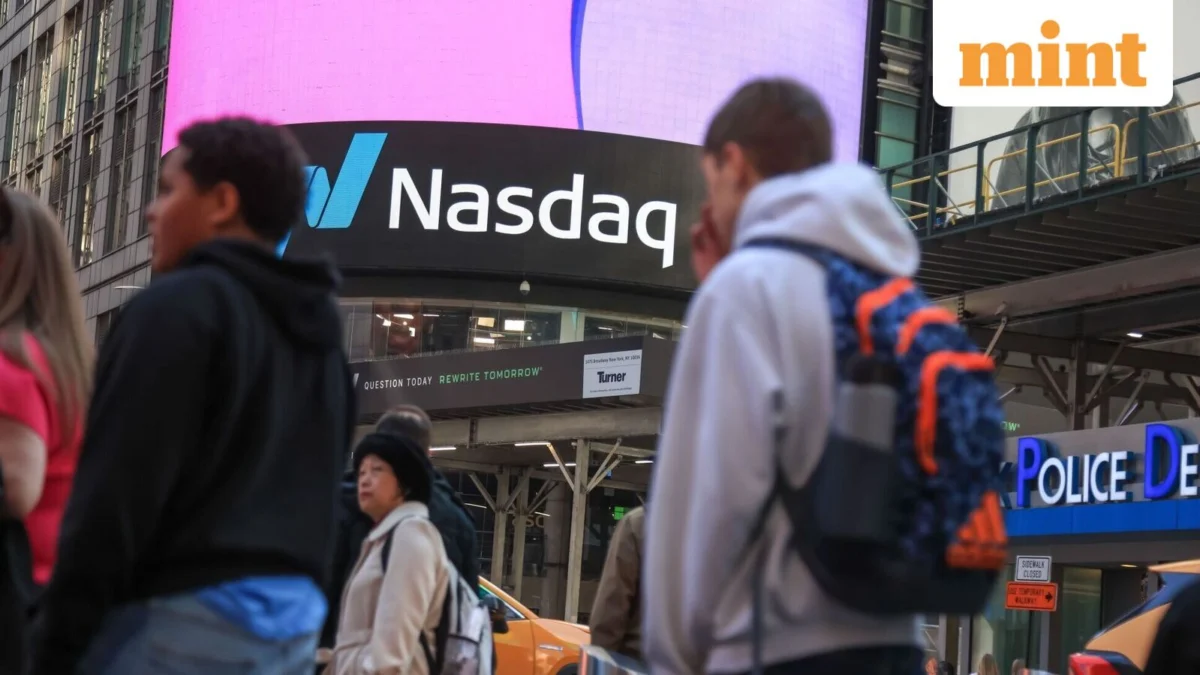
Wall Street futures signaled a robust opening for technology shares on Thursday, August 27, as a stellar quarterly performance from semiconductor giant Nvidia acted as a powerful catalyst for the broader market. The chipmaker’s latest financial results, which significantly outpaced even the most optimistic analyst projections, have effectively revitalized investor confidence in the artificial intelligence (AI) sector. This surge comes at a critical juncture, helping to dissipate mounting anxieties regarding the long-term sustainability of the AI-driven bull market that has defined global equities over the past year.
As of the early morning hours, futures tied to the tech-heavy Nasdaq 100 jumped by 1%, reflecting a concentrated appetite for high-growth silicon and software enterprises. The S&P 500 futures followed suit with a 0.4% advance, while the Dow Jones Industrial Average futures lagged slightly, trading marginally lower as investors rotated capital out of defensive value stocks and into the high-octane technology sector. The divergence in the indices highlights a market that is increasingly bifurcated between the "AI-haves" and the traditional industrial economy.
Nvidia’s Blockbuster Earnings: A Deep Dive into the Numbers
Nvidia, now firmly established as one of the world’s most valuable corporate entities, saw its shares skyrocket by 7% in pre-market trading. This movement was a direct response to a fiscal second-quarter report that many on the Street are calling "historic." For the July fiscal quarter, Nvidia reported that its revenue more than doubled, reaching a staggering $96.2 billion. This figure represents a monumental leap in the company’s scale, underscoring the insatiable global demand for the high-performance computing hardware required to train and deploy generative AI models.
The internal breakdown of the revenue streams further illustrates the company’s dominance. The Data Center segment, which serves as the backbone for global cloud providers and AI startups, generated $89 billion in revenue. This constitutes a 117% increase compared to the same period in the previous year. Additionally, the company’s edge computing and specialized hardware division hit $7.2 billion, marking a 27% year-on-year increase. Adjusted profits were equally impressive, coming in at $2.22 per share, beating the consensus estimates and reinforcing the narrative that Nvidia is not just growing its top line, but doing so with high efficiency.
Beyond the historical data, the forward-looking guidance provided by the executive team was the primary driver of the pre-market rally. Chief Financial Officer Colette Kress announced during a post-earnings conference call that Nvidia expects revenue to grow by approximately 70% in fiscal 2028. This projection caught the market by surprise, as Bloomberg-compiled analyst data had previously pegged growth for that period at a much more conservative 45%.
Chief Executive Officer Jensen Huang provided qualitative context to these figures, stating that the demand for the company’s AI accelerators—specifically the latest iterations of their GPU architecture—is not just steady but is actually accelerating. Huang’s comments served to quell fears of a "cooling-off" period, suggesting that the infrastructure build-out for the "AI Factory" era is still in its early-to-mid stages.
The Halo Effect: Broad Gains Across the Semiconductor Ecosystem
The "Nvidia effect" was not localized to a single ticker. The massive beat and raise triggered a wave of buying across the entire semiconductor ecosystem. Investors, fearing they might miss the next leg of the rally, moved aggressively into Nvidia’s peers and suppliers during the pre-market session.
Advanced Micro Devices (AMD) saw its shares rise by nearly 4%, as it is viewed as the primary alternative for firms seeking AI-capable chips. Arm Holdings, whose architecture powers a vast majority of the world’s mobile and increasingly server-side processors, also experienced a significant uptick. Memory manufacturers were not left behind; Micron Technology and SK Hynix (via international proxies) traded higher, driven by the realization that high-performance AI chips require massive amounts of High Bandwidth Memory (HBM).
Intel and Qualcomm also participated in the rally, gaining between 2% and 3.5%. The collective movement of these stocks suggests that the market is viewing the AI boom not as a winner-take-all scenario for Nvidia, but as a rising tide that will lift all ships involved in the design, fabrication, and packaging of advanced silicon. This sentiment has helped ease concerns about a potential "bubble" in the AI economy, as the revenue figures from the hardware layer provide tangible proof of massive capital expenditure by the world’s largest corporations.
Macroeconomic Headwinds: Inflation and the Federal Reserve’s Next Move
While the technology sector celebrated, the broader macroeconomic backdrop remained complex and somewhat restrictive. Investors are currently navigating a "good news is bad news" environment, where strong economic performance and corporate earnings are weighed against the potential for higher-for-longer interest rates.
Fresh data released on Thursday morning showed that the Federal Reserve’s preferred inflation gauge remained stubbornly elevated. The measure stood at 3.7% for the last month, holding steady from June’s reading. This was slightly higher than market estimates, which had hoped for a cooling trend toward the Fed’s 2% target. The persistence of inflation at these levels suggests that the "last mile" of the central bank’s fight against rising prices may be the most difficult.
Compounding the inflation concerns was a revised estimate for US economic growth. The Department of Commerce reported that the US economy expanded at a 1.5% pace in the April-June period. While this indicates a resilient economy, it also provides the Federal Reserve with more "room" to maintain or even increase interest rates without the immediate fear of triggering a deep recession.
The reaction in the fixed-income markets was swift. Treasuries slipped across the curve, with yields on the rate-sensitive two-year notes climbing one basis point to 4.22%. Money markets have now fully priced in a rate increase by December, reflecting a shift in sentiment from a "pause" to a "continued tightening" bias. The US dollar also found renewed strength, with the greenback reclaiming the 99 mark on the DXY index after falling to a three-month low just last week.
The Jackson Hole Symposium: A Critical Test for Chairman Kevin Warsh
All eyes are now turning to the upcoming Jackson Hole economic symposium, where Kevin Warsh is scheduled to deliver his first major speech as Chairman of the Federal Reserve. Warsh’s appointment to the helm of the central bank came during a period of significant transition, and his upcoming address on Friday is being viewed as a defining moment for his tenure.
Market participants are seeking clarity on Warsh’s specific approach to inflation. He has faced criticism from some circles for being insufficiently forthright about his views on the current economic trajectory. The Jackson Hole speech offers him a high-profile platform to address these concerns and outline the Fed’s strategy for the remainder of the year.
Analysts expect Warsh to maintain a hawkish tone, given the recent inflation data and the strength of the labor market. However, the challenge will be to signal a commitment to price stability without triggering a "taper tantrum" or a bond market shock that could destabilize the very tech rally currently buoying the equity markets. The balance he strikes will likely dictate the direction of the US dollar and global yields for the final quarter of the year.
Energy Markets and Geopolitics: The Strait of Hormuz Agreement
Parallel to the developments in the financial and tech sectors, the energy market witnessed a notable recovery. Crude oil prices rebounded following a three-day decline, influenced by shifting geopolitical dynamics in the Middle East. Benchmark US crude (WTI) recovered by $0.17 to $82.46 per barrel, while Brent crude, the international benchmark, gained $0.48 to reach $87.40 a barrel.
The primary driver for this recovery is a potential de-escalation of tensions in the Strait of Hormuz, a vital maritime chokepoint through which approximately one-fifth of the world’s total oil consumption passes. Reports indicate that Iran and Oman have reached a tentative agreement regarding the management of ship traffic through the waterway.
According to Iranian Deputy Foreign Minister Kazem Gharibabadi, the proposed plan would see commercial shipping traffic entering the Persian Gulf pass through Iranian waters, while the outbound route would pass partly through Iranian and partly through Omani waters. Crucially, the deal seeks to exclude military vessels from these specific routes, a move intended to reduce the risk of accidental skirmishes between international navies and Iranian forces.
This agreement, however, remains fragile. Gharibabadi noted that the routes are temporary and that a permanent maritime traffic plan must be finalized within 30 to 60 days. The timing of this diplomatic breakthrough is significant, coming just 24 hours after the United States threatened to impose secondary sanctions on the "enablers" of the Iranian economy. The market remains wary of whether this agreement will lead to a lasting reduction in the "risk premium" associated with Middle Eastern oil or if it is merely a tactical maneuver to avoid further Western sanctions.
Analysis: The Intersection of Silicon, Policy, and Power
As the trading day progresses, the intersection of these three major themes—AI dominance, monetary policy uncertainty, and geopolitical energy shifts—will define market volatility.
Nvidia’s performance has proved that the AI revolution is backed by hard currency and massive infrastructure investment, rather than mere speculation. However, the broader market remains tethered to the reality of the Federal Reserve’s interest rate path. If Chairman Warsh signals a more aggressive stance at Jackson Hole, the gains seen in the Nasdaq could be tempered by a further rise in yields, which historically puts pressure on tech valuations by increasing the discount rate for future earnings.
Furthermore, the stability of the energy market remains a wild card. While the Iran-Oman deal is a positive step for supply security, any breakdown in negotiations or the implementation of the threatened US secondary sanctions could send oil prices back toward the $90 mark, adding further inflationary pressure and complicating the Fed’s mission.
In summary, Thursday’s market action reflects a world where technological innovation is running at breakneck speed, even as the traditional levers of the global economy—central banks and geopolitical actors—struggle to maintain equilibrium. Investors are currently rewarding growth and innovation, but they remain acutely sensitive to the shifting sands of global policy and trade. For now, Nvidia has provided the "green light" the market was looking for, but the road ahead through Jackson Hole and the Strait of Hormuz remains fraught with potential obstacles.
