

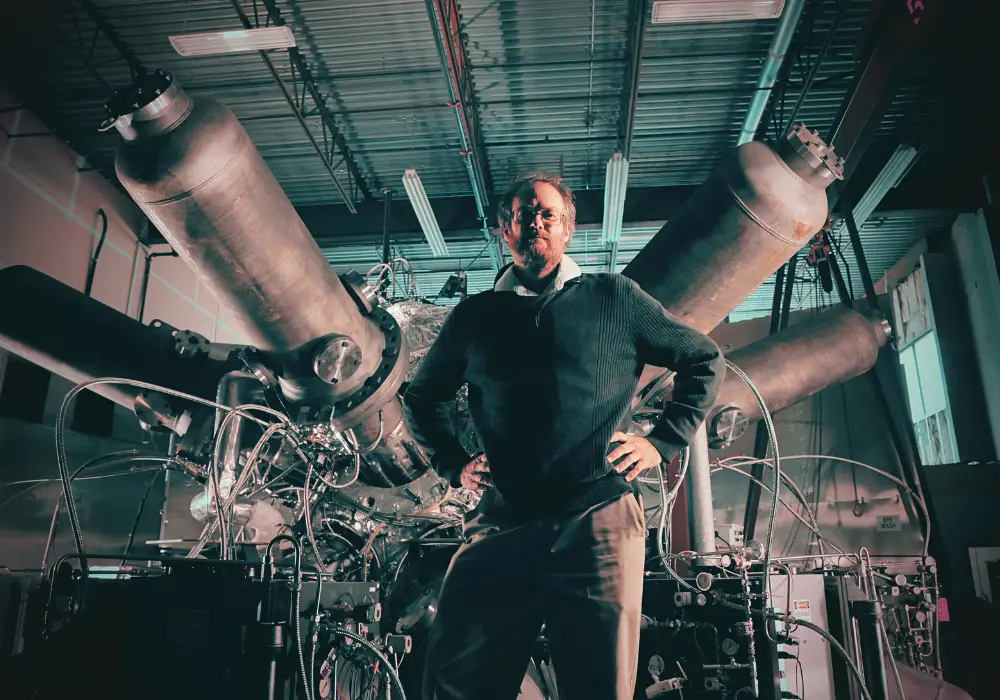
The global computing landscape reached a significant turning point this week as Nvidia, the world’s most valuable semiconductor company, announced a landmark partnership with IonQ to deploy the industry’s first-ever quantum processing unit (QPU) within Nvidia’s accelerated quantum research centers. This move marks a dramatic strategic pivot for Nvidia and signals a new era of hybrid "quantum-classical" supercomputing. The partnership arrives less than two years after a period of intense volatility for the quantum sector, sparked by public skepticism from Nvidia’s own leadership regarding the near-term viability of the technology.
In January 2025, the quantum computing industry faced a severe "quantum winter" scare when Nvidia CEO Jensen Huang predicted that it would be another three decades before a "very useful" quantum computer would emerge. The impact of this statement was immediate and profound; stocks for publicly traded quantum firms plummeted across the board. IonQ, a leader in trapped-ion quantum architecture, suffered its largest single-day loss in company history, with shares devaluing by 40% in a matter of hours. However, the rapid acceleration of artificial intelligence (AI) and the subsequent strain on global data center infrastructure appear to have pulled the timeline for quantum integration forward. By joining forces with IonQ, Nvidia joins a prestigious cohort of tech giants, including Google, Amazon Web Services (AWS), and IBM, all of whom are racing to integrate quantum capabilities into their cloud and research ecosystems.
A Chronology of the Quantum Pivot
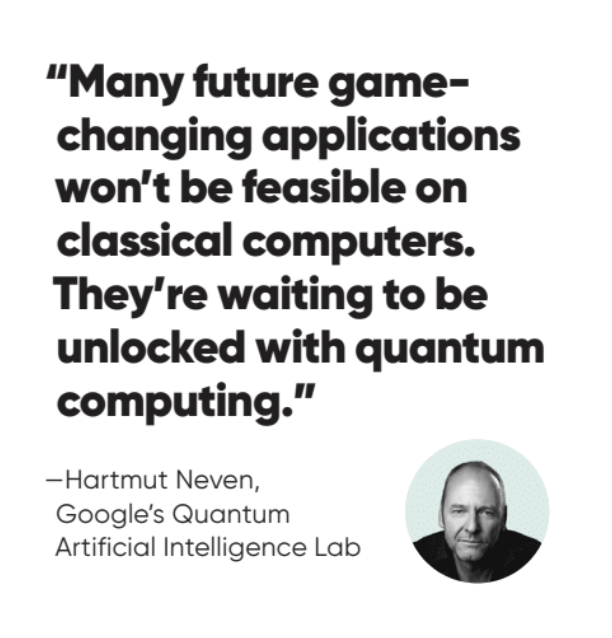
The journey to this partnership is defined by a series of rapid technological milestones that challenged the 30-year skepticism of early 2025. In December 2024, just weeks before Huang’s cautious forecast, Google’s Quantum Artificial Intelligence Lab, led by Hartmut Neven, unveiled the "Willow" quantum chip. The results of the Willow tests were staggering: the chip completed a standard benchmark computation in just five minutes—a task that would have taken the world’s fastest classical supercomputers approximately 10 septillion years (a one followed by 25 zeroes).
Despite the sheer speed of these calculations, the industry remained divided on their practical utility. Critics argued that these benchmarks were "synthetic" and did not translate to real-world commercial value. However, throughout 2025 and 2026, the demand for computing power reached a breaking point. The explosion of generative AI models, spearheaded by Nvidia’s primary clients like OpenAI, created a "compute crunch." Data centers began to consume electricity and water at rates that threatened national grids and corporate sustainability targets.
This environmental and infrastructural pressure necessitated a search for more efficient computing architectures. Nvidia’s decision to integrate IonQ’s QPU into its accelerated computing platform suggests that the company now views quantum not as a distant replacement for the GPU, but as a necessary co-processor that can handle specific, high-complexity tasks that are currently bottlenecking AI development.
The Mechanics of the Quantum Advantage
To understand why Nvidia is investing in this technology now, one must look at the fundamental differences between classical and quantum processing. Traditional computing, including the powerful GPUs produced by Nvidia, relies on binary bits. These bits function like light switches, existing in one of two states: 1 or 0. Every complex operation, from rendering a video to training a large language model, is essentially a massive sequence of these binary choices.
Quantum computing introduces two revolutionary concepts: superposition and entanglement. A quantum bit, or "qubit," can exist in a state of superposition, meaning it represents both 1 and 0 simultaneously. This allows a quantum computer to explore a vast number of potential solutions to a problem at once, rather than checking them sequentially.
The concept of entanglement further amplifies this power. Entanglement is a phenomenon where the state of one subatomic particle is directly linked to the state of another, regardless of the distance between them. In a computing context, this allows qubits to work in a highly coordinated fashion, leading to exponential increases in processing power. Hartmut Neven of Google famously illustrated this with a "tennis ball" analogy: Imagine a closet with a million drawers, one of which contains a tennis ball. A classical computer would have to open an average of 500,000 drawers to find it. A quantum computer, utilizing its unique algorithmic properties, could locate the ball in just 1,000 steps.
The Environmental Imperative and the Energy Paradox
The integration of IonQ’s technology into Nvidia’s infrastructure is also a response to the staggering environmental costs of the current AI boom. Data centers have become the "factories" of the 21st century, but their resource consumption is increasingly unsustainable. Recent reports indicate that OpenAI alone expects its future energy needs to rival the total consumption of the country of India. Furthermore, some analyses suggest that the carbon footprint of the top AI firms could soon double that of the world’s largest oil companies.
The physical infrastructure required to support these machines is equally taxing. Current high-end supercomputers require cooling systems capable of filling an Olympic-sized swimming pool in minutes and consume enough electricity to power 15,000 homes. Quantum computing offers a theoretical path toward "computational efficiency," where a single QPU could replace thousands of energy-hungry GPUs for specific tasks.
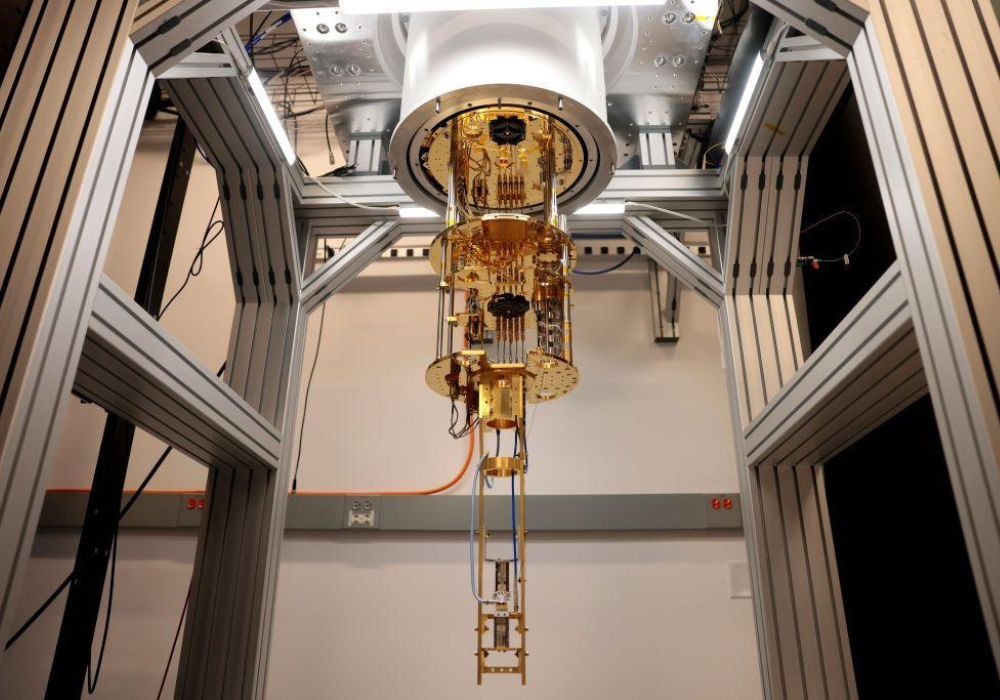
However, the transition to energy-efficient quantum computing is not without its own hurdles. Julian Fletcher, chair of the BCS Quantum Computing specialist group, has noted that while quantum algorithms are efficient, the "overhead" required to run the hardware is immense. Most quantum processors, including Google’s Willow, must be housed in dilution refrigerators—complex, chandelier-like structures that cool the chips to near-absolute zero (colder than outer space). This is necessary to prevent "decoherence," where external heat or vibration causes the qubits to lose their quantum state and introduce errors.
Fletcher’s research suggests that for the time being, the energy required for error correction and cooling could make quantum computers up to 35 times more energy-intensive than classical systems for certain operations. The industry’s goal, and the focus of the Nvidia-IonQ partnership, is to reach "fault-tolerant" quantum computing, where the efficiency of the calculation finally outweighs the energy cost of the cooling and error correction.
Industry Reactions and Strategic Implications
The partnership has sent shockwaves through the technology sector, prompting reactions from competitors and analysts alike. Industry insiders suggest that Nvidia’s move is a defensive play to ensure they remain the dominant platform for all forms of high-performance computing (HPC). By integrating IonQ’s QPUs into the Nvidia CUDA-Q platform—an open-source programming model for hybrid systems—Nvidia is positioning itself as the software gateway for the quantum era.
Market analysts at McKinsey & Company have highlighted that while quantum computers are currently in the "experimental" phase, their potential to simulate molecular systems could revolutionize industries that are currently stagnant. "Theoretically, a fully fault-tolerant quantum chip could one day rival the output of billions of classical GPUs on certain highly specialized problems," McKinsey researchers stated. This includes simulating the quantum mechanics of molecules, a task that scales exponentially and quickly becomes impossible for classical machines.
For IonQ, the partnership represents a validation of its "trapped-ion" approach. Unlike the superconducting qubits used by Google and IBM, which require extreme refrigeration, IonQ uses ionized atoms held in place by electromagnetic fields. This architecture is often cited as being more scalable and potentially easier to integrate into existing data center environments.
The Future of Scientific Discovery
The ultimate promise of the Nvidia and IonQ collaboration lies in "useful" quantum applications—the very thing Jensen Huang doubted just 24 months ago. Experts believe that the first real-world breakthroughs will occur in material science and chemistry.
One of the most anticipated applications is the discovery of new battery chemistries. Current lithium-ion technology is reaching its physical limits; quantum simulations could allow scientists to design new molecules that hold a charge more effectively, potentially tripling the range of electric vehicles. Similarly, quantum computing could unlock the secrets of the Haber-Bosch process, the method used to create synthetic fertilizer. Currently, this process consumes 1% of the world’s total energy supply. A quantum-designed catalyst could theoretically allow this reaction to occur at room temperature, drastically reducing global energy consumption.
Furthermore, the technology holds the key to viable carbon-capture systems and the realization of nuclear fusion. These "game-changing" applications require the simulation of subatomic interactions that are simply too complex for even the most advanced Nvidia Blackwell GPUs.
As Nvidia and IonQ begin their deployment, the focus will remain on error correction and the stabilization of qubits. While the "30-year" timeline predicted in 2025 has been effectively discarded, the road to a quantum-powered world remains an engineering marathon. However, with the world’s most valuable company now fully committed to the race, the finish line appears closer than ever before. The "quantum-classical" hybrid data center is no longer a theoretical concept; it is an emerging reality that will define the next decade of technological progress and environmental sustainability.
