

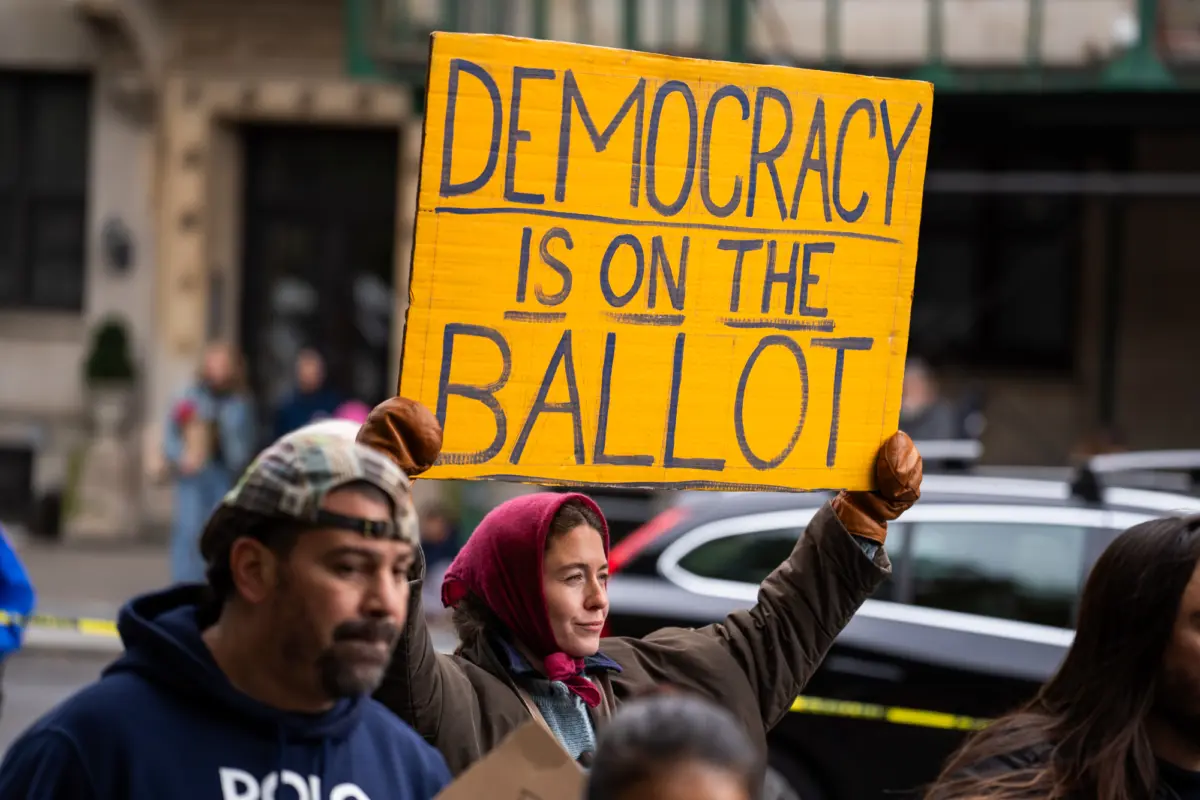
The United States witnessed a massive wave of grassroots mobilization this past Saturday as the No Kings network, a prominent advocacy group formed in opposition to the administration of President Donald Trump, coordinated thousands of rallies across the country. These events, strategically timed ahead of the upcoming midterm elections, were designed with the primary objective of driving high voter turnout through early participation. With more than 3,000 individual events organized in cities ranging from major metropolitan hubs to smaller rural communities, the "No Kings: Vote Early" campaign represents one of the most significant non-governmental electoral outreach efforts in recent political history. While organizers categorized the rallies as nonpartisan, the underlying sentiment of the movement remained rooted in nearly two years of sustained demonstrations against the current administration’s policies and executive style.
The central theme of the weekend was "nonpartisan voter participation," a message reinforced by official statements from the No Kings leadership. Organizers emphasized that the goal was to foster community unity and ensure that every eligible citizen is equipped with the knowledge and logistical support necessary to cast their ballot. By advocating for early voting, the network seeks to mitigate the risks of Election Day congestion and what they describe as potential "malfeasance" that could arise during the final hours of the polls. This strategic focus on early voting is a direct response to the increasing complexity of the American electoral landscape, where administrative hurdles and legal challenges have become central to the political discourse.
Mobilization at the Lincoln Memorial and National Highlights
In Washington, D.C., the Lincoln Memorial served as a backdrop for one of the day’s most visible gatherings. Despite a noticeable chill in the air that required attendees to don heavy coats and caps, several hundred people gathered at the historic site. The atmosphere was characterized by a mix of festive energy and political urgency. A live band provided musical accompaniment, leading to moments where the crowd danced to keep warm while waving placards with slogans such as "VOTE EARLY" and "HANDS OFF MY VOTE!" The choice of the Lincoln Memorial was symbolic, invoking the historical struggle for civil rights and the preservation of democratic institutions—themes that have been central to the No Kings platform since its inception.
Similar scenes played out in Atlanta, Georgia, a state that has become a perennial battleground in national elections. At a rally held in the city, Councilman Michael Julian Bond addressed a crowd of enthusiastic supporters, framing the act of voting not just as a civic duty, but as a form of personal empowerment. Bond’s speech drew heavily on pop culture metaphors to resonate with a diverse audience, comparing the right to vote to the inherent powers of iconic superheroes.
"The Constitution gives you one power, right? That is the power to vote," Bond told the crowd. "You don’t see Superman giving up his power. You don’t see Black Panther giving up his power. You don’t see Wonder Woman giving up her magic lasso. So why would you give up your right, your power, your obligation to vote? Be a superhero, use your power. Go to the polls and vote." Bond’s rhetoric underscored the movement’s attempt to reframe the midterm elections as a pivotal moment for individual agency in the face of federal authority.
The Legal and Political Backdrop: A Divided Administration
The No Kings rallies did not occur in a vacuum; they were held against a backdrop of intensifying legal skirmishes between the Trump administration and state election officials. President Donald Trump has maintained a long-standing and vocal skepticism regarding mail-in voting and early ballot procedures. Since the 2020 presidential election, the President has frequently asserted, without providing evidence that has held up in court, that widespread voter fraud was a factor in his previous electoral outcomes. These assertions have fundamentally shaped the administration’s approach to the current midterm cycle.
Just days before the nationwide rallies, the administration escalated its efforts to oversee state-level election processes. On Thursday, the federal government filed a lawsuit against California election officials. The legal action seeks to prevent the state from counting mail-in ballots from individuals whom the federal government has flagged as "likely" noncitizens. The lawsuit demands that these ballots be set aside until the immigration status of the voters in question can be definitively confirmed through federal databases. This move has been met with fierce criticism from voting rights advocates who argue that such measures are intended to intimidate eligible voters and create administrative bottlenecks that could disenfranchise legitimate citizens.
The Department of Justice (DOJ) further intensified the pressure on Friday. In a formal warning, DOJ officials cautioned local election workers and administrators that processing or tabulating ballots submitted by suspected noncitizens could lead to criminal investigations and potential prosecution. This directive has created a climate of uncertainty for election officials across the country, many of whom are now caught between state laws that mandate the counting of all validly cast ballots and federal threats of legal retribution.
Congressional Pushback and the Defense of Election Integrity
The administration’s actions have prompted a swift response from Democratic leaders in Congress. Senators Alex Padilla of California, Sheldon Whitehouse of Rhode Island, and Dick Durbin of Illinois—the latter serving as the Chair of the Senate Judiciary Committee—penned a joint letter to Attorney General Todd Blanche. In the correspondence, the Senators demanded that the Justice Department provide an explicit commitment that it will not seize ballots or other essential election materials before the midterm results are officially certified.
The Senators expressed grave concerns that federal intervention in the days leading up to and following the November 3 general election could undermine the integrity of the democratic process. They argued that the threat of ballot seizure or the interruption of tabulation processes by federal agents would represent an unprecedented overreach of executive power. The letter highlighted the need for a clear separation between federal law enforcement and the independent administration of elections by the states, a principle that has been a cornerstone of American governance.
Data and Context: The Evolution of the No Kings Network
To understand the scale of the current mobilization, it is necessary to look at the trajectory of the No Kings network. Founded in the aftermath of the previous general election, the organization began as a loose coalition of activists, civil rights groups, and concerned citizens. Over the past two years, it has evolved into a sophisticated national infrastructure capable of organizing thousands of simultaneous events.
The network’s shift from protest-oriented marches to electoral-focused mobilization reflects a broader trend in American politics where grassroots movements are increasingly prioritizing "voter education" and "early voting" as primary tools for political change. According to data from previous election cycles, early voting—both in-person and by mail—has seen a steady increase in popularity. In the 2022 midterms, nearly 50% of all votes were cast before Election Day in several key states. The No Kings network aims to push these numbers even higher in the current cycle, believing that a large volume of early votes provides a "buffer" against potential legal challenges or technical failures on the day of the election.
Analysis of Implications for the Midterm Elections
The collision between the No Kings mobilization and the administration’s legal strategy suggests a highly litigious and potentially volatile post-election period. The focus on "noncitizen" voters in California and the DOJ’s warnings to local officials indicate that the administration is preparing to challenge the legitimacy of the results in specific jurisdictions, particularly those with high immigrant populations or those that utilize expansive mail-in voting systems.
For the No Kings network, the success of the weekend’s rallies will be measured by the actual early voting turnout figures reported in the coming weeks. If early voting reaches record levels, it may complicate the administration’s efforts to challenge the results, as a high volume of early ballots is more difficult to litigate than a narrow margin on Election Day. However, the administration’s focus on the "status" of voters rather than just the "method" of voting introduces a new variable into the equation. By targeting the voter rolls themselves, the federal government is challenging the very foundation of who is permitted to participate in the democratic process.
Furthermore, the involvement of high-ranking senators and the Attorney General ensures that the conduct of the midterm elections will remain a matter of national security and constitutional debate. The demand for the DOJ to refrain from seizing ballots is a preemptive attempt to prevent a "constitutional crisis" where federal and state authorities might find themselves in a direct physical or legal standoff over the control of election materials.
Conclusion: The Road to November 3
As the United States moves toward the November 3 general election, the dual forces of grassroots activism and executive scrutiny are shaping an unprecedented electoral environment. The No Kings network’s massive mobilization efforts underscore a deep-seated commitment among a significant portion of the electorate to protect and exercise their right to vote early. Conversely, the Trump administration’s legal maneuvers and the Justice Department’s warnings reflect a determined effort to reshape election oversight and enforce a stricter, more centralized interpretation of voter eligibility.
The rallies held on Saturday were more than just a call to the polls; they were a manifestation of the ongoing struggle over the future of American democracy. Whether through the "superhero" rhetoric of local leaders in Atlanta or the cold, determined dancing of protesters at the Lincoln Memorial, the message was clear: the outcome of the midterm elections will likely be decided not just by who votes, but by the legal and social battles currently being fought over how, when, and where those votes are counted. With only weeks remaining until the final ballots are cast, the nation remains on high alert, watching as the legal framework of the election is tested in real-time.
