

Four years after the Calf Canyon/Hermits Peak Fire carved a path of unprecedented destruction across 341,471 acres of northern New Mexico, the state is embarking on a sophisticated, multi-agency strategy to reclaim its blackened landscapes. The fire, which remains the most destructive in New Mexico’s history, left behind a massive burn scar characterized by miles of charred timber and soil so severely damaged that natural regeneration is nearly impossible. This crisis is not isolated; data from the New Mexico Energy, Minerals and Natural Resources Department (EMNRD) reveals a staggering reality: more than 5.45 million acres of wildland have been consumed by fire across the state over the last two decades.
The challenge of restoring these forests has historically been hampered by low survival rates for transplanted trees and a chronic shortage of appropriate seedlings. To address this, a coalition of state agencies and academic institutions has broken ground on the New Mexico Reforestation Center in Mora County. This facility represents the cornerstone of a new "reforestation pipeline," an end-to-end industrial and scientific process designed to produce 5 million climate-resilient seedlings annually. By integrating seed collection, nursery hardening, and predictive planting models, New Mexico aims to transform the success rate of reforestation in an era of intensifying drought and heat.
The Legacy of the Calf Canyon and Hermits Peak Disaster
The 2022 Calf Canyon/Hermits Peak Fire was a watershed moment for New Mexico’s land management policies. Originating from two separate prescribed burns conducted by the U.S. Forest Service that escaped control, the blazes merged to create a firestorm of historic proportions. The fire destroyed hundreds of homes and fundamentally altered the hydrology of the region, leading to massive post-fire flooding and the contamination of municipal water supplies.
In the years following the blaze, the landscape has remained largely barren. Traditional reforestation efforts in the American Southwest have often seen failure rates as high as 75 percent. When seedlings are planted into burn scars, they encounter an environment that is radically different from the forest that existed before the fire. The loss of canopy cover exposes the ground to direct, intense solar radiation, while the dark, charred soil and ash absorb heat rather than reflecting it. This creates a "micro-oven" effect where surface temperatures can spike to 150 degrees Fahrenheit, effectively cooking young plants before they can establish root systems.

Establishing the Reforestation Pipeline
To combat these dismal survival statistics, New Mexico is moving away from a fragmented approach to land restoration. The "reforestation pipeline" is a collaborative effort involving EMNRD, New Mexico Highlands University, New Mexico State University (NMSU), and the University of New Mexico (UNM). This model treats reforestation as a continuous sequence of specialized steps, each optimized for the realities of a warming planet.
The process begins with the search for "the best trees on the worst sites." Researchers from New Mexico Highlands University scout forests across the state to identify mature trees that have survived extreme drought, previous fires, or record-breaking heatwaves. By collecting seeds from these resilient individuals, scientists hope to pass on genetic advantages to the next generation of forests. In 2024 alone, this scouting effort resulted in the collection of 12 million seeds.
Once collected, the seeds undergo rigorous testing. Samples are sent to the U.S. Forest Service National Seed Laboratory to certify their genetic identity and physical health. This ensures that the state is not only planting trees but planting the specific genotypes best suited for the rugged New Mexican terrain.
Engineering Resilient Seedlings in the Nursery
The next phase of the pipeline occurs at the John T. Harrington Forestry Research Center in Mora. Historically, New Mexico relied on out-of-state commercial nurseries, often as far away as Idaho, to provide seedlings. However, the stress of long-distance transport and the sudden transition from Idaho’s climate to New Mexico’s arid environment often proved fatal for the young trees.
Under the direction of Jenn Auchter and research scientist Andrei Toca, the new center is shifting toward "stress-conditioning" or "hardening" seedlings. Unlike traditional nurseries that grow plants under optimal, lush conditions, the New Mexico Reforestation Center intentionally exposes seedlings to controlled stressors.

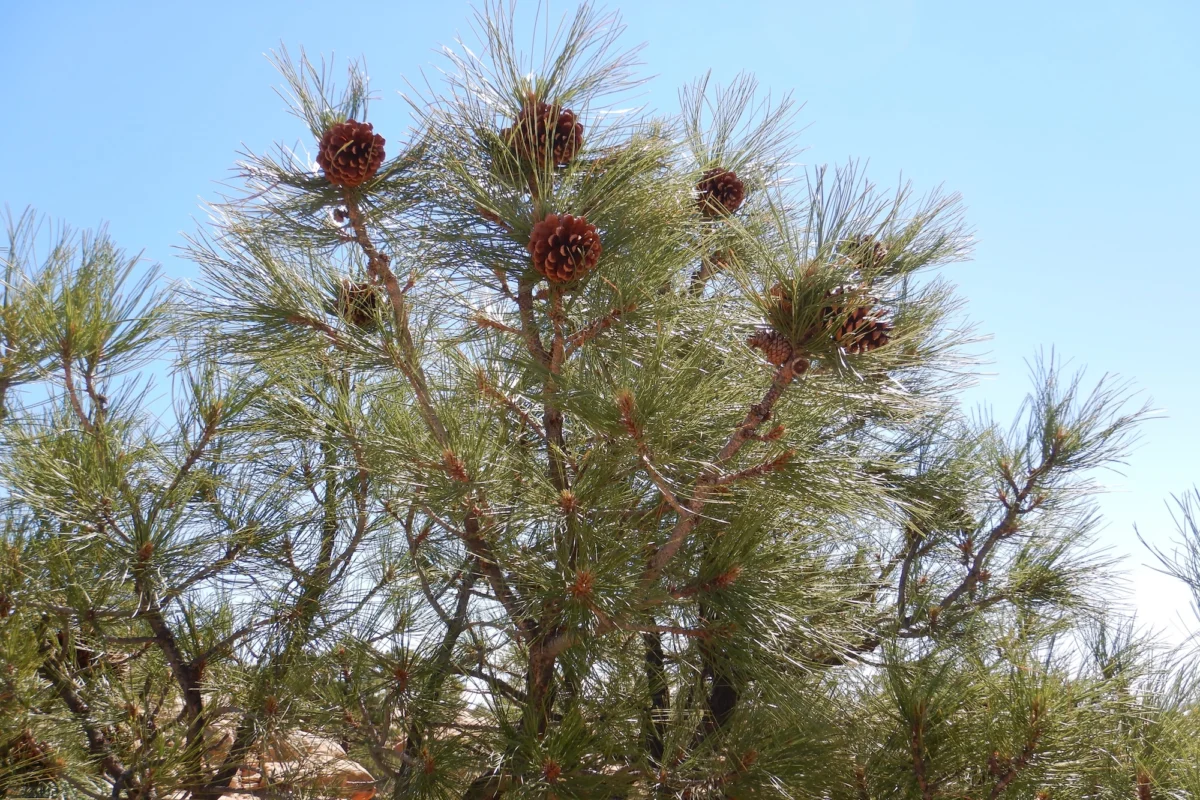
Toca’s team subjects the young ponderosa pines and Douglas firs to artificial drought and elevated temperatures while they are still in the nursery. This "tough love" approach triggers biological responses: the trees produce larger, deeper root systems to seek out moisture and reduce their needle count to minimize water loss through transpiration. By the time these seedlings reach a burn scar, they have already survived conditions similar to what they will face in the wild, significantly increasing their chances of reaching maturity.
Predictive Modeling and the Science of Placement
Even the hardiest seedling will perish if planted in an unsustainable location. This is where the University of New Mexico’s research, led by Professor Matt Hurteau, becomes critical. Hurteau has spent years studying the survival patterns of trees in the footprints of previous mega-fires, such as the 2011 Las Conchas Fire.
Using data from thousands of test plantings, Hurteau’s team has developed a predictive model that identifies high-probability survival zones within a landscape. The model accounts for topography, slope aspect, and solar radiation. For example, the research shows that in middle to lower elevations, seedlings planted on south- or west-facing slopes—which receive the most direct afternoon sun—fare the worst. Conversely, gullies or north-facing slopes that retain more moisture and offer shade provide a much higher chance of success.
The model currently operates with approximately 63 percent accuracy for ponderosa pines. By providing land managers with detailed maps of these "survivable niches," the state can ensure that limited resources and labor are directed toward areas where the forest has the best chance of taking hold.
Assisted Migration: Redefining the Future Forest
One of the more provocative elements of New Mexico’s strategy is the consideration of "assisted migration." As the climate shifts, the species that thrived in northern New Mexico for centuries may no longer be viable in the future. Professor Hurteau suggests that reforestation efforts must look further south for solutions.

The Chihuahuan pine, typically found in southern New Mexico and Arizona, is a prime candidate for northern migration. This species has evolved specific adaptations to frequent fire and prolonged drought that its northern cousins lack. By intentionally introducing these southern species into northern burn scars, foresters are essentially "pre-adapting" the landscape to the climate of 2050 or 2100. This long-term thinking is essential for creating ecosystems that can withstand the increasingly volatile weather patterns of the Southwest.
Economic and Community Implications
The necessity of this reforestation effort extends far beyond environmental aesthetics. The health of New Mexico’s forests is directly tied to its water security. When a forest burns at high intensity, the soil can become hydrophobic, meaning it repels water. During the monsoon season, rain that would normally be absorbed by the forest floor instead rushes down slopes, carrying ash, debris, and sediment into rivers and reservoirs.
This was tragically illustrated in the city of Las Vegas, New Mexico, following the 2022 fire. The city’s primary water source was contaminated with post-fire debris, forcing a total shutdown of the water supply. The resulting economic shock hit the local tourism, hospitality, and agricultural sectors hard. Furthermore, the increased risk of flash flooding in burn scars continues to threaten infrastructure and lives years after the flames have been extinguished.
Steve Bassett, director of conservation programs for The Nature Conservancy in New Mexico, emphasizes that reforestation is a race against time. As the backlog of burned acreage grows—currently estimated at 7 million acres when including older scars—the window for effective intervention narrows. Without active reforestation, many of these lands may undergo a "type conversion," permanently shifting from lush forests to arid shrublands or grasslands, which store less carbon and offer fewer ecosystem services.
A National Model for Forest Management
The New Mexico Reforestation Center, which broke ground in April 2026, is scheduled to scale up production over the coming years. By the fall of 2028, it aims to produce its first million seedlings, eventually reaching a steady state of 5 million per year. While this is a fraction of what is needed to restore millions of acres, the "pipeline" model provides a scalable framework that other Western states are watching closely.

The integration of university research with state-level implementation ensures that the project remains at the cutting edge of silviculture. As wildfire seasons become longer and more severe across the American West, the lessons learned in the charred mountains of Mora County may well define the future of forest conservation in the 21st century. The goal is no longer just to plant trees, but to engineer a resilient, self-sustaining ecosystem capable of enduring a hotter, drier world.
