

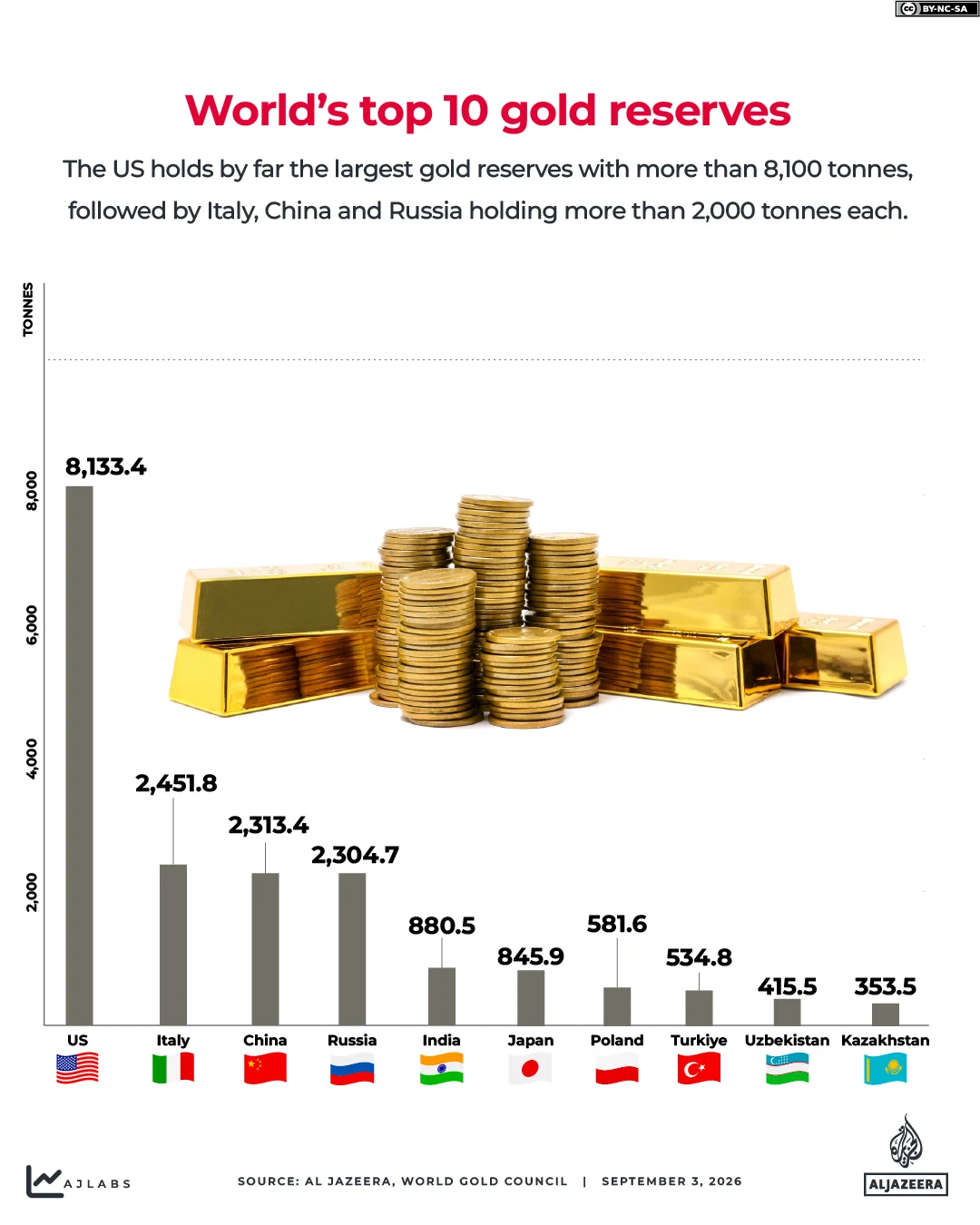
The Netherlands has undertaken a significant relocation of a substantial portion of its gold reserves, moving billions of dollars worth of bullion from the United States and Canada to the United Kingdom and its domestic facility in Zeist. This strategic shift, announced by the Dutch Central Bank (DNB) on Wednesday, comes amidst a backdrop of escalating global geopolitical tensions and a stated aim to bolster the nation’s preparedness for severe crises. The move underscores a growing trend among central banks to reassess the security and accessibility of their sovereign assets in an increasingly fragmented international landscape.
The Strategic Relocation and DNB’s Rationale
The DNB explicitly stated its intention to be "better prepared for severe crises," though it refrained from specifying the exact nature of these potential disruptions. DNB President Olaf Sleijpen emphasized that the relocation enhances the "tradability" of the reserves. "With this relocation, we have improved the tradability of our gold reserves. We expect that we will never need to use them, but we do need to strengthen our resilience and preparedness," Sleijpen stated, highlighting a proactive approach to risk management. The decision to increase holdings in London, a major global gold trading hub, is seen as crucial for facilitating quicker access and deployment of the gold should extreme systemic risks materialize. "Keeping a larger share of the gold reserves in London strengthens the function of gold as an anchor of trust. Gold is seen as the ultimate reserve asset because it is ideally suited to hedge extreme systemic risks," the bank elaborated, contrasting this with reserves held in New York and Ottawa which "cannot be utilised as quickly and directly in such a situation."
Chronology and Scale of the Movement
The Netherlands holds a total of 612.4 tonnes of gold, valued at approximately 72.2 billion euros ($83.8 billion). Prior to this relocation, the distribution of these reserves was: 30.8 percent at DNB’s Cash Centre in Zeist, 18.1 percent in London, 31.3 percent in New York, and 19.7 percent in Ottawa. The recent operation has significantly altered this spread.
The relocation, which commenced in late 2025 and concluded earlier this year, involved approximately 10.11 billion euros ($11.73 billion) worth of gold based on its value at the end of 2025, which rose to an estimated 10.34 billion euros ($12 billion) by Wednesday. The DNB employed a dual strategy for this complex operation:
- Sale and Purchase: Approximately 59 tonnes of gold, valued at about $8.3 billion, were sold from reserves held in New York. Simultaneously, an equivalent amount of gold was purchased in London. This method allows for a swift transfer of ownership without the logistical complexities and security risks of physical transport over long distances.
- Physical Transfer: More than 27 tonnes of gold, approximately $3.84 billion worth, were physically moved from vaults in the United States and Canada to the DNB’s Cash Centre in Zeist. Concurrently, a similar quantity of gold that meets international market standards was transferred from Zeist to London. This strategic exchange prevented the need for costly and time-consuming remelting of gold bars to meet specific market standards.
In total, roughly $10.7 billion in gold was shifted from New York, and a little over $1 billion from Ottawa, based on December 2025 valuations. Following these adjustments, the new geographical distribution of Dutch gold reserves is: Zeist holding 30.8 percent, London 32.1 percent, New York 18.5 percent, and Ottawa 18.5 percent. This creates a more balanced spread, as highlighted by the DNB. The dual approach to relocation also served as a risk diversification strategy for the operation itself, providing the bank with experience in both methods for potential future crisis scenarios.
Unspecified Crises: A Tapestry of Geopolitical Tensions
While the DNB did not explicitly name the crises it is preparing for, analysts and observers point to a confluence of international events that have undeniably raised the risk profile of holding significant assets in certain jurisdictions. The timing of the move aligns with a period of profound instability in global politics and economics.

1. US Trade Wars and Transatlantic Strain:
The administration has been embroiled in multiple trade disputes since 2025, particularly impacting relations with traditional allies. The US initiated a trade tariff war with Canada, imposing duties on steel, aluminum, and automobiles. In August, Washington escalated these tensions by levying an additional 50 percent tariff on $20 billion worth of Canadian goods after trade talks collapsed. Ottawa responded with retaliatory tariffs on over 700 US products, also valued at $20 billion, with rates ranging from 15 to 50 percent, set to take effect on September 8.
Beyond North America, diplomatic relations between European countries and the US have become notably strained. Last year, the administration’s renewed ambitions to acquire Greenland, coupled with threats of more trade tariffs against European nations that expressed opposition, further exacerbated tensions. In April, the rhetoric intensified when the administration admonished European allies to "go get your own oil" from the Gulf amidst disruptions caused by the US war on Iran, which had led to the closure of the Strait of Hormuz and global energy market chaos. These comments followed reports of European nations refusing to facilitate US military operations, such as France barring Israeli planes carrying weapons, Italy denying landing permission for US bombers in Sicily, and Spain refusing the use of its bases and airspace. Even the UK, despite allowing US base usage, saw its then-Prime Minister Keir Starmer distance the nation from direct involvement in the Iran conflict, prompting a sharp retort from the administration that the "relationship is obviously not what it was."
2. US Foreign Policy and Military Engagements:
The US-Israel war on Iran, which began in February this year, remains ongoing with no clear resolution in sight. This conflict has not only fueled energy market volatility but also created deep divisions between the US and its European partners who have largely resisted joining the military campaign. Simultaneously, Washington has ramped up military operations in other regions. In January, US forces reportedly abducted Venezuela’s then-President Nicolas Maduro, transporting him to the US to face charges, a move that raised significant concerns about international law and sovereignty. Following this, the US has struck deals to gain control over a substantial portion of Venezuela’s oil industry. Operations around Cuba have also intensified, further contributing to regional instability. Such assertive foreign policy actions, particularly those perceived as unilateral or extra-legal, can make nations wary of having critical assets within the reach of the initiating power.
3. The Precedent of Russian Asset Freeze:
Perhaps one of the most significant factors influencing central bank risk assessments is the unprecedented freezing of Russian central bank sovereign assets by the European Union and G7 nations following Russia’s full-scale invasion of Ukraine in February 2022. Approximately $300 billion, representing about half of Russia’s total $640 billion wealth, was frozen. This move was groundbreaking, as it targeted a G20 super economy and broke with a long-held tradition of treating the reserves of major powers as sacrosanct under standard international financial norms.
The situation further evolved in 2024 when the EU and G7 nations agreed on a mechanism to utilize profits generated by these frozen assets to back a $50 billion loan package for Ukraine. In December 2025, the bloc moved to make the freezing of Russian sovereign assets indefinite, removing the need for six-month extensions. This series of actions has sent a powerful signal globally: sovereign assets held abroad are no longer immune to political intervention, especially in times of severe geopolitical conflict. For central banks, this establishes a new, high-risk precedent for holding reserves with countries whose governments or leaders might be considered unpredictable or willing to employ such measures. The DNB’s emphasis on "systemic risks" and the need for assets to be "easily tradeable" and "directly utilised" strongly suggests an awareness of this new reality.
A Global Trend: Other Nations Repatriating Gold
The Netherlands is not an isolated case. A number of other countries have undertaken similar repatriations of gold reserves from major holding centers, particularly the United States, in recent years, reinforcing the idea of a broader shift in central bank strategy.
- France: In January, the Banque de France moved 129 tonnes of gold, valued at approximately $17 billion, from the Federal Reserve Bank of New York back to France. The stated reasons included a technical upgrade of its storage facilities and seeking a better return on its assets. Like the DNB, France utilized a sell-and-buy approach to facilitate this transfer.
- Germany: Between 2013 and 2017, the German Bundesbank executed a massive repatriation, moving over 600 tonnes of gold (worth about $77.5 billion at the time) from New York to Frankfurt. The Bundesbank explicitly cited the need to secure its national reserves and enhance public confidence as key drivers for this decision. This multi-year operation was one of the largest gold repatriations in recent history.
These moves by major European economies highlight a collective re-evaluation of the risks associated with storing significant national assets in foreign vaults, especially those located in countries perceived to be at the center of volatile geopolitical developments.
Implications for International Finance and Trust
The Netherlands’ decision carries several significant implications:
- Erosion of Trust in Custodial Nations: While not explicitly stated, the move signals a subtle erosion of trust in the US and Canada as unassailable custodians of sovereign assets. When a nation like the Netherlands, a long-standing ally, opts to reduce its holdings in these countries, it suggests underlying concerns about political stability, legal predictability, or potential for asset seizure/restriction.
- Strengthening London’s Role: By significantly increasing its gold holdings in London, the DNB implicitly endorses the UK capital as a relatively safer and more liquid hub for gold trading and storage. This could enhance London’s status in the global gold market.
- Reinforcing Diversification Strategy: The move reinforces the principle of geographical diversification for central bank reserves. It’s a pragmatic response to the increasing interconnectedness of global finance, which also means that crises in one region can have far-reaching impacts.
- Potential for De-dollarization Debates: While the gold move is distinct from currency reserve strategies, it feeds into broader discussions about de-dollarization and the future of the US dollar as the world’s primary reserve currency. If nations are concerned about the security of physical assets held in the US, similar concerns might extend to financial assets denominated in dollars.
- New Norms for Sovereign Assets: The precedent set by the Russian asset freeze, combined with these repatriations, suggests a fundamental shift in international financial norms. Central banks are likely to increasingly prioritize immediate accessibility and political neutrality of their reserves, potentially leading to more domestic storage or diversification across a wider array of politically stable jurisdictions.
In conclusion, the Netherlands’ strategic relocation of billions in gold reserves is more than just a logistical exercise. It is a potent symbol of the profound anxieties gripping global financial markets and central banks in an era of heightened geopolitical instability. As nations grapple with trade wars, military conflicts, and the weaponization of financial systems, the pursuit of greater autonomy, resilience, and direct control over sovereign assets is becoming an increasingly urgent imperative. The DNB’s move underscores a collective re-evaluation of trust, risk, and preparedness that is reshaping the very architecture of international finance.
