

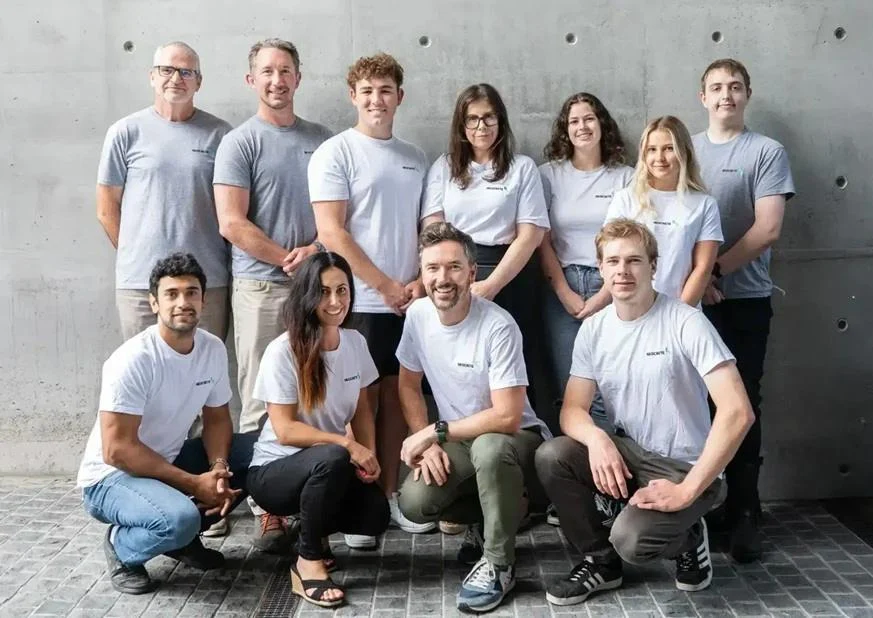
Neocrete, a New Zealand-based developer of concrete decarbonization technology, has successfully closed a $3.5 million funding round designed to catalyze its expansion into the United States and European markets while bolstering its commercial footprint across Southeast Asia. The investment round was led by returning investor Wavemaker Ventures, with significant participation from Icehouse Ventures and a new strategic partner, Catalytic Capital for Climate and Health (C3H), a catalytic investment vehicle managed by Temasek Trust. The round also saw continued support from prominent global angel investors, including Doug Parker and Steve Melhuish, both of whom increased their previous stakes in the company.
The infusion of capital arrives at a critical juncture for the global construction industry, which is under mounting pressure to reduce its environmental impact. Cement production, the primary binding agent in concrete, is currently responsible for approximately 8% of total global carbon dioxide emissions. The chemical process of producing clinker—the main component of cement—is exceptionally carbon-intensive, with every 1,000 kilograms of material manufactured resulting in more than 900 kilograms of CO2 emissions. Neocrete’s proprietary technology aims to disrupt this paradigm by significantly reducing the amount of cement required in concrete mixtures without compromising structural integrity or economic viability.
The Technological Core: Transforming Waste into High-Performance Assets
Founded in 2018 by Zarina Alexander and Matt Kennedy-Good, Neocrete has spent the last six years refining a suite of additives that enable the use of abundant, low-carbon, and historically "low-performance" materials. These materials, such as low-quality fly ash—a byproduct of coal combustion—and natural volcanic ash, have traditionally been viewed as unsuitable for high-strength construction due to their inconsistent chemical properties and poor reactivity.
Neocrete’s specialized additives function at a molecular level to activate these materials, allowing them to replace between 30% and 50% of traditional Portland cement in concrete mixes. By utilizing what the industry terms Supplementary Cementitious Materials (SCMs), Neocrete addresses two of the most significant barriers to sustainable construction: cost and performance. According to company data, the integration of Neocrete additives can enhance the overall performance of concrete by 15% to 40% while simultaneously lowering the embodied carbon and the total material cost. This performance boost ensures that the resulting concrete maintains the necessary strength, durability, and workability required for large-scale infrastructure and commercial building projects.
Proving the Model: The Brunei Pilot and Muara Port Redevelopment
The commercial viability of Neocrete’s technology has been rigorously tested through a strategic partnership with Readymix Brunei, the largest ready-mix concrete supplier in Brunei. In 2025, Readymix Brunei began piloting the additives to utilize locally available waste ash that had previously been relegated to landfills due to its substandard performance.
The results of this pilot have provided a robust proof of concept for Neocrete’s global ambitions. To date, Readymix Brunei has utilized the technology to replace 30% of the cement in various commercial projects, resulting in the pouring of 3,700 cubic meters of concrete. This shift has successfully reduced embodied carbon by 25%, avoiding approximately 215 tonnes of CO2 emissions. Furthermore, the transition proved economically beneficial, saving the supplier nearly $20,000 in material costs.
The partnership is now scaling to its most ambitious phase yet: the redevelopment of Muara Port, Brunei’s primary international shipping gateway. This project represents Neocrete’s largest deployment to date. Estimates suggest that approximately 65,000 cubic meters of Neocrete-enhanced concrete will be utilized in the port’s reconstruction. The environmental and financial implications are substantial, with projected savings of $300,000 and the avoidance of 5,200 tons of CO2 emissions.
Addressing the "Green Premium" Challenge
One of the most persistent hurdles in the adoption of sustainable technologies is the "green premium"—the additional cost often associated with choosing an eco-friendly alternative over a traditional one. In the low-margin, high-volume world of construction, these premiums are frequently a deal-breaker for developers and contractors.
Zarina Alexander, CEO and co-founder of Neocrete, emphasizes that the company’s strategy is built around eliminating this financial barrier. "Globally, we’ve found customers are willing to pay exactly net zero to achieve net zero," Alexander stated. "Green premiums do not work in the concrete industry. In Brunei, by economically boosting the performance of abundant, low-quality materials, we’ve now proven that it’s possible for concrete makers to cut carbon and cost, with no trade-offs."
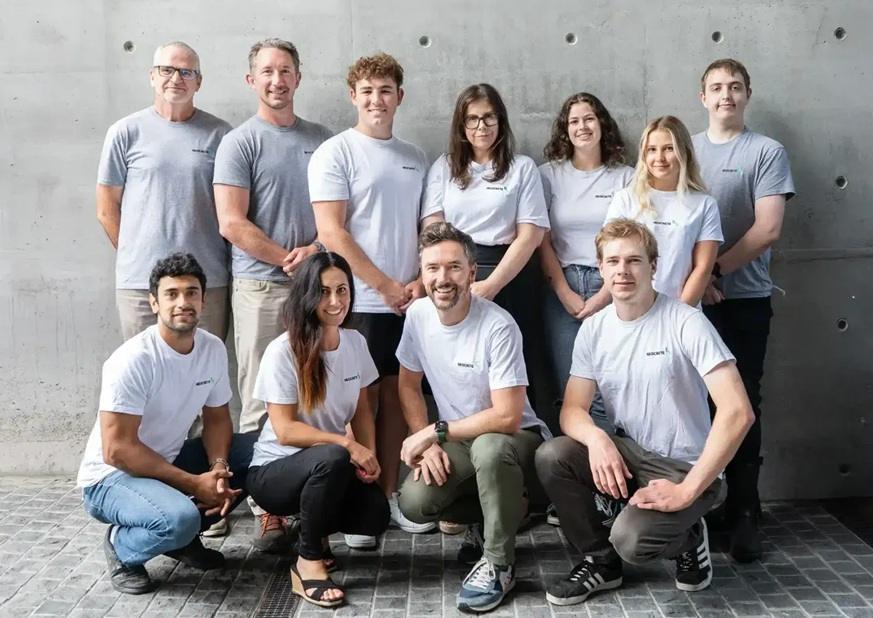
By focusing on a "no trade-off" value proposition, Neocrete positions itself not just as a climate solution, but as a manufacturing optimization tool. This approach is particularly attractive in emerging markets in Southeast Asia, where infrastructure demand is surging but budgets remain tight.
Strategic Investment and Global Roadmap
The involvement of Temasek Trust’s C3H highlights the strategic importance of Neocrete’s technology in the broader context of global decarbonization. Ryan Tan, Head of C3H, noted that the built environment is one of the most difficult sectors to abate. "Decarbonizing concrete is an urgent and difficult challenge in a hard-to-abate sector," Tan said. "Neocrete stands out because of its reduced carbon emission footprint, lower cost, and is a higher performing alternative to conventional cement, which helps to address a key barrier to commercial deployment."
With the $3.5 million in new funding, Neocrete is set to expand its operations into the United States and Europe. These markets are currently undergoing a regulatory transformation that favors Neocrete’s business model. In the U.S., the Inflation Reduction Act (IRA) and various state-level "Buy Clean" initiatives are creating significant incentives for low-carbon building materials. Similarly, the European Union’s Carbon Border Adjustment Mechanism (CBAM) and the tightening of the Emissions Trading System (ETS) are making traditional, high-carbon cement increasingly expensive.
The company plans to use the capital to:
- Establish Regional Hubs: Setting up technical and sales support teams in North America and the EU to navigate local building codes and certification requirements.
- R&D Scaling: Continuing to test and certify the additive with a wider variety of local SCMs found in different geographic regions, such as different types of calcined clays and industrial slags.
- Supply Chain Optimization: Scaling the production of the proprietary additive to meet the demand of large-scale international distributors.
Industry Context: The Global Race to Net-Zero Concrete
Neocrete’s expansion occurs within a broader industry movement toward sustainability. The Global Cement and Concrete Association (GCCA) has committed to delivering society with carbon-neutral concrete by 2050. Achieving this goal requires a multi-pronged approach, including carbon capture and storage (CCS), the use of alternative fuels in kilns, and—most crucially in the short term—the reduction of the "clinker factor" through SCMs.
While several companies are exploring alternative binders and carbon-curing technologies, Neocrete’s focus on enhancing "poor-quality" waste materials provides a unique advantage. It addresses the looming shortage of high-quality SCMs; as coal-fired power plants are decommissioned globally, the supply of high-grade fly ash is dwindling. By making low-grade ash and natural volcanic pozzolans viable, Neocrete secures a supply chain for the future of sustainable construction.
Chronology of Development
- 2018: Neocrete is founded in New Zealand by Zarina Alexander and Matt Kennedy-Good with a focus on nanotechnology applications in construction.
- 2019-2022: Intensive R&D and local pilot projects in New Zealand, establishing the efficacy of the additive with volcanic ash.
- 2023: Initial seed funding rounds and expansion of the laboratory facilities to accommodate international material testing.
- 2024: Strategic partnership established with Readymix Brunei, marking the first major international commercial deployment.
- 2025: Successful completion of the Brunei pilot and commencement of the Muara Port project.
- 2026 (Present): Closure of the $3.5 million funding round to facilitate entry into the U.S. and European markets.
Analysis of Implications
The success of Neocrete’s funding round and its subsequent expansion signals a shift in investor sentiment toward "pragmatic" climate tech. Investors are increasingly looking for solutions that do not require a total overhaul of existing industrial infrastructure. Because Neocrete’s additive can be integrated into existing ready-mix plants without major capital expenditure, the barrier to entry for concrete producers is remarkably low.
Furthermore, the focus on Southeast Asia as a primary proving ground is a calculated move. The region is expected to see some of the world’s highest rates of urbanization over the next two decades. If Neocrete can standardize the use of local waste materials in these high-growth markets, the cumulative carbon avoidance could be measured in the millions of tons.
As Neocrete moves into the U.S. and Europe, the challenge will shift from proving the chemistry to navigating the complex landscape of international construction standards (such as ASTM and EN standards). However, with the backing of sophisticated investors like Wavemaker and Temasek Trust’s catalytic vehicle, the company is well-positioned to bridge the gap between laboratory innovation and global industrial adoption. The Muara Port project will serve as the ultimate lighthouse project, demonstrating to the global engineering community that low-carbon concrete is no longer a niche experimental material, but a commercially superior alternative for the world’s most critical infrastructure.
