

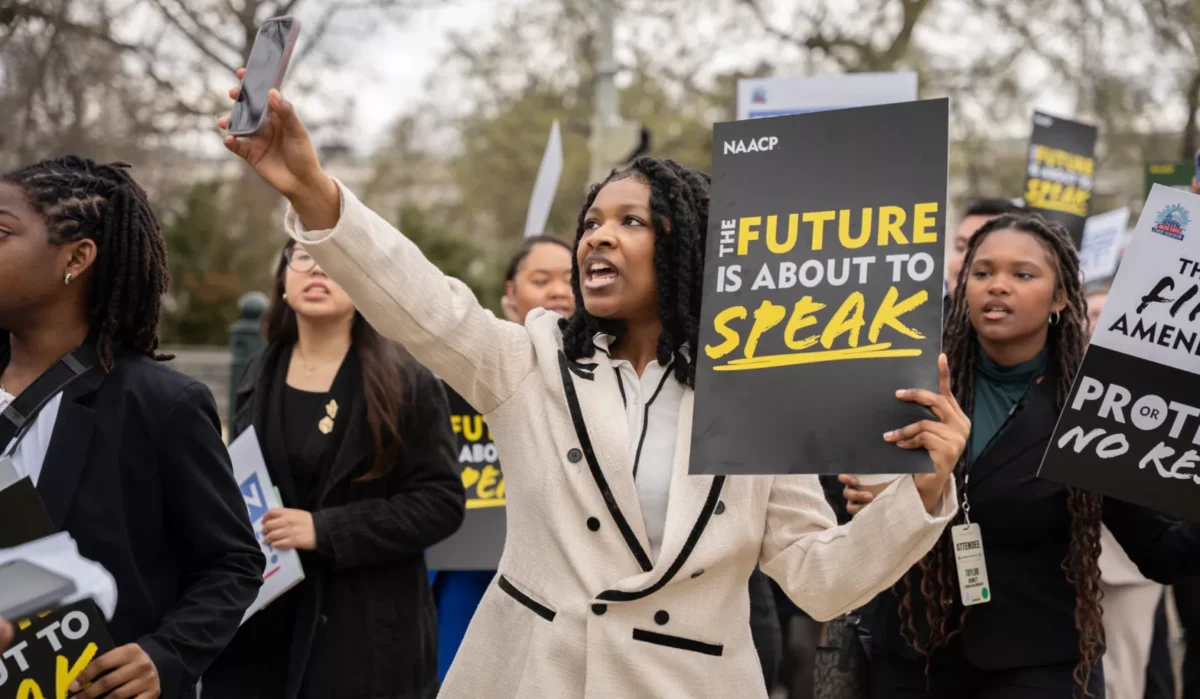
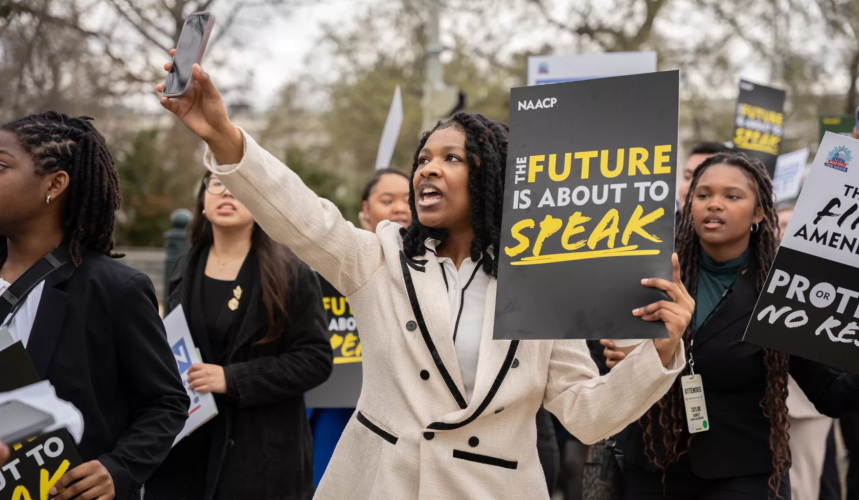
The National Association for the Advancement of Colored People (NAACP) has officially inaugurated a high-stakes advocacy initiative titled Out of Bounds, aimed at mobilizing Black student-athletes, their families, and sports fans to challenge a wave of restrictive voting legislation across the Southern United States. By highlighting the stark contrast between the celebration of Black athletic talent on the field and the systematic erosion of Black voting power in state legislatures, the campaign seeks to use the multi-billion-dollar college sports industry as a lever for civil rights reform. The movement specifically targets eight states within the Southeastern Conference (SEC) footprint, arguing that the financial prosperity of these institutions is built upon the labor of a demographic whose constitutional rights are currently under legislative assault.
The impetus for the campaign stems from a growing frustration with the judicial and legislative rollbacks of the Voting Rights Act of 1965. For decades, this landmark legislation served as the primary defense against racially discriminatory voting practices. However, recent rulings by the U.S. Supreme Court have significantly narrowed the scope of the law, leading to what civil rights advocates describe as a "sprint to erase Black political power" through aggressive redistricting and gerrymandering. The NAACP’s Out of Bounds campaign represents a strategic pivot, moving beyond traditional litigation to embrace economic and cultural pressure as a means of protecting the franchise.
The Legal Landscape and the Catalyst for Action
The current crisis in voting rights reached a tipping point following the Supreme Court’s decision in Louisiana v. Callais, handed down on April 29. The ruling, delivered by the court’s conservative majority, provided a legal pathway for Republican lawmakers in Louisiana to implement Congressional maps that critics argue dilute the influence of Black voters. This decision followed a similar pattern of racially motivated redistricting in Texas, signaling to other state legislatures that the federal judiciary would likely not interfere with efforts to reorganize voting districts to the disadvantage of minority communities.
In the wake of the Callais decision, several states moved with unprecedented speed to finalize new maps. According to the NAACP, these legislative actions occurred within days—and in some instances, hours—of the ruling. The organization contends that these maps are designed to dismantle minority-majority districts, thereby ensuring that Black communities are unable to elect representatives of their choice. The states identified as primary offenders in this "redistricting war" include Tennessee, Louisiana, Alabama, Florida, Mississippi, South Carolina, Texas, and Georgia. These eight states form the geographic and economic heart of the Southeastern Conference (SEC), the most profitable entity in collegiate athletics.
The Economic Power of the SEC and the Role of Black Athletes
To understand the leverage the NAACP seeks to exert, one must look at the sheer scale of the collegiate sports economy. The SEC recently reported record-setting revenue of $1.1 billion for the last fiscal year. A significant portion of this wealth is generated by football and basketball programs at flagship public universities in the eight targeted states. The NAACP estimates that the sports programs in these specific states alone generate more than $100 million in annual revenue per institution through broadcasting rights, ticket sales, and corporate sponsorships.

A disproportionate amount of the "on-field" value in these programs is provided by Black athletes. In many high-profile SEC football and basketball programs, Black players constitute the majority of the roster and are the primary drivers of the competitive success that fuels donor contributions and television ratings. The NAACP’s argument is one of fundamental fairness: it is hypocritical for a state to profit from the physical prowess of Black youth while simultaneously enacting policies that disenfranchise those same individuals and their families.
"The state that is working to erase your grandmother’s congressional district is the same state whose governor will stand on the field and celebrate your touchdown or game-winning shot," said Tylik McMillan, the NAACP’s national director for the youth and college division. This sentiment underscores the campaign’s core message—that Black athletes possess a "cultural cachet" and economic value that can be used to demand political accountability.
Strategic Objectives of the Out of Bounds Campaign
The Out of Bounds campaign is structured around three primary calls to action, each designed to disrupt the status quo of the collegiate athletic system:
- Recruitment Diversion: The NAACP is urging high school recruits, particularly those ranked as elite prospects, to reconsider committing to public universities in the eight targeted states. Instead, the organization encourages these athletes to bring their talents to Historically Black Colleges and Universities (HBCUs). By shifting the talent pool, the NAACP aims to boost the profile and revenue of HBCUs while signaling to major state universities that their political environment has consequences for their athletic recruitment.
- Athlete Advocacy and Transfers: For athletes currently enrolled in SEC schools, the campaign suggests two paths. The first is to use their platform to speak out against restrictive voting laws, following the tradition of "athlete-activists" who use media availability and social media to raise awareness. The second, more radical option is to utilize the NCAA’s modern transfer portal to move to institutions in states that have maintained or expanded voting protections.
- Consumer and Donor Boycotts: Perhaps the most direct economic threat is the call for a general public boycott. The NAACP is asking fans, alumni, and major donors to withhold financial support from the targeted athletic departments. This includes boycotting officially licensed merchandise, apparel, and game tickets. Supporters are encouraged to redirect those funds toward HBCU athletic programs or civil rights organizations.
Historical Context: From Selma to Kaepernick
The NAACP’s move to politicize sports is not without precedent, though it represents an evolution of tactics. The organization draws a direct line between the current struggle for the ballot and the events of 1965. In March of that year, the "Bloody Sunday" attack on peaceful protesters in Selma, Alabama, became a catalyst for the passage of the original Voting Rights Act. The media coverage of police violence against Black citizens seeking the right to vote shocked the national conscience and forced federal intervention.
In the modern era, the legacy of sports as a site of protest was revitalized by NFL quarterback Colin Kaepernick in 2016. Kaepernick’s decision to kneel during the national anthem to protest police brutality and racial injustice sparked a national debate on the role of athletes in politics. While Kaepernick was effectively exiled from the league, his actions demonstrated the power of the individual athlete to dominate the news cycle and force corporate and political entities to address social issues.
The Out of Bounds campaign seeks to harness this same energy but applies it to the collegiate level, where the "student-athlete" designation often masks the intense commercial exploitation of players. By focusing on voting rights—the bedrock of democratic participation—the NAACP is attempting to make the political cost of disenfranchisement visible to the power brokers of college sports.
Challenges and Reactions
The campaign faces significant headwinds. Critics argue that asking young athletes to sacrifice their professional prospects by avoiding top-tier SEC programs is an unfair burden. SEC schools often provide the best facilities, coaching, and exposure to professional scouts, and a move to an HBCU or a school in a different region could potentially impact a player’s draft stock.
Furthermore, recent political trends show a complex landscape. In the 2024 election, data suggested a shift in some minority voting patterns, with a segment of Black and Latino voters moving toward the Republican platform. This shift complicates the narrative of a monolithic voting bloc and may impact the degree to which current students feel compelled to join a boycott. Howard Bryant, a journalist for The Guardian, noted that while Black athletes have immense power, they have often remained silent in the years following the 2020 George Floyd protests, partly due to the professional risks involved.
However, proponents of the campaign point to recent successes in grassroots mobilization. In South Carolina, for instance, a record-breaking turnout for early voting in primary elections was attributed to widespread anger over redistricting plans that threatened the seat of veteran Congressman James Clyburn. "People were upset that this was taking place. And people tend to vote when they get angry," Rep. Clyburn told reporters, suggesting that the "anger" identified by the NAACP is a potent tool for mobilization.
Broader Implications for American Democracy
The Out of Bounds campaign is more than a dispute over college football; it is a reflection of the deep polarization of the American political system. As state legislatures become more adept at using data-driven gerrymandering to insulate themselves from electoral competition, civil rights groups are forced to look for non-traditional avenues of influence.
If the campaign successfully diverts even a small percentage of elite talent or donor revenue, it could force university presidents and athletic directors—who often wield significant influence with state legislators—to lobby against restrictive voting bills in the interest of protecting their "brands." In many Southern states, the success of the university football team is a matter of intense state pride and economic importance; a threat to that success is one of the few things capable of moving the needle in a gerrymandered legislature.
Ultimately, the NAACP’s initiative highlights the fact that voter suppression is not a localized issue. Because redistricting affects the composition of the U.S. House of Representatives and, by extension, the federal legislative agenda and judicial appointments, the laws passed in states like Louisiana and Georgia have national consequences. By taking the fight to the "sacred ground" of the college football stadium, the NAACP is ensuring that the struggle for voting rights remains at the forefront of the American cultural and economic conversation. The success of the movement will depend on whether the next generation of Black athletes views their power as extending beyond the scoreboard and into the ballot box.
