

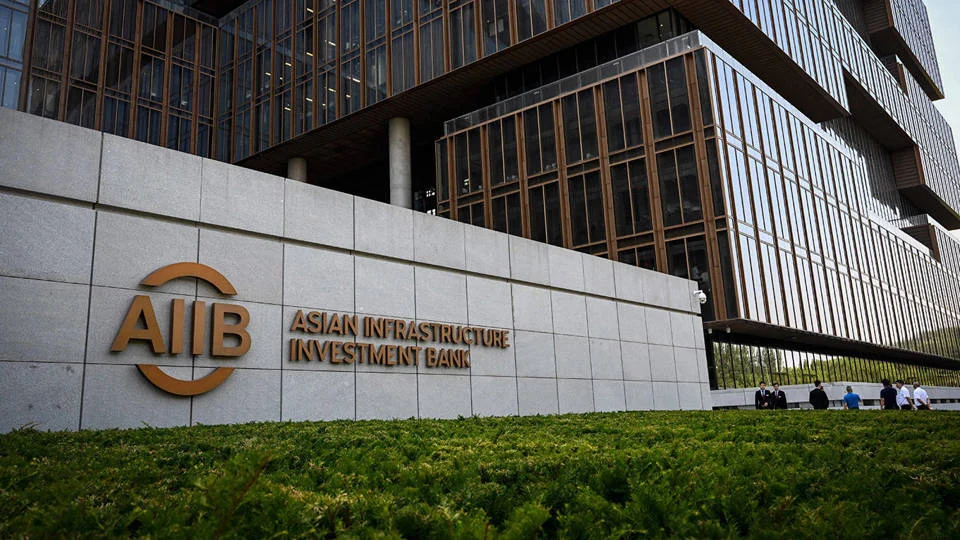
The year is 2026, and while the grand architecture of multilateralism appears to be under unprecedented strain, a crucial yet often overlooked sector of the global financial ecosystem is not merely weathering the storm but demonstrating remarkable resilience and growth. Multilateral Development Banks (MDBs), institutions established to foster economic development and cooperation among nations, are emerging as a surprising source of stability, their ability to access capital at rates remarkably close to those of the U.S. Treasury positioning them to underpin the global financial system with a new class of de facto risk-free assets.
The Evolving Landscape of Global Finance
The contemporary international order is characterized by a complex interplay of rising geopolitical tensions, trade disputes, and the persistent challenge of climate change. These factors have created an environment of heightened uncertainty, leading many to question the future of global cooperation and the institutions designed to facilitate it. The very concept of multilateralism, once a cornerstone of post-World War II international relations, is being re-examined, with some nations advocating for more inward-looking policies and bilateral agreements.
However, within this seemingly chaotic backdrop, MDBs like the World Bank, the International Monetary Fund (IMF), regional development banks such as the Asian Development Bank (ADB) and the African Development Bank (AfDB), and other specialized agencies, are charting a different course. Their continued strength is not accidental; it is a testament to their fundamental mandate, their robust governance structures, and their unique financial instruments.
The Financial Engine of Development: MDBs’ Borrowing Advantage
The core of the MDBs’ current success lies in their exceptional borrowing capacity. These institutions are typically capitalized by their member governments, who often provide guarantees on their debt. This backing, coupled with their established track record of responsible financial management and their role in promoting global economic stability, allows them to issue bonds in international markets at highly competitive interest rates. In many cases, these rates are only marginally higher than those of sovereign debt issued by the most creditworthy nations, particularly the United States Treasury.
This ability to borrow at near-risk-free rates is critical. It enables MDBs to on-lend funds to developing countries and emerging economies at favorable terms, supporting essential infrastructure projects, poverty reduction programs, and initiatives aimed at addressing climate change and other global challenges. The spread between their borrowing costs and their lending rates, while modest, is sufficient to cover operational expenses and build reserves, ensuring their long-term sustainability.
A De Facto Risk-Free Asset Class
The implications of MDBs’ borrowing advantage extend beyond their direct lending activities. The bonds issued by MDBs are increasingly viewed by institutional investors as a highly secure and stable investment. For pension funds, insurance companies, and sovereign wealth funds seeking to diversify their portfolios and mitigate risk, MDB bonds offer an attractive option. Their implicit backing by a coalition of developed and developing nations, combined with their focus on productive investments, lends them a perceived safety that rivals even the most secure government bonds.
This perception is further reinforced by the strict regulatory and oversight mechanisms that govern MDB operations. Their financial reporting is transparent, and their lending practices are subject to rigorous evaluation. This has created a de facto risk-free asset class, providing a crucial anchor in volatile capital markets. In an era where traditional safe havens may be subject to national policy shifts or economic shocks, MDB bonds offer a more globally diversified and institutionally secured alternative.
Background and Historical Context
The genesis of MDBs can be traced back to the Bretton Woods Conference of 1944, which established the International Bank for Reconstruction and Development (IBRD), later to become part of the World Bank Group. The primary objective was to finance the reconstruction of war-torn Europe and Japan, and subsequently, to promote economic development in developing nations. Over the decades, the MDB landscape has expanded significantly, with the creation of numerous specialized and regional institutions, each with a distinct geographic or thematic focus.
Throughout periods of economic boom and bust, political upheaval, and financial crises, MDBs have consistently played a vital role. They have provided essential financing during times of national distress, supported economic reforms, and facilitated cross-border cooperation on issues of shared concern. Their resilience in the face of current geopolitical fragmentation underscores their enduring value as instruments of global economic governance.
Timeline of MDB Growth and Adaptation
- 1944: Bretton Woods Conference establishes the International Bank for Reconstruction and Development (IBRD).
- 1945: IBRD begins operations, focusing initially on post-war reconstruction.
- 1956: The International Finance Corporation (IFC) is established to promote private sector development in emerging markets.
- 1960: The International Development Association (IDA) is created to provide concessional financing to the poorest countries.
- 1960s-1970s: Proliferation of regional development banks, including the Asian Development Bank (ADB) and the African Development Bank (AfDB), to address specific regional development needs.
- 1980s-1990s: MDBs play a significant role in supporting structural adjustment programs and economic reforms in developing countries, alongside responses to the debt crisis.
- 2000s: Increased focus on poverty reduction, good governance, and environmental sustainability. MDBs become key players in addressing the impacts of globalization.
- 2008-2009: MDBs respond to the global financial crisis by increasing lending and supporting economic stimulus packages in member countries.
- 2010s-Present: Heightened focus on climate change, sustainable development goals (SDGs), and addressing global health crises. MDBs adapt their lending instruments and strategies to meet these evolving challenges, while navigating increasing geopolitical fragmentation and a resurgence of nationalism.
Supporting Data and Financial Performance
The financial strength of MDBs is often reflected in their robust balance sheets and consistent credit ratings. For instance, the World Bank Group, a leading MDB, consistently maintains AAA ratings from major credit rating agencies, a testament to its strong financial standing and the implicit backing of its member states. In recent years, MDBs have reported significant increases in their lending volumes.
For example, the World Bank Group’s total commitments in fiscal year 2025 are projected to exceed $100 billion, a substantial increase compared to previous years, reflecting both growing demand for development finance and the institution’s enhanced capacity to deliver it. Similarly, regional development banks have seen their portfolios expand. The ADB, for instance, reported record lending levels in 2024, supporting critical projects in infrastructure, health, and education across Asia.
These figures are not merely abstract numbers; they represent tangible investments in schools, hospitals, roads, renewable energy projects, and critical public health initiatives in countries that need them most. The ability of MDBs to mobilize such vast sums, often from private capital markets through their bond issuances, highlights their crucial role as financial intermediaries and development catalysts.
Official Responses and Declarations
Leaders within the MDB community have consistently articulated the importance of their role, particularly in times of global uncertainty. At recent annual meetings, presidents of major MDBs have emphasized their commitment to providing stable financing, supporting the transition to green economies, and fostering inclusive growth.
"In a world facing complex and interconnected challenges, the role of multilateral development banks is more critical than ever," stated the President of the World Bank in a recent press conference. "We are committed to leveraging our financial strength and expertise to help our member countries build resilience, accelerate sustainable development, and create a more equitable future for all."
Similarly, leaders of regional development banks have underscored their unique position to address localized development needs while contributing to global stability. They often highlight their close relationships with national governments and their understanding of specific regional contexts.
Broader Impact and Implications
The continued strength and perceived stability of MDBs have several profound implications for the global economy:
- Financial System Stability: By providing a reliable source of de facto risk-free assets, MDBs can help to anchor global financial markets. This is particularly important during periods of market volatility, where investors may flee to traditional safe havens. The diversification offered by MDB bonds can help to prevent cascading financial crises.
- Sustainable Development Acceleration: The ability of MDBs to borrow at low costs allows them to provide much-needed capital for projects aligned with the Sustainable Development Goals (SDGs) and climate action. This is crucial for developing nations that lack the domestic resources to fund these essential transitions.
- Counterbalancing Protectionism: In an era where protectionist sentiments are on the rise, the continued functioning and expansion of MDBs serve as a powerful counterexample, demonstrating the benefits of international cooperation and shared responsibility. They provide a framework for collaboration that transcends narrow national interests.
- Catalytic Role in Mobilizing Private Capital: MDBs often act as catalysts, using their own capital and guarantees to attract private sector investment into developing countries. This “blended finance” approach multiplies the impact of their resources, enabling them to tackle larger and more complex development challenges.
- Geopolitical Soft Power: The effective functioning of MDBs, particularly their ability to deliver development finance and technical assistance impartially, can serve as a form of soft power, fostering goodwill and strengthening diplomatic ties between member countries.
Despite the evident challenges to the multilateral order, the MDBs are proving to be remarkably robust. Their financial discipline, their clear mandates, and their inherent global interconnectedness have positioned them not just as survivors, but as vital architects of a more stable and sustainable global financial future. As geopolitical tensions continue to shape the international landscape, these institutions stand as enduring pillars of cooperation, offering a crucial pathway for progress in an uncertain world.
