

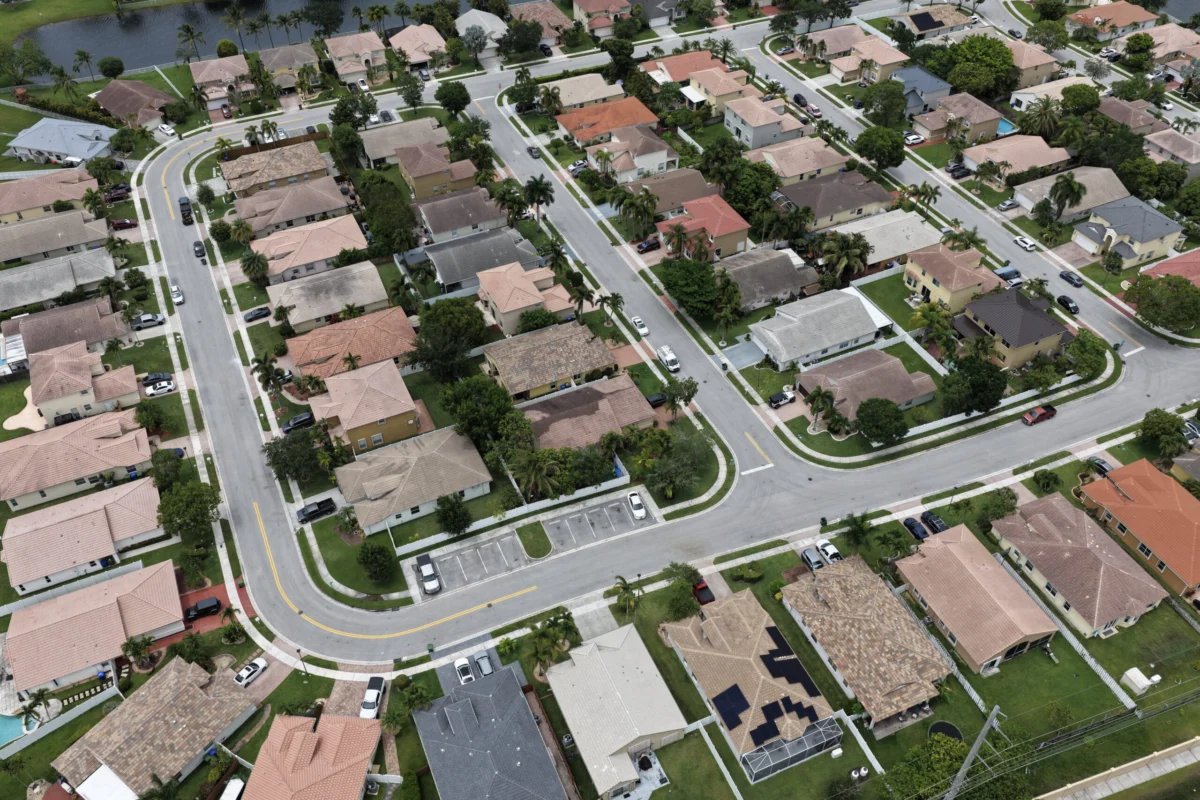
Total mortgage application volume in the United States experienced a notable decline of 3.8% last week compared with the preceding seven-day period, according to the Mortgage Bankers Association’s (MBA) seasonally adjusted index. This downturn reflects a mixed week for mortgage rates, which saw initial upward pressure from inflation data tempered by optimism surrounding geopolitical developments. Both prospective homebuyers and current homeowners seeking to refinance demonstrated reduced demand, underscoring the delicate balance of economic indicators and global events influencing the housing finance sector.
The average contract interest rate for 30-year fixed-rate mortgages, specifically those with conforming loan balances of $832,750 or less, held steady at 6.60%. Points, including the origination fee for loans with a 20% down payment, also remained unchanged at 0.63. While the headline rate showed stability, the underlying market sentiment was far from placid, responding dynamically to a series of impactful news events.
A Week of Economic and Geopolitical Tensions
The week commenced with the release of Consumer Price Index (CPI) data, which revealed that inflationary pressures continued to mount. The Bureau of Labor Statistics reported an annualized inflation rate of 4.2% for the preceding month, surpassing many economists’ projections of 3.9%. This unexpected uptick immediately fueled concerns that the Federal Reserve might adopt a more hawkish stance, leading to an initial surge in Treasury yields and, consequently, upward pressure on mortgage rates. Investors, anticipating potential policy tightening, adjusted their portfolios, pricing in a higher cost of borrowing. This early-week reaction left many market participants bracing for sustained higher rates.
However, the narrative shifted dramatically mid-week. Reports began to circulate regarding significant diplomatic progress aimed at de-escalating tensions surrounding the Strait of Hormuz. This critical waterway, bottlenecking approximately one-fifth of the world’s total petroleum liquids consumption, has been a flashpoint for geopolitical instability, particularly concerning the ongoing conflict with Iran. News of potential breakthroughs, including initial reports of a temporary ceasefire agreement and opening of key shipping lanes, injected a wave of optimism into global markets. The immediate effect was a substantial drop in crude oil prices, as fears of supply disruptions eased. Since energy costs are a significant component of overall inflation and influence broader economic stability, this positive development swiftly translated into a downward trajectory for long-term Treasury yields, pulling mortgage rates lower by the week’s end.
Mike Fratantoni, senior vice president and chief economist at the MBA, encapsulated the week’s volatility, stating in a release, "Last week’s CPI data showed that inflation continued to move higher, putting upward pressure on rates early in the week, but growing optimism regarding the opening of the Strait of Hormuz brought rates down again by the end of the week." This observation highlights the intricate interplay between domestic economic data and international geopolitical events in shaping the cost of borrowing.
Declining Demand Across Mortgage Segments
The seesaw movement in rates, despite ultimately trending lower by the week’s close, appeared to have a dampening effect on overall mortgage activity. Applications to refinance a home loan experienced a 5% decline for the week. This drop occurred even as current rates offered a more favorable environment compared to the previous year. Specifically, refinance applications were 17% higher than the same week one year ago, a period when mortgage rates hovered nearly a quarter of a percentage point higher, around 6.85%. This suggests that while rates are lower year-over-year, the recent fluctuations and lingering economic uncertainty may have prompted potential refinancers to adopt a wait-and-see approach, hoping for more stable or even lower rates in the near future. Many homeowners who could benefit from refinancing may also have already done so during earlier dips in rates, leaving a smaller pool of eligible candidates.
Similarly, applications for a mortgage to purchase a home fell 3% for the week. Despite this weekly dip, purchase applications were still 3% higher than the same week a year ago. This modest year-over-year growth underscores the persistent challenges faced by prospective homebuyers. Beyond the often-cited high mortgage rates, buyers continue to contend with a remarkably lean supply of available properties. National housing inventory, while showing marginal improvements in some localized markets, remains approximately 18% below pre-pandemic levels. This scarcity, coupled with steadily appreciating home prices—the median existing home price reached $425,000 last month, representing a 5.5% increase year-over-year—creates a significant affordability barrier. Furthermore, the broader economic landscape, marked by persistent inflation and a degree of uncertainty regarding future economic growth, contributes to buyer hesitancy.
The Federal Reserve’s Pivotal Role
As the week concluded, all eyes turned to the upcoming Federal Reserve meeting, scheduled for Wednesday. This gathering marks the first official meeting presided over by the Fed’s newly appointed chairman, Kevin Warsh. Warsh, a former Federal Reserve governor with a reputation for a more hawkish stance on monetary policy, assumed the chairmanship following a period of significant economic volatility. His appointment has been closely watched by financial markets for clues regarding the future direction of monetary policy.
While widespread consensus among economists and market analysts suggests that the Federal Open Market Committee (FOMC) is unlikely to alter the federal funds rate at this particular meeting, investors will be meticulously scrutinizing the post-meeting statement and any press conference remarks. Market participants will be searching for subtle shifts in language, forward guidance, or any indications that might signal a change in the Fed’s outlook on inflation, employment, or its balance sheet strategy. Even a hint of a more aggressive or more accommodative stance could send ripples through the bond market and, by extension, impact mortgage rates. Chairman Warsh’s inaugural public comments will be particularly scrutinized for insights into his leadership style and the committee’s collective resolve to navigate the current economic complexities.
Market Reactions and Expert Outlook
Separate analyses of mortgage rate movements continued to show a downward trend into the current week. According to a survey from Mortgage News Daily, rates have now fallen to their lowest level since May 14. This continued decline is directly mirroring the ongoing fall in global oil prices, as investors react positively to the sustained hope of a definitive end to the conflict with Iran and the continued unimpeded flow through the Strait of Hormuz.
Matthew Graham, chief operating officer at Mortgage News Daily, offered a cautious perspective on this trend. "The only warning is that some analysts think oil prices have already gotten ahead of themselves in that regard," Graham wrote. He elaborated that the current market pricing might be overly optimistic, factoring in a complete and stable resolution that is not yet fully guaranteed. "If those analysts are right, it could limit any additional momentum toward lower rates until peace is on more solid footing," he added. This warning underscores the inherent fragility of market sentiment, particularly when tied to complex geopolitical negotiations. Any reversal or perceived setback in the peace process could quickly trigger a rebound in oil prices and a corresponding upward adjustment in mortgage rates.
The Broader Economic Landscape and Implications
The recent dynamics in the mortgage market are not isolated but are deeply intertwined with the broader economic landscape. Persistent inflation, even if showing signs of deceleration in specific sectors, continues to erode purchasing power and influences the Fed’s policy decisions. The labor market, while robust in many aspects, also faces challenges, including wage growth that struggles to keep pace with rising costs of living. Consumer confidence, a critical driver of economic activity, remains sensitive to these factors, impacting discretionary spending and long-term financial commitments such as home purchases.
For prospective homebuyers, the current environment presents a complex dilemma. While rates have softened somewhat from their peak, they remain significantly higher than the ultra-low levels seen in recent years. This, combined with high home prices and limited inventory, continues to stretch affordability to its limits. Many first-time buyers find themselves priced out of desirable markets, while others are forced to compromise on location or size. The fear of missing out (FOMO) that characterized earlier housing booms has largely been replaced by a cautious approach, as buyers weigh the costs and benefits against economic uncertainties.
For homeowners, the fluctuating rates mean that refinancing opportunities are more opportunistic. Those who locked in lower rates years ago may feel less pressure to refinance, while others with adjustable-rate mortgages or higher fixed rates are keenly watching for sustained dips. The equity gained from recent home value appreciation provides a buffer for many, but also increases the financial stakes in a volatile market.
Real estate agents and developers are also navigating this complex environment. While demand remains relatively strong in certain segments, particularly for new constructions in burgeoning suburban areas, the overall market has seen a slowdown in transaction volumes. Developers are grappling with higher construction costs and tighter financing, while agents are focusing on educating clients about the nuances of the current market, emphasizing long-term value over short-term rate fluctuations.
Looking Ahead: Key Indicators and Geopolitical Stability
The coming weeks will be critical in determining the sustained trajectory of mortgage rates and the broader housing market. Beyond the Federal Reserve’s meeting, investors will closely monitor upcoming inflation reports, labor market data, and consumer sentiment surveys. Any significant deviation from expected trends in these economic indicators could prompt further market adjustments.
Crucially, the ongoing geopolitical developments surrounding the Strait of Hormuz and the broader conflict with Iran will continue to exert a powerful influence. The "peace on more solid footing" that Matthew Graham alluded to is not a foregone conclusion, and any renewed tensions or breakdowns in diplomatic efforts could quickly reverse the current optimism, leading to a resurgence in oil prices and a corresponding upward pressure on interest rates. The global economy’s interconnectedness means that events unfolding thousands of miles away can have immediate and tangible impacts on the financial decisions made by families in Pembroke Pines, Florida, and across the United States.
In conclusion, the mortgage market remains in a state of dynamic flux, driven by a powerful confluence of domestic economic data and international geopolitical developments. While the recent dip in rates offers a glimmer of relief, the underlying challenges of inflation, housing affordability, and global instability persist, shaping the decisions of millions of Americans contemplating one of life’s most significant financial commitments.
