

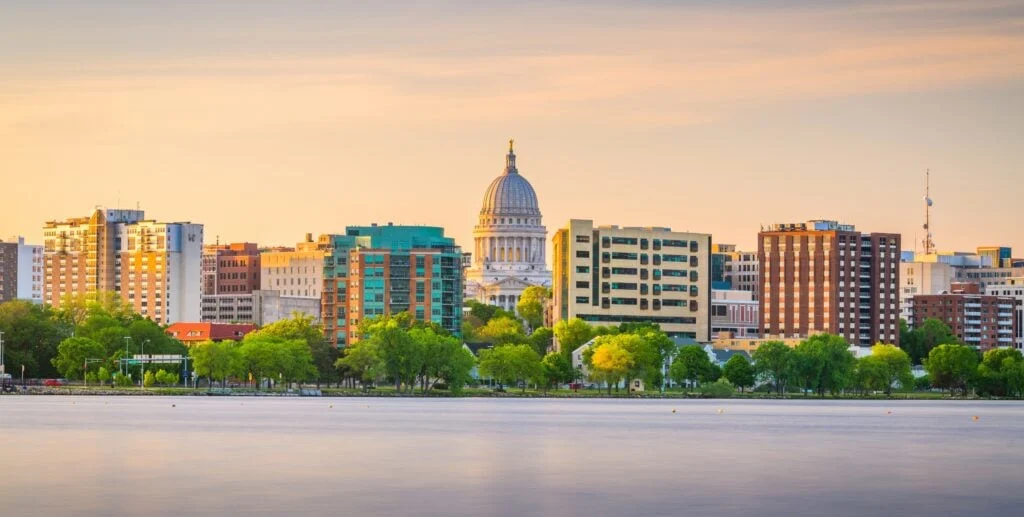
The residential real estate landscape in the United States is undergoing a significant geographic realignment, as the once-dominant Sunbelt markets concede their momentum to the Great Lakes region. According to the newly released Redfin 2026 Hottest Neighborhoods report, Michigan and Wisconsin have emerged as the primary engines of housing demand, collectively securing five of the top ten spots on the national ranking. This shift reflects a broader economic trend where affordability, coupled with stable employment sectors, has become the primary driver for both first-time homebuyers and seasoned real estate investors. The ranking, which analyzes year-over-year growth in listing views and buyer competition metrics, indicates that the "flyover states" are no longer being bypassed but are instead becoming the preferred destination for a new generation of American workers.
The 2026 Market Rankings and the Midwest Ascendancy
The dominance of the Midwest in the 2026 rankings marks the second consecutive year that the region has led the nation in market heat. Wisconsin, in particular, demonstrated remarkable strength, with three Milwaukee suburbs—Oak Creek, West Bend, and Menomonee Falls—landing in the top ten. Michigan followed closely with two high-ranking entries: Lincoln Park, situated on the periphery of Detroit, and Howell, a growing hub in Southeast Michigan. These neighborhoods are characterized by a unique "sweet spot" identified by economists: they offer the amenities of major metropolitan hubs like Chicago, Milwaukee, and Detroit while maintaining a cost of living that remains accessible to those on entry-level or mid-career salaries.
Redfin’s data reveals that the attraction to these areas is not merely anecdotal. Listing views in these specific Midwestern zip codes have surged as buyers from high-cost coastal markets seek relief from inflationary pressures. The "hottest" designation is calculated through a proprietary blend of traffic on the Redfin platform, the speed at which homes go under contract, and the frequency of "above-ask" offers. In 2026, the data suggests a persistent "migration of necessity," where the search for equity and stability outweighs the traditional draw of warmer climates or coastal lifestyle perks.
Economic Drivers: The Affordability Equation
At the heart of the Midwest’s resurgence is a stark disparity in pricing compared to the rest of the nation. While the national median home price has faced upward pressure due to limited inventory, many of the top-performing neighborhoods in Michigan and Wisconsin feature price points that market analysts describe as belonging to a "bygone era." For instance, Lincoln Park, Michigan, maintains an average home price of approximately $158,000—a figure that is roughly 30% to 50% lower than comparable properties in Sunbelt cities like Phoenix or Austin, and a fraction of the cost found in New York or California.
This affordability is not just a benefit for buyers; it is a fundamental shift in how wealth is built in the modern economy. Real estate professionals note that for younger demographics, specifically Generation Z, these markets represent the only viable path to homeownership. By entering the market at a lower price point, these buyers are able to build equity earlier in life without the "overhead drowning" effect of massive mortgages. This has created a self-sustaining cycle of demand, as young professionals move to the region, bolster the local tax base, and drive further investment in retail and infrastructure.
Demographic Shifts: Gen Z and the Remote Work Revolution
The demographic profile of the Midwest is shifting as a result of these economic realities. Research from firms such as Checkr and LinkedIn suggests that university graduates and entry-level workers are increasingly looking toward cities like Grand Rapids, Milwaukee, and South Bend. For a worker earning a starting salary in a major coastal hub, the cost of rent and basic necessities often precludes any ability to save. In contrast, the Midwest offers a "value play" where wages, particularly in the manufacturing and healthcare sectors, are competitive with national averages while housing costs remain manageable.
The role of remote work cannot be understated in this transition. While many corporations have implemented "return-to-office" mandates, a significant portion of the workforce remains hybrid or fully remote. For these individuals, the ability to maintain a "coastal salary" while living in a market like Appleton, Wisconsin, or Howell, Michigan, creates an unprecedented level of disposable income. This influx of "geographic arbitrage" participants has put upward pressure on local prices, but the baseline remains low enough that the region continues to rank as the most affordable in the country.
Regional Deep Dive: Wisconsin’s Fox River Valley and Michigan’s Industrial Renaissance
A key area of interest for both residents and investors is the stretch of Wisconsin along the Fox River Valley, extending from Oshkosh to Green Bay. This region has become a bellwether for housing health. According to data cited by the Wall Street Journal, in the counties surrounding Appleton and Green Bay, only one in seven homebuyers spends more than 30% of their income on housing. This is significantly better than the national average, where one in five households is considered "rent-burdened" or "mortgage-burdened."
The stability of the Fox River Valley is rooted in its heavy emphasis on manufacturing and specialized industrial jobs. Unlike the tech-heavy markets of the West Coast, which are susceptible to boom-and-bust cycles, the Midwest’s industrial base provides a steady floor for the local economy. In Michigan, the story is similar but involves a recovery narrative. The outskirts of Detroit, long overlooked, are seeing a revitalization as "spillover" buyers from more expensive suburbs move into areas like Lincoln Park. This has resulted in a 14% year-over-year increase in home sales in certain Michigan corridors, with nearly 40% of homes selling above the asking price.
Market Dynamics: The Shift from Buyers to Sellers
The surge in interest has fundamentally altered the power balance in Midwestern real estate transactions. Zillow’s Market Heat Index for early 2026 indicates that while Sunbelt markets are beginning to favor buyers due to increased inventory and cooling demand, the Midwest has become a firm seller’s market. In cities like Howell, Michigan, inventory levels have hit historic lows. Real estate agents in the region report that there simply aren’t enough homes to satisfy the current wave of buyers, leading to "buying frenzies" that were once only seen in markets like Seattle or San Francisco.
For investors, this transition presents both opportunity and risk. The opportunity lies in the potential for both cash flow and appreciation. Analysis from Norada Real Estate Investments highlights that major Midwestern metros—including Cleveland, Indianapolis, and St. Louis—are offering capitalization (cap) rates of 8% or higher. Properties priced around $160,000 can generate monthly rents of approximately $1,500 in stable, "B-class" neighborhoods. However, the risk involves the increasing difficulty of finding "distressed" or "undervalued" deals as the general public becomes more aware of the region’s potential.
Broader Impact and Long-term Implications
The rise of the Midwest is expected to have long-term implications for the U.S. economy and political geography. Demographers, including Diana Lind of the New Urban Order, predict that the Midwest will become the fastest-growing region in the country by the end of the decade. This is not merely a temporary reaction to high interest rates but a structural rebalancing of the American population toward areas with sustainable water resources, lower climate risk, and affordable infrastructure.
However, experts caution that the Midwest is not a monolith. While neighborhoods in Milwaukee and Detroit are thriving, other areas continue to struggle with legacy issues related to deindustrialization. The challenge for investors and policymakers alike is to discern which markets possess the necessary "anchor institutions"—such as universities, hospital systems, and manufacturing hubs—to sustain growth over the next twenty years.
The "Indianapolis Catch" serves as a cautionary tale in this regard. In recent years, an influx of out-of-state investors flooded the Indianapolis market, driving up prices and eventually leading to a saturated rental market in certain sub-sectors. This highlights the importance of localized research; following the "herd" into a hot market without understanding the underlying neighborhood dynamics can lead to diminished returns.
Conclusion: A Sustained Heatwave in the North
As the 2026 housing market unfolds, the data remains clear: the Midwest is currently the most competitive and value-driven region in the United States. The combination of "bygone era" pricing and modern economic opportunities has created a magnet for a diverse array of buyers. Whether it is a Gen Z worker looking for their first starter home or a remote professional seeking to maximize their quality of life, the neighborhoods of Michigan and Wisconsin offer a compelling alternative to the traditional coastal and Sunbelt powerhouses. While the "heat" in these markets may eventually lead to higher entry costs, the current trajectory suggests that the Great Lakes revival is only in its opening chapters. For those willing to trade palm trees for pine trees, the Midwest represents the new frontier of the American Dream.
