


The agreement highlights a growing trend among technology companies to look beyond renewable energy and into the "hard-to-abate" industrial sectors, such as steel and cement, which are critical to the physical infrastructure of the digital economy. As Meta continues to expand its global network of data centers, the demand for sustainable building materials has become a central pillar of its corporate sustainability strategy. By decoupling the environmental attributes from the physical product through EACs, Meta can support the growth of green manufacturing even in regions where it may not immediately utilize the physical material, while maintaining the option to integrate the cement into its own construction projects in the future.
The Global Challenge of Cement Decarbonization
The significance of this partnership is underscored by the massive environmental impact of the cement industry. Cement is the most widely used man-made material on Earth, second only to water in terms of global consumption. However, this ubiquity comes at a high environmental cost; cement production is responsible for approximately 8% of global carbon dioxide emissions. If the cement industry were a country, it would be the third-largest emitter in the world, trailing only China and the United States.
The primary challenge in decarbonizing cement lies in the chemistry of the production process itself. Roughly 60% of the CO2 emitted during cement manufacturing is "process emissions," which occur when limestone (calcium carbonate) is heated in a kiln to produce clinker. This chemical reaction, known as calcination, releases CO2 as a byproduct regardless of the energy source used to heat the kiln. The remaining 40% of emissions come from the combustion of fossil fuels to reach the extreme temperatures (up to 1,450°C) required for the process. While many industries can reach net-zero through electrification and renewable energy, the cement industry requires fundamental changes to its chemical formulations and carbon capture technologies.
Fortera’s ReCarb Technology: A Circular Solution
Founded in 2019 and headquartered in San Jose, California, Fortera has emerged as a frontrunner in the race to solve the cement industry’s carbon problem. The company’s proprietary ReCarb technology offers a "bolt-on" solution that can be integrated into existing cement and lime plants. Rather than requiring manufacturers to abandon their existing infrastructure, ReCarb captures the CO2 emitted from the kiln during the calcination process and mineralizes it back into a solid form.
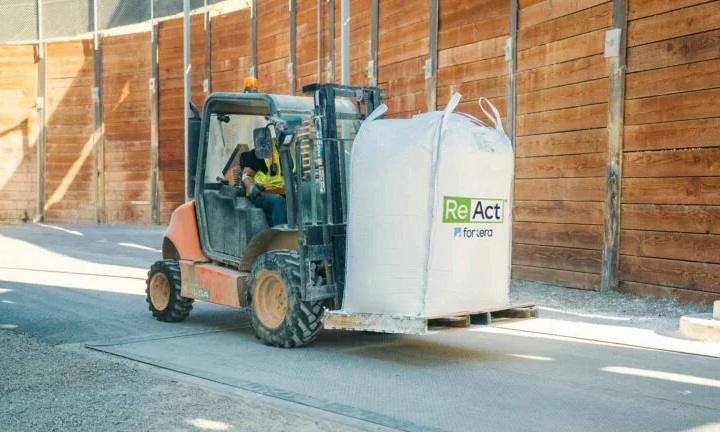
This captured CO2 is converted into a feedstock for the production of Fortera’s flagship product, ReAct cement. By recycling the waste CO2 into the final product, Fortera achieves a 70% reduction in carbon intensity compared to standard OPC. Crucially, Fortera’s technology is designed to produce cement at cost parity with traditional methods, addressing one of the most significant barriers to the adoption of green building materials: the "green premium."
Ryan Gilliam, CEO of Fortera, emphasized the economic and environmental synergy of the technology, noting that using waste CO2 as a primary feedstock transforms decarbonization into an economic engine. By enabling existing communities that depend on cement and lime production to transition to cleaner technologies without losing their industrial base, Fortera aims to provide a scalable model for the global industry. The technology allows manufacturers to retain their existing kilns and distribution networks, facilitating a faster transition to low-carbon production.
The Role of EACs in Green Industrial Financing
The deal between Meta and Fortera utilizes Environmental Attribute Certificates (EACs), a financial instrument that is becoming increasingly common in the push for industrial decarbonization. Much like Renewable Energy Certificates (RECs) in the power sector, EACs represent the environmental benefits of a specific unit of production. By purchasing these certificates, Meta provides Fortera with a guaranteed stream of income that is independent of the physical sale of the cement.
This "revenue visibility" is critical for startups in the heavy industry sector. Building a cement plant is an incredibly capital-intensive endeavor, often requiring hundreds of millions of dollars in investment. Traditional lenders and investors are often hesitant to fund such projects without proof of long-term demand. Meta’s commitment to purchase 200,000 tons’ worth of EACs acts as a powerful "demand signal," reducing the risk for financiers and enabling Fortera to secure the capital needed to move the Ste. Genevieve plant from the planning phase into active production.
Devon Lake, Head of Net Zero Strategy at Meta, highlighted this aspect of the deal, stating that a multi-year commitment is the catalyst needed to get a cement plant financed. Lake noted that the agreement not only helps Fortera build its Missouri facility but also ensures that low-carbon cement becomes available to the broader construction market, creating a "multiplier effect" for sustainability.

Impact on Local Economies and Supply Chains
The first major beneficiary of this partnership will be the community of Ste. Genevieve, Missouri. The Fortera Cement Plant located there is expected to become a hub for low-carbon manufacturing, providing long-term manufacturing jobs and supporting the local economy. Missouri has a long history of cement and lime production due to its abundant limestone reserves, and the integration of Fortera’s technology ensures that this traditional industry remains viable in a carbon-constrained world.
For Meta, the deal is a strategic alignment of its environmental goals with its operational needs. Meta is one of the world’s largest builders of data centers—massive, concrete-heavy structures that house the servers powering platforms like Facebook, Instagram, and WhatsApp. As the company works toward its goal of achieving net-zero emissions across its entire value chain (Scope 1, 2, and 3) by 2030, addressing the "embodied carbon" in its buildings is a top priority.
By fostering a domestic supply of low-carbon cement in the United States, Meta is helping to build a more resilient and sustainable supply chain. The option to use the physical ReAct cement in its own Missouri-based projects further strengthens this connection, allowing the company to directly reduce the carbon footprint of its physical infrastructure.
Broader Implications for the Tech Industry and Beyond
The Meta-Fortera agreement is likely to serve as a blueprint for other tech giants and large-scale builders. In recent years, companies like Microsoft, Google, and Amazon have made similar moves into the green materials space. Microsoft, for instance, has invested in several carbon-capture and low-carbon building material startups through its Climate Innovation Fund.
These investments and procurement deals represent a shift in corporate responsibility. Rather than simply purchasing carbon offsets—which have faced criticism for lack of transparency and efficacy—leading corporations are now investing in the "deep decarbonization" of the global supply chain. By supporting technologies like Fortera’s, they are helping to create the industrial infrastructure of the future.

The success of Fortera’s Missouri plant will be a critical litmus test for the scalability of ReCarb technology. If Fortera can demonstrate that it can produce low-carbon cement at scale and at a competitive price, it could trigger a wave of adoption across the global cement industry. Major cement players, such as Holcim and Heidelberg Materials, are already exploring various carbon capture and utilization (CCU) technologies, and the entry of high-profile buyers like Meta provides the market confidence needed to accelerate these transitions.
Analysis of Future Challenges
Despite the optimism surrounding the Meta-Fortera deal, the path to a zero-carbon cement industry remains fraught with challenges. One of the primary hurdles is regulatory and structural. The construction industry is notoriously conservative, governed by strict building codes and standards that have been in place for decades. Introducing new materials like ReAct cement requires rigorous testing and certification to ensure they meet the structural integrity and durability requirements of traditional OPC.
Furthermore, while 200,000 tons is a significant amount, it represents only a fraction of the global cement market, which produces over 4 billion tons annually. To meet global climate targets, such as those set out in the Paris Agreement, the industry will need thousands of plants like the one in Ste. Genevieve. This will require not only corporate backing but also supportive government policies, such as carbon pricing, green procurement mandates for public infrastructure, and subsidies for early adopters of clean technology.
However, the Meta-Fortera partnership proves that the "demand-side" of the equation is ready to move. By providing the financial bedrock for Fortera’s expansion, Meta is playing a pivotal role in proving that industrial decarbonization is not just a moral imperative, but a viable business model. As the Fortera plant in Missouri moves toward production, it will stand as a monument to how technology, finance, and industrial tradition can converge to build a more sustainable future.
