

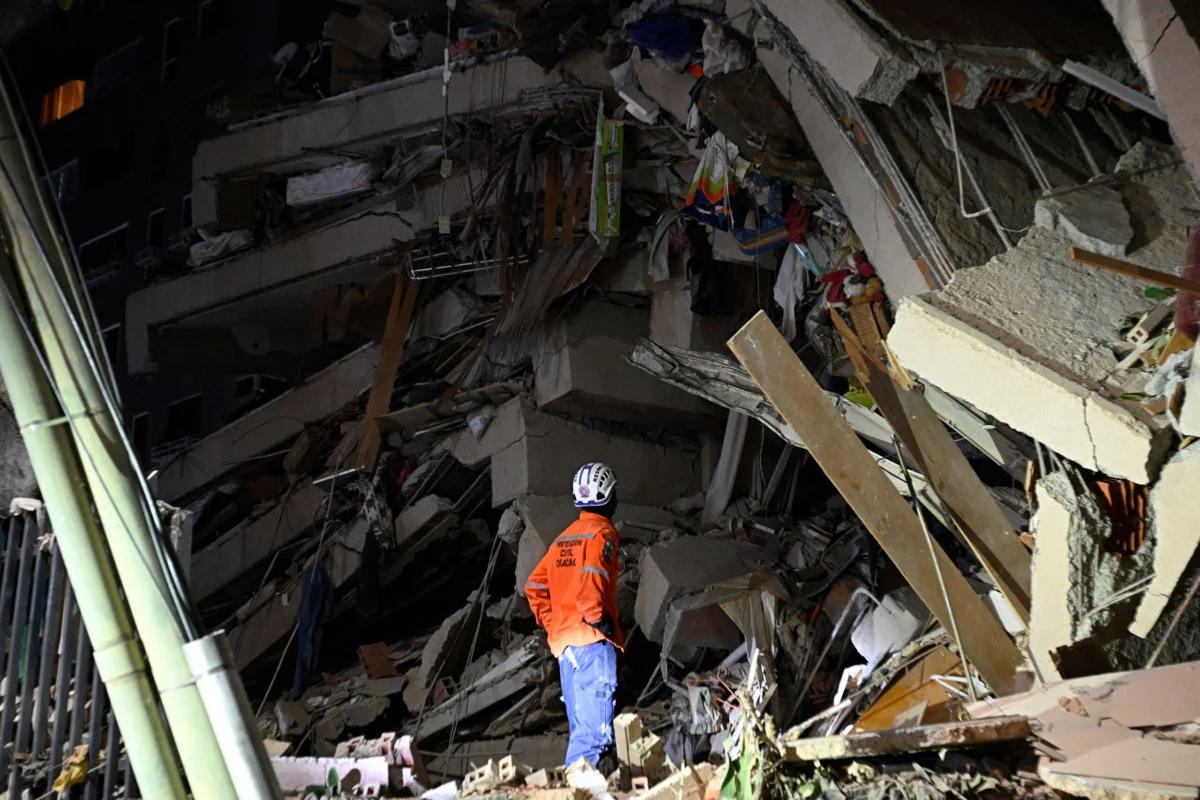
The South American nation of Venezuela is grappling with a humanitarian catastrophe of historic proportions following a pair of devastating earthquakes that struck the country’s northern coastline in rapid succession on Wednesday evening. The seismic events, occurring less than sixty seconds apart, have left a trail of destruction extending from the northwestern town of Yumare to the capital city of Caracas, with the United States Geological Survey (USGS) warning that the eventual death toll could surpass 10,000 individuals. As of Thursday morning, interim President Delcy Rodríguez has confirmed 164 deaths and nearly 1,000 injuries, though these figures are expected to rise exponentially as search and rescue teams reach more remote and heavily impacted areas.
The disaster comes at a moment of profound political transition for Venezuela, following the January capture of former authoritarian president Nicolás Maduro by United States forces and the subsequent swearing-in of Rodríguez. This transition has added layers of complexity to the emergency response, even as the international community, led by the United States, pledges immediate and substantial logistical and medical support.
Chronology of the Seismic Event
The first tremors were recorded at approximately 6:00 p.m. local time on Wednesday. Residents in Caracas reported an initial rolling motion that quickly escalated into violent shaking. Less than a minute later, a second, more powerful shockwave struck. According to the USGS, the primary earthquake registered a magnitude of 7.5, making it the most powerful seismic event to hit Venezuela since the beginning of the 20th century.
The epicenter was located just outside Yumare, a town in the state of Yaracuy, approximately 250 kilometers west of Caracas. However, the shallow depth of the quakes meant that the energy was felt across the entire northern corridor of the country. In the capital, office towers swayed dangerously, and older masonry structures in the city’s historic districts suffered immediate partial collapses. In the hillside "barrios" surrounding Caracas, where housing is often constructed without seismic reinforcement, the impact was reportedly catastrophic, with entire rows of homes sliding down unstable slopes.
By 7:30 p.m., communication networks began to fail as cell towers lost power or became overwhelmed by the volume of traffic. By 9:00 p.m., the full scale of the disaster began to emerge as local governors and municipal leaders reported massive structural failures and a surge of trauma patients arriving at hospitals that were already struggling with limited resources.
Casualty Estimates and Missing Persons
While the official death toll currently stands at 164, authorities admit this number represents only a fraction of the likely total. Interim President Rodríguez noted in her national address that 971 people have been confirmed injured, many of them in critical condition. However, the USGS "PAGER" system (Prompt Assessment of Global Earthquakes for Response), which uses mathematical modeling to estimate fatalities based on population density and building vulnerability, has indicated a high probability that the final count will exceed 10,000.
Compounding the fear is the staggering number of missing persons. A dedicated website, Desaparecidos Terremoto Venezuela, was launched within hours of the quake to allow families to register names and last known locations of loved ones. As of Thursday morning, more than 10,000 individuals have been reported missing on the platform. Rescue workers in Yumare and surrounding villages in Yaracuy and Falcón states report that entire residential blocks have been leveled, suggesting that many of the missing may be trapped beneath rubble.
Geological and Technical Context
Venezuela sits atop a complex tectonic boundary where the Caribbean Plate meets the South American Plate. This boundary is defined by a series of major fault systems, including the Boconó, San Sebastián, and El Pilar faults. Seismologists indicate that Wednesday’s event likely involved a significant rupture along this fault zone, which has historically produced destructive earthquakes, most notably in 1967 and 1997.
The 7.5 magnitude recorded on Wednesday is particularly significant. For comparison, the 1967 Caracas earthquake, which killed over 200 people and caused extensive damage to the city’s high-rises, was estimated at a magnitude of 6.6. The exponential nature of the Richter scale means that a 7.5 magnitude earthquake releases significantly more energy than its predecessors. The "double-tap" nature of the event—two major shocks in less than a minute—likely weakened structures during the first tremor before the second, larger shock caused them to fail entirely.
National Response and State of Emergency
Interim President Delcy Rodríguez addressed the nation on Wednesday night, appearing on state television to declare a nationwide state of emergency. Her tone was one of somber urgency as she called for national solidarity in the face of the tragedy.
“The first message for our people is to stay united to save lives,” Rodríguez stated. She issued an immediate directive for all medical professionals, including doctors, nurses, and health technicians, to report to their nearest medical facilities. The healthcare system, which has been under significant strain due to years of economic instability, is currently the focal point of the recovery effort. Rodríguez emphasized that the immediate priority is the stabilization of the injured and the extraction of those still trapped, noting that the reconstruction of infrastructure would follow in the coming weeks and months.
The government has also ordered the evacuation of buildings showing visible cracks or structural compromise. This directive led thousands of Venezuelans to spend Wednesday night sleeping in parks, plazas, and open streets, braving the humidity and the fear of significant aftershocks.
Infrastructure Damage and Transportation
The impact on Venezuela’s infrastructure has been severe. The Simón Bolívar International Airport in Maiquetía, the country’s primary gateway for international travel and aid, has been closed indefinitely. Reports from the site indicate serious damage to the runways and the main terminal buildings, rendering it unsafe for large aircraft. This closure presents a significant hurdle for the arrival of international search and rescue teams.
Road networks have also been compromised. Several key bridges connecting the central region to the western states have collapsed or been deemed structurally unsound. In Caracas, the metro system was suspended as engineers began inspecting tunnels for damage. Power outages remain widespread across the northern states, and water distribution systems have been disrupted in multiple municipalities due to ruptured mains.
International Assistance and Geopolitical Context
The international community has moved quickly to offer assistance, with the United States taking a leading role. United States Secretary of State Marco Rubio announced early Thursday morning that the U.S. government is in the process of deploying specialized Disaster Assistance Response Teams (DART). These teams include search and rescue experts, structural engineers, and medical units equipped to handle mass casualty events.
The U.S. response follows a public pledge of support from President Donald Trump. In a post on Truth Social, President Trump expressed his administration’s commitment to the new Venezuelan leadership, stating, “We will be there for our new and great friends.”
This rapid alignment between Washington and the Rodríguez administration marks a significant shift in Venezuelan foreign policy. Analysts suggest that the earthquake will serve as a "stress test" for the new government and its ability to coordinate with international partners. The presence of U.S. aid workers and equipment on the ground is expected to be the largest humanitarian deployment to the country in decades.
Other regional neighbors, including Colombia and Brazil, have also offered to send supplies and personnel. The United Nations and the International Red Cross have begun mobilizing regional hubs to provide food, clean water, and temporary shelter for the thousands who have been displaced.
Analysis of Economic and Social Implications
The timing of the earthquake is particularly difficult for a nation already in the midst of a delicate political and economic transition. The cost of rebuilding is expected to run into the billions of dollars, a sum that will challenge the interim government’s fiscal capacity. Beyond the immediate loss of life, the destruction of commercial property and industrial infrastructure in the north-central region will likely lead to a short-term contraction in economic activity.
However, some analysts point out that the shared national trauma could potentially serve as a unifying force for a country that has been deeply polarized for years. The "Desaparecidos" website and the grassroots mobilization of citizens helping neighbors reflect a level of social cohesion that may assist in the long-term recovery process.
Looking Ahead: The Recovery Phase
As the first 48 hours—often called the "golden window" for finding survivors—progress, the focus remains squarely on search and rescue. Heavy machinery is being moved toward Yumare and the hardest-hit sectors of Caracas, though progress is slowed by debris and damaged roadways.
The threat of aftershocks remains a primary concern for seismologists. Several smaller tremors have already been recorded, and experts warn that a major aftershock could trigger the collapse of buildings already weakened by Wednesday’s 7.5 magnitude quake.
The Rodríguez administration has promised transparency in the coming days as more data becomes available. For now, a nation in mourning is looking toward both its own resilient population and the promised aid from the international community to navigate one of the darkest chapters in its modern history.
This is a developing story. Further updates will be provided as official casualty figures are updated and international aid arrives.
