

Wall Street futures signaled a robust opening on Thursday as investors processed a whirlwind of geopolitical and economic developments, ranging from a historic diplomatic breakthrough with Iran to a major domestic semiconductor manufacturing alliance. Traders are looking to shake off the previous session’s marginal losses, buoyed by the Federal Reserve’s decision to maintain interest rates and a series of high-profile corporate announcements that have reshaped expectations for the second half of 2026. The optimism coincides with a day of high-profile domestic events, including a championship ticker-tape parade for the New York Knicks in Manhattan and the star-studded inauguration of the Obama Presidential Center in Chicago, signaling a moment of significant cultural and economic momentum in the United States.
Federal Reserve Stability Under Chairman Kevin Warsh
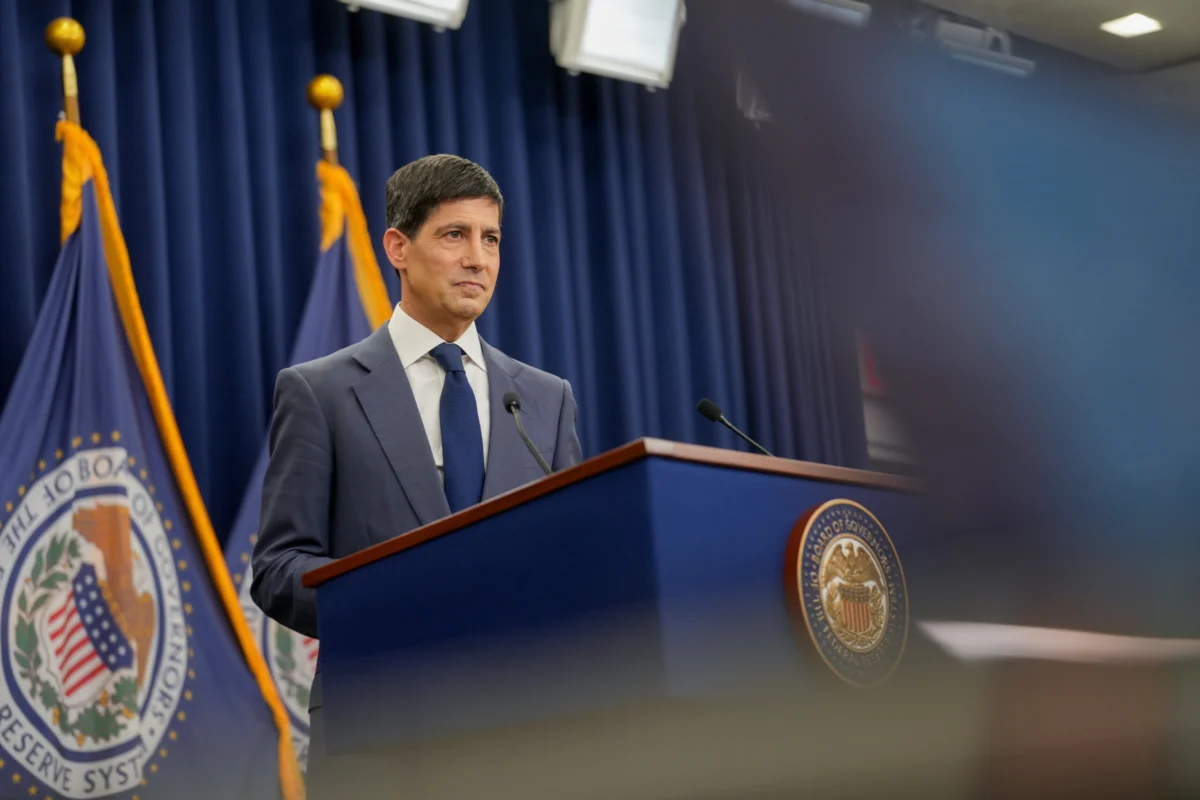
In his debut meeting as Chairman of the Federal Reserve, Kevin Warsh presided over a Federal Open Market Committee (FOMC) that elected to keep the federal funds rate steady within the 3.5% to 3.75% range. The decision, which was widely anticipated by economists, marks a period of calculated patience for the central bank as it navigates a complex inflationary environment and a robust labor market. Warsh, who took the helm following a period of significant leadership transition at the Fed, emphasized in his post-meeting press conference that the "current restrictive stance is appropriate" to ensure inflation remains on a sustainable path toward the 2% target.
Market analysts noted that while the rate hold was expected, the "Warsh Pivot" lies in the subtle shift in rhetoric regarding future liquidity. The FOMC’s updated Summary of Economic Projections suggests that while the era of rapid hikes has concluded, the "higher for longer" mantra remains the guiding principle. Investors took solace in the Chairman’s transparent communication style, which many characterized as a return to a more hawkish, yet predictable, monetary framework. The stability in rates provides a clear runway for corporate earnings and capital expenditure planning, particularly in the tech and manufacturing sectors which have been sensitive to borrowing costs over the past three fiscal years.
The 14-Point Peace Memorandum with Iran
On the geopolitical front, a landmark diplomatic event occurred in Paris as President Donald Trump and Iranian President Masoud Pezeshkian signed a 14-point memorandum of understanding (MOU) aimed at establishing a permanent peace framework. This follows a preliminary signing earlier in the week by Vice President JD Vance and Iranian Parliamentary Speaker Mohammad Bagher Ghalibaf, signaling a unified front in both executive and legislative branches of the two nations.
The MOU represents the most significant shift in U.S.-Iran relations since the 2015 JCPOA. Key provisions of the document include:
- Strait of Hormuz Access: A 60-day window where the vital maritime corridor will remain open without tolls or military interference, ensuring the stability of global oil transit.
- Nuclear Material Resolution: A formal agreement to resolve the long-standing dispute regarding Iran’s stockpiles of highly-enriched uranium, with oversight from international monitors.
- Economic Normalization: Frameworks for the gradual lifting of specific sanctions in exchange for verified compliance with regional security protocols.
The immediate reaction in energy markets was a slight cooling of Brent Crude prices, as the threat of a blockade in the Strait of Hormuz—through which roughly 20% of the world’s petroleum passes—has effectively been neutralized for the short term. However, skeptics in Washington and Tehran remain, with hardliners on both sides questioning the durability of a deal that relies so heavily on the personal rapport between the current administrations.
G7 Summit and the Global AI Coalition
Simultaneously, at the G7 summit, the future of technology regulation and safety took center stage. Anthropic CEO Dario Amodei and Google DeepMind CEO Demis Hassabis utilized a private luncheon with world leaders to advocate for a U.S.-led artificial intelligence coalition. The proposed alliance seeks to create a unified regulatory and developmental framework to mitigate the existential risks associated with frontier AI models while ensuring that Western democracies maintain a competitive edge over adversarial states.
The push for a coalition comes at a time when AI integration has reached a critical mass in global financial and military infrastructure. Amodei and Hassabis argued that without a coordinated effort, the "fragmentation of safety standards" could lead to catastrophic systemic failures. The G7 leaders reportedly expressed "cautious enthusiasm" for the proposal, acknowledging that the rapid pace of AI evolution has outstripped the capacity of individual nations to regulate the sector effectively.
Aviation and Regional Economic Shifts: JetBlue’s Florida Pivot
In the corporate sector, JetBlue Airways is undergoing a major strategic realignment, shifting its focus from the saturated New York City market toward the high-growth corridors of Florida. The airline announced plans to significantly reduce its footprint at Newark Liberty International and LaGuardia Airports. This includes the closure of its flight attendant hub in New Jersey and the cessation of seasonal routes to Los Angeles and Las Vegas from Newark.
This retreat from the Northeast is directly tied to JetBlue’s aggressive expansion in Fort Lauderdale and the burgeoning "Space Coast" region of Florida. The carrier is betting on the sustained economic boom in the Sunshine State, driven by an influx of high-net-worth residents and the rapid industrialization of the aerospace sector.
The demand for commercial real estate and luxury hospitality on Florida’s eastern coast is reaching unprecedented levels. As private space firms like SpaceX and Blue Origin ramp up their launch schedules, a new economy of "launch tourism" and executive travel has emerged. Developers are currently breaking ground on several five-star hotels and luxury condominiums to accommodate the scientists, engineers, and venture capitalists who are frequently traveling to the region. This shift underscores a broader trend of "de-urbanization" from traditional Northern hubs toward specialized industrial clusters in the South.
Semiconductors and the Intel-Apple Alliance
Perhaps the most significant market mover this morning is Intel, with shares surging 9% in premarket trading. The rally follows an announcement by President Trump regarding a new partnership between Intel and Apple. Under the terms of the deal, Intel will design and manufacture specialized chips for Apple within the United States. This partnership is viewed as a crowning achievement for the U.S. government’s industrial policy, following the 10% equity stake the Treasury took in Intel in August 2025 to stabilize the domestic chipmaker.
For Intel, the Apple deal represents a definitive comeback after a multi-year slump that saw it lose significant market share to TSMC and Samsung. For Apple, the move secures a domestic supply chain for its next generation of silicon, insulating the tech giant from potential disruptions in the Taiwan Strait. Analysts suggest this "national champion" model of corporate partnership could serve as a blueprint for other critical industries, including battery manufacturing and telecommunications.
Meanwhile, the exuberance in the space sector saw a brief pause. SpaceX, which recently executed a record-breaking IPO, saw its first significant pullback. After closing Wednesday down 5%, the stock dropped another 3% in early morning trading. Market observers characterized the dip as a "healthy correction" following a historic rally, as investors take profits and reassess the company’s valuation in the context of its ambitious Mars-bound capital expenditure plans.
The 2026 Midterm Landscape: The Battle for North Carolina
As the 2026 midterm elections approach, the political spotlight has intensified on North Carolina. Democrats are eyeing the Senate seat currently contested by former Governor Roy Cooper as their most viable path to flipping a Republican-held position. Cooper, a popular two-term governor known for his moderate stance and administrative competence, is facing off against Michael Whatley, the former chair of the Republican National Committee.
The race is being viewed as a litmus test for the "split-ticket" phenomenon. While North Carolina has consistently elected Democratic governors over the past decade, it has not sent a Democrat to the U.S. Senate or voted for a Democratic presidential candidate since 2008. Political scientists note that North Carolina voters tend to distinguish between state-level management and federal-level ideology.
Republicans are framing the race as a choice between a "local favorite" and the broader national Democratic agenda led by Senate Majority Leader Chuck Schumer. The outcome of this race will likely determine the balance of power in the Senate, influencing everything from judicial appointments to the continuation of the current administration’s trade and energy policies.
Market Outlook and Implications
As the opening bell approaches, the convergence of stable monetary policy, diplomatic breakthroughs, and domestic industrial revival has created a cautiously optimistic environment for investors. The Fed’s "wait-and-see" approach under Warsh provides a sense of predictability that has been missing in recent years, while the Intel-Apple deal reinforces the narrative of a "Resurgent America" in high-tech manufacturing.
However, risks remain on the horizon. The durability of the Iran MOU will be tested by regional proxies, and the cooling of the SpaceX rally suggests that the "hype cycle" for space and AI may be entering a more sober, execution-focused phase. For now, the markets are choosing to focus on the tangible progress in domestic production and the absence of immediate interest rate threats, setting the stage for what could be a historic summer for the American economy.
