

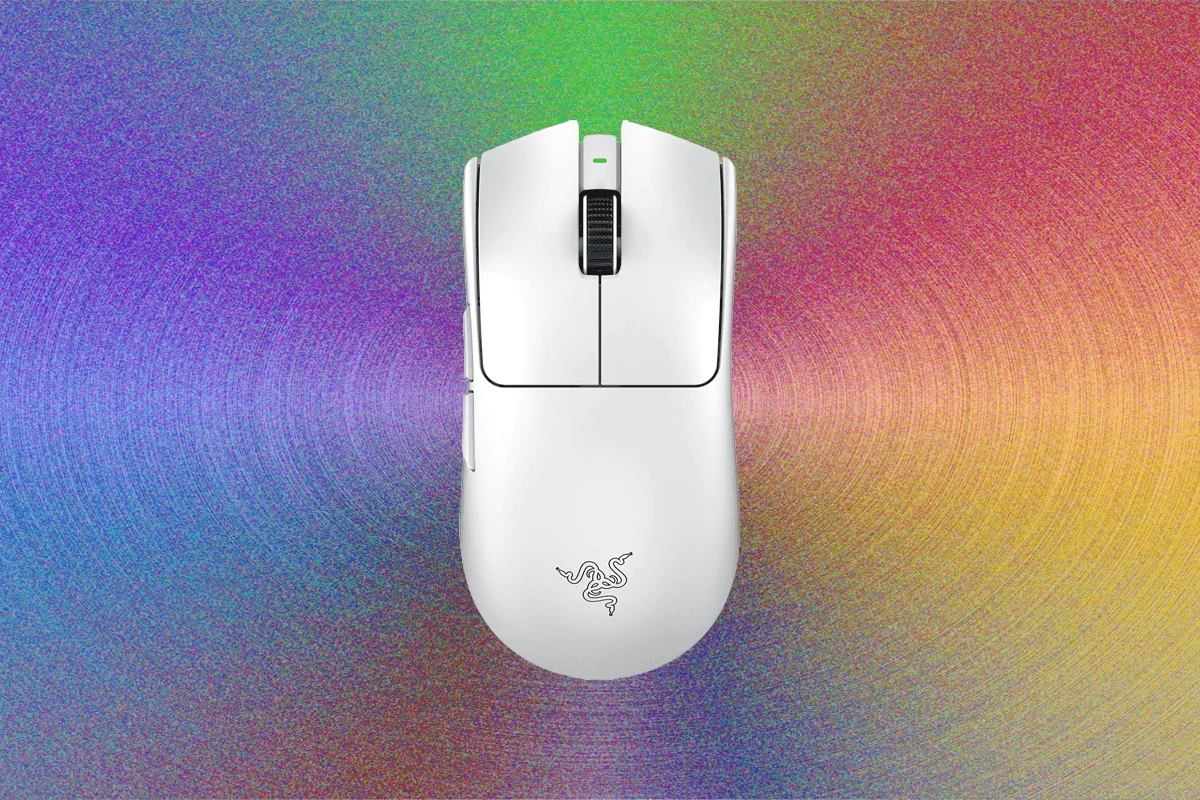
The landscape of PC gaming peripherals has undergone a radical transformation over the last decade, shifting from a focus on excessive buttons and heavy weights to a relentless pursuit of "ultralight" construction and extreme sensor precision. As of late 2024, the market has reached a point of saturation where the difference between a "good" and a "great" mouse is often measured in single-digit grams or micro-seconds of latency. This evolution is driven by the demands of professional eSports, where the hardware must act as a seamless extension of the player’s hand. After rigorous testing of dozens of the latest models, it has become clear that while there is no singular "perfect" mouse for every user, the industry has branched into several distinct categories: the ultralight speedsters, the ergonomic workhorses, the niche specialists, and the high-value budget entries.
The Evolution of the Ultralight Frontier
The chronology of gaming mouse development shows a distinct pivot around 2019, when the "honeycomb" shell design popularized by brands like Finalmouse and Glorious forced industry giants like Logitech and Razer to rethink their engineering. This trend culminated in products like the Corsair Sabre V2 Pro Ultralight, which currently sits at the extreme end of the weight spectrum. Weighing in at a mere 36 grams, the Sabre V2 Pro represents a technical milestone in weight reduction. However, achieving this weight requires significant trade-offs in structural integrity.

Early reviews of the Sabre V2 Pro have noted that the shell is exceptionally thin, leading to a "flimsy" sensation that may alienate users accustomed to more substantial hardware. This design philosophy echoes the famous mantra of Lotus Cars founder Colin Chapman: "Simplify, then add lightness." While the Sabre V2 Pro is a marvel of engineering for those who prioritize low inertia above all else, it highlights the current tension in the market between weight and durability. Users who find the 36-gram limit too compromising often turn to the Corsair Sabre V2 Magnesium or Carbon Fiber editions. These models hover around the 60-gram mark, offering a much more rigid chassis and a premium tactile feel, albeit at a higher price point of $170.
Performance Benchmarks and Sensor Technology
The technical data behind modern gaming mice centers on two primary metrics: Dots Per Inch (DPI) and Polling Rate. While marketing materials often highlight DPI levels as high as 30,000, most professional players and enthusiasts operate within the 400 to 1,600 DPI range. The real technological battleground has shifted to polling rates. A standard gaming mouse operates at 1,000 Hz, meaning it reports its position to the computer 1,000 times per second. New flagship models, such as the Razer Viper V3 Pro and the Corsair Sabre V2 series, now support up to 8,000 Hz (HyperPolling).
Data suggests that 8,000 Hz polling rates can reduce input latency from 1 millisecond to 0.125 milliseconds. While this difference is nearly imperceptible to the average user, it provides a smoother cursor trail on high-refresh-rate monitors (240 Hz and above). The Razer Viper V3 Pro, currently priced around $100 for previous-generation stock, remains a benchmark for this technology. It combines an 8,000 Hz polling capability with a battery life rated for over 95 hours, proving that high-speed performance no longer necessitates a wired connection.

The Ergonomic Stalwarts: Logitech and Sony
While Corsair and Razer chase the ultralight crown, Logitech has focused on refining shapes that have become industry standards. The Logitech Pro X Superlight 2 Dex, priced at $160, is a prime example of an asymmetrical, sculpted design aimed at right-handed users who prefer a "palm" or "claw" grip. Although its technical specifications occasionally lag slightly behind Razer’s newest releases, the Superlight series remains the most popular choice among professional FPS players due to its reliable "Hero 2" sensor and the ubiquity of its shape.
A surprising newcomer to the high-end space is Sony, through its Inzone gaming brand. The Sony Inzone Mouse-A, retailing for approximately $148, attempts to bridge the gap between lifestyle aesthetics and hardcore performance. At 48 grams, it is remarkably light for a mouse that does not feature a "holed" shell. However, testing has revealed that Sony still faces "first-generation" hurdles. Reports of battery drain while the mouse is disconnected and a scroll wheel with inconsistent tactile feedback suggest that while the hardware quality is high, the firmware and mechanical refinement are not yet on par with established peripheral manufacturers.
Niche Applications and Specialized Hardware
Not all gaming requires 40-gram mice and 8,000 Hz sensors. The MMO (Massively Multiplayer Online) and MOBA (Multiplayer Online Battle Arena) genres demand high macro availability. The Corsair Scimitar Elite Wireless SE, priced at $80, serves this specific demographic. It features a patented sliding side rail with a 12-button numpad, allowing users to customize the position of the buttons to match their thumb length. This focus on utility over raw speed highlights a significant segment of the market that values "actions per minute" over "frames per second."

Durability is another specialized sub-sector. The SteelSeries Aerox 3 ($100) addresses the common issue of hardware failure due to environmental factors. It is one of the few gaming mice to feature an IP54 rating, making it water-resistant and dust-proof. This is achieved through a protective coating on the internal circuitry, allowing for a "hole-heavy" ultralight design without the fear of damage from spills or sweat.
The Budget Reality: High Performance for Less
The democratization of sensor technology has led to a surge in high-quality budget options. The Logitech G203, often found for under $30, demonstrates that a "premium" experience is no longer gated by a $100+ price tag. While it utilizes a more traditional 8,000 DPI sensor and a heavier build, its inclusion of RGB lighting, six programmable buttons, and a reliable mechanical tensioning system makes it a viable entry point for competitive gaming. This segment of the market serves as a vital counterbalance to the escalating prices of flagship magnesium and carbon fiber models.
The Critical Role of the Mouse Surface
A gaming mouse is only as effective as the surface it glides upon. The industry has seen a parallel evolution in "desk mats," ranging from the $11 SteelSeries QcK—a staple of the eSports scene for over a decade—to luxury options like the $239 Harber London Professional Leather Desk Mat. While leather mats offer a sophisticated aesthetic, gamers typically prioritize low-friction cloth or specialized "speed" surfaces.

Recent trends have also introduced "hybrid" pads, such as the Grovemade Wool Felt Desk Pad ($70). While not marketed exclusively to gamers, the natural fibers of wool provide a unique glide that many users find comparable to high-end synthetic "glass" pads. The choice of mousepad is increasingly recognized as a vital component in the "input chain," affecting both the sensor’s tracking accuracy and the physical effort required to move the mouse.
Ergonomics and Grip: The Science of Hand Interaction
Industry experts and ergonomic researchers emphasize that a mouse’s "best" status is entirely subjective to the user’s grip style. There are three primary classifications:
- Palm Grip: The entire hand rests on the mouse. This requires a larger, more contoured mouse like the Logitech Dex.
- Claw Grip: Only the palm’s base and fingertips touch the mouse. This is best served by medium-sized, symmetrical mice like the Razer Viper.
- Fingertip Grip: Only the fingertips touch the mouse, allowing for maximum agility. This style benefits most from the extreme ultralight models like the 36-gram Corsair Sabre.
Failure to match a mouse to one’s grip style and hand size (measured from the base of the palm to the tip of the middle finger) can lead to Repetitive Strain Injury (RSI) or Carpal Tunnel Syndrome, particularly in high-intensity gaming sessions.

Market Outlook and Implications
The gaming mouse market is currently in a state of "diminishing returns" regarding raw specifications. With sensors now capable of tracking on glass and polling rates exceeding the processing capabilities of some older CPUs, the next frontier is likely to be material science and sustainability. The shift toward magnesium alloy and carbon fiber suggests a move toward "luxury" peripherals that justify their high costs through durability and exotic aesthetics rather than just sensor increments.
Furthermore, the integration of high-performance wireless technology has effectively ended the "wired vs. wireless" debate. With sub-1ms latencies now standard in wireless flagship models, the cord has become a relic of the past for all but the most budget-conscious or professional-grade setups. As the industry moves forward, the focus will likely return to refining software ecosystems—like Corsair’s iCUE or Logitech’s G Hub—which remain a point of contention for users seeking a streamlined, bloatware-free experience.
In conclusion, the "best" gaming mouse is no longer a single product, but a choice based on a specific intersection of weight preference, hand size, and game genre. Whether it is the featherweight 36-gram Sabre V2 Pro for the aspiring pro-player or the versatile G203 for the casual gamer, the current market offers a level of precision and variety that was unimaginable just a few years ago.
