

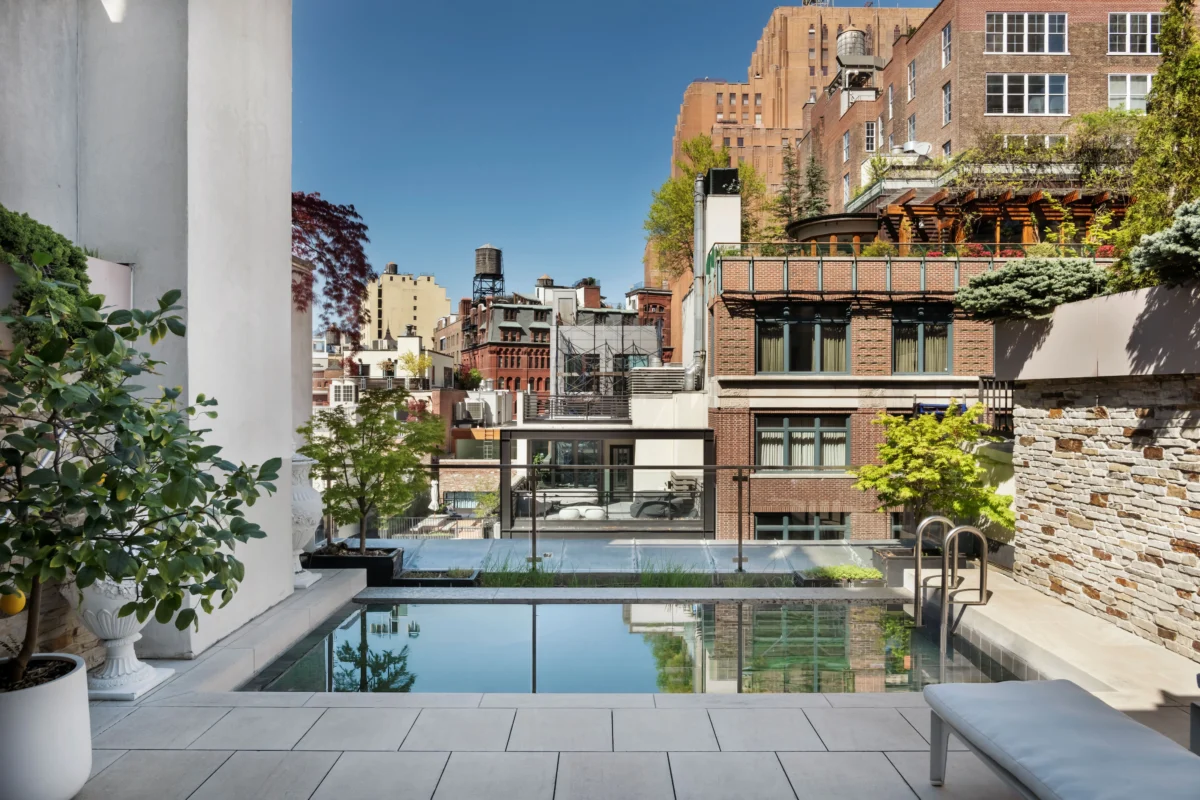
A significant shift is underway in Manhattan’s elite real estate landscape, with an unprecedented surge in wealthy renters driving the borough’s rental market to historic highs. This phenomenon, largely fueled by a confluence of record-low sales inventory, strategic investment considerations, and the looming impact of new tax policies, is redefining luxury living in one of the world’s most competitive urban environments. The once-unthinkable monthly rents of six figures are now becoming increasingly commonplace within an exclusive, often private, market.
The Unprecedented Surge in Manhattan Rents
Recent data paints a stark picture of a rental market in overdrive. According to the Real Deal Report, meticulously compiled by Jonathan Miller, director of markets for Street Matrix, the median rent in Manhattan soared to an all-time high of $5,000 a month in July. This milestone was accompanied by a substantial average rent increase of 15% year-over-year, pushing the figure to $6,306. While these statistics reflect a broad market trend, the true drivers of this exceptional growth reside at the apex of the rental spectrum.
The luxury rental segment, which constitutes the top 10% of the market, has experienced a particularly explosive trajectory. Over the past year, the average price for these high-end properties jumped a staggering 35%, reaching $17,464 a month. This translates to an average of $121 per square foot, a figure that underscores the intense demand and premium placed on prime Manhattan residences. These aren’t merely expensive apartments; they represent a distinct category of "mega-rentals" that cater to an ultra-affluent clientele, often capable of purchasing multi-million dollar homes but strategically opting for tenancy.
Laura Klein of Bespoke Real Estate, a prominent broker in this exclusive domain, offers firsthand insight into this burgeoning market. She recently facilitated a rental deal for a penthouse in Chelsea at an astonishing $177,000 a month, a transaction that epitomizes the current demand for top-tier properties. "These are people who can easily afford $20 million, $50 million trophy homes," Klein states, emphasizing that the decision to rent is not born out of financial constraint but rather a calculated choice. The primary catalyst, according to Klein, is the severe lack of available inventory for sale. "There is so little inventory. And they don’t want to compromise." This sentiment resonates deeply across the high-end brokerage community, where clients are increasingly unwilling to settle for anything less than their ideal residence, even if it means temporary, albeit extraordinarily expensive, rental accommodation.
Decoding the Drivers: Scarcity, Strategy, and Taxation
Several intertwined factors are contributing to this remarkable shift in Manhattan’s luxury real estate paradigm. Historically, renters are typically individuals who, for various reasons, cannot yet afford to purchase property. However, today’s market in Manhattan presents a stark deviation from this norm. The ultra-wealthy, possessing ample capital for significant real estate investments, are consciously choosing to rent, a decision informed by a complex interplay of market dynamics and regulatory changes.
The Inventory Crisis and Investment Aversion:
A critical factor underpinning the rental surge is the record-low supply of high-end properties available for sale. Manhattan’s sales inventory has been constrained for some time, a situation exacerbated by a variety of factors including rising construction costs, lengthy approval processes, and a general reluctance among existing owners to sell in a fluctuating market. For affluent buyers with specific preferences for location, amenities, and finish, finding a "dream home" to purchase has become an increasingly challenging and protracted endeavor. Rather than compromising or waiting indefinitely, many are choosing to reside in luxury rentals until a suitable purchase opportunity arises.
Furthermore, the investment appeal of Manhattan resales has diminished in recent times. Reports indicate that prices for Manhattan resales have been either falling or flat, making apartments less attractive as pure investments compared to previous bullish cycles. In an environment where asset appreciation is not guaranteed, the traditional allure of real estate as a primary investment vehicle is tempered, prompting some wealthy individuals to hold off on purchasing, preferring to maintain liquidity or deploy capital in other, more immediately lucrative ventures. Renting, in this context, offers flexibility without the long-term commitment and potential downside risk associated with ownership in a softening sales market.
The Impact of the Pied-à-Terre Tax:
Perhaps the most significant and relatively recent legislative catalyst driving this trend is the new New York pied-à-terre tax. This tax, formally known as the "Pied-à-Terre Tax on High-Value Second Homes," was a legislative proposal aimed at generating revenue for the state and addressing issues of housing affordability and vacancy. While the initial proposals for a sweeping tax faced considerable opposition, a version of it was eventually passed. The tax targets non-primary residences, or second homes, above a certain valuation threshold, imposing an annual levy on these properties. The intent was to discourage speculative ownership and generate funds for public services, but it has had an undeniable, albeit perhaps unintended, consequence on the luxury sales market.
Pam Liebman, president and CEO of The Corcoran Group, one of New York’s premier real estate firms, confirms this impact. "The sharp increase in rentals following the pied-à-terre tax announcement suggests that some prospective purchasers may already be choosing flexibility over ownership," Liebman noted. For ultra-wealthy individuals considering a secondary residence in Manhattan – a pied-à-terre – the additional annual tax burden represents a significant ongoing cost that diminishes the financial attractiveness of ownership. Renting, conversely, offers the desired access to a luxury Manhattan residence without incurring this specific tax liability, allowing for greater financial flexibility and predictability.
A Deeper Dive into Market Dynamics and Chronology
The current state of Manhattan’s luxury rental market is not an isolated phenomenon but rather the culmination of several years of evolving economic conditions, demographic shifts, and policy interventions.
Post-Pandemic Resurgence:
The initial phase of the COVID-19 pandemic saw a temporary exodus from New York City, leading to a dip in both rental and sales prices as demand waned. However, this trend was short-lived. By mid-2021, a robust return to urban living began, driven by a desire for amenities, culture, and professional opportunities that only a city like New York can offer. This resurgence quickly absorbed the temporary surplus in housing supply, setting the stage for renewed upward pressure on prices. The pent-up demand, combined with a gradual return to office work and a renewed appreciation for city life, ignited the market anew.
Economic Headwinds and Shifting Investment Paradigms:
Beyond local market dynamics, broader economic factors have also played a role. While the ultra-wealthy are generally less sensitive to interest rate fluctuations than average buyers, rising interest rates do impact the cost of capital, even for substantial loans. More significantly, periods of stock market volatility or economic uncertainty can lead high-net-worth individuals to re-evaluate their asset allocation strategies. In such times, maintaining liquidity and avoiding long-term, illiquid investments like real estate purchases can be a prudent strategy. Renting offers a way to enjoy the benefits of a prime asset without tying up significant capital in a potentially uncertain sales market.
Historical Context:
Manhattan has always been a high-cost housing market. However, the current confluence of factors has created a unique scenario, particularly at the extreme high end. While rental markets have seen peaks and troughs, the specific phenomenon of ultra-wealthy individuals opting to rent at six-figure monthly sums, driven by inventory scarcity and tax implications, represents a novel chapter in the city’s real estate history. Previous peaks were often driven purely by demand outstripping supply or robust economic growth, but the current situation layers on the complexity of strategic avoidance of ownership costs and a pronounced shift in buyer psychology.
Timeline of Key Events:
- Pre-Pandemic (Early 2020): Manhattan’s luxury market was strong but showing signs of normalization after a long boom. Rental prices were high but relatively stable.
- Early-Mid Pandemic (2020-2021): Temporary dip in demand and prices as residents left the city.
- Late Pandemic/Early Recovery (Mid-2021-2022): Return to NYC accelerates, demand outstrips rebounding supply, rental prices begin a steady climb. Discussions around potential pied-à-terre tax gain momentum.
- Late 2022/Early 2023: Legislative discussions surrounding the pied-à-terre tax intensify, eventually leading to its passage in some form. Brokers begin observing a behavioral shift among prospective high-end buyers.
- Summer 2023 (July): Median and average Manhattan rents hit all-time records. The luxury rental segment shows unprecedented growth, driven by the factors discussed. The market for mega-rentals ($50,000+ and $100,000+ per month) experiences exponential growth.
The Stealth Market and Brokerage Insights
One of the most fascinating aspects of this emerging luxury rental trend is its opaque nature. Unlike typical rental listings, the vast majority of these ultra-high-end properties are never publicly advertised. This "stealth market" operates through an exclusive network of high-end brokers who cater specifically to ultra-wealthy clients.
Laura Klein, a key player in this niche, elaborates on this phenomenon. She currently manages private listings for a $175,000-a-month rental in Tribeca and a $95,000-a-month property on the Upper East Side. These transactions occur discreetly, connecting discerning renters with opportunistic owners. "The $100,000-a-month number is almost normal now," Klein observes, highlighting the rapid normalization of what would once have been considered an extreme anomaly. These renters, she explains, seek "turnkey, unique, trophy properties" – residences that offer unparalleled luxury, bespoke design, and immediate move-in readiness, often with high-end furnishings and services included.
The owners of these luxury rentals are typically not in urgent need of income. Instead, they are high-net-worth individuals who own exceptionally valuable properties – often worth tens of millions of dollars if listed for sale – and are willing to rent them out if the financial terms are sufficiently attractive. "They say to me, ‘If the number is right, I’ll rent,’" Klein recounts. This opportunistic approach by owners, coupled with the intense demand from wealthy renters seeking flexibility and avoiding ownership complications, creates a perfectly symbiotic, albeit exclusive, market. It allows owners to generate substantial income from an asset that might otherwise sit vacant, while providing renters with access to properties that are virtually unattainable through traditional sales channels or too costly to own outright given current market conditions and tax implications.
Broader Implications and Future Outlook
The ascent of Manhattan’s luxury rental market carries significant implications for the city’s real estate landscape, its economy, and broader socio-economic trends.
Impact on NYC’s Real Estate Landscape:
This trend redefines what constitutes "luxury" in Manhattan real estate. It shifts the focus from purely ownership-based status to one that also encompasses ultra-high-end tenancy, where flexibility and access to unparalleled properties are prioritized. It also highlights the continued premium placed on Manhattan addresses, even as the mode of occupancy evolves. The growth of the "mega-rental" segment suggests a more segmented market, where the very top tier operates under different rules and motivations than the rest.
Affordability Concerns and Economic Disparity:
While the article focuses on the ultra-luxury segment, such extreme pricing at the top inevitably exerts upward pressure across all rental tiers. The overall median rent of $5,000 in Manhattan, while distinct from the $17,000+ luxury average, is still indicative of a severe affordability crisis for a vast majority of New Yorkers. This widening gap between the accessible and inaccessible segments of the market underscores growing economic disparity within the city. The wealthy’s ability to absorb such high rents indirectly contributes to the overall escalation of housing costs, making it increasingly challenging for middle- and lower-income residents to find suitable housing.
Policy Effectiveness and Unintended Consequences:
The pied-à-terre tax, intended to address issues of housing affordability and generate revenue, appears to be having an unanticipated effect on the luxury sales market, pushing potential buyers into rentals. This raises questions about the effectiveness of such policies in achieving their stated goals and the potential for unintended consequences that can reshape market dynamics in unforeseen ways. Policymakers will need to closely monitor whether the revenue generated outweighs the potential dampening effect on the luxury sales market and its broader economic contributions.
Market Sustainability and Future Trends:
The sustainability of these record-high luxury rents is a key question. Factors that could shift the trend include:
- Increased Sales Inventory: Should more high-end properties become available for sale, some wealthy renters might revert to buying.
- Changes in Tax Policy: Any modification or repeal of the pied-à-terre tax could influence buyer behavior.
- Economic Shifts: A prolonged economic downturn or significant stock market correction could impact the financial capacity or willingness of the ultra-wealthy to sustain such high rental costs.
- New Developments: A surge in new luxury condo developments could eventually alleviate inventory pressure, though this takes years.
For now, the indicators suggest that this trend of wealthy renters prioritizing flexibility and access over ownership is likely to persist as long as sales inventory remains constrained and the tax landscape encourages such strategic decisions. The "new normal" in Manhattan’s luxury housing market is one where six-figure monthly rents are not just an outlier but a growing segment of an exclusive, dynamic, and often invisible market.
