

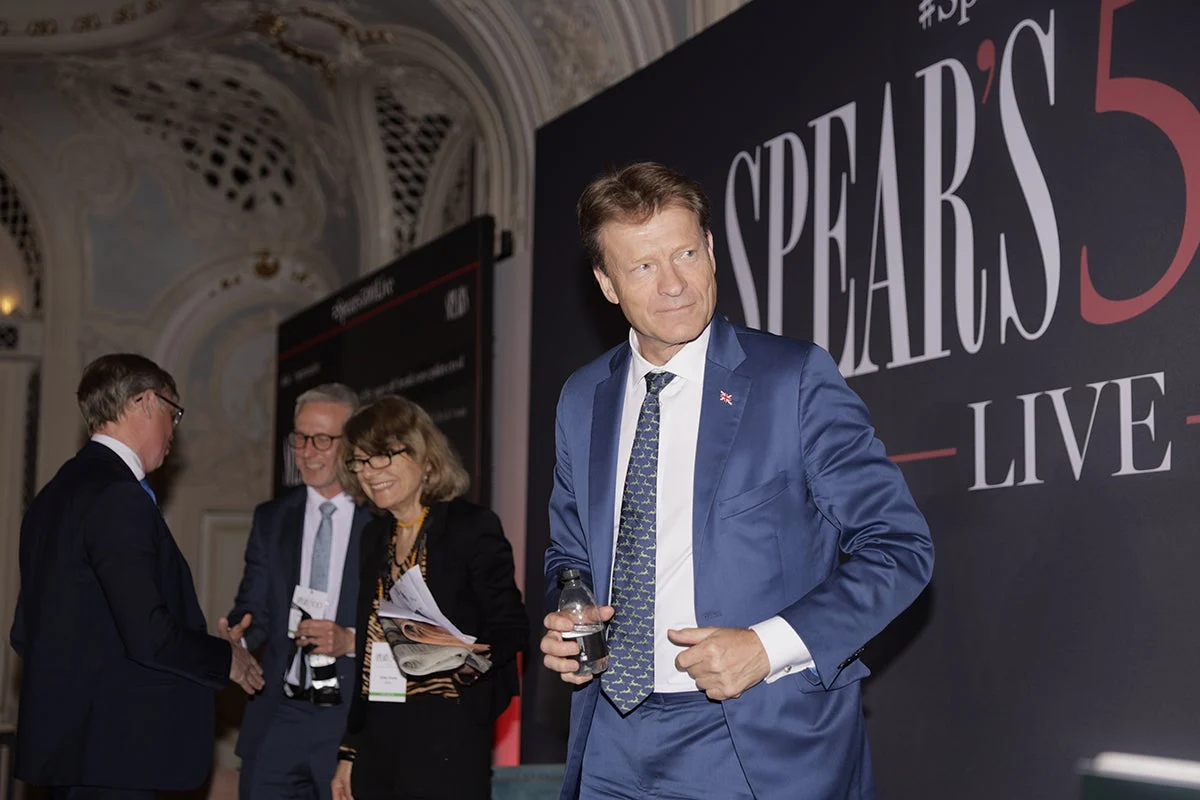
London, UK – The vitality and future economic trajectory of London have become a focal point of urgent discussion, with Richard Tice, Deputy Leader of Reform UK, issuing a stark warning about the city’s "anti-wealth culture" and advocating for policies that champion entrepreneurialism and reward risk-takers. Speaking at the prestigious Spear’s 500 Live event, held at The Savoy on May 6th, Tice articulated a vision for London’s resurgence, emphasizing the detrimental impact of over-regulation, excessive taxation, and a perceived decline in law and order on its ability to attract and retain wealth creators.
The event, a key gathering for private client professionals and leading figures within the private wealth and family office ecosystem, provided a platform for Tice to outline his party’s economic agenda. He argued that a combination of burdensome financial sector regulations, complex planning laws, and high taxation on wealth generators have created an environment that is actively stifling economic growth in the capital and across the United Kingdom. "That’s been driven from the political class and it’s been catastrophic," Tice stated, questioning the rationale for individuals to remain in a jurisdiction perceived as punitive. "People say, ‘Why would I stay there? Why would I pay all these taxes?’"
Tice, who divides his time between the UK and Dubai, also highlighted growing concerns over law and order as a significant factor driving internationally wealthy residents away from London. This sentiment resonates with broader anecdotal evidence and reports suggesting a shift in the preferences of high-net-worth individuals seeking secure and stable environments for their assets and families.
The urgency of Tice’s message was amplified by the context of current economic data. Recent reports have indicated significant double-digit falls in central London property values, alongside a higher unemployment rate of 7.4% compared to the national average of 4.9%. These figures paint a picture of a capital city grappling with significant economic headwinds.
The Case for a Pro-Growth Agenda
Tice’s core argument centres on the need to actively foster an environment where entrepreneurs and wealth creators feel valued and incentivized. He called for a substantial simplification of business regulations and proposed a reduction in corporation tax to "20 per cent or lower," a notable contrast to the current main rate of 25%. "We all want smart and safe regulation in any industry, any walk of life. What we don’t want is the daft dither and delay, and we’ve got far too much of the latter, and that is crowding out the former," he elaborated, underscoring a desire for efficient and effective governance.
He further articulated a critique of the prevailing political discourse surrounding wealth, stating, "We want to celebrate wealth creators, [but] we’ve ended up in a situation where it can become a sort of source of resentment and envy amongst the political class, and that has been disastrous." This sentiment suggests a belief that a negative portrayal of wealth creation is counterproductive to economic prosperity.
Panel Discussion: A Shared Concern for London’s Future
Tice’s address was part of a broader panel discussion that included prominent economist Vicky Pryce, Chief Economic Adviser at The Centre for Economics and Business Research (CEBR), and John Mulryan, CEO of Ballymore UK, a leading London property developer. The consensus among the three speakers was that immediate and decisive action is required to revitalize London’s economic standing.
Vicky Pryce characterized London as Britain’s "lacklustre golden goose," emphasizing its critical role in the national economy. She voiced strong criticism of the government’s 2024 increase in National Insurance contributions, labelling it a "complete mistake" and a "tax on jobs." Despite this critique, Pryce acknowledged the government’s efforts to "reset" relations with the EU, noting that the impact of Brexit on financial services had not been as severe as initially feared. "Despite Brexit and everything else, London still seems to be the number one or two location for investment coming in, and the financial sector has done rather well, despite leaving the EU," she observed, highlighting London’s resilience.
Pryce, who previously served in government, expressed concern over a potential tourist tax, reportedly being considered by London Mayor Sadiq Khan, which could levy £350 million annually on overnight visitors. "Do we really want to charge people to come here when we depend on them coming here?" she questioned, advocating for the expansion of Heathrow Airport as a crucial component of London’s global connectivity. "It affects the rest of the country as well as being a hub that earns a great deal of money for the UK as a whole," she added. "London is the treasure that we absolutely need to continue to feed, because if London were to go then the rest of the country would suffer hugely."
Addressing the Property and Housing Crisis
John Mulryan focused on the severe downturn in London’s home building sector, noting that construction began on only 4,550 homes last year, a staggering 72% decrease from the 2023/24 period. He attributed this decline to escalating costs imposed on developers by local authorities, compounded by the pervasive impact of inflation. Mulryan proposed the abolition of stamp duty on property transactions, particularly the substantial rates that can reach 19% for overseas buyers of second homes in prime London areas. He suggested replacing it with a simpler property tax to stimulate the housing market and encourage international investment.
His remarks also touched upon the impact of recent changes to the tax regime concerning non-domiciled residents, stating, "The non-dom change was a mistake." He argued that other nations are actively seeking to attract wealth, and such policy shifts can send a negative signal. "Some people have left, but how many people haven’t come that would have otherwise come?" Mulryan pondered. He stressed the importance of sending positive messages about wealth creation and investment, asserting that "when you send out messages that we’re going to have higher tax, [that] we’re attacking wealthy people – all those kind of messages are probably more damaging than the economics of it."

Complacency and the Path to Recovery
The panel broadly agreed that London’s past successes may have fostered a degree of complacency. Richard Tice warned that some international investors now perceive London as "a great place to go on holiday but becoming completely uninvestable." He emphasized the highly competitive global landscape and the increasing mobility of capital, which has hindered London’s growth rate.
When pressed on the timeline for London’s recovery, Tice expressed a cautious outlook. "I fear it’s going to get worse before it gets better," he admitted. However, he projected that with the "right direction of travel, the right leadership, the right pro-business, pro-growth, pro-wealth creation attitude," a realistic timeframe for significant improvement could be between "four to seven years."
Navigating Tax Scrutiny and Political Discourse
During the event, Tice also addressed recent scrutiny regarding his personal tax affairs, which had been raised by media outlets and tax expert Dan Neidle. Neidle had alleged that companies controlled by Tice might have underpaid approximately £98,000 in tax related to a property business. Tice refuted these claims, describing the coverage as "full of wrong assumptions, wrong numbers, wrong dates" and a deliberate attempt to "smear and attack and, frankly, libel people." He stated that such allegations are "just ignored" as the focus remains on moving forward.
Tice further revealed that a prior, "politically motivated tax investigation" had concluded that he had actually overpaid tax by a "five-figure sum." He defended the role of wealth creators and politicians, advocating for a celebration of success rather than criticism. "The key point is: what do we want from our key wealth creators, and what do we want from our key politicians? And if you want really successful people to help run London, to help run this country, then we’ve got to celebrate success. Celebrate wealth creators, celebrate people who’ve built thousands of homes, as opposed to drive them out of the world of leadership, of the world of politics."

Broader Implications and Future Outlook
The discussions at Spear’s 500 Live underscore a critical juncture for London’s economic identity. The sentiment expressed by Tice, Pryce, and Mulryan reflects a growing concern among business leaders and economists that the city’s competitive edge is at risk. The calls for deregulation, lower taxation, and a more supportive environment for wealth creation are not new, but they gain significant traction when voiced at such influential forums and in the context of current economic data.
The potential implementation of a tourist tax and ongoing debates around tax policies for high-net-worth individuals and corporations will continue to shape investor sentiment. As Pryce noted, London’s role as a global financial hub and its contribution to the wider UK economy are immense, making its sustained prosperity a national imperative. The challenge for policymakers will be to balance fiscal responsibilities with the imperative to attract and retain the capital and talent necessary for continued growth. The coming years will likely see further debate and policy adjustments as London seeks to navigate these complex economic currents and reaffirm its position as a leading global city.
The full panel discussion, titled "Is London becoming uninvestable? Richard Tice, Vicky Pryce and the fight for London’s future," was made available for viewing, offering deeper insights into the perspectives shared at the event. Spear’s 500 Live, presented in association with partners including the Charities Aid Foundation, CMB Monaco, and Guernsey Finance, continues to serve as a vital platform for dialogue within the private wealth sector.
