

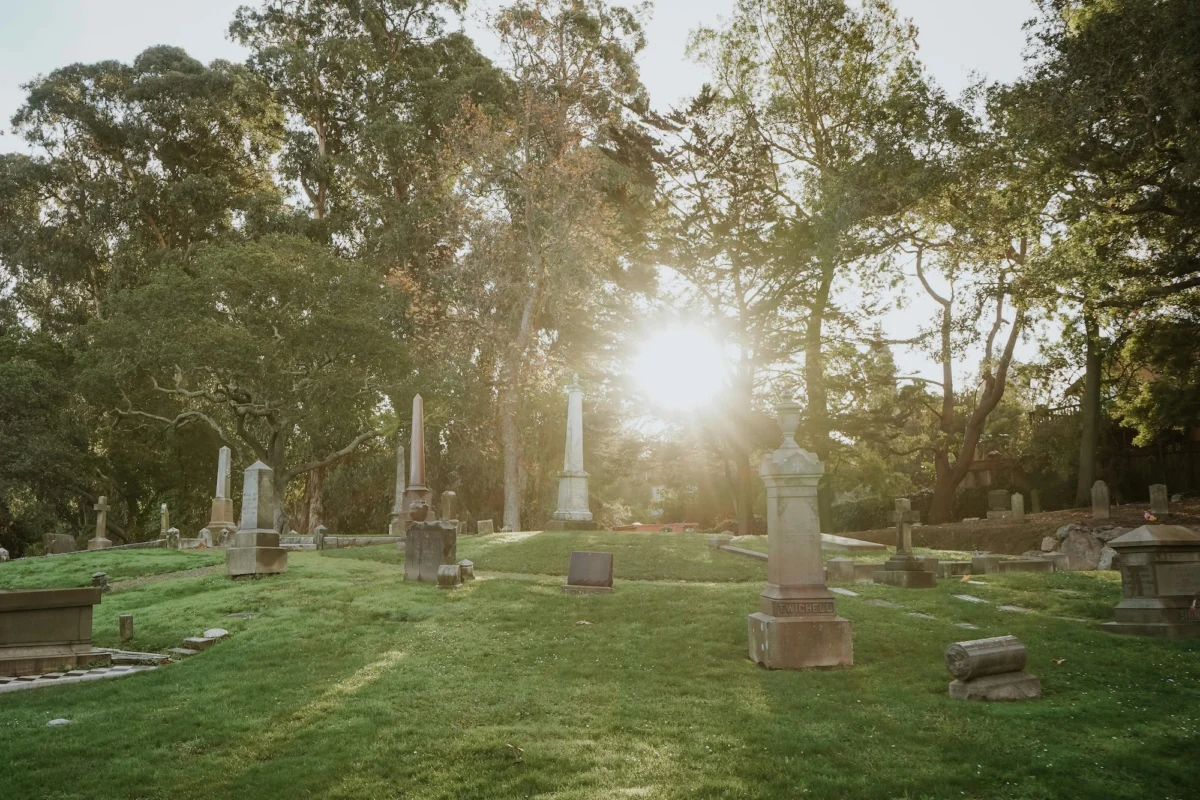
In the quiet, manicured grounds of the East Lawn Cemetery in Ithaca, New York, a biological phenomenon is unfolding beneath the soil. While these grounds are traditionally associated with mourning and the past, they have become a vibrant hub for one of the largest and oldest known communities of ground-nesting bees in the world. Research conducted by scientists at Cornell University has revealed that the "regular miner bee," or Andrena regularis, has found an ideal refuge in this seemingly sterile landscape of tombstones and cropped lawns. This discovery underscores a shifting perspective in urban ecology: cemeteries are not merely repositories for the deceased but are increasingly serving as vital "lifeboats" for biodiversity in an era of rapid habitat loss.
The Hidden World of the Miner Bee
The regular miner bee is a solitary, ground-nesting insect characterized by its black and tan fuzzy body, often accented with patches of yellow pollen. Unlike the well-known honeybee, which lives in massive social colonies with a central queen, the miner bee represents the 90 percent of bee species that are solitary. Instead of building wax hives in trees, these bees excavate intricate tunnels in the earth.
At East Lawn Cemetery, the population of these bees is staggering. By collecting samples and extrapolating the data across the cemetery’s acreage, Cornell researchers estimate that the site hosts between 3 million and 8 million bees. In certain high-density areas, thousands of individuals were observed emerging from a single square meter of ground. The health of this population is further evidenced by the high ratio of females to males; because female offspring require more resources to produce, a high female population indicates an environment rich in nutrients and low in stress.
The presence of the miner bee’s natural enemy, the cuckoo bee (Nomada imbricata), also serves as a biological indicator of a thriving ecosystem. Cuckoo bees are kleptoparasites, meaning they lay their eggs in the burrows of miner bees. When the cuckoo larvae hatch, they consume the host’s food stores and often the host larvae themselves. While morbid, the presence of these parasites confirms that the miner bee population is robust enough to support a complex multi-trophic food web.
Why Cemeteries Provide Ideal Habitats
The selection of cemeteries by ground-nesting bees is not accidental. According to Jordan Kueneman, a community ecologist at Cornell University and co-author of the study, the characteristics that make land suitable for human burial often align with the needs of subterranean insects. Miner bees require soil that is easy to excavate, well-drained to prevent flooding of the larvae chambers, and stable enough to prevent tunnel collapse.

The management of cemetery grounds also plays a surprising role in their success. Frequent mowing, which is often criticized in other ecological contexts for reducing floral diversity, actually benefits ground-nesting bees by keeping the soil exposed. Bare or thinly covered ground warms up more quickly in the sun, allowing the bees to become active earlier in the day and providing them with clear flight paths to and from their nests.
Furthermore, cemeteries offer a level of protection rarely found in urban parks or residential areas. They are largely free of the "human disturbances" that plague other green spaces, such as off-leash dogs, heavy foot traffic, and recreational activities that compact the soil. Perhaps most importantly, cemeteries are devoid of speeding vehicles, which are responsible for the deaths of hundreds of millions of insects and birds annually in the United States.
A Historical Context: The Rural Cemetery Movement
The role of cemeteries as nature preserves is rooted in the "Rural Cemetery Movement" of the 19th century. Prior to this era, burials typically occurred in cramped churchyards within city centers. In the 1830s, however, designers began creating sprawling, park-like cemeteries on the outskirts of cities, such as Mount Auburn in Cambridge, Massachusetts, and Green-Wood in Brooklyn, New York.
These sites were designed as "arboretums for the public," featuring diverse tree species, winding paths, and meticulously planned landscapes. Over the decades, as the cities grew to surround these cemeteries, the sites became "islands" of green in a sea of concrete. Today, these historical decisions have resulted in mature urban forests that provide nesting sites for hawks, migratory stops for songbirds, and stable ground for rare plants that have been wiped out in the surrounding suburban sprawl.
Supporting Data and Global Trends
The findings in Ithaca are mirrored by a growing body of international research. A 2019 study published in the journal Sustainability highlighted that cemeteries in Europe often harbor higher levels of plant and insect diversity than nearby urban parks. In the United Kingdom, "Living Churchyards" projects have identified rare lichens and fungi that exist nowhere else in their respective counties.
The importance of protecting these pollinators cannot be overstated from an economic and agricultural perspective. In New York State alone, the apple industry—a $260 million business—relies heavily on native pollinators like the miner bee. While farmers often rent honeybee hives, native solitary bees are frequently more efficient pollinators on a per-bee basis, particularly for specific crops that require "buzz pollination" or early-spring activity.

| Species Type | Estimated Population at East Lawn | Ecological Role |
|---|---|---|
| Andrena regularis (Miner Bee) | 3,000,000 – 8,000,000 | Primary Pollinator |
| Nomada imbricata (Cuckoo Bee) | Thousands (Estimated) | Parasitic Regulator |
| Migratory Birds | Variable | Pest Control / Seed Dispersal |
| Rare Flora | Varies by Region | Genetic Reservoirs |
Implications for Urban Management and Conservation
The Cornell study suggests that with minor adjustments, cemetery groundskeepers could significantly enhance the conservation value of their land. Christopher Grinter, collection manager of entomology at the California Academy of Sciences, notes that recognizing these "unexpected places" for biodiversity is a crucial first step toward intentional management.
Recommended strategies for "wildlife-friendly" cemetery management include:
- Modified Mowing Schedules: Mowing early in the morning before bees emerge or late in the evening can prevent direct mortality of active insects.
- Reduction of Chemicals: Limiting the use of rodenticides and insecticides is critical. Rodenticides, in particular, can travel up the food chain, poisoning the owls and hawks that frequent cemetery trees.
- Native Plant Integration: While manicured lawns are preferred by miner bees for nesting, the perimeter of cemeteries can be planted with native wildflowers to provide the nectar and pollen necessary to fuel the bees’ reproductive cycles.
- Green Burials: The rising trend of "natural" or "green" burials, which eschew embalming fluids and concrete vaults, further reduces the chemical load on the soil and encourages a more natural nutrient cycle.
The Broader Impact on Climate and Urban Heat
Beyond biodiversity, the preservation of cemetery ecosystems offers significant benefits for climate adaptation. Large, tree-filled cemeteries act as "urban cooling islands." Through transpiration and shade, these spaces can reduce local temperatures by several degrees compared to adjacent paved areas. By supporting a healthy population of pollinators, cemeteries ensure the continued health of the urban canopy, which in turn mitigates the urban heat island effect and improves air quality for city residents.
The shift in conservation philosophy—from viewing cities as "biological deserts" to seeing them as complex mosaics of habitat—is gaining momentum. Seth Magle, senior director of the Urban Wildlife Institute at the Lincoln Park Zoo, emphasizes that as the world continues to urbanize, the goal must be to create spaces where humans and wildlife can coexist.
"It’s about finding the ‘aha’ moments in our own backyards," Magle noted. "Cemeteries prove that even in the most unlikely places, nature is waiting for an opportunity to thrive."
Conclusion
The discovery of millions of bees beneath the East Lawn Cemetery serves as a poignant reminder of the resilience of nature. As habitat loss continues to threaten pollinator populations globally, these final resting places are taking on a new life as essential sanctuaries. By acknowledging and fostering the biodiversity within these sacred spaces, society can ensure that the "quiet neighbors" in our cemeteries continue to play their vital role in the ecosystem for generations to come. The intersection of death and life in the cemetery provides a unique model for future urban planning, where every acre of green space is managed with an eye toward the survival of the planet’s smallest, yet most important, inhabitants.
