

Court Decision Clarifies Construction Lien Priority for Lenders
Toronto, ON – July 15, 2026 – In a landmark ruling that offers significant clarity and reassurance to the real estate development financing sector, the Court of Appeal for Ontario has definitively established the limits to which construction liens can supersede a lender’s mortgage interest in the event of a project’s insolvency. The decision, released on July 13, 2026, effectively draws a crucial line for lenders, curtailing the potential for construction lien claimants to assert priority claims beyond the actual shortfall in legally mandated holdbacks.
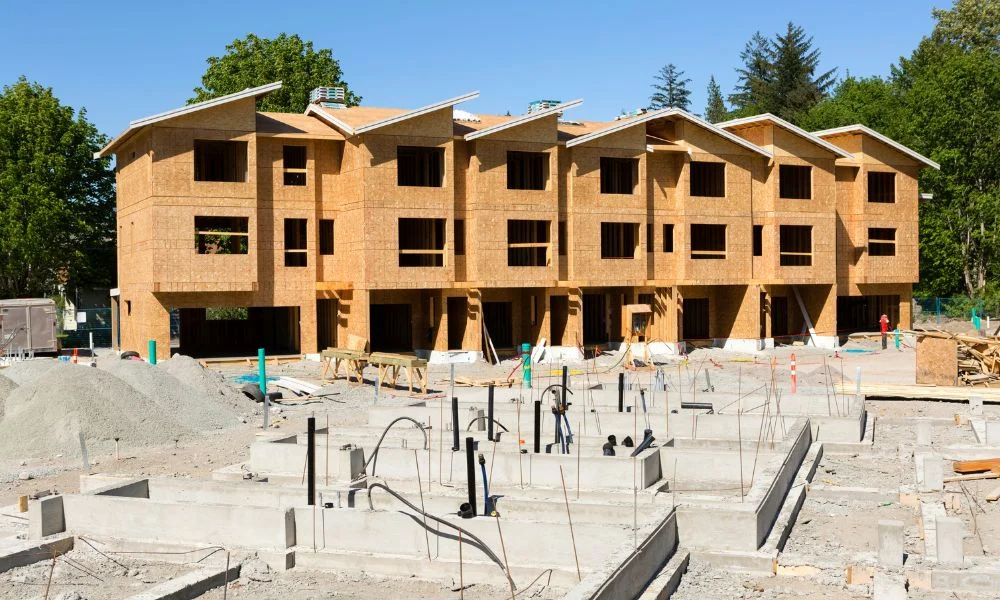
The case, which originated from a residential townhouse project in Barrie, Ontario, centered on the complex interplay between the province’s Construction Act and the rights of secured lenders when a developer encounters financial distress. At its core, the dispute revolved around the interpretation of "holdbacks" and how they should be calculated when assessing the priority of construction lien claims against a lender’s mortgage in an insolvency scenario.
Background of the Dispute
The development in question faced significant financial headwinds, ultimately leading to the developer’s default on its loan obligations to senior lender KingSett Mortgage Corporation. A receiver was officially appointed to manage the insolvent project on March 21, 2024. Subsequently, the partially completed project was sold to Dunsire Homes Inc., a homebuilder seeking to complete the development.
The crux of the legal battle involved two suppliers who had provided materials and services to the project. While these suppliers had been paid in full for their earlier invoices, their outstanding claims were only partially settled. They contended that their priority claim against the sale proceeds should be calculated based on ten percent of their total invoiced amount, regardless of whether those invoices had been fully paid. This interpretation, if successful, would have significantly increased their potential recovery and, consequently, diminished the recovery available to the senior lender.
Dunsire Homes Inc., having stepped into the lender’s shoes through its purchase of the project, argued that the holdback shortfall should only be calculated on the unpaid portion of the invoices. This would exclude any amount that had already been paid in full, as there would be no corresponding holdback deficiency related to those settled transactions.
The Court’s Interpretation of Holdbacks and Lien Priority
The Court of Appeal for Ontario was tasked with resolving this critical interpretational difference: should a holdback shortfall be measured against total invoices rendered, or only against those that remain outstanding? The court decisively sided with the purchaser, Dunsire Homes Inc., and by extension, the secured lender.
In its judgment, the court held that where invoices have been paid in full and there are no competing subcontractor lien claims outstanding, there is no actual shortfall in the legally required holdback pertaining to that specific payment. Therefore, the priority claim for a lien claimant can only extend to ten percent of the unpaid portion of their invoices.
The appellate court found the suppliers’ interpretation to be "commercially absurd." The reasoning behind this assertion is that allowing a contractor to claim a ten percent holdback on an invoice that has already been paid in full would essentially permit them to collect the same ten percent twice – once through the initial payment from the owner and again as a priority claim against the lender’s security in an insolvency. This would create an inequitable and commercially unsustainable outcome.
Chronology of Key Events
- March 21, 2024: A receiver is appointed to manage the insolvent residential townhouse project in Barrie, Ontario, following the developer’s default on its loan from KingSett Mortgage Corporation.
- Post-March 21, 2024: The project is sold to homebuilder Dunsire Homes Inc.
- Undisclosed Date: Two suppliers involved in the project file claims asserting priority for ten percent of their total invoiced amounts, even for invoices that had been paid in full.
- Lower Court Decision (Implicit): The lower courts likely ruled in favor of the purchaser, establishing the precedent that holdback shortfall is calculated on unpaid invoices.
- July 13, 2026: The Court of Appeal for Ontario releases its decision, dismissing the suppliers’ appeal and upholding the principle that holdback priority is limited to the actual deficiency in holdback amounts for unpaid work.
Supporting Data and Legal Context: The Construction Act and Holdbacks
Ontario’s Construction Act (formerly the Construction Lien Act) is designed to protect those who supply services and materials to a construction project. A key mechanism within the Act is the mandatory holdback requirement. Under Section 8 of the Act, owners of a construction project are required to retain 10 percent of the price of services and materials supplied as a holdback for a prescribed period. This holdback fund is intended to act as a buffer, providing a source of payment for contractors and subcontractors who may have unpaid claims against the contractor or owner.
The purpose of the holdback is to protect the flow of funds down the construction pyramid, ensuring that those who perform work or supply materials have recourse even if the primary contractor or owner becomes insolvent. In insolvency situations, construction liens can, under specific circumstances, achieve priority over a lender’s mortgage. However, this priority is generally capped by the amount of the required holdback that has not been properly retained or paid out.
The case at bar tested the boundaries of this priority. The suppliers argued for an expansive interpretation of the holdback shortfall, while the purchaser advocated for a more constrained, literal interpretation tied to actual payment deficiencies. The court’s decision reinforces the principle that the holdback is a specific fund designed to cover deficiencies in payment for work performed, not a general entitlement to a percentage of all invoiced amounts, paid or otherwise.
Implications for Lenders and the Development Industry
This ruling carries significant implications for lenders who finance real estate development projects across Ontario. The decision provides a much-needed measure of certainty, particularly in the challenging landscape of project insolvencies.
- Reduced Risk of Double Recovery: For private lenders, mortgage funds, and real estate debt investors, the ruling significantly reduces the risk of their security being eroded by construction lien claims demanding holdbacks on payments already made. It confirms that once an invoice is paid in full, and assuming no outstanding subcontractor liens on that specific payment, the lender’s position relative to that portion of the project’s financing is more secure.
- Predictability in Receiverships: In situations where a project enters receivership, lenders can now more accurately forecast their potential recovery. The "bite" that construction liens can take out of recoveries is effectively narrowed, making development lending a more predictable and potentially less risky endeavor.
- Encouragement of Responsible Payment Practices: While protecting lenders, the ruling also implicitly encourages contractors and suppliers to diligently manage their invoicing and payment schedules. It reinforces the idea that lien rights are tied to actual unpaid amounts.
However, the Court of Appeal was careful to delineate the scope of its ruling. The judgment explicitly states that it applies "where no subcontractor lien claims exist at the time of the dispute." This caveat is crucial. The court noted that the outcome could differ in scenarios where subcontractors have indeed filed lien claims that remain outstanding. In such complex situations, the interplay of multiple lien claims and holdback entitlements might lead to a different judicial interpretation, highlighting the ongoing complexity of construction lien law.
Official Responses and Market Reactions
While direct statements from the involved parties beyond the court’s published reasons are not available, the decision is likely to be met with considerable relief within the financial sector. Industry associations representing private lenders and mortgage investment funds are expected to widely disseminate the findings of this ruling, emphasizing the clarity it brings to their risk assessment and recovery strategies.
Legal experts specializing in construction law and insolvency are already analyzing the decision, with many anticipating that it will lead to fewer protracted legal battles over holdback calculations in future insolvency cases. The $40,000 in costs awarded to the purchaser in this case also signals the court’s firm stance on the matter.
Broader Impact and Future Considerations
The ruling in Dufferin Concrete Products (as the case is likely to be cited) is more than just a resolution of a specific dispute; it is a judicial affirmation of commercial realities and a reinforcement of established legal principles designed to balance the rights of various stakeholders in the construction ecosystem. It underscores that while construction liens provide vital protection for those who build, their priority is not absolute and is intricately tied to the actual mechanics of payment and the existence of unpaid obligations.
For developers, the decision reinforces the importance of maintaining clear and transparent payment records and ensuring that all contractual obligations are met promptly to avoid triggering complex insolvency proceedings where lien priority becomes a critical issue. For lenders, it provides a clearer roadmap for navigating the potential pitfalls of construction financing, offering a greater degree of confidence in their investments.
The caveat regarding outstanding subcontractor liens remains a significant point of consideration. Future cases may further refine the application of holdback priority in more complex scenarios involving multiple layers of claimants. Nevertheless, for a broad spectrum of development financing, this Ontario Court of Appeal decision represents a significant and welcome clarification, providing a more stable and predictable environment for capital investment in construction projects across the province.
