

The United States Senate confirmed Kevin Warsh as the next chairman of the Federal Reserve on May 13, 2026, in a vote that will be remembered as the narrowest margin for a central bank head in modern American history. The slim victory highlights a deeply polarized legislative environment and signals a potentially tumultuous tenure for Warsh as he takes the reins of the world’s most influential financial institution. His confirmation comes at a critical juncture for the global economy, which is currently grappling with the dual pressures of an ongoing conflict in the Middle East and a rapidly evolving technological landscape. Analysts suggest that the razor-thin margin of support in the Senate reflects broader anxieties regarding the Federal Reserve’s independence and its strategy for navigating a "higher-for-longer" interest rate environment.
Kevin Warsh, a former member of the Federal Reserve Board of Governors and a well-known figure in fiscal policy circles, was nominated to succeed the outgoing chair amidst calls for a more hawkish approach to lingering inflationary pressures. His confirmation hearing, which took place in the Dirksen Senate Office Building on April 21, 2026, saw intense questioning from the Senate Banking, Housing, and Urban Affairs Committee. Lawmakers from both sides of the aisle pressed Warsh on his views regarding quantitative easing, the central bank’s role in climate-related financial risks, and the potential implementation of a central bank digital currency. The narrowness of yesterday’s vote suggests that Warsh will have little room for error as he attempts to build consensus within the Federal Open Market Committee (FOMC) and maintain market stability.
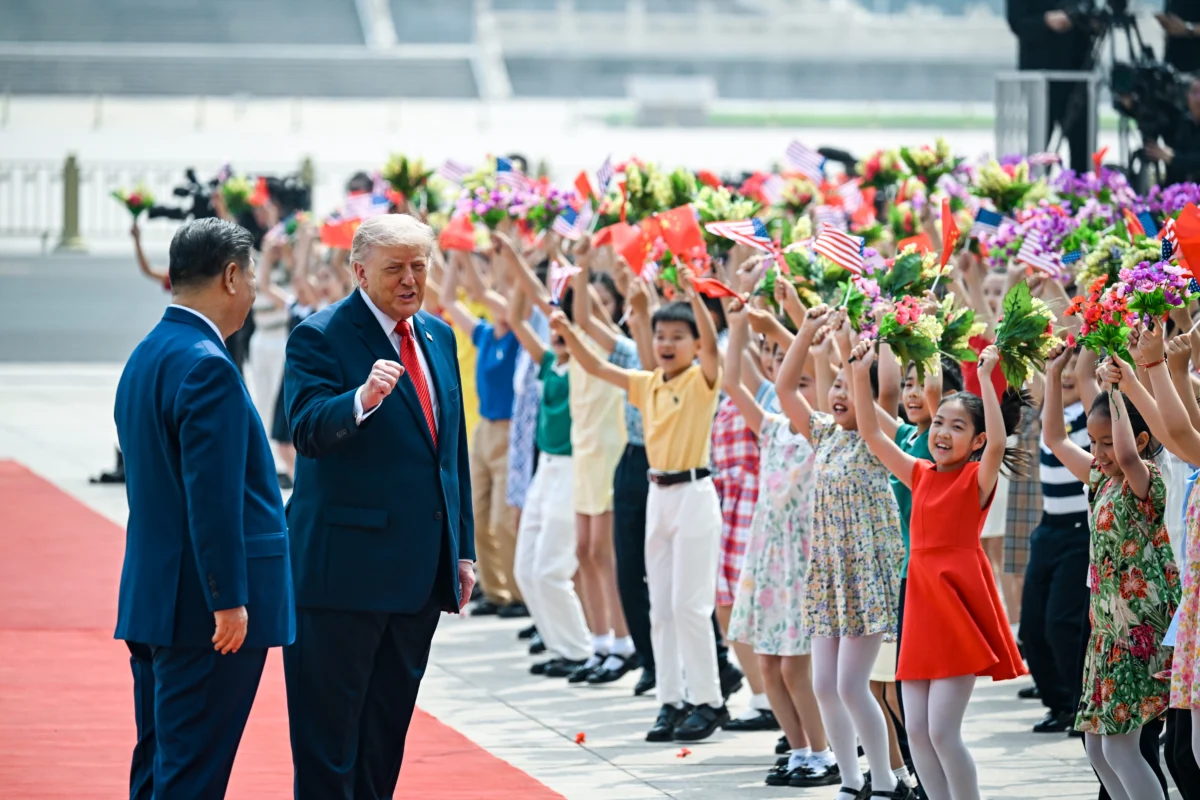
The leadership transition at the Federal Reserve is occurring simultaneously with a high-stakes diplomatic mission in Asia. President Donald Trump is currently in Beijing for a summit with Chinese President Xi Jinping, a meeting that has taken on heightened significance due to the volatile situation in the Middle East. Readouts from the initial sessions at the Great Hall of the People indicate that the discussions have centered on three primary pillars: the Iran war, bilateral economic cooperation, and the perennially sensitive issue of Taiwan’s sovereignty.
A primary objective of the summit is the stabilization of global energy markets, which have been severely disrupted by the conflict in Iran. White House officials confirmed that both President Trump and President Xi have reached a rare point of consensus regarding the necessity of keeping the Strait of Hormuz open. As a vital artery for global oil shipments, any prolonged closure of the strait would likely trigger a global recession. The agreement to cooperate on maritime security in the region is seen as a pragmatic step to protect both nations’ economic interests, despite their ongoing strategic competition.
However, the tone remained more contentious regarding regional security in the Pacific. President Xi Jinping reiterated that Taiwan remains "the most important issue" in U.S.-China relations, cautioning against further American military or diplomatic incursions into what Beijing considers its internal affairs. In his public remarks on Thursday, Xi invoked the "Thucydides Trap"—a historical theory popularized by political scientist Graham Allison, which posits that a rising power’s challenge to an established hegemon often results in catastrophic war. Xi’s mention of this theory underscores the gravity of the current geopolitical climate and the mutual desire, at least rhetorically, to find a path toward "peaceful coexistence" through strategic guardrails.
The economic dimension of the U.S.-China relationship is also being redefined by the race for supremacy in artificial intelligence. Treasury Secretary Scott Bessent, speaking from Beijing, characterized the current state of the industry as a race that the United States is currently winning. However, Bessent emphasized that the U.S. is not seeking a total decoupling but rather a framework of "managed competition." He noted that the two superpowers are working toward a protocol to establish international best practices for AI development. A key concern shared by both Washington and Beijing is the risk of sophisticated AI models falling into the hands of non-state actors or extremist groups, which could utilize the technology for cyber warfare or biological disruptions.
While the geopolitical stage remains fraught with tension, the corporate sector is seeing a massive divergence in performance based on AI integration. Cisco Systems provided a bright spot for the technology sector this week, reporting third-quarter earnings that significantly outperformed Wall Street’s expectations. The networking giant’s stock surged by more than 15% in extended trading following the announcement. The primary driver of this growth has been a massive influx of AI-related infrastructure orders, totaling $5.3 billion so far this fiscal year.

Despite the robust financial performance and a 33% year-to-date increase in share price, Cisco also announced a strategic restructuring that includes the reduction of its workforce by approximately 4,000 positions. This move reflects a broader trend in the tech industry where companies are aggressively pivoting toward automated and AI-driven operations, often at the expense of traditional roles. CEO Chuck Robbins is expected to detail the company’s long-term vision for "AI-native networking" during a scheduled appearance on CNBC’s "Squawk on the Street." Market analysts note that Cisco, which had previously lagged behind other data center-focused stocks like Nvidia and Arista Networks, is now being re-evaluated as a core beneficiary of the AI hardware build-out.
However, the optimism found in the tech sector is not being mirrored in the broader consumer staples market. Recent data reveals a significant downturn in the American beer industry, with sales volumes for beer, flavored malt beverages, and cider falling by more than 6% year-over-year in the first week of May. This "fizzling out" of demand is being attributed to the secondary economic effects of the Iran war—specifically, the surge in domestic gasoline prices.
The correlation between fuel costs and discretionary spending is most evident in California, which currently maintains the highest average fuel prices in the nation. In the Golden State, beer sales volumes plummeted by 16% over a four-week period. Economists explain that as the cost of commuting and basic logistics rises, lower-to-middle-income consumers are forced to prioritize essential goods over "affordable luxuries" like alcoholic beverages. The pullback is particularly noticeable at convenience store chains, which typically rely on high-frequency, impulse purchases from drivers stopping to refuel. If energy prices remain elevated due to Middle Eastern instability, analysts warn that the slump in the beverage industry could be the precursor to a wider contraction in the retail and hospitality sectors.
Adding to the complexity of the current national landscape is a burgeoning public health concern. The U.S. is currently monitoring an outbreak of Hantavirus, which was recently detected on a cruise ship. While the term "outbreak" has triggered memories of the 2020 pandemic, health experts are quick to distinguish Hantavirus from COVID-19. Hantavirus is typically transmitted through contact with infected rodents and does not exhibit the same level of rapid human-to-human respiratory transmission that characterized the coronavirus.
Nevertheless, the situation is being treated as a vital test of the nation’s pandemic preparedness infrastructure, which has been significantly overhauled over the last six years. Public health officials are using the cruise ship incident to evaluate the speed of diagnostic deployment and the effectiveness of localized quarantine protocols. While the immediate risk to the general public is considered low, the psychological impact on the travel and tourism industry remains a point of concern for investors.
As Kevin Warsh prepares to take his seat at the Federal Reserve, he faces a mosaic of challenges that extend far beyond traditional monetary policy. He must navigate an economy where AI is driving massive capital expenditure and stock market gains, while simultaneously, an energy crisis is hollowing out consumer demand in the heartland. The outcome of the Trump-Xi summit will likely dictate the "geopolitical risk premium" that Warsh must account for in his inflation modeling.
The next few months will be a period of intense scrutiny for the new Fed Chair. With a divided Senate watching his every move and a global economy balanced on a knife-edge, Warsh’s ability to maintain the "soft landing" attempted by his predecessor will be tested by variables ranging from the Strait of Hormuz to the server racks of Silicon Valley. The narrowness of his confirmation vote serves as a reminder that in the current era, economic policy is inseparable from the volatile realities of global politics and rapid technological disruption.
