

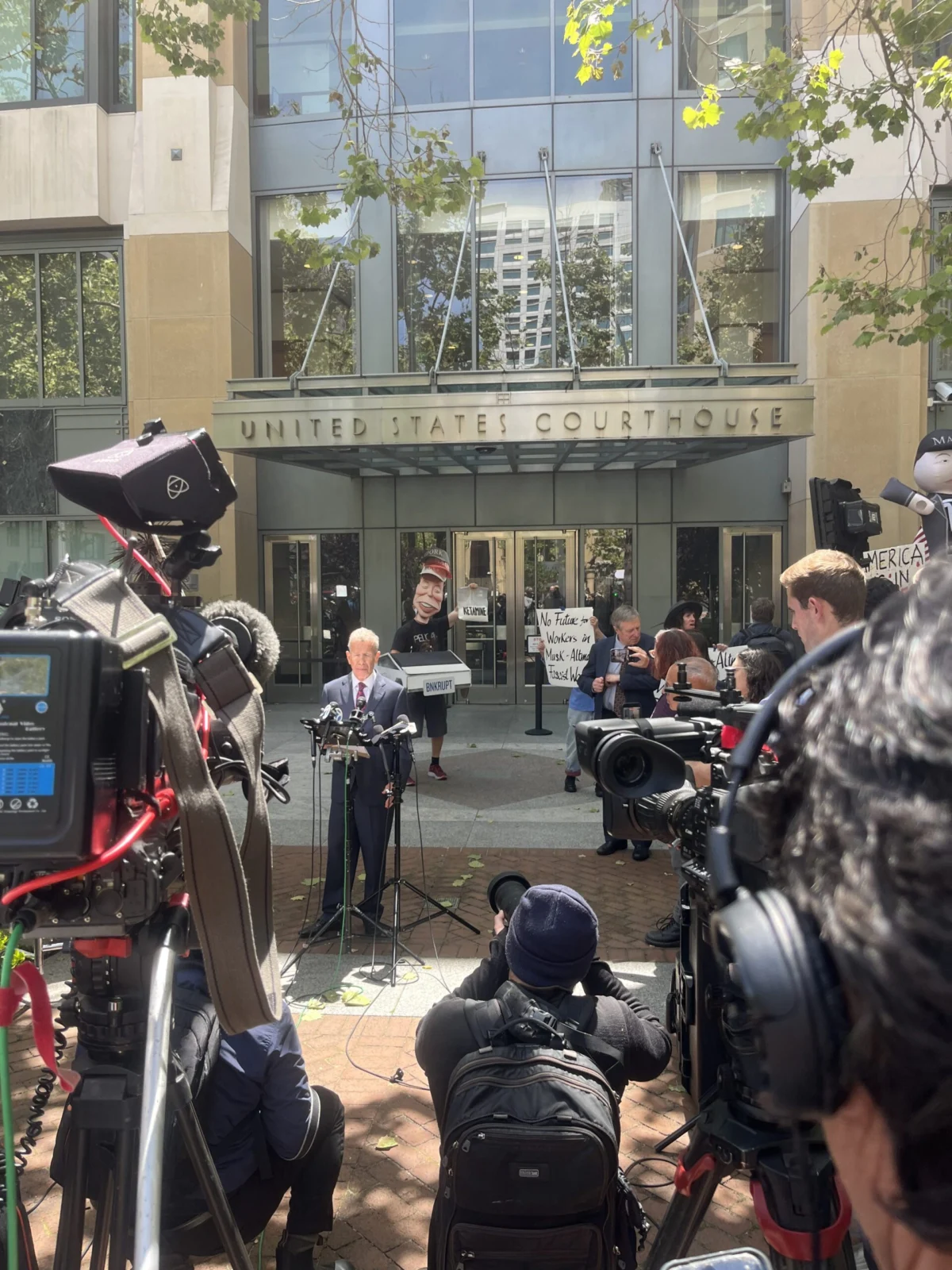
Nine California jurors have begun deliberations to determine the future of OpenAI, the world’s most prominent artificial intelligence laboratory, following a trial that has laid bare the internal fractures and ideological shifts of the organization. The legal battle, initiated by billionaire Elon Musk against fellow co-founders Sam Altman and Greg Brockman, as well as the organization’s primary financial backer, Microsoft, seeks to address whether the company abandoned its original non-profit mission in favor of commercial gain. While the testimony has spanned nearly a decade of history—from the idealistic founding of the lab in 2015 to the dramatic firing and rehiring of CEO Sam Altman in late 2023—the jury is tasked with answering a specific set of narrow legal questions regarding charitable trusts, unjust enrichment, and corporate governance.
The verdict carries immense implications for the technology sector. If the jury finds in favor of Musk, it could potentially force a restructuring of OpenAI, potentially dismantling its multi-billion-dollar for-profit arm. Conversely, a victory for OpenAI would validate its current hybrid structure and solidify its partnership with Microsoft. As the jury deliberates, legal experts and industry analysts are closely watching for a decision that could redefine how non-profit organizations transition into commercial powerhouses.
A Chronology of Conflict: From Founding to Litigation
The friction between Elon Musk and OpenAI is rooted in the very genesis of the organization. To understand the current legal impasse, it is necessary to trace the timeline of events that led to the California courtroom:
- December 2015: OpenAI is founded as a non-profit research laboratory. Musk, Altman, Brockman, and others pledge to develop artificial general intelligence (AGI) for the benefit of humanity, promising to keep their research open-source and free from the influence of financial returns. Musk provides the initial significant funding, totaling tens of millions of dollars.
- 2017–2018: Internal tensions rise regarding the pace of development and the need for massive computing power. Musk proposes a merger between OpenAI and Tesla to compete with Google’s DeepMind. The board rejects the proposal. In February 2018, Musk resigns from the board, citing potential future conflicts of interest with Tesla’s own AI development.
- 2019: Under Altman’s leadership, OpenAI creates a "capped-profit" subsidiary, OpenAI Global LLC. This allows the organization to raise billions in venture capital while theoretically remaining under the control of the non-profit foundation. Microsoft announces its initial $1 billion investment.
- November 2022: The release of ChatGPT triggers a global AI boom, skyrocketing OpenAI’s valuation and making it a household name.
- January 2023: Microsoft invests an additional $10 billion into the for-profit affiliate, deepening the commercial ties between the two entities.
- November 2023 ("The Blip"): The non-profit board abruptly fires Sam Altman, citing a lack of "candor." Within days, following a near-total staff mutiny and pressure from Microsoft, Altman is reinstated with a new board.
- Early 2024: Elon Musk files his lawsuit, alleging that OpenAI has become a "closed-source de facto subsidiary" of Microsoft, breaching its original "Founding Agreement."
The Allegation of Breached Charitable Trust
The centerpiece of Musk’s case is the claim that OpenAI’s leadership breached a "charitable trust." Musk’s legal team argues that his early donations were predicated on a clear, documented understanding: that OpenAI would remain a non-profit dedicated to AI safety and public benefit. They contend that the $10 billion Microsoft deal in 2023 was the ultimate betrayal of this trust.
According to Musk’s attorneys, this investment transformed OpenAI into a commercial engine for Microsoft’s cloud business, enriching private investors at the expense of the charitable mission. They argue that the shift from open-source research to proprietary, "closed" models like GPT-4 proves the organization is no longer serving the public interest.
OpenAI’s defense has focused on the lack of formal, written restrictions on Musk’s donations. During the trial, OpenAI’s attorneys cross-examined Musk’s closest associates, including financial adviser Jared Birchall, chief of staff Sam Teller, and special adviser Shivon Zilis. None could point to a specific legal document that prohibited OpenAI from ever seeking private capital or forming a for-profit affiliate. Furthermore, a forensic accountant testified that Musk’s total contributions—roughly $44 million—had been fully exhausted by the foundation by August 2021, prior to the filing of the lawsuit. OpenAI argues this renders the "charitable trust" argument moot, as the funds were used for their intended research purposes long ago.
Unjust Enrichment and the Question of Equity
The second major pillar of the lawsuit involves "unjust enrichment." Musk’s team points to the astronomical valuations of OpenAI, which have reached nearly $200 billion in the secondary market. They argue that founders like Greg Brockman and Ilya Sutskever, along with Microsoft, have benefited from equity structures that were built on the back of Musk’s early "charitable" seed money.
The plaintiffs contend that the non-profit foundation has been left "essentially dormant," with no full-time employees and no real control over the for-profit entity that holds the intellectual property. They describe the current structure as a "shell game" designed to bypass the restrictions of a 501(c)(3) organization.
In response, OpenAI executives, including Sam Altman, testified that the for-profit structure was a necessity, not a choice. They argued that the cost of compute power required to reach AGI is so vast that no non-profit could ever raise the required funds through donations alone. Altman emphasized that providing a free tier of ChatGPT to hundreds of millions of users worldwide is a direct fulfillment of the mission to share the benefits of AI with the world. They also maintain that the non-profit board still holds ultimate "veto power" over the for-profit’s activities, particularly regarding the determination of when AGI has been reached—a milestone that would trigger the end of Microsoft’s commercial license.
Microsoft’s Role: Aiding and Abetting or Essential Partner?
The trial has also cast a harsh light on the relationship between OpenAI and Microsoft. Musk’s case focuses heavily on "The Blip"—the five-day period in November 2023 when Altman was ousted. Musk’s lawyers presented evidence suggesting that Microsoft CEO Satya Nadella played a decisive role in Altman’s return and the subsequent restructuring of the board.
The plaintiffs argue that Microsoft aided and abetted the board’s breach of fiduciary duty. They highlighted clauses in the Microsoft-OpenAI agreement that grant Microsoft significant rights over corporate decisions, suggesting that the "non-profit" nature of the parent company is now a legal fiction.
Microsoft’s witnesses, however, maintained that the company acted only to protect its massive investment and ensure stability. They testified that Microsoft conducted extensive due diligence and found no evidence of any restrictive "founding agreement" that would prevent OpenAI from engaging in its current commercial activities. They argued that without Microsoft’s infrastructure and capital, OpenAI’s breakthroughs would have been impossible.
The Defense Strategy: Statute of Limitations and "Unclean Hands"
OpenAI’s legal team, led by Bill Savitt, has employed a multi-pronged defense aimed at discrediting Musk’s motivations and the timing of the suit.
First, they argue "unreasonable delay" and a violation of the statute of limitations. They presented evidence that Musk was informed of the for-profit pivot as early as 2018 and received term sheets detailing the Microsoft partnership years before he filed suit. They noted that Musk even tweeted criticisms of OpenAI’s structure in 2020, yet waited until the company was a global success to take legal action.
Second, the defense invoked the doctrine of "unclean hands." They produced internal communications showing that while Musk was an OpenAI board member, he attempted to seize control of the company and fold it into Tesla. They further alleged that Musk actively recruited OpenAI talent for his own competing ventures, such as xAI and Tesla’s Autopilot team, while still claiming to support OpenAI’s mission. "Mr. Musk abandoned OpenAI for dead in 2018," Savitt told the jury, suggesting the lawsuit is born of "sour grapes" rather than a concern for AI safety.
Broader Implications and Potential Outcomes
The verdict from the nine-person jury will be the first step in a complex resolution process. If the jury finds OpenAI liable for breach of trust or unjust enrichment, the case will move to a "remedy phase." Beginning next week, the judge is scheduled to hold hearings to debate the consequences of a pro-Musk verdict. Potential outcomes include:
- Restructuring: The court could order OpenAI to divest its for-profit arm or return to a strictly non-profit model.
- Disgorgement of Profits: The defendants could be forced to return funds or equity deemed to have been obtained through "unjust enrichment."
- Governance Changes: The court could mandate the appointment of independent monitors to ensure the non-profit mission is prioritized.
However, a verdict in favor of OpenAI would effectively end the challenge, validating the "capped-profit" model that many other AI startups have since emulated.
Beyond the courtroom, the case highlights a critical debate in the tech industry: Can the development of world-altering technology like AGI be safely managed by a for-profit corporation? Or does the immense capital required for such development make a traditional non-profit model obsolete? As the jurors deliberate, their decision will not only decide the fate of Sam Altman and Elon Musk’s fractured partnership but may also set the legal precedent for how the most powerful technology in human history is governed and owned.
