

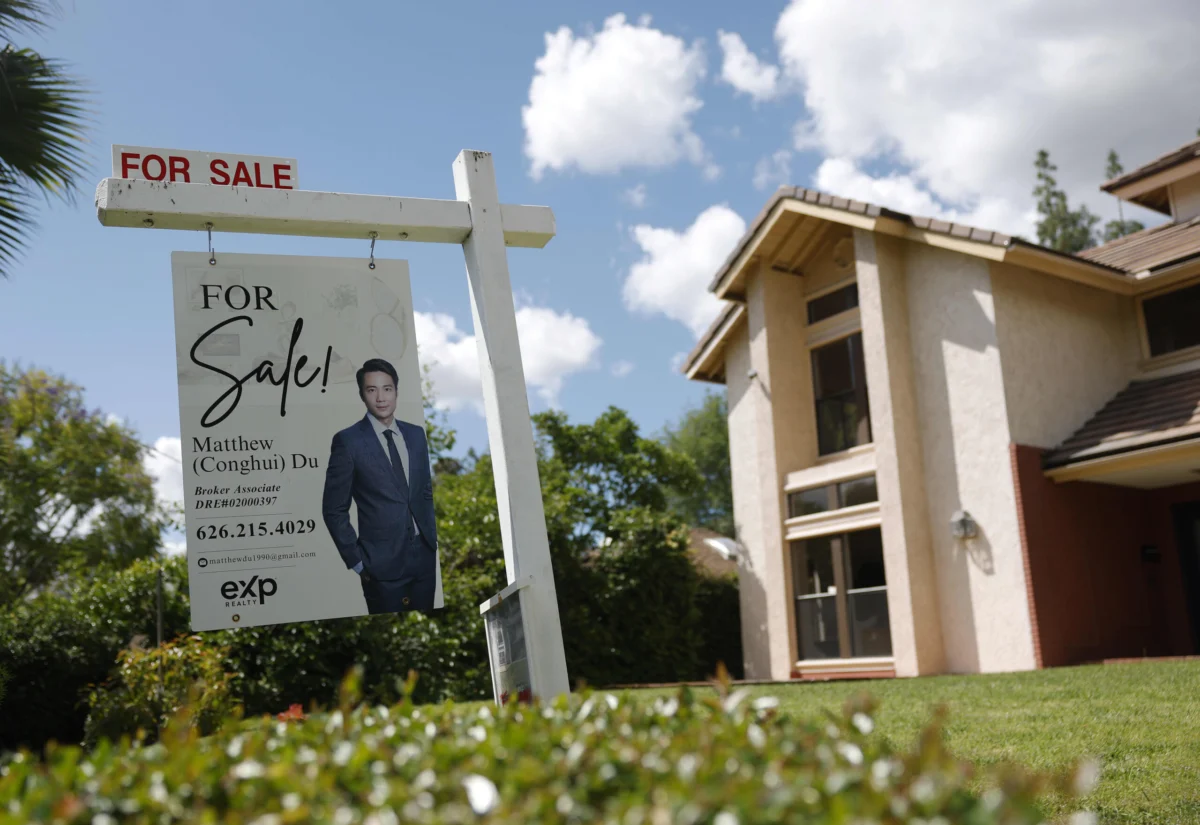
The American housing market experienced a notable contraction in June, with sales of previously owned homes declining more than anticipated, as the twin pressures of record-high prices and elevated mortgage rates continued to deter prospective buyers. This downturn underscores a persistent affordability crisis that is reshaping the landscape of homeownership across the nation.
According to the latest data released by the National Association of Realtors (NAR), sales of existing homes dropped by 2.4% from May, settling at a seasonally adjusted, annualized rate of 4.09 million units. This figure fell short of housing analysts’ predictions, who had largely forecasted a modest month-over-month gain, signaling a deeper sensitivity among buyers to prevailing market conditions. Despite the monthly dip, June sales did register a 2.8% increase compared to the same month a year prior, offering a slight silver lining in an otherwise challenging environment.
The Affordability Squeeze: A Deeper Dive
The core issue throttling the market remains the severe affordability squeeze. The median price for an existing home sold in June reached an unprecedented $440,600, marking a 1.8% increase from the previous year and establishing a new all-time high. This milestone is particularly significant given that June traditionally represents the strongest month for both sales volume and price appreciation, indicating that demand, while tempered, still outstrips available supply in many segments.
Lawrence Yun, NAR’s chief economist, articulated the market’s delicate balance. "The back-and-forth in monthly home sales activity, driven by mild fluctuations in mortgage rates, shows how sensitive home buyers are to affordability conditions," Yun stated in a release. He further acknowledged the supportive role of job market strength, noting, "However, job gains—more than half a million since the beginning of the year—will continue to provide support for the housing market." While robust employment figures offer a foundational economic strength, their impact on housing affordability is increasingly offset by the rising cost of homeownership.
Mortgage Rate Dynamics and Geopolitical Influences
A critical factor influencing June’s sales figures is the trajectory of mortgage rates. The reported sales represent closed transactions, meaning the underlying contracts were likely signed in May. During that period, the average rate on the 30-year fixed mortgage was still on an upward trend. The NAR report specifically highlighted that rates began rising sharply at the start of March, coinciding with the beginning of the Iran war, a geopolitical event cited as influencing broader economic stability and, consequently, lending rates.
This rise in mortgage rates has been a significant deterrent. After reaching historic lows below 3% during the pandemic-era stimulus, 30-year fixed mortgage rates began a sustained climb in late 2021, accelerating through 2022 as the Federal Reserve initiated aggressive interest rate hikes to combat surging inflation. While rates saw some moderation in late 2022, they have largely remained elevated, hovering in the 6-7% range, a level not seen consistently for over a decade. For a median-priced home, a rate increase from 3% to 7% can translate into hundreds, if not over a thousand, dollars in additional monthly mortgage payments, severely impacting purchasing power and effectively pricing out a significant portion of potential buyers.
Persistent Inventory Shortages
Adding to the affordability challenge is the enduring scarcity of housing inventory. At the close of June, the total housing stock available for sale stood at 1.56 million units. This figure represents a slight decrease of 0.6% from May but is 1.3% higher than June of the previous year. At the current sales pace, this translates to a 4.6-month supply of homes. For context, a balanced market, one that favors neither buyers nor sellers, is generally considered to have a six-month supply.
The consistent undersupply has been a hallmark of the post-pandemic housing market. Many existing homeowners are reluctant to sell, having secured historically low mortgage rates in recent years. Trading up or moving would mean taking on a new mortgage at a significantly higher rate, effectively "locking" them into their current homes. Furthermore, new home construction, while showing signs of recovery in some regions, has not kept pace with demand, particularly for entry-level and mid-range properties. This bottleneck in supply continues to exert upward pressure on prices, even as buyer demand wanes dueifying the crucial role of increased housing stock.

Disparities Across Market Segments and Regions
A deeper look into the June sales data reveals a stark divergence in performance across different price points and geographic regions, underscoring the uneven impact of current market conditions. The luxury segment continues to demonstrate remarkable resilience, if not outright growth, while the more affordable tiers struggle significantly.
Sales of homes priced below $100,000 experienced a 1.7% year-over-year decline. Similarly, the segment for homes priced between $100,000 and $250,000 saw only a marginal increase of less than 1%. This trend starkly contrasts with the robust activity at the higher end of the market. Sales of homes priced between $750,000 and $1 million surged by nearly 14% from a year ago, and those priced above $1 million witnessed an impressive 18% increase. This divergence highlights that affluent buyers, who are often less reliant on mortgage financing or less sensitive to higher interest rates, continue to drive activity in the premium segments. For many, wealth accumulation during recent years and the ability to make substantial down payments or all-cash offers shield them from the severe affordability pressures facing the majority of buyers.
Regionally, June home sales data painted a largely consistent picture of decline across most of the United States. Sales were down month-over-month in every major region except for the Northeast. This regional variation can be attributed to several factors, including differing local economic conditions, unique supply-demand dynamics, and varying levels of housing inventory. For instance, some Northeastern markets, particularly those with strong job growth in specific sectors or areas experiencing renewed urban migration, may have maintained sufficient demand to offset the broader national slowdown. Conversely, regions that experienced rapid price appreciation during the pandemic, or those with more interest-rate-sensitive buyer pools, likely saw more pronounced pullbacks.
Buyer Profile Shifts: Cash and First-Timers
The composition of buyers in June also showed subtle but significant shifts. All-cash sales accounted for one-quarter (25%) of all transactions, a decrease from 29% in the previous year. While this still represents a substantial portion of the market, the slight decline could indicate that even some cash-rich buyers are exercising caution or finding fewer suitable opportunities. All-cash transactions are often a strong indicator of investor activity or buyers less impacted by lending rates.
First-time buyers, a crucial segment for market health and upward mobility, made up 33% of sales in June, an increase from 30% a year ago. This modest uptick, while positive, needs to be viewed within the context of the challenging environment they face. Despite rising rates and prices, the slight increase suggests that some first-time buyers are perhaps seizing opportunities in less competitive segments or benefiting from family assistance or specific loan programs. However, for many, the path to homeownership remains fraught with financial hurdles, often requiring significant sacrifices and extended savings periods.
Broader Economic Implications and Future Outlook
The performance of the housing market has profound implications for the broader economy. A slowdown in home sales can impact various ancillary industries, including construction, real estate services, mortgage lending, and retail (for home furnishings and improvements). While the job market remains robust, a sustained downturn in housing could dampen consumer confidence and spending.
NAR’s chief economist, Lawrence Yun, emphasized the critical need for increased supply to address the long-term affordability challenge. "Progress on long-term housing affordability could be hampered if inventory growth continues to stall. Without consistent gains in inventory, home prices can accelerate. It is critical to introduce more supply to the market to widen the opportunity for homeownership," Yun reiterated. This sentiment is echoed by many housing policy experts and industry stakeholders who advocate for measures to streamline zoning regulations, incentivize new construction, and promote sustainable urban development.
Looking ahead, the trajectory of the housing market will largely depend on several key factors: the Federal Reserve’s monetary policy decisions and their impact on mortgage rates, the pace of new home construction, and the overall health of the job market. While the resilience of the job market offers a crucial buffer, the ongoing struggle with affordability, fueled by high prices and elevated rates, presents a formidable barrier to a more balanced and accessible housing market. Until a significant increase in inventory materializes or mortgage rates recede more substantially, the market is likely to remain highly sensitive to economic fluctuations, with segments of buyers continuing to face significant challenges in achieving the dream of homeownership. The current environment reinforces the need for strategic interventions and sustained efforts to expand housing opportunities for all segments of the population.
