

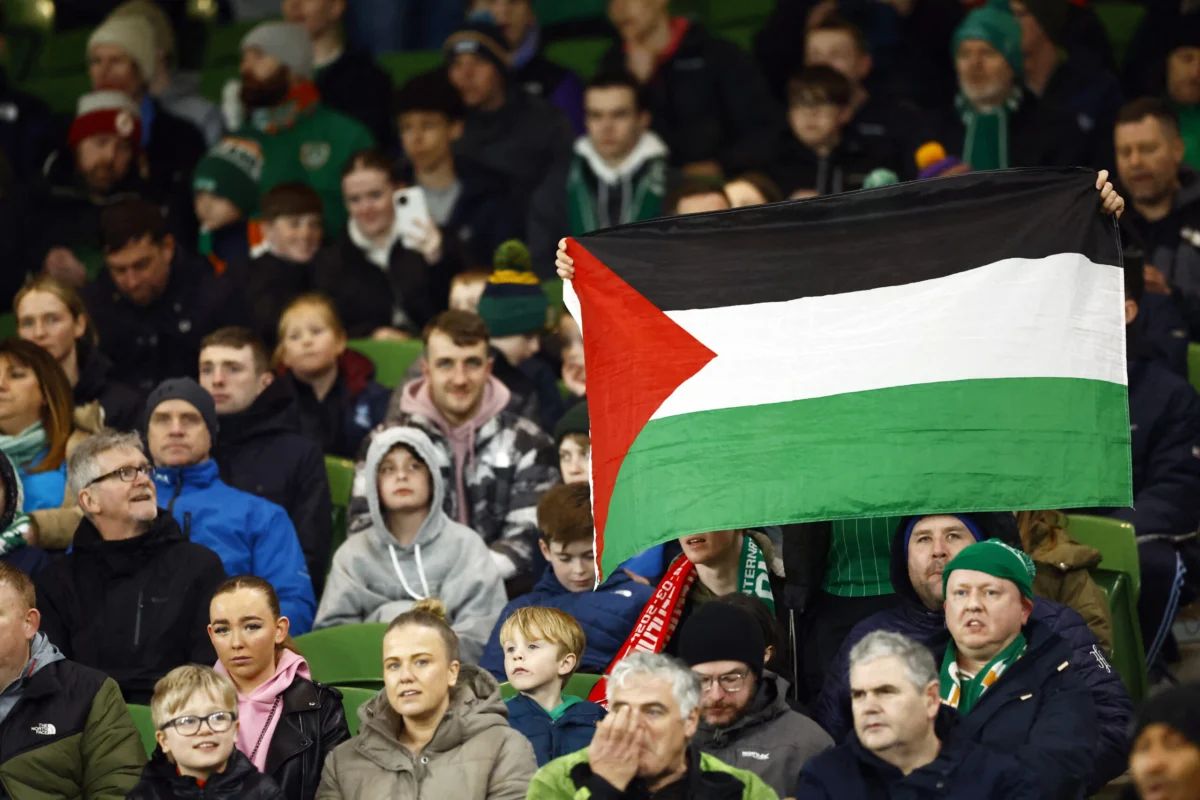
A significant campaign is gaining momentum in Ireland, urging the Republic of Ireland national football team to boycott its upcoming UEFA Nations League fixtures against Israel. Led by the advocacy group Irish Sport for Palestine, the movement accuses Israel of engaging in "genocide" in its ongoing military operations in Gaza and asserts that Israel’s participation in UEFA competitions breaches international sporting statutes. This contentious issue has drawn the support of prominent Irish figures from the worlds of sport, music, and acting, setting the stage for a profound debate on the intersection of sport and geopolitics, and presenting a considerable challenge to the Football Association of Ireland (FAI) and the Irish government.
The Genesis of the Boycott Campaign and its Core Accusations
The "Stop the Game" campaign coalesced around an open letter dispatched to the Football Association of Ireland (FAI), articulating the demands of Irish Sport for Palestine. At the heart of the campaign’s grievance is the stark accusation that Israel’s military actions in Gaza constitute "genocide." This grave charge is frequently cited by international human rights organizations and has been the subject of proceedings at the International Court of Justice (ICJ), where South Africa has brought a case against Israel alleging violations of the 1948 Genocide Convention. Israel vehemently denies these allegations, asserting that its military operations are aimed at dismantling Hamas, a designated terrorist organization, and ensuring its national security following the unprecedented attacks of October 7.
Beyond the charge of genocide, Irish Sport for Palestine contends that Israel’s continued participation in UEFA competitions contravenes both UEFA and FIFA statutes. Specifically, the group highlights the alleged breach of regulations by allowing Israeli teams to play on land designated as occupied Palestinian territory. This argument touches upon the complex political status of settlements in the West Bank and East Jerusalem, which are widely considered illegal under international law. The campaign posits that by hosting or participating in matches under these circumstances, UEFA and FIFA are inadvertently endorsing or overlooking actions that violate international norms.
A Broad Coalition of Influential Signatories
The "Stop the Game" letter boasts an impressive list of signatories, underscoring the widespread sentiment behind the boycott call within Irish society. From the sporting community, notable names include several League of Ireland players, underscoring grassroots support within professional football. Former men’s national team coach Brian Kerr, a respected figure in Irish football, and Louise Quinn, a two-time Women’s Player of the Year, lend significant weight and credibility to the appeal. Their involvement signals that the issue transcends purely political activism, resonating deeply within the professional sporting fraternity.
The campaign’s reach extends far beyond sport, drawing strong backing from the cultural and artistic sectors. Iconic Irish rock band Fontaines D.C., known for their critically acclaimed music, have signed the letter, as have the popular hip-hop trio Kneecap, and the revered folk singer-songwriter Christy Moore. The inclusion of Oscar-nominated actor Stephen Rea further amplifies the campaign’s visibility and influence, indicating a broad cross-section of Irish public figures willing to publicly advocate for the boycott. This diverse coalition reflects a deeply felt moral imperative shared across different facets of Irish public life.
A powerful statement from Roberto Lopes, captain of Shamrock Rovers and chair of the Professional Footballers’ Association of Ireland, encapsulates the humanitarian drive behind the campaign. "We can’t ignore the humanitarian catastrophe in Palestine; the sheer loss of life there has to take precedence over any sporting consideration," Lopes stated. His words highlight the ethical dilemma faced by athletes, weighing professional obligations against profound moral concerns. Lopes, who is also set to represent Cape Verde at the World Cup in June, added, "Ireland has an opportunity here to lead and do what others won’t," positioning Ireland as a potential trailblazer in linking sporting integrity with human rights.
The Humanitarian Crisis in Gaza and Allegations of War Crimes
The backdrop to this campaign is the devastating humanitarian crisis unfolding in the Gaza Strip. Following the October 7 attacks by Hamas, which resulted in the deaths of approximately 1,200 Israelis and the abduction of hundreds more, Israel launched a comprehensive military response. This response has led to widespread destruction, displacement, and a catastrophic loss of life among Palestinians in Gaza. According to figures from the Gaza Ministry of Health, tens of thousands of Palestinians have been killed, a significant proportion of whom are women and children. The United Nations and numerous aid agencies have consistently reported severe shortages of food, water, medicine, and shelter, warning of famine conditions and a collapsing healthcare system.
The scale of civilian casualties and the extent of damage to civilian infrastructure have prompted international calls for investigations into potential war crimes and breaches of international humanitarian law. Human rights organizations, including Amnesty International and Human Rights Watch, have documented alleged violations by both sides, though the focus of the "genocide" accusation, as articulated by Irish Sport for Palestine, primarily targets Israel’s actions and their devastating impact on the Palestinian population. These dire circumstances are what campaigners argue should override all other considerations, including sporting fixtures.
The FAI’s Mandate and its Precarious Position
The Football Association of Ireland finds itself in a particularly delicate and challenging position. In what is now understood to have been November 2023 (correcting the likely typo of "November 2025" in the original text), a staggering 93 percent of FAI members voted for its leadership to press UEFA to suspend Israel under the aforementioned statutes. This overwhelming mandate from its own membership places immense pressure on the FAI to act. Campaigners explicitly demand that the Irish governing body "respect and represent" this democratic decision.
Ignoring such a clear directive from its members could severely undermine the FAI’s legitimacy and lead to internal strife. However, complying with the boycott demand carries significant risks. FAI Chief Executive David Courell articulated these concerns in February, stating that the national team had no choice but to "fulfil its obligations or risk harming the long-term sporting interests of Irish football, including potential disqualification from future competitions." UEFA and FIFA typically maintain a strict stance against political interference in sport, and national associations that unilaterally boycott fixtures often face severe sanctions. These could range from hefty fines and points deductions to outright expulsion from tournaments or even a ban from international competition for a period, which would have catastrophic consequences for Irish football development and its international standing.
Official Responses: Government and FAI’s Dilemma
The Irish government’s stance reflects a nuanced approach that seeks to balance its historical empathy for the Palestinian cause with the conventions of international diplomacy and sporting autonomy. Micheál Martin, then Prime Minister (Taoiseach) and now Tánaiste (Deputy Prime Minister), affirmed that the two matches against Israel should proceed. He acknowledged Ireland’s strong criticism of Israeli government policy within Gaza and condemned the "horrific" Hamas attack on Israel. However, he emphasized a prevailing view that "sport is an an area that can be challenging when it crosses into the realm of politics."
This position aligns with the traditional separation of sport and politics advocated by many international bodies and governments. While Ireland has a long history of supporting Palestinian rights and has often been critical of Israeli policies, the government appears hesitant to endorse a sporting boycott that could have significant diplomatic and sporting repercussions. The government’s concern likely extends to avoiding setting a precedent that could be applied inconsistently or create new diplomatic headaches.
The FAI, caught between its members’ mandate and the threat of international sanctions, must navigate this complex landscape. Their public statements indicate a preference for adhering to international sporting regulations to protect the future of Irish football. This highlights the inherent tension between the moral and political demands of a domestic constituency and the binding rules of international sports governance.
Historical Precedent: Israel’s Sporting Journey
Israel’s participation in UEFA competitions since the early 1980s is itself a result of historical political tensions. Initially, Israel was a member of the Asian Football Confederation (AFC). However, in the 1970s, it faced increasing exclusion from AFC competitions as several Arab and Muslim-majority countries refused to play against them due largely to political reasons related to the Israeli-Palestinian conflict and broader Arab-Israeli disputes. This led to Israel’s effective expulsion from the AFC.
After a period of sporting isolation, Israel was eventually admitted as a full member of UEFA in 1994, having competed in some European qualifying campaigns previously. This move allowed Israeli clubs and the national team to integrate into a major continental football confederation, albeit one geographically distinct from its own region. This historical context underscores how political considerations have long influenced Israel’s sporting affiliations and demonstrates the precedents for how international bodies have responded to such pressures, often by reconfiguring membership rather than endorsing boycotts.
UEFA and FIFA Regulations: The Legal Framework
The core of the FAI’s dilemma lies in the regulations of UEFA and FIFA. Both organizations have statutes designed to prevent political interference in football and to ensure the smooth running of competitions. Article 16 of the FIFA Statutes, for example, outlines penalties for associations that fail to participate in a competition for which they have entered. Such penalties can include fines, exclusion from future competitions, and even relegation. UEFA has similar provisions.
Furthermore, UEFA and FIFA have often emphasized the principle of "sport for all" and discourage discrimination based on origin, religion, or politics. While the Irish Sport for Palestine campaign argues that Israel’s actions breach international law and thus should warrant suspension, UEFA and FIFA typically aim to remain politically neutral. Their primary concern is the integrity of the sport and the orderly conduct of competitions. Suspending a member association based on external political conflicts is a drastic step, usually reserved for extreme cases like state-sponsored doping (e.g., Russia from some Olympic events) or direct military conflict involving the sporting nation itself (e.g., Russia from all FIFA/UEFA competitions following the invasion of Ukraine). The case of Israel is different as the conflict is internal to its region, and Israel is a recognized UN member state.
The Broader Context of Sporting Boycotts
Sporting boycotts have a long and complex history, often used as a tool of protest against perceived injustices or political regimes. The most famous example is the international sporting boycott of apartheid-era South Africa, which saw the country excluded from global sports for decades. This boycott was widely seen as instrumental in isolating the regime and contributing to its eventual downfall. More recently, Russia has faced widespread sporting sanctions, including exclusion from numerous international competitions, following its full-scale invasion of Ukraine in 2022.
These precedents demonstrate that sporting bodies can act decisively in response to severe geopolitical events, particularly when there is broad international consensus or direct aggression involved. However, the decision to impose a boycott is never taken lightly, given the significant impact on athletes and the principle of keeping sport separate from politics. The challenge for Irish Sport for Palestine is to convince the FAI, and by extension UEFA, that the situation in Gaza warrants a similar, exceptional response, even in the face of differing political views on the conflict.
Upcoming Fixtures and Potential Scenarios
The Republic of Ireland is scheduled to face Israel twice in the UEFA Nations League. The first fixture, designated as an Israeli home match, is set for September 27 and is widely expected to be staged at a neutral venue, likely due to ongoing security concerns in the region. The return leg, with Ireland as the host, is slated for October 4 at Dublin’s Aviva Stadium.
Should the FAI bow to the pressure and boycott the matches, several scenarios could unfold:
- Forfeiture and Sanctions: Ireland would likely forfeit both matches, resulting in automatic 3-0 defeats. This would severely damage their standing in the Nations League group and could lead to fines, points deductions in future qualifying campaigns, or even a ban from subsequent UEFA tournaments.
- UEFA Intervention: UEFA could take disciplinary action against the FAI, potentially leading to a temporary suspension of Ireland from all European competitions.
- Domestic Fallout: A boycott would likely be celebrated by campaigners but could divide public opinion further, and potentially alienate some within the football community who prioritize sporting participation.
- No Boycott: If the FAI adheres to its obligations, it would face condemnation from Irish Sport for Palestine and its supporters, but would avoid international sporting sanctions, preserving Ireland’s standing in UEFA and FIFA.
Public Opinion and National Sentiment
Beyond the FAI’s internal vote, a poll conducted by the Irish Football Supporters Partnership revealed that 76 percent of respondents opposed the fixture being played. This data point underscores a significant public appetite within Ireland for a boycott, reflecting a broader national sentiment that has historically been sympathetic to the Palestinian cause. Irish society often draws parallels between its own history of colonial rule and the Palestinian experience, fostering a strong sense of solidarity. This public pressure adds another layer of complexity to the FAI’s decision-making process.
Implications for Irish Football and International Sport
The unfolding situation presents a critical juncture for Irish football and could have wider implications for international sport. For Ireland, a boycott would be a bold moral statement but would likely come at a considerable sporting cost, potentially setting back the development of the national team and its players. It could also create a precedent for other nations to weigh political stances against sporting obligations, further blurring the lines between sport and politics.
For UEFA and FIFA, this campaign highlights the increasing difficulty of maintaining political neutrality in an interconnected world where global conflicts directly impact national federations and their athletes. The outcome of this debate in Ireland could influence how similar calls for boycotts are handled in the future, particularly concerning the Israeli-Palestinian conflict, which continues to be a flashpoint in various international forums. The decision by the FAI will not only shape the future of Irish football but also contribute to the ongoing global discussion about the role and responsibility of sport in addressing human rights and international justice.
