

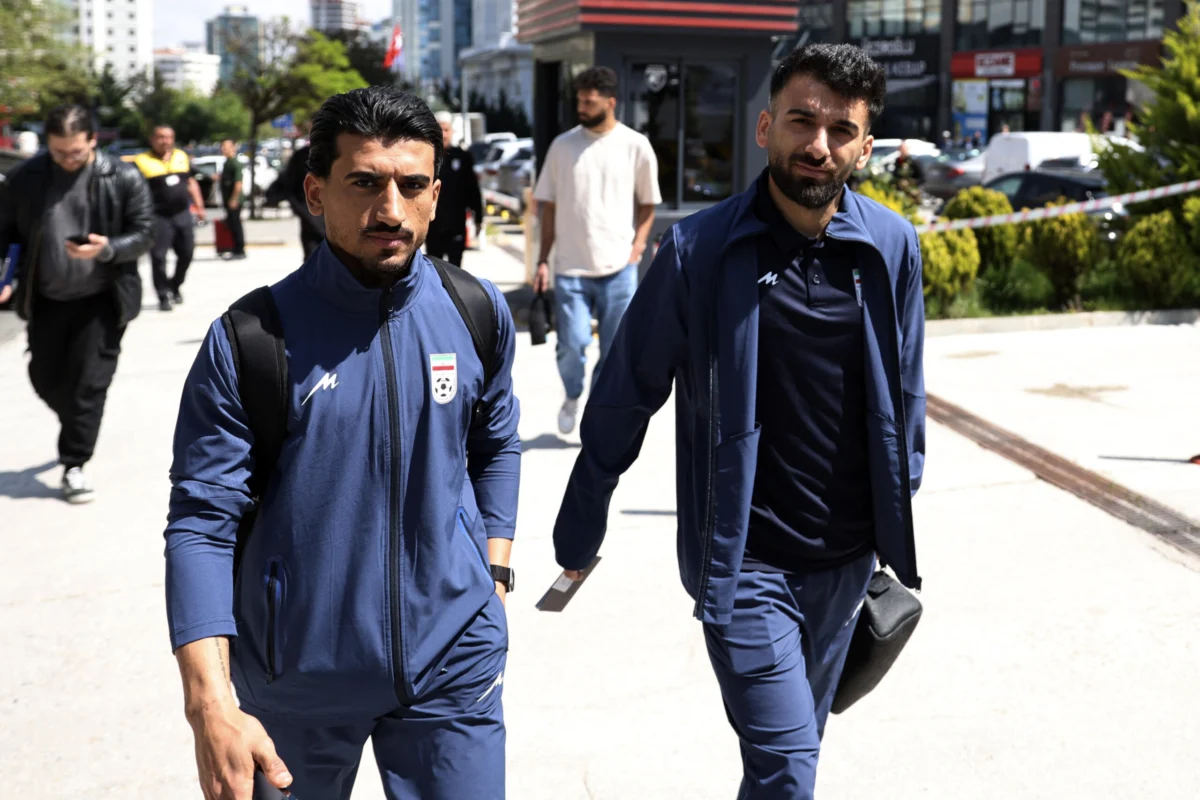
The Iranian national football team, known as Team Melli, finds its preparations for the upcoming 2026 FIFA World Cup complicated by significant logistical hurdles, primarily concerning the issuance of multiple-entry visas for their delegation to the United States. This challenge emerges just weeks before the tournament’s kickoff, compounded by a recent decision to relocate their base camp from the US to Tijuana, Mexico, a move aimed at mitigating some of these very issues amidst escalating regional tensions.
The Visa Conundrum for Team Melli
The Iranian football federation (FFIRI) has formally requested that the United States government issue multiple-entry visas for its entire World Cup delegation, comprising players, coaching staff, and support personnel. This demand comes two days after FIFA confirmed the relocation of Iran’s base camp, highlighting the intricate travel arrangements necessitated by the change. FFIRI president Mehdi Taj emphasized the critical need for these visas, stating on Wednesday that the US "should give all players multiple-entry visas as they would have to leave and re-enter the US many times." This requirement stems directly from the team’s new operational strategy, where they will be based in Tijuana, Mexico, but must travel across the border to the United States for all three of their Group G matches.
As of the latest reports, the Iranian squad has yet to receive their US visas, casting a shadow of uncertainty over their participation. The visa application process has been multifaceted and extended. Several members of the delegation attended appointments in Turkiye last week, where the team has been holding training camps. This group included players and staff who traveled to Turkiye from Iran specifically for this purpose. Additionally, individuals who had not applied for US visas prior to the onset of heightened geopolitical tensions in February submitted their applications in person at the US embassy in Turkiye. The situation underscores the bureaucratic complexities and the heightened scrutiny often associated with travel from Iran to the United States.
Adding another layer of foresight, the entire Iranian squad also applied for Canadian visas. This proactive measure anticipates the possibility of Team Melli advancing to the knockout stages of the tournament, which are allocated to venues in Canada. Such comprehensive visa applications reflect the federation’s diligent planning amidst an unpredictable international landscape, aiming to ensure that logistical barriers do not impede the team’s progression in the prestigious global tournament.
Strategic Relocation to Tijuana
The decision to move Iran’s base camp from the United States to Mexico was confirmed by FIFA on Monday, May 27, following a direct request from the Iranian team. Initially, Iran had selected a sports complex in Tucson, Arizona, as their primary training and accommodation hub for the duration of the World Cup. However, the federation later sought a change, leading to the official approval by FIFA of Centro Xoloitzcuintle in Tijuana, Mexico, as their new location of choice. This facility is notably the home ground of Club Tijuana, a professional Mexican football club, offering state-of-the-art training amenities.
FFIRI President Mehdi Taj had first announced the camp’s move on Saturday, May 24, prior to FIFA’s official confirmation. He detailed the rigorous approval process, stating, "All team base camps for the countries participating in the World Cup must be approved by FIFA." Taj elaborated on the collaborative efforts that led to the change: "Fortunately, following the requests we submitted and the meetings we held with FIFA and World Cup officials in Istanbul, as well as the webinar meeting we had yesterday in Tehran with the respected FIFA secretary general, our request to change the team’s base from the United States to Mexico was approved."
The strategic advantage of Tijuana’s location is undeniable. Situated directly across the US-Mexico border from San Diego, California, it offers a pragmatic solution to potential visa and travel challenges. Taj explicitly noted that this proximity could significantly aid in easing the visa process for the team’s multiple entries into the United States. The plan involves the delegation crossing the border for their matches in Los Angeles and Seattle, and then returning to their Mexican base, thus necessitating the multiple-entry visas currently being sought. This logistical pivot highlights the extraordinary measures national federations sometimes undertake to navigate political sensitivities and ensure their teams’ smooth participation in international sporting events.
Geopolitical Undercurrents: A Region in Flux
The logistical challenges faced by the Iranian delegation are inextricably linked to the broader geopolitical climate, particularly the strained relations between Iran and the United States. The original article mentions that "The US and Israel launched attacks on Iran on February 28, leading to a regional conflict that has now lasted three months." This statement points to a period of heightened military engagement and political friction that predates the World Cup preparations and undoubtedly informs the current visa predicament.
Further escalating these tensions, recent events on Wednesday, May 28, saw the US carry out strikes on Iranian military sites. In retaliation, the Islamic Revolutionary Guard Corps (IRGC) launched an attack on what it described as an "American airbase" in the region. These exchanges occurred despite a ceasefire being reportedly in place, underscoring the volatile nature of the relationship and the persistent risk of escalation. Such direct military confrontations, even if localized, inevitably impact diplomatic channels and bureaucratic processes, including visa approvals for high-profile delegations.
Historically, US-Iran relations have been fraught with periods of intense hostility, marked by sanctions, proxy conflicts, and a lack of formal diplomatic ties since 1980. This deep-seated mistrust and adversarial posture mean that any interaction, even in the realm of sports, is viewed through a lens of national security and political strategy. The US government, responsible for issuing visas, operates under its own domestic and foreign policy directives, which prioritize national security concerns, especially when dealing with entities from nations designated as adversaries. This complex background makes the processing of visas for an entire national sports team a delicate balancing act, requiring careful consideration of security protocols alongside international sporting obligations.

Navigating the 2026 FIFA World Cup Schedule
The 2026 FIFA World Cup, co-hosted by the United States, Canada, and Mexico, is scheduled to run from June 11 through July 19. Iran’s Group G fixtures are all slated to take place within the United States, necessitating frequent cross-border travel from their Tijuana base. Their World Cup campaign is set to commence on June 15 against New Zealand in Los Angeles, California. Six days later, on June 21, Team Melli will face Belgium, also in Los Angeles. Their final Group G game is against Egypt, scheduled for June 25 in Seattle, Washington state, assuming a standard fixture spacing given the original article’s likely typo of two matches on June 21.
The travel itinerary from Tijuana to these US venues presents a significant logistical challenge. Los Angeles is approximately a three-hour drive from Tijuana, assuming smooth border crossings. Seattle, however, is a much longer journey, requiring either a lengthy domestic flight within the US or a substantial drive north from California. The requirement for multiple entries means that the efficiency and predictability of the visa process and border crossings are paramount to the team’s ability to maintain its training regimen and arrive at matches rested and focused. Any delays or complications at the border could directly impact player morale and physical readiness, potentially affecting their performance on the global stage.
FIFA’s Mandate and Host Nation Responsibilities
As the global governing body for football, FIFA bears the responsibility of ensuring the smooth execution of the World Cup, a tournament designed to transcend political divides and foster international camaraderie through sport. FIFA’s approval of Iran’s base camp relocation underscores its commitment to facilitating the participation of all qualified nations, even amidst complex geopolitical circumstances. The organization’s rules and regulations generally mandate that host nations provide all necessary facilities and access for participating teams, including visa issuance.
While FIFA cannot dictate the sovereign visa policies of a host nation, it typically engages in diplomatic efforts to resolve such issues, emphasizing the spirit of international sportsmanship. The expectation, as articulated by FFIRI President Taj, is that the US, as a co-host, will honor its commitments to facilitate the entry of all participating delegations. This principle is fundamental to the integrity and universality of the World Cup. Failure to issue timely and appropriate visas for a participating nation would represent a significant breach of the host nation’s obligations and could set an undesirable precedent for future international sporting events.
Implications for Team Preparation and Performance
The ongoing uncertainty surrounding visa issuance can have profound implications for the Iranian national team’s psychological and physical preparation. Elite athletes require a stable and predictable environment to perform at their peak. The anxiety of not knowing whether their entire squad and support staff will be able to enter the host country can be a significant distraction. This uncertainty could detract from focus during training sessions, impact team cohesion, and ultimately affect performance on the field.
Players and coaching staff are tasked with fine-tuning tactical strategies, perfecting set pieces, and building team chemistry in the crucial weeks leading up to the tournament. When a fundamental logistical element like travel authorization remains unresolved, it forces the team’s leadership to divert energy and resources towards administrative issues rather than purely football-related preparations. The move to Tijuana, while offering a solution, adds another layer of complexity with daily border crossings, potentially increasing travel fatigue and reducing recovery time between matches and training sessions.
Broader Context: Sports as a Diplomatic Arena
This situation highlights the perennial intersection of sports and politics. While major sporting events like the World Cup are often promoted as platforms for unity and fair competition, they frequently become arenas where geopolitical tensions play out. For Iran, participation in the World Cup is not merely a sporting endeavor; it carries significant national pride and soft power implications. The team’s performance on the international stage can reflect positively on the nation and its people.
For the United States, granting visas to the Iranian delegation is a delicate diplomatic act. It involves balancing national security imperatives with its role as a global host and its commitment to international sporting principles. Historically, there have been instances where political tensions have affected sporting participation, such as boycotts during the Cold War Olympics. However, in modern globalized sports, outright denial of entry to a qualified team is rare and typically met with strong international condemnation. The global sports community, including FIFA, will be keenly observing how this situation unfolds, as it could shape future discussions on host nation responsibilities and the apolitical nature of sport.
The Road Ahead: Urgency of Resolution
With the 2026 FIFA World Cup less than three weeks away, the urgency of resolving the visa situation for the Iranian delegation is paramount. The FFIRI continues to press for the multiple-entry visas required for their unique travel arrangements from Tijuana to US venues. The coming days will be critical in determining whether a diplomatic solution can be reached, allowing Team Melli to focus solely on their footballing ambitions. The world will be watching to see if the spirit of international sport can ultimately prevail over geopolitical complexities, ensuring that all qualified teams have an unobstructed path to compete on the grandest stage of football.
