

In a significant escalation of economic pressure, the United States on August 24, 2026, announced a sweeping new package of sanctions targeting Iran, with US Treasury Secretary Scott Bessent declaring the measures are designed to sever financial support for the Iranian regime and warning Tehran’s trade partners of severe repercussions should they fail to comply. The announcement marks a critical juncture in the ongoing, multifaceted conflict often termed the "Iran War," which encompasses not only proxy battles and regional tensions but also a relentless economic offensive.
The Latest Offensive: US Sanctions and Warnings
Secretary Bessent, speaking from Washington, detailed the comprehensive nature of the new sanctions, which he asserted would target critical sectors of the Iranian economy, including its remaining oil exports, the financial institutions facilitating these transactions, and key individuals and entities associated with the Islamic Revolutionary Guard Corps (IRGC) and other state-affiliated organizations. The Treasury Department explicitly stated that these measures aim to cut off funds that the US alleges are used to finance regional destabilization, support proxy groups, and advance Iran’s missile and nuclear programs.
Crucially, the sanctions introduce more stringent secondary penalties, meaning foreign entities and individuals engaged in transactions with sanctioned Iranian entities could face exclusion from the US financial system. This extraterritorial reach is intended to compel international compliance, placing a heavy burden on nations that have historically maintained trade relationships with Iran. Bessent underscored this warning, stating, "Our message to the world is clear: those who continue to do business with entities supporting the Iranian regime’s illicit activities will find themselves facing the full force of US economic power. We urge all our allies and partners to stand with us in isolating this regime and supporting the cause of peace and stability."
The announcement was accompanied by a dossier detailing alleged illicit financial networks and deceptive practices employed by Iran to circumvent previous sanctions, including the use of front companies and obfuscated shipping routes. The Treasury Department indicated that intelligence sharing with allied nations would be intensified to ensure effective enforcement of the new measures.
Iran’s Defiant Response and Economic Realities
Tehran’s initial response was swift and defiant. The Iranian Foreign Ministry condemned the sanctions as an act of economic warfare and a violation of international law. President Hassan Rouhani, in a televised address, declared that the US move was an "admission of military defeat," suggesting that Washington, having failed to achieve its objectives through other means, was resorting to desperate economic measures. He warned countries against aiding what he termed Washington’s "illegal and inhumane" campaign, asserting that Iran would find new ways to overcome the pressure and continue its path of development.
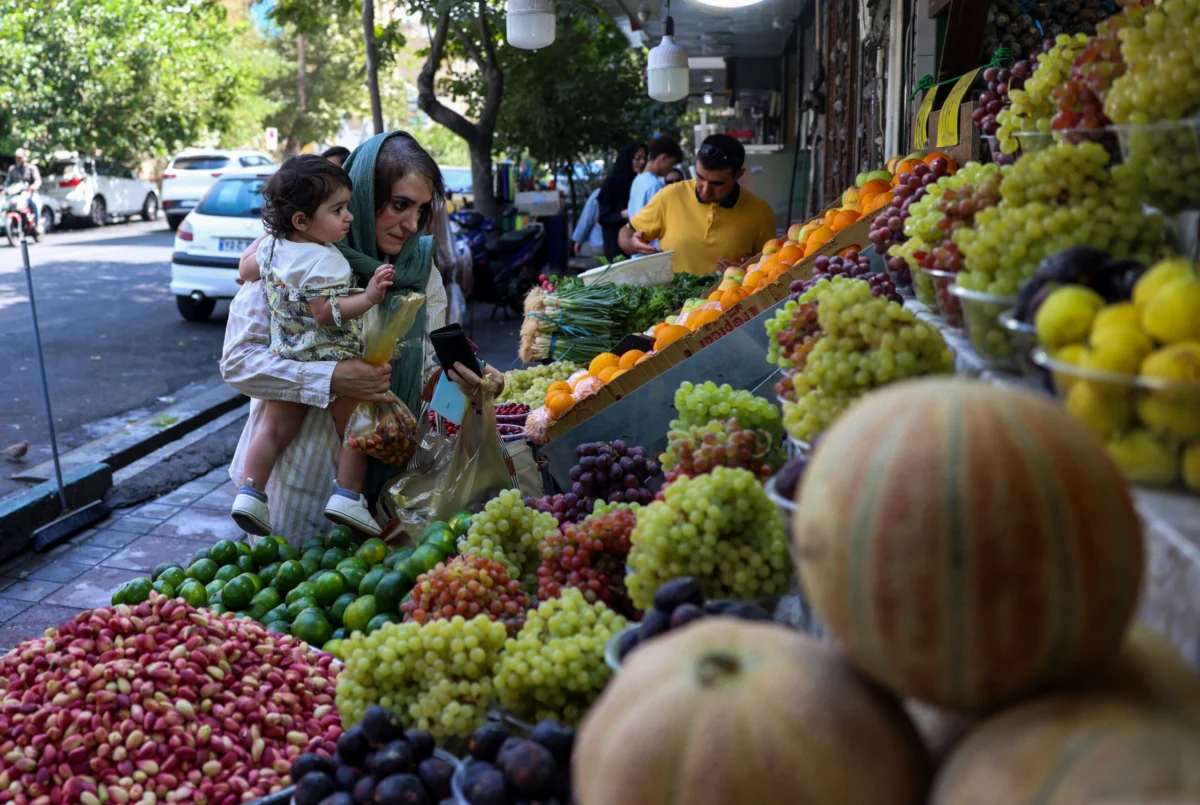
The Iranian rial experienced a sharp but contained depreciation in the immediate aftermath of the announcement, reflecting market anxieties. However, state media outlets quickly moved to reassure the public, emphasizing the country’s resilience and its history of enduring economic hardship. Despite the rhetoric, the Iranian economy has been severely battered by years of sanctions. According to data from the International Monetary Fund (IMF), Iran’s GDP contracted by an estimated 5.5% in 2025, following earlier significant contractions. Inflation rates have consistently remained in the double digits, hovering around 40-50% for several years, severely impacting the purchasing power of ordinary citizens. Unemployment, particularly among youth, has been a persistent challenge, estimated at over 15% nationally. The oil sector, historically the backbone of the economy, has seen its export volumes plummet from over 2.5 million barrels per day (bpd) before the US withdrawal from the Joint Comprehensive Plan of Action (JCPOA) to an estimated 500,000-700,000 bpd in 2025, largely reliant on covert sales to a limited number of buyers.
Background: A Decades-Long Antagonism
The latest sanctions are the culmination of a protracted and often hostile relationship between the United States and Iran, dating back to the 1979 Islamic Revolution. For decades, mutual distrust and conflicting strategic interests have fueled tensions. The early 2000s saw a significant focus on Iran’s burgeoning nuclear program, which the US and its allies feared was aimed at developing nuclear weapons, despite Iran’s consistent claims of peaceful intent.
A brief period of détente emerged with the signing of the Joint Comprehensive Plan of Action (JCPOA) in 2015, which saw Iran agree to significant restrictions on its nuclear activities in exchange for the lifting of international sanctions. However, this accord proved fragile. In 2018, the US unilaterally withdrew from the JCPOA under the previous administration, reimposing and intensifying sanctions under a "maximum pressure" campaign. This move was justified by Washington as a necessary step to curb Iran’s ballistic missile program and its support for regional proxy groups, which the US deemed destabilizing.
Since then, the relationship has been characterized by a series of escalations: attacks on oil tankers in the Persian Gulf, drone strikes, cyber warfare, and persistent skirmishes involving Iranian-backed militias in Iraq, Syria, Yemen, and Lebanon. The "Iran War" terminology reflects this multifaceted conflict, which, while largely avoiding direct conventional military engagement between the US and Iran, involves intense economic pressure, covert operations, and proxy confrontations that routinely push the region to the brink.
A Chronology of Escalation (2018-2026)
- May 2018: US withdraws from the JCPOA and begins reimposing sanctions.
- May-September 2019: A series of attacks on oil tankers in the Gulf and drone attacks on Saudi oil facilities, widely attributed to Iran, lead to heightened regional tensions.
- January 2020: A US drone strike kills Iranian General Qassem Soleimani in Baghdad, prompting Iranian missile retaliations against US bases in Iraq.
- 2020-2023: Continued "maximum pressure" campaign; Iran increases uranium enrichment levels beyond JCPOA limits. Cyberattacks and counter-attacks between the US, Israel, and Iran become more frequent. Diplomatic efforts to revive the JCPOA repeatedly fail.
- Late 2023: Increased activity by Iranian-backed militias in Iraq and Syria targets US interests, leading to retaliatory strikes.
- Early 2024: Reports emerge of Iran making significant advancements in its missile technology and further expanding its nuclear program, raising alarms in Washington and Jerusalem.
- Mid-2024: A regional conference aimed at de-escalation, involving Gulf states, the US, and European powers, collapses due to fundamental disagreements on Iran’s regional role and nuclear ambitions.
- Late 2024 – Early 2025: A series of naval incidents in the Strait of Hormuz, including alleged harassment of international shipping, further strains relations.
- Mid-2025: The US strengthens its naval presence in the Gulf and initiates joint military exercises with regional allies, signaling a readiness to counter Iranian aggression.
- Late 2025 – Early 2026: Heightened rhetoric from both Washington and Tehran, with US officials increasingly warning of "all options on the table" and Iranian leaders vowing "crushing responses" to any perceived aggression.
- August 24, 2026: US Treasury Secretary Scott Bessent announces the new, stringent sanctions package, directly targeting Iran’s financial support networks and issuing stark warnings to its trade partners.
International Reactions and the Broader Impact
The international community’s reaction to the new sanctions has been mixed, reflecting the complex geopolitical landscape.
- European Union (EU): EU officials expressed "deep concern" over the escalation, reiterating their commitment to diplomacy and the preservation of the JCPOA, however tenuous it may be. While acknowledging the US’s sovereign right to impose sanctions, a spokesperson for the European External Action Service emphasized the importance of maintaining humanitarian channels and avoiding measures that disproportionately harm the Iranian populace. However, European companies, highly dependent on access to the US financial system, are expected to largely comply with the secondary sanctions, further isolating Iran. Several major European banks and corporations have already begun to review their limited engagements with Iran.
- China and Russia: Both nations, significant trading partners with Iran and vocal critics of US unilateralism, condemned the sanctions. The Chinese Foreign Ministry called for "dialogue and negotiation, not sanctions and pressure," urging the US to refrain from actions that exacerbate regional tensions. Russia’s Foreign Minister stated that such unilateral measures undermine international law and global financial stability, vowing to explore alternative mechanisms to facilitate trade with Iran that circumvent US restrictions. However, the practical impact of these alternative mechanisms on Iran’s overall economy remains limited, given the dollar’s dominance in global finance.
- Regional Allies (Israel, Saudi Arabia, UAE): Israel’s Prime Minister lauded the US move, calling it a "necessary step to counter the greatest threat to regional stability." Saudi Arabia and the United Arab Emirates also expressed support, viewing the sanctions as a vital tool to curb Iran’s influence and protect their security interests in the Gulf. These nations have been actively lobbying Washington for stronger measures against Tehran for years.
Implications: Economic, Geopolitical, and Humanitarian
The immediate economic implication for Iran is a further tightening of its already constrained financial lifelines. While Iran has developed strategies to mitigate the impact of sanctions, including diversifying its trade partners and developing domestic industries, the scale and scope of these new measures, particularly the stringent secondary sanctions, are expected to inflict additional pain. This could lead to further depreciation of the rial, increased inflation, and a more challenging environment for both state-run enterprises and the private sector. The risk of social unrest due to economic hardship also remains a persistent concern for the Iranian government.
Geopolitically, the sanctions are likely to harden Iran’s stance, potentially pushing it further away from any future negotiations on its nuclear program or regional activities. Tehran may perceive these actions as a direct assault on its sovereignty, leading to more defiant behavior and potentially an intensification of its support for proxy groups as a means of projecting power and retaliating against perceived US aggression. The move also underscores a growing chasm in the international financial system, as major powers like China and Russia seek to develop alternatives to the dollar-dominated architecture, a development that could have long-term implications for global finance. The Middle East, already a volatile region, faces increased instability as the economic "war" intensifies, raising the specter of miscalculation and accidental escalation into direct military confrontation.
Humanitarian concerns are also paramount. While US sanctions often include provisions for humanitarian trade, the chilling effect on banks and companies often makes it difficult to process even legitimate transactions for food, medicine, and medical equipment. This can lead to shortages and inflated prices for essential goods, disproportionately affecting the most vulnerable segments of the Iranian population.
In conclusion, the new US sanctions represent a significant escalation in the ongoing "Iran War," an intricate conflict defined by economic pressure, regional rivalries, and a persistent lack of diplomatic breakthroughs. While Washington aims to dismantle the financial infrastructure supporting the Iranian regime’s policies, Tehran remains defiant, and the international community grapples with the far-reaching economic, geopolitical, and humanitarian consequences of these increasingly stringent measures. The path forward appears fraught with challenges, with little indication of a de-escalation in the foreseeable future.
