

What began as a conventional search for a residential duplex in the Florida market culminated in the acquisition of a commercial-scale eight-unit apartment complex in the heart of St. Louis, Missouri. The investor, an architect named Amanda, initially sought a manageable entry point into real estate investment with a one-to-two-unit property. However, after navigating the high-competition residential market and evaluating the limitations of small-scale multi-family assets, she executed a strategic pivot that redefined her portfolio trajectory. This transition from a residential mindset to a commercial scale highlights a growing trend among savvy investors who leverage professional backgrounds to bypass the crowded "starter" investment market.
The Evolution of a Real Estate Strategy
The genesis of Amanda’s search was rooted in the sunbelt, specifically the Florida market. Like many investors in the post-2020 era, she was drawn to the state’s high growth and demand. However, after rigorous market research and financial modeling, the numbers in Florida began to pale in comparison to the cash-flow potential of the Midwest. Specifically, St. Louis emerged as a primary contender due to its favorable price-to-rent ratios and the investor’s personal familiarity with the region.
Upon shifting her focus to St. Louis, Amanda’s initial objective remained modest: find a value-add single-family home or a duplex in North St. Louis County. The goal was to utilize the BRRRR method (Buy, Rehab, Rent, Refinance, Repeat) to build equity and cash flow. However, the search quickly migrated toward the city’s more established south-side neighborhoods, where the density of multi-family housing provided a more robust set of data points for analysis.
Chronology of the Search: From Misses to a Major Win
The journey to the eight-unit acquisition was defined by two significant "near-misses" that served as essential data points for Amanda’s eventual pivot. These properties illustrated the friction points currently present in the residential multi-family market.
Case Study 1: The Murdoch Avenue Value-Add
The first serious contender was 4926 Murdoch Avenue, located in the Princeton Heights neighborhood. This 2,100-square-foot duplex was listed at $299,000. On the surface, it appeared to be an ideal value-add opportunity: one unit was fully updated, while the other required a total overhaul.
However, upon conducting a physical inspection of the occupied unit, the reality of the renovation scope became clear. The projected costs to bring the second unit to market standard, combined with the complexities of managing a renovation in an occupied building, did not align with the asking price. Amanda’s background as an architect allowed her to see past cosmetic issues and identify structural and systemic requirements that would have eroded her margins. She opted to pass, prioritizing mathematical viability over the emotional desire to close a deal.
Case Study 2: The Portis Avenue Bidding War
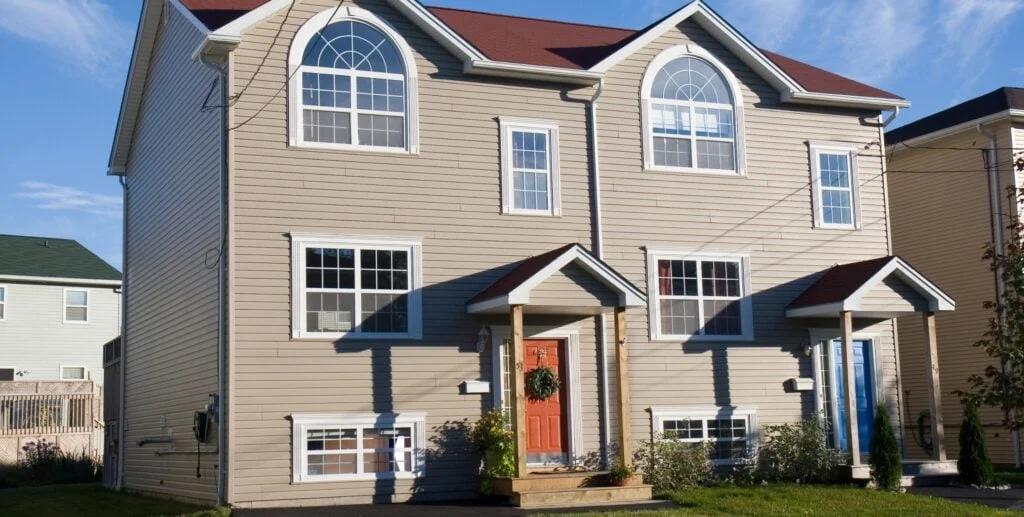
Shortly after, Amanda identified 3237 Portis Avenue in the highly desirable Tower Grove South neighborhood. This side-by-side duplex offered two units, each featuring two bedrooms and one bathroom, along with a garage. Listed at $365,000, the property was essentially turnkey, offering immediate cash flow with minimal initial capital expenditure.
The competition for this asset was fierce. Tower Grove South has become a focal point for both local and out-of-state investors due to its proximity to Tower Grove Park and a vibrant commercial corridor. Amanda submitted a competitive offer, but the property ultimately went to another buyer in a multiple-offer situation. This loss served as a catalyst for a fundamental change in strategy.
The Strategic Pivot: Scaling Beyond the Duplex
Losing the Portis Avenue property forced a re-evaluation of the "one duplex at a time" philosophy. Amanda realized that the residential multi-family market (1-4 units) was saturated with individual buyers, house-hackers, and small-scale investors, leading to compressed cap rates and aggressive bidding wars.
As an architect who manages large-scale commercial projects, Amanda possessed a unique comfort level with complex building systems and project management. She realized that the same amount of due diligence and administrative effort required for a duplex could be applied to a larger asset with significantly higher revenue potential.
Alicia Sierra, Team Leader at The Sierra Group and Amanda’s real estate agent, noted the importance of this mental shift. "What stood out with Amanda is that she didn’t stay attached to the original plan," Sierra stated. "She evaluated what would actually move her forward and made a decisive shift. A lot of investors don’t lack opportunity; they lose momentum by second-guessing and waiting too long to act."
Anatomy of the Deal: 4067 Connecticut Avenue
The pivot led Amanda to 4067 Connecticut Avenue, an eight-unit apartment building located just two blocks from Tower Grove Park. This acquisition marked her transition from residential to commercial real estate.
Property Specifications:
- Total Units: 8
- Square Footage: Over 5,000 sq. ft.
- Purchase Price: $775,000 (Approximately $96,875 per unit)
- Location: Tower Grove East/South periphery, a high-demand rental corridor.
The financing for the property was structured as a commercial loan, requiring a 25% down payment. Unlike residential loans, which focus heavily on the borrower’s personal income, commercial financing places significant weight on the Debt Service Coverage Ratio (DSCR) of the asset itself. The building’s existing rent roll and the potential for market-rate adjustments made it an attractive candidate for commercial lenders.
Market Context and Data Analysis
The St. Louis real estate market has garnered national attention for its stability. While coastal markets have seen extreme volatility in pricing, St. Louis has maintained a steady trajectory of modest appreciation coupled with high rental yields.
According to recent market data, the Tower Grove area has seen rental demand increase by approximately 5-8% annually over the last three years. The "brick city" aesthetic and the walkability of these neighborhoods attract a demographic of young professionals and graduate students from nearby institutions like Washington University and Saint Louis University.
By purchasing eight units at once, Amanda achieved an immediate economy of scale. In a duplex, a single vacancy represents a 50% loss in gross income. In an eight-unit building, a single vacancy only impacts the gross income by 12.5%, providing a significantly larger cushion for operating expenses and debt service.
Long-Term Repositioning Strategy
Amanda’s approach to the eight-unit building is characterized by "patient capital." Rather than attempting a forced appreciation through a rapid, high-cost renovation of all units, she has implemented a two-year repositioning play.
The strategy involves:
- Organic Turnover: As existing leases expire, units will be assessed for upgrades.
- Systematic Renovations: Modernizing kitchens, bathrooms, and flooring to meet current market demands for "luxury-lite" rentals in the Tower Grove area.
- Incremental Rent Adjustments: Bringing under-market rents up to current standards as renovations are completed.
- Operational Efficiency: Implementing professional property management systems to reduce utility leakage and maintenance response times.
This methodical execution minimizes the risk of over-leveraging and allows the property’s cash flow to fund a portion of the capital improvements.
Broader Implications for Modern Investors
Amanda’s journey offers a blueprint for investors operating in high-competition environments. Her success was not merely a result of finding a "hidden gem," but of her willingness to adapt her strategy to the realities of the market.
Key Takeaways for the Investment Community:
- Skillset Alignment: Amanda leveraged her professional background as an architect to mitigate the perceived risk of a larger building. Investors should identify which asset classes align with their professional strengths.
- Market Education through Failure: The two failed duplex deals were not wasted time; they were essential for understanding local market pricing and the limitations of the 1-4 unit asset class.
- The Scalability Advantage: Moving into the 5+ unit space often removes an investor from the most crowded segment of the market, where they are competing against emotional buyers rather than purely mathematical ones.
Conclusion
The acquisition of 4067 Connecticut Avenue represents a sophisticated evolution of a real estate investment thesis. By moving from a duplex search in Florida to an eight-unit complex in St. Louis, Amanda demonstrated that the most effective path to portfolio growth is often found by looking where other investors are not. Her story underscores the importance of flexibility, professional due diligence, and the courage to scale when the math supports the move. As the real estate landscape continues to shift under the weight of interest rate fluctuations and inventory shortages, the ability to pivot from residential to commercial assets may become a defining characteristic of the successful modern investor.
