

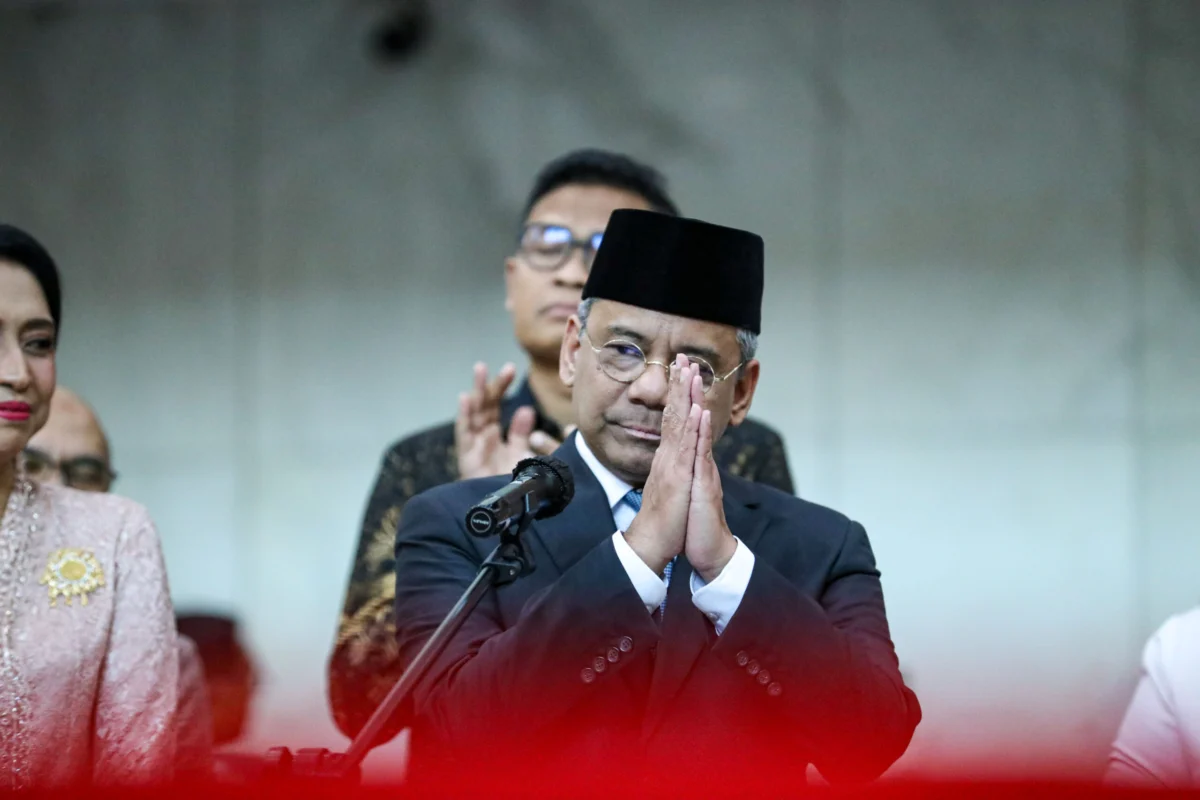
Jakarta, Indonesia – September 14, 2026 – In a significant move that underscores ongoing economic recalibrations, Indonesia has appointed Suahasil Nazara as its third Finance Minister in just two years. The swift transition, following the dismissal of Purbaya Yudhi Sadewa on Monday, places a renewed spotlight on the fiscal health and policy direction of Southeast Asia’s largest economy. Analysts are closely watching Nazara’s tenure for signs of a crucial shift towards fiscal prudence and a departure from what some describe as "interventionist" economic policies, particularly in the wake of a turbulent year marked by market volatility and credit rating concerns.
The change at the helm of the Ministry of Finance comes on the heels of another high-profile departure: Bank Indonesia Governor Perry Warjiyo’s abrupt resignation just weeks prior. This dual reshuffling has intensified scrutiny over President Prabowo Subianto’s influence on the nation’s fiscal and monetary policy, raising questions about the autonomy of key economic institutions. For international investors, the elevation of Nazara, a recognized technocrat with extensive experience within the Ministry of Finance, is seen as a potentially stabilizing force. His appointment could help restore confidence after a challenging period under Sadewa, which saw credit rating outlooks tempered and the Indonesian Rupiah plummet to historic lows earlier this year.
Nazara, who was sworn into his new role mere hours after Sadewa’s dismissal, brings a wealth of institutional knowledge. He served as Deputy Finance Minister for seven years and previously headed the Ministry’s fiscal policy agency from 2015 to 2019. This deep-seated familiarity with the ministry’s operations and budget machinery is expected to minimize transition risks, according to Qi Hang Tay, Senior Asia Analyst at the Economist Intelligence Unit. "He is a known technocrat with deep Finance Ministry experience and strong links to the Sri Mulyani era," Tay noted, referring to a previous period of perceived stability and robust fiscal management under a former Finance Minister.
Gareth Leather, Senior Asia Economist at Capital Economics, echoed this sentiment, describing the appointment as "a welcome development." However, he cautioned that definitive conclusions about Indonesia "truly turning a corner" would require further evidence of sustained improvements in policymaking and economic management.
Economic Pressures and Market Reactions
Indonesia’s economy has faced considerable headwinds throughout the year. The ripple effects of global geopolitical tensions, including the Iran war, have exacerbated an energy crisis, leading to a surge in energy costs. This, in turn, has significantly increased the burden of energy subsidies, forcing the government to curtail spending on vital flagship programs. The financial markets have responded unfavorably to this environment. The benchmark IDX Composite index has seen a substantial decline, shedding over 25% year-to-date. The Indonesian Rupiah also experienced a sharp devaluation, reaching record lows against the US Dollar in June.
Despite these pressures, a subsequent pivot toward fiscal discipline in recent weeks appears to have helped stabilize market sentiment. The Rupiah has shown signs of recovery, trading at approximately 17,680 per US Dollar on Wednesday. Radhika Rao, an economist at DBS Bank, anticipates the currency to remain within a near-term range of 17,600 to 17,800, attributing this stability to the bolstering effect of fiscal credibility on the bond market and the currency itself.
Fiscal Outlook and Policy Challenges
The nation’s fiscal deficit is projected to widen to 2.85% of Gross Domestic Product (GDP) in 2026, according to projections. Purbaya Yudhi Sadewa’s one-year tenure was notably marked by credit outlook downgrades from major agencies like Fitch and Moody’s, citing policy uncertainty. This occurred even as Indonesia’s GDP growth reached three-year highs in the first quarter of 2026, beating market expectations.
The new Finance Minister, Suahasil Nazara, faces the immediate challenge of navigating these complex fiscal realities. In his initial statements, Nazara committed to safeguarding the budget’s credibility and pledged to maintain the fiscal deficit below the 3% of GDP threshold, a commitment that has been met with cautious optimism.
However, a significant constraint remains: Nazara must finance President Prabowo Subianto’s ambitious growth agenda with increasingly limited fiscal resources. This situation is expected to lead to a less expansionary fiscal policy and a potentially more cooperative relationship with Bank Indonesia, a departure from any perceived friction during the previous administration.
A Potential Shift from Interventionist Policies?
The appointment of Nazara is being interpreted by some as a signal that Indonesia may be gradually moving away from the "more populist and interventionist policymaking that has characterized Prabowo’s presidency so far," as noted by Gareth Leather. This potential shift could involve a greater emphasis on market-driven mechanisms and less direct government intervention in economic activities.
However, not all observers are entirely reassured by the leadership changes. The ongoing reshuffle has coincided with growing concerns regarding the autonomy of the central bank. In February, President Prabowo’s nephew, Thomas Djiwandono, was appointed as a deputy governor of Bank Indonesia. This appointment, occurring just months before Governor Warjiyo’s resignation, has fueled anxieties about potential political influence over monetary policy. Subsequently, Destry Damayanti was appointed as Bank Indonesia’s first female governor on September 1, following a parliamentary selection process.
Joshua Kurlantzick, a Senior Fellow at the Council on Foreign Relations, views Nazara’s elevation as "a further, and worrisome, sign of the consolidation of economic power in the hands of Prabowo," expressing particular concern over the independence of the Bank of Indonesia. The degree to which the central bank can operate without undue political pressure remains a key area of focus for market participants and economic analysts.
The Road Ahead: Clues from the 2027 Budget
The upcoming 2027 budget will serve as an early barometer for Nazara’s ability to enact a genuine shift in policymaking. According to EIU’s Tay, key indicators will include his decisions regarding fiscal spending priorities, revenue assumptions, and the overall deficit target.
On the monetary policy front, a clearer delineation between fiscal policy and the central bank’s operational independence will be another critical signal. This would be particularly important if the government refrains from leaning heavily on Bank Indonesia to stimulate growth or to absorb a larger share of the national debt financing burden.
The ultimate test for Nazara, Tay suggests, lies in his willingness to trim or postpone programs that have historically failed to deliver substantial economic velocity relative to their cost. "If he does that while protecting fiscal credibility, that would point to a genuine shift," Tay stated. "But if spending ambitions remain unchanged and the adjustment is mostly rhetorical, it would look more like business as usual." The coming months will therefore be crucial in determining whether Nazara’s appointment heralds a new era of sound fiscal management or a continuation of existing policy trajectories under a different leadership.
Historical Context of Leadership Changes
Indonesia has experienced a notable frequency of changes in its top financial leadership over the past few years. The appointment of Suahasil Nazara marks the third Finance Minister to hold the position since 2024, highlighting a period of considerable flux at the heart of the nation’s economic management.
Prior to Purbaya Yudhi Sadewa’s brief tenure, Sri Mulyani Indrawati, a highly respected technocrat, served as Finance Minister for a significant period. Her leadership was characterized by a focus on fiscal discipline and institutional reform, often lauded by international financial circles. The transition from Indrawati to Sadewa, and now to Nazara, represents a shift in leadership styles and potentially policy priorities, creating a complex environment for economic planning and investor confidence.
The frequent changes can be attributed to a confluence of factors, including political dynamics, evolving economic challenges, and the need to adapt to global economic shocks. Each new appointee inherits a unique set of circumstances and expectations, making their ability to navigate these complexities a critical determinant of their success.
Broader Implications for Regional Stability
The economic stability and policy direction of Indonesia have significant implications not only for its own population but also for the broader Southeast Asian region. As the largest economy in the bloc, Indonesia’s fiscal health and growth trajectory influence regional trade, investment flows, and overall economic sentiment.
A period of sustained fiscal prudence and consistent policymaking under Nazara could bolster investor confidence across the region. Conversely, continued policy uncertainty or a widening fiscal deficit could dampen regional economic prospects and deter foreign direct investment. The international community, including multilateral development banks and global financial institutions, will be closely observing Indonesia’s economic performance and policy decisions under its new Finance Minister. The ability of Nazara to balance President Prabowo’s ambitious development goals with the imperative of fiscal sustainability will be a key factor in shaping Indonesia’s economic future and its role within the global economy. The coming budget cycle and any subsequent policy announcements will be scrutinized for their adherence to principles of fiscal responsibility and their impact on long-term economic stability.
