

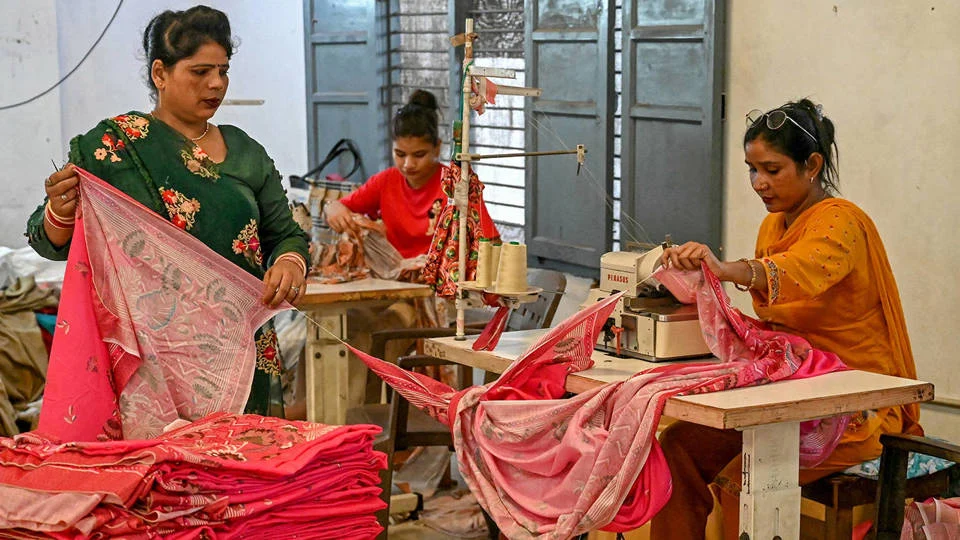
India’s female labor force participation rate (LFPR) has long trailed that of comparable economies such as Bangladesh, not primarily due to ingrained social norms, but rather as a consequence of insufficient labor demand. This presents a solvable challenge, achievable through pragmatic regulatory reforms and strategic public investment, offering a hopeful outlook for economic advancement and gender equality.
A Detailed Look at the LFPR Landscape
As of September 11, 2026, India’s female labor force participation rate stands at a modest 35%. This figure is notably lower when contrasted with regional peers, with Bangladesh reporting 42% and the Philippines a more robust 50%. While a substantial increase from the 21% recorded in the 2017-18 fiscal year is evident, a deeper analysis reveals a concerning trend. Over 70% of this growth originated from the agriculture and subsistence sectors. This implies a significant presence of disguised employment, where individuals are employed but their marginal productivity is very low, or even zero, thus not reflecting genuine job creation or economic contribution in a meaningful way. This reliance on sectors often characterized by low wages, precarious working conditions, and limited opportunities for advancement underscores the qualitative aspect of the rise in participation, rather than a broad-based economic upliftment for women.
The International Labour Organization (ILO)STAT database, a primary source for labor statistics, confirms these figures. The trends observed in India’s LFPR are not isolated incidents but part of a complex socio-economic tapestry that has evolved over decades. Historically, India’s economic development has been characterized by a gradual shift away from agriculture, but for women, this transition has been slower and less inclusive. Factors such as limited access to quality education and vocational training, coupled with pervasive gender biases in the labor market, have historically channeled women into specific sectors or confined them to unpaid domestic work.
Understanding the Disguised Employment Phenomenon
The prevalence of disguised employment within the agriculture and subsistence sectors warrants closer examination. This phenomenon, often termed "underemployment," means that a significant number of women engaged in these activities might be contributing minimally to overall economic output, or are essentially filling roles that could be performed by fewer individuals. This can be a consequence of limited off-farm employment opportunities, lack of access to capital for small businesses, or the absence of supportive infrastructure for women entrepreneurs.
For instance, a woman may be listed as participating in agricultural activities alongside her family, but her contribution might be limited to seasonal tasks or household chores related to farming, rather than engaging in full-time, productive agricultural labor. Similarly, subsistence activities often involve producing goods or services primarily for household consumption, with little surplus for market exchange. While these activities are crucial for household well-being, they are not typically captured as formal employment in standard labor force statistics, and their inclusion in LFPR calculations can inflate the numbers without reflecting genuine economic empowerment.
A Chronology of Trends and Policy Interventions
The trajectory of India’s female LFPR has been a subject of ongoing discussion and policy concern. For decades, the rate hovered around the low 20s, prompting numerous studies and government initiatives aimed at improving women’s economic participation.
- Early 2000s: Initial policy focus was on education and skill development for women, with the assumption that improved human capital would naturally lead to increased employment. Programs like the Sarva Shiksha Abhiyan (Education for All) aimed to increase school enrollment for girls, while vocational training initiatives were launched in various sectors.
- 2010s: As LFPR remained stagnant or declined in some periods, the focus began to shift towards understanding the demand-side constraints. The concept of "missing women" in the labor force gained prominence, with researchers highlighting the role of economic growth patterns and structural impediments.
- 2017-18 onwards: A noticeable uptick in LFPR, particularly in the agricultural sector, was observed. This period coincided with various government schemes aimed at rural employment and agricultural support, such as the Mahatma Gandhi National Rural Employment Guarantee Act (MGNREGA), which has a significant female beneficiary base. However, the qualitative nature of this increase, as discussed, raised concerns.
- Present Day (2026): The current data underscores the persistent challenge of creating formal, well-paying employment opportunities for women beyond traditional sectors, and the need for a more nuanced approach to measuring genuine labor force participation.
Supporting Data and Regional Comparisons
The disparity in LFPR between India and its peers like Bangladesh and the Philippines is stark and warrants careful consideration.
- Bangladesh: The higher LFPR in Bangladesh, particularly in the garment industry, has been a significant driver. While this sector has faced its own challenges related to working conditions and wages, it has historically provided a large number of formal employment opportunities for women. Government policies and the growth of the ready-made garment sector played a crucial role in absorbing female labor.
- Philippines: The Philippines’ high LFPR is attributed to a more diversified economy, a strong service sector, and a historical tradition of women participating in the global workforce, particularly in overseas employment. Factors like increased access to education and a more equitable distribution of domestic responsibilities, compared to some other Asian nations, also contribute.
Furthermore, within India itself, there are significant regional variations in LFPR, often correlating with levels of industrialization, urbanization, and access to education and childcare facilities. Southern states, for instance, have historically shown higher LFPRs compared to some northern states, reflecting a complex interplay of socio-cultural and economic factors.
Analysis of Implications: The Economic and Social Dividend of Inclusion
The current situation presents both challenges and opportunities. The fact that the problem is rooted in weak labor demand, rather than insurmountable social barriers, offers a path forward.
- Economic Growth: A substantial increase in female labor force participation has been shown to have a significant positive impact on economic growth. Estimates suggest that closing the gender gap in employment could boost India’s GDP by a considerable margin. Increased participation means a larger pool of talent, greater productivity, and enhanced consumption.
- Poverty Reduction: Formal employment for women is a powerful tool for poverty reduction, both at the household and national levels. When women earn an income, they tend to invest more in their children’s health and education, leading to intergenerational benefits.
- Gender Equality: Increased economic participation is intrinsically linked to greater gender equality. It empowers women, enhances their decision-making power within households and communities, and challenges traditional patriarchal structures.
- Demographic Dividend: India is in a unique demographic phase, with a large young population. Effectively integrating women into the workforce is crucial to capitalizing on this demographic dividend and avoiding the pitfalls of an aging population without sufficient economic support.
Challenges and Potential Solutions
Despite the hopeful prognosis, several hurdles need to be addressed:
- Skills Mismatch: There is a significant gap between the skills possessed by women and the skills demanded by emerging industries. Bridging this requires targeted skill development programs that are aligned with industry needs and accessible to women in both urban and rural areas.
- Access to Quality Childcare: The burden of childcare and domestic responsibilities remains a primary reason for women’s withdrawal from the labor force. Affordable and quality childcare facilities are essential to enable women to pursue employment.
- Safe and Decent Workplaces: Ensuring safe, harassment-free, and decent working conditions is paramount. Many women are deterred from entering or remaining in the workforce due to concerns about safety and workplace discrimination.
- Regulatory Reforms: Streamlining labor regulations, promoting formalization of employment, and ensuring fair wages and social security benefits for all workers, including women, are crucial.
- Public Investment: Strategic public investment in sectors that have the potential to create large numbers of jobs, particularly those amenable to female employment, such as manufacturing, healthcare, education, and the green economy, is vital.
Inferred Reactions and Expert Opinions
While specific reactions from related parties are not detailed in the provided snippet, it is reasonable to infer that various stakeholders would express a mix of concern and optimism.
- Government Officials: Policy makers would likely acknowledge the persistent challenge of low female LFPR, while emphasizing ongoing efforts and the potential for future growth through targeted interventions. They might highlight the recent increase, albeit with a focus on its qualitative aspects, and reiterate commitments to job creation and women’s empowerment.
- Economists and Researchers: Academics and think tanks would likely underscore the need for robust data collection and analysis to understand the nuances of female employment. They would advocate for comprehensive policy packages that address both supply-side (skills, education) and demand-side (job creation, investment) factors.
- Women’s Rights Organizations: These groups would likely call for a more proactive approach to addressing systemic barriers, including gender-based violence, discrimination in the workplace, and the unequal distribution of unpaid care work. They would champion policies that ensure women have access to decent work and economic independence.
- Industry Leaders: Business leaders might express willingness to hire more women, provided there is a skilled talent pool and supportive infrastructure. They would likely emphasize the need for efficient regulatory frameworks that encourage investment and job creation across all sectors.
Broader Impact and Implications for India’s Future
The challenge of India’s low female LFPR is not merely an economic statistic; it is a critical determinant of the nation’s social progress and its ability to harness its full human potential. Addressing this issue effectively will have far-reaching consequences:
- Enhanced Social Mobility: Empowering women economically can lead to greater social mobility, breaking cycles of poverty and disadvantage for families.
- Improved Health and Education Outcomes: Increased household income due to women’s earnings often translates into better nutrition, healthcare access, and educational opportunities for children.
- Stronger Democracy and Governance: Greater participation of women in the economy can foster greater civic engagement and lead to more inclusive governance.
- Demographic Dividend Realization: By creating avenues for women to contribute meaningfully to the workforce, India can better leverage its young population to drive economic growth and innovation, avoiding the demographic challenges faced by many developed nations.
In conclusion, while the current figures for India’s female labor force participation rate present a complex picture, the underlying cause—weak labor demand—offers a tangible pathway to improvement. Through a concerted effort involving strategic policy reforms, public investment in job-creating sectors, enhanced skill development, and the creation of supportive environments for women in the workplace, India can unlock the immense potential of its female population, paving the way for more inclusive and sustainable economic growth and societal progress. The coming years will be crucial in determining whether India can translate this understanding into tangible, widespread improvements in women’s economic participation and empowerment.
