

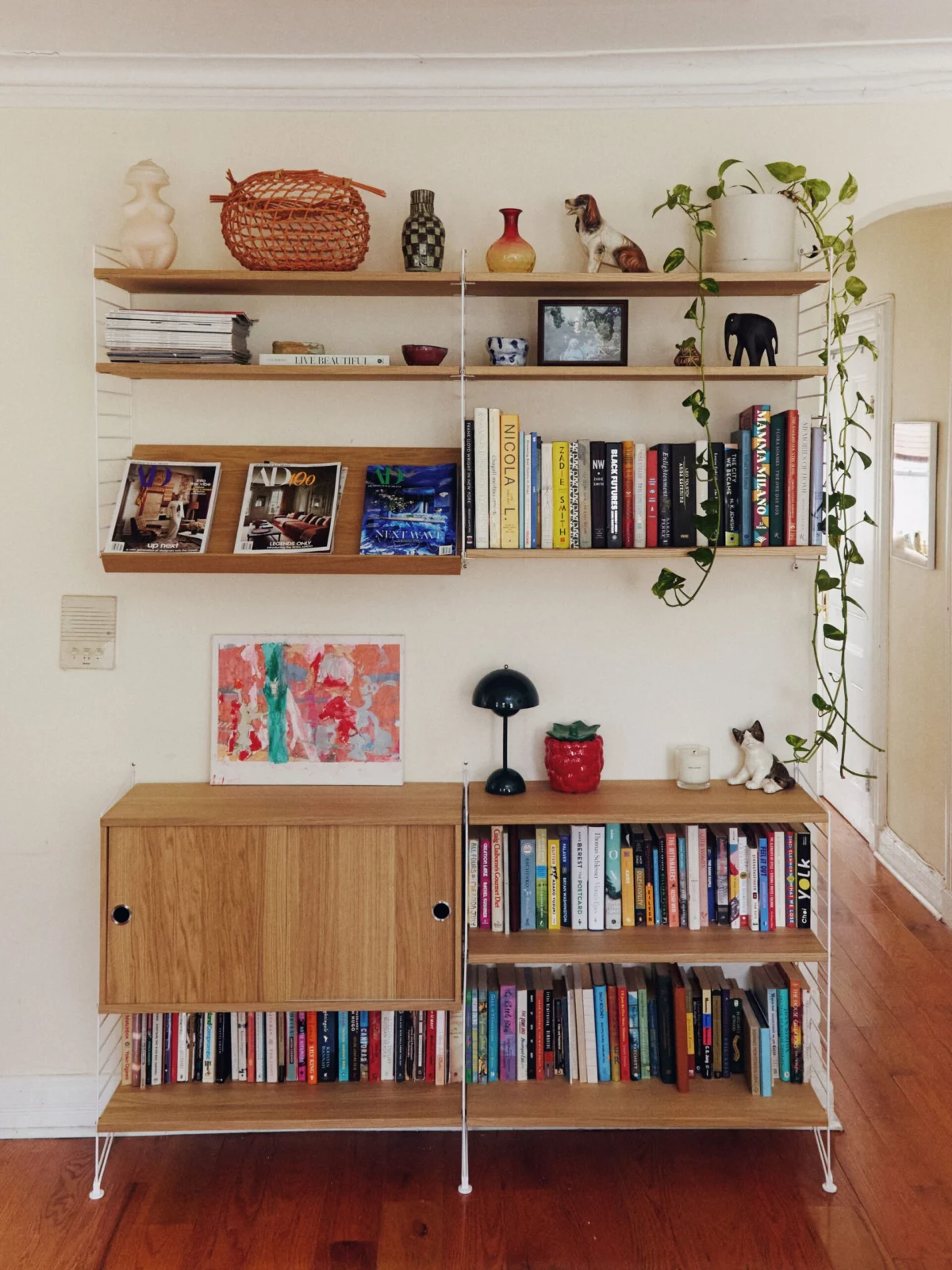
The String Shelving System, a cornerstone of mid-century Scandinavian design, has re-emerged as a primary solution for modern urban dwellers seeking a balance between permanent aesthetics and the flexibility required by rental living. Originally conceived in 1949 by Swedish architects Kajsa and Nisse Strinning, the system has transitioned from a localized Nordic staple to a global icon of modular furniture. While competitors such as Dieter Rams’s Vitsoe 606 Universal Shelving System often dominate the high-end conversation among design enthusiasts, the String system offers a distinct blend of wire-bracket minimalism and material warmth that continues to capture the market nearly 75 years after its debut.

The 1949 Genesis: A Competition That Defined an Era
The history of the String Shelving System is rooted in a specific cultural moment in post-war Sweden. In 1949, the Bonniers folkbibliotek (Bonnier’s Public Library) announced a competition seeking a shelving design that was affordable, easy to ship, and simple to assemble. The objective was to encourage the Swedish public to buy more books by providing them with a functional way to store them.
Nisse and Kajsa Strinning won the competition with a design that utilized plastic-coated wire ladders as the supporting structure. This innovation allowed the shelves to be "hung" on the wall rather than requiring a bulky, floor-standing frame. The design was revolutionary for its time, utilizing the "flat-pack" concept years before it became a global standard. By the 1950s, the String system had become the best-selling shelving unit in Sweden and was prominently featured in the United Nations headquarters in New York, cementing its status as a symbol of modern functionalism.

Engineering Modularity: Technical Specifications and Materiality
At its core, the String system relies on a deceptively simple engineering principle: lateral stability provided by ladder-like side panels. These panels, available in wall-mounted or floor-persistent versions, allow for the infinite adjustment of shelves, cabinets, and specialized components.
The materials used in contemporary String production maintain high standards of durability. The shelves are typically constructed from dense particleboard finished with high-quality wood veneers, such as oak, walnut, or ash. For more utilitarian environments, powder-coated metal shelves with perforated surfaces are also available. The side panels are made of steel wire, coated in hard-wearing polymers or lacquers to prevent corrosion and provide a smooth tactile experience.

Recent consumer data indicates that the weight-bearing capacity of these units is a significant factor in their longevity. A standard 78-centimeter-wide shelf can support up to 15 kilograms (approximately 33 pounds) when weight is distributed evenly. This structural integrity allows the system to transition from a light decorative display to a heavy-duty library or kitchen pantry without compromising the integrity of the wall mounts.
The Installation Process: A Barrier to Entry and its Solutions
For many consumers, the primary deterrent to adopting modular wall shelving is the perceived difficulty of installation. Unlike freestanding bookcases, the String system requires precise drilling and a commitment to wall modification. However, architectural reviews and user reports suggest that the process is streamlined by the system’s minimalist mounting hardware.

The installation typically involves securing the wire brackets to the wall with a single screw at each corner. Because the brackets are visible, the user has a clear guide for alignment. Nevertheless, for those living in pre-war buildings with irregular wall surfaces or for renters concerned about security deposits, professional installation remains a recommended route. Reports from professional handymen suggest that a full multi-unit configuration can often be installed in under an hour, provided the layout has been pre-planned using the brand’s digital configuration tools.
Market Positioning and Economic Value
The String system occupies a "mid-to-high" luxury bracket in the furniture market. Pricing reflects the modular nature of the product, where consumers can start with a basic configuration and expand over decades.
.png)
A single wall-mounted shelf unit through authorized retailers like Design Within Reach (DWR) typically starts around $350. Larger, more complex configurations that include slanted magazine shelves, sliding-door cabinets, and integrated desks can exceed $2,800.
While the initial investment is higher than mass-market alternatives like IKEA’s Elfa or Billy series, the String system’s value proposition lies in its resale market and adaptability. Data from secondary furniture markets shows that String components retain a high percentage of their original retail value, often selling for 60-70% of the MSRP even after years of use. This "investment furniture" status is a key driver for younger professionals who anticipate moving between apartments but wish to maintain a consistent interior aesthetic.

Comparative Analysis: String vs. Vitsoe vs. Elfa
To understand the String system’s place in the modern home, it must be compared with its primary rivals in the modular storage sector:
- Vitsoe 606 (Dieter Rams): Often considered the gold standard of modularity, Vitsoe uses an E-track system that is more industrial in appearance. While Vitsoe offers a "lifetime" service where the company helps users move and reconfigure their shelves, the price point is significantly higher than String, and the aesthetic is strictly limited to aluminum and neutral laminates.
- The Container Store’s Elfa: This is a more utilitarian, budget-friendly option. While Elfa offers high functionality and ease of installation via a top-track system, it lacks the "heritage" design status of String. Elfa is often relegated to closets and pantries, whereas String is designed to be a centerpiece of a living room or bedroom.
- String Furniture: It sits in the "sweet spot" of design history and accessibility. It provides a warmer, more "furniture-like" feel due to the use of real wood veneers, making it more suitable for residential spaces where comfort is as important as organization.
The Urban Impact: Small-Space Optimization
As urbanization continues to decrease the average square footage of apartments in major hubs like New York, London, and Tokyo, wall-mounted storage has shifted from a luxury to a necessity. By lifting storage off the floor, the String system creates an illusion of more space, a psychological benefit frequently cited by interior designers.

Furthermore, the system’s "fear of commitment" solution—the ability to add or remove components—appeals to the "liquid modernity" of the 21st century. Consumers are no longer buying a single piece of furniture for life; they are buying a system that can evolve from a nursery bookshelf to a home office desk, and eventually into a display unit for a larger home.
Official Responses and Brand Evolution
In recent years, String Furniture (the Swedish company that currently owns the rights to the design) has expanded the line to include "String Outdoor" made of galvanized metal and "String Museum," a specialized line developed in collaboration with TAF Studio for the Nationalmuseum in Stockholm.

Peter Cohen, a lead designer at String Furniture, has noted in industry statements that the brand’s goal is to remain faithful to Nisse Strinning’s original vision while adapting to modern needs. "The genius of the system is that it is never finished," Cohen stated regarding the brand’s philosophy. "It is a living organism within the home."
Broader Implications for the Furniture Industry
The enduring success of the String Shelving System highlights a broader trend in the furniture industry: the move away from "fast furniture" toward durable, modular systems. As environmental concerns become a primary driver of consumer behavior, the ability to repair, expand, and move furniture—rather than discarding it—is becoming a critical selling point.

The String system serves as a case study in how 20th-century design can solve 21st-century problems. It addresses the modern need for organization, the aesthetic desire for minimalism, and the economic reality of a mobile workforce. By overcoming the "fear of commitment" through modularity, the system has secured its place as a permanent fixture in the history of interior design.
