

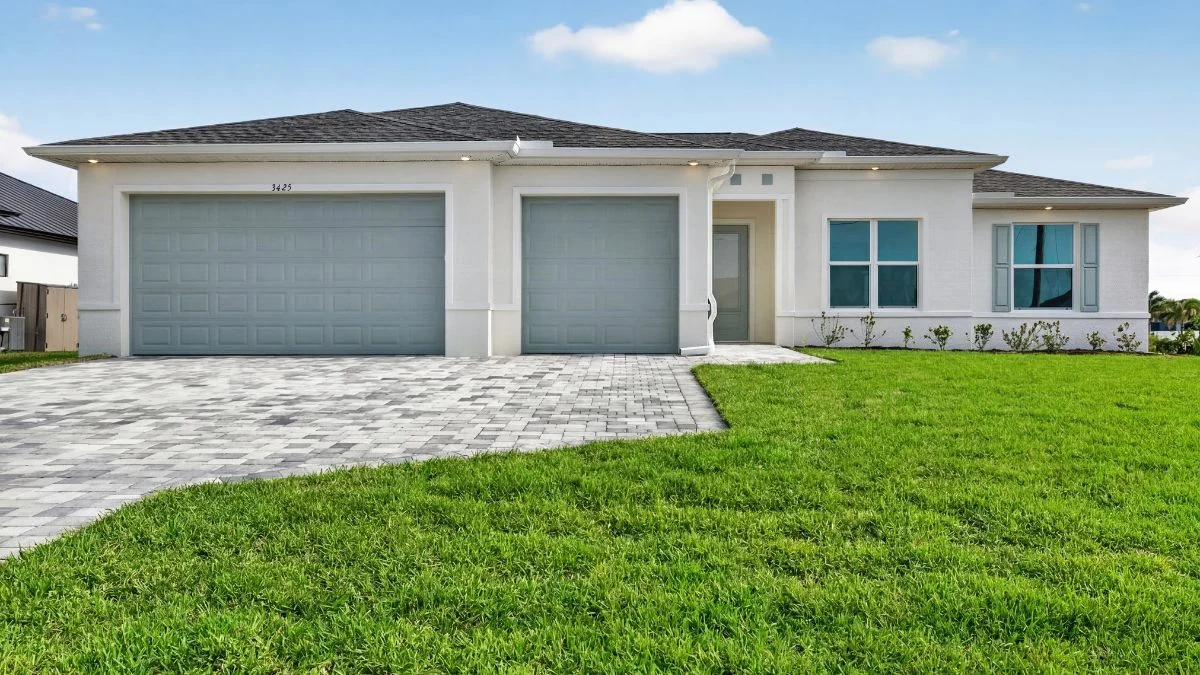
The landscape of American homebuilding is traditionally dominated by multi-billion-dollar public entities with vast land banks and deep institutional pockets. However, the 2025 HousingWire Homebuilder Rankings have highlighted a significant shift in the industry’s momentum, placing a regional Florida-based firm, Sunlife Homes, as the 11th fastest-growing builder in the United States. This ranking, predicated on year-over-year growth in residential sales volume, underscores a period of rapid expansion for the Southwest Florida builder, which saw its sales volume surge by 31.8% over the last fiscal year. As the company prepares for an even more aggressive 2026, its trajectory offers a case study in operational precision, niche market targeting, and the resilience required to navigate one of the most volatile real estate environments in modern history.
Sunlife Homes President and CEO Jeffrey Kershner recently provided insights into the firm’s operational health, noting that the company has already closed 43 homes this year with an additional 19 pending contracts. According to Kershner, the company is on a trajectory to eclipse its total 2025 closing figures by midyear. This growth is particularly notable given the headwinds facing the Florida market, ranging from fluctuating interest rates to the lingering logistical impacts of major weather events.
Institutional Roots and the Pandemic Pivot
The genesis of Sunlife Homes is rooted in the institutional real estate sector of the Midwest. Jeffrey Kershner, a native of Chicago, spent the formative years of his career in the homebuilding and property management industries. His professional pedigree includes a significant tenure at Invitation Homes, the nation’s largest owner and operator of single-family rental homes. Serving as the Vice President of Operations for the Chicago and Minneapolis markets, Kershner was instrumental in scaling the company’s portfolio to over 4,000 properties across both regions.
It was during this period that Kershner partnered with a prominent REO (Real Estate Owned) broker to launch Clickinvest, an acquisitions platform designed to serve family offices, fix-and-flip investors, and long-term buy-and-hold operators. While Clickinvest was successful in the institutional space, Kershner’s long-term ambition remained rooted in traditional residential construction.
The catalyst for the shift from Illinois to Florida was the COVID-19 pandemic. In a narrative shared by many "pandemic migrants," Kershner and his family spent a month in Florida while much of the northern United States remained under strict lockdowns. The state’s open-business environment, combined with its climate and lifestyle appeal, prompted a permanent relocation to Cape Coral. By 2022, Clickinvest was rebranded as Sunlife Homes. Initially, the company focused on build-to-rent (BTR) and short-term rental developments, leveraging Kershner’s experience with institutional portfolios. However, by 2024, the company pivoted toward a retail for-sale model, driven by Kershner’s stated passion for building homes for individual owner-occupants rather than corporate entities.
The Scattered-Lot Strategy: Leveraging Local Infrastructure
Sunlife Homes’ business model is uniquely adapted to the geography of Southwest Florida, specifically the cities of Cape Coral and Port Charlotte. Unlike many national builders that purchase massive tracts of undeveloped land to create master-planned communities, Sunlife operates primarily on "scattered lots."
This strategy is made possible by the historical development of the region. Cape Coral and Port Charlotte were largely platted in the 1950s and 1960s as massive residential projects. These areas were divided into hundreds of thousands of individual quarter-acre lots with much of the basic infrastructure—such as roads and some utilities—already in place. This "pre-platted" nature allows Sunlife Homes to operate with a "land-light" strategy.
By avoiding the massive capital expenditure required to hold and develop large land tracts, the company can remain nimble. Kershner noted that the company averages approximately 240 days from the acquisition of a lot to the final sale of the home. This rapid turnover of capital is essential for a private builder competing against public companies with lower costs of capital. The company’s focus remains on keeping cycle times—the period from permit to completion—at approximately 95 to 100 days.
Product Differentiation in a Competitive Market
The Southwest Florida market is a primary battleground for the nation’s largest homebuilders, including D.R. Horton, Lennar, and PulteGroup. To compete with these giants, Sunlife Homes has eschewed the high-incentive model favored by public builders. While a company like Lennar reported incentive rates as high as 14% in early 2026 to offset high mortgage rates, Sunlife maintains an incentive rate of roughly 3%.
Instead of competing on price alone, Sunlife differentiates through product design and standard features. The company’s core product line serves the entry-level and affordable segments, with homes priced between $290,000 and $400,000. Their "hero" product is an 1,800-square-foot, four-bedroom, three-bathroom floor plan that features dual primary suites. This configuration is specifically designed to appeal to multi-generational families or co-living arrangements—a demographic often underserved by the standardized floor plans of national builders.
Furthermore, Sunlife includes "upgraded" features as standard, such as quartz countertops, impact-resistant windows (a critical feature in hurricane-prone regions), and superior interior finishes. This "spec-heavy" approach—where 85% of homes are built without a pre-existing contract—allows the company to maintain its strict construction timelines by avoiding the delays associated with buyer customizations.
Navigating Environmental and Economic Volatility
The rise of Sunlife Homes has not been without significant challenges. The company officially entered the Southwest Florida construction market just as it faced a series of "black swan" events. In September 2022, Hurricane Ian made landfall as a Category 5-equivalent storm, causing catastrophic damage to the Cape Coral and Fort Myers areas. This was followed by a turbulent 2024 hurricane season that contributed to a sharp correction in local real estate prices.
Internal data from Sunlife Homes indicates that home prices in their primary markets fell by as much as 18.5% from their post-pandemic peaks. However, the company’s analysis suggests the market bottomed out in July 2025 and has since entered a phase of normalization.
The economic landscape has been further complicated by global events, such as geopolitical tensions in the Middle East, which have contributed to interest rate volatility. Despite mortgage rates remaining elevated, Sunlife has worked with preferred lenders to offer below-market rates to buyers, though Kershner admits that continued rate pressure could "squeeze" margins further.
Addressing the Florida Insurance Crisis
One of the most significant hurdles for any Florida builder is the public perception of the state’s insurance market. Skyrocketing premiums and the exit of several major carriers from the state have made national headlines. However, Sunlife Homes utilizes a data-driven approach to mitigate these concerns for their buyers.
By focusing on lots located outside of high-risk flood zones and building to modern, stringent Florida building codes, Sunlife is able to help buyers secure insurance rates that are often significantly lower than the state average. Kershner noted that many of their buyers see annual premiums between $800 and $1,200—a figure that often surprises those moving from northern states who have heard only the worst-case scenarios regarding Florida’s insurance "crisis."
Chronology of Sunlife Homes’ Expansion
- 2020: Jeffrey Kershner visits Southwest Florida during the COVID-19 pandemic; decides to relocate operations from Chicago.
- 2021: Operations move to Cape Coral; Clickinvest begins identifying opportunities in the Florida market.
- 2022: Rebranding to Sunlife Homes; initial focus on build-to-rent (BTR) models. Hurricane Ian strikes the region, testing the company’s fledgling operations.
- 2023: Expansion of the scattered-site model; refinement of the 95-day construction cycle.
- 2024: Strategic shift to a retail for-sale model; launch of the dual primary suite floor plan.
- 2025: Sunlife Homes ranked 11th fastest-growing builder by HousingWire; market prices begin to stabilize after an 18.5% correction.
- 2026 (Projected): Expansion into Port Charlotte and preliminary exploration of Florida’s East Coast markets.
Analysis: The Future of the Land-Light Private Builder
The success of Sunlife Homes reflects a broader trend in the residential construction industry where operational efficiency is becoming more valuable than land speculation. In a high-interest-rate environment, the ability to "velocity build"—turning over inventory in under 250 days—is the primary defense against the rising cost of capital.
As Sunlife Homes looks toward the future, its focus remains on geographical diversification. Having successfully replicated its scattered-site model in Port Charlotte, the company is now eyeing expansion toward the East Coast of Florida. By maintaining a strict adherence to their metrics and avoiding the "customization trap," Sunlife has positioned itself as a high-volume production builder that retains the agility of a local firm.
In the words of Jeffrey Kershner, the company’s survival and growth in one of the nation’s toughest markets is a testament to maximizing every dollar and minute. While the "magical" margins of the post-pandemic boom have evaporated, Sunlife’s ability to "make a few bucks" through high-efficiency operations suggests that the company is built to endure the cyclical nature of Florida real estate. For the broader industry, Sunlife’s rise serves as a reminder that even in a market dominated by public giants, there remains a significant opportunity for private builders who can master the art of the niche and the science of the schedule.
