

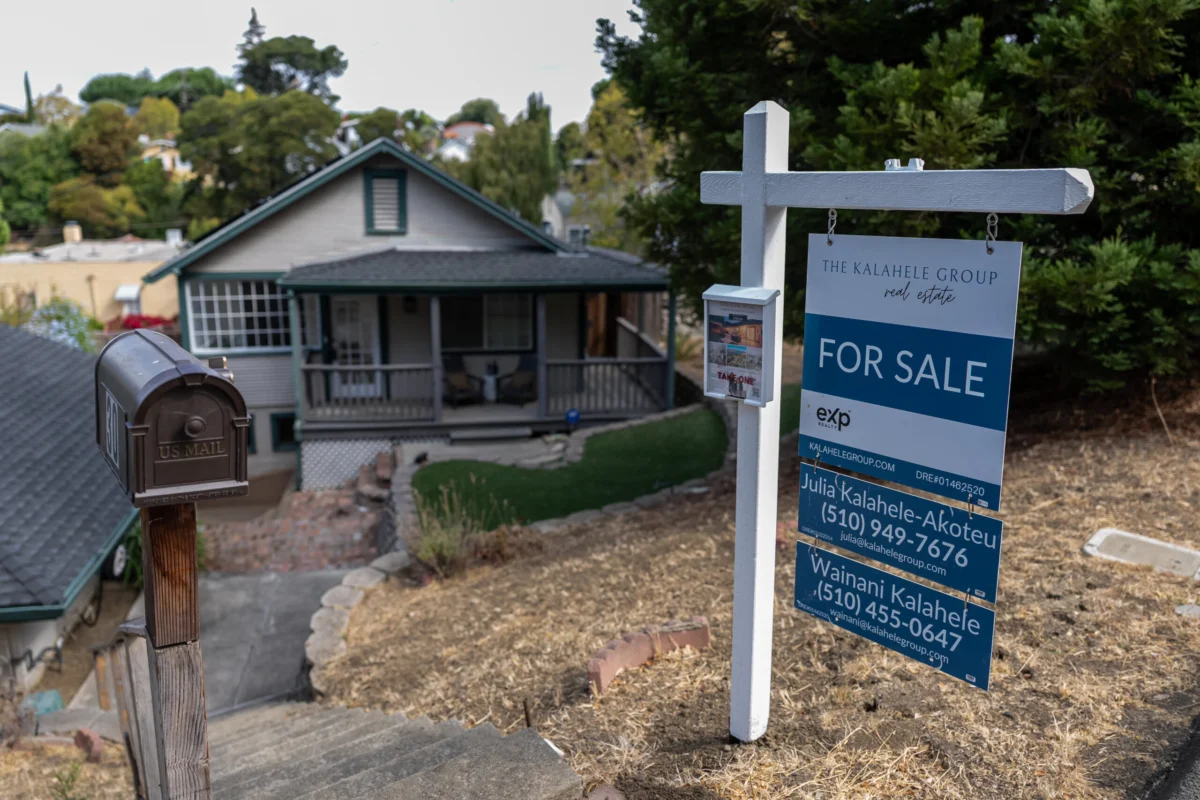
The U.S. housing market continues to navigate a complex landscape marked by elevated mortgage rates and persistently high home prices, leading to a notable decline in sales of previously owned homes in August. According to the latest data released by the National Association of Realtors (NAR), sales activity experienced a 2% contraction from July, settling at a seasonally adjusted annual rate of 3.98 million units. This marks the slowest pace of existing home sales observed since June 2025, underscoring the ongoing challenges faced by prospective homebuyers across the nation.
The August downturn was not uniform, with the Northeast and Midwest regions bearing the brunt of the slowdown. On a year-over-year basis, sales were down 1.2%, indicating a sustained period of reduced transaction volume compared to the previous year. This deceleration in sales is largely attributed to the surge in mortgage rates during the preceding months, particularly in June and July, when many of the contracts for August closings would have been signed. Mortgage rates saw a sharp upward trajectory in the middle of July, exerting significant pressure on buyer affordability and market momentum.
The Enduring Influence of Mortgage Rates
The inverse relationship between mortgage rates and home sales is a fundamental principle of the housing market, a dynamic clearly evidenced in the latest figures. Lawrence Yun, chief economist for the National Association of Realtors, acknowledged this trend, stating, "Mortgage rates and home sales move in opposite directions, so it’s not surprising to see a mild dip in home buying activity due to high mortgage rates." This observation highlights how critical interest rate fluctuations are to market performance. When rates climb, the cost of borrowing increases, making monthly mortgage payments substantially higher, even for homes with stable prices. For many potential buyers, especially first-timers, this added financial burden can push homeownership out of reach or force them to delay their purchase plans.
The recent spike in mortgage rates can be traced back to a confluence of macroeconomic factors. Following a period of aggressive monetary tightening by the Federal Reserve to combat persistent inflation, the broader financial markets reacted by pushing bond yields higher. Mortgage rates, which are typically tied to the yield on the 10-year Treasury note, followed suit. Throughout 2025 and into 2026, the Federal Reserve maintained a hawkish stance, signaling its commitment to bringing inflation down to its target 2% rate. This sustained pressure from monetary policy has kept borrowing costs elevated across the economy, with the housing sector feeling a direct and profound impact. Analysts have pointed out that even small percentage point increases in mortgage rates can translate into hundreds of dollars added to a monthly payment for a median-priced home, effectively pricing out a segment of the buyer pool.
Paradox of Rising Prices Amidst Slowing Sales
Despite the cooling sales activity, the housing market continues to defy conventional wisdom in one critical aspect: home prices are still on an upward trajectory. The median price of an existing home sold in August reached $429,100, marking a 1.6% increase from August 2025. This figure represents a new high for the month of August, indicating the persistent demand and limited supply dynamics that continue to underpin property values. This paradox – falling sales alongside rising prices – is a testament to the unique structural challenges within the current housing market.
The primary driver behind this phenomenon is the enduring shortage of available homes for sale. While housing supply did see an increase, totaling 1.62 million homes for sale at the end of August – up 3.2% from July and 5.9% from the year prior – it remains historically low relative to demand. At the current sales pace, this inventory represents a 4.9-month supply, which, while the highest level in more than a decade according to NAR, still falls short of what is considered a balanced market (typically a 6- to 7-month supply). The scarcity of options means that even with fewer buyers in the market due to high rates, those who are still able and willing to purchase face considerable competition, particularly for desirable properties. This sustained competition, even among a smaller pool of buyers, prevents prices from retreating significantly.
Regional Disparities and Market Dynamics
The national statistics mask significant regional variations in market performance. Price gains were most pronounced in the Northeast, a region characterized by exceptionally low inventory levels. In areas like the greater Boston metropolitan area or parts of New York, where demand consistently outstrips supply, even a slight increase in available homes can still lead to bidding wars and upward price pressure. The Midwest also experienced robust price growth, driven by a combination of relative affordability compared to coastal markets and a tightening supply.
Conversely, the West was the only region to experience a median price decline year over year. This could be attributed to several factors, including the exceptionally high price points in many Western markets (such as California and parts of the Pacific Northwest), which make them particularly sensitive to interest rate hikes. When mortgage rates rise, the already steep cost of homeownership in these regions becomes even more prohibitive, leading to a more pronounced cooling effect on demand and, consequently, on prices. Additionally, some Western markets may have seen a more significant influx of new construction in recent years, which could gradually alleviate supply pressures.
Shifting Buyer Demographics and Market Segments
The current market conditions are also influencing the composition of homebuyers. Sales continue to be strongest at the highest end of the market, indicating that affluent buyers, who are often less reliant on mortgage financing or less sensitive to interest rate fluctuations, remain active. Compared with August 2025, sales of homes priced above $1 million were 3.9% higher, representing the only price range that saw increased sales. This trend suggests a bifurcation in the market, where luxury properties maintain their appeal, potentially attracting cash buyers or those with substantial equity from previous sales.
In stark contrast, sales of homes priced between $100,000 and $250,000 were down a significant 10% compared to August 2025. This segment typically caters to first-time homebuyers and those with more limited budgets, who are disproportionately affected by higher mortgage rates. The shrinking accessibility of homes in this crucial entry-level price bracket poses long-term challenges for housing affordability and wealth creation among younger generations.
Regarding buyer types, cash buyers constituted 27% of August sales, a slight increase from July but a modest decrease from August of last year. This segment often includes investors or individuals selling a previous property with significant equity, allowing them to bypass mortgage financing and gain a competitive edge. First-time buyers, despite the challenging environment, made up 30% of sales, a slight increase from both July and August 2025. This resilience among first-time buyers, while encouraging, often comes at the cost of stretching budgets or compromising on desired features, as they navigate an expensive market with high borrowing costs.
A notable shift was observed in the investor and second-home buyer segment, which accounted for just 15% of August sales, down from 21% the year before. This decline suggests that higher interest rates and potentially lower rental yields, coupled with increased holding costs, might be deterring some investors from expanding their portfolios. The reduced presence of speculative buyers could, in theory, alleviate some pressure on the market, but its overall impact on affordability for primary residents remains limited given the broader supply constraints.
Time on Market and Seller Expectations
Another indicator of the evolving market landscape is the average time homes are sitting on the market. In August, homes averaged 31 days on the market, an increase from 29 days in July. While still relatively quick by historical standards, this upward trend suggests that buyers are becoming more discerning, and sellers may need to adjust their pricing expectations or be more patient. The frenzied pace of multiple offers above asking price, which characterized the peak of the pandemic-era boom, has largely subsided in many areas. Sellers who are unwilling to adapt to the new market realities, where buyers have less purchasing power and more options (albeit still limited), may find their properties lingering for longer periods. This gradual shift in market velocity could eventually lead to more balanced negotiations between buyers and sellers, although the median price data indicates that sellers still hold considerable leverage.
Broader Economic Implications and Outlook
The performance of the housing market is intricately linked to the broader economy. A slowdown in housing transactions can have ripple effects, impacting related industries such as construction, real estate services, home furnishings, and lending. While the dip in sales suggests a moderation in economic activity, the persistent rise in home prices could also contribute to inflationary pressures, particularly if housing costs continue to climb. The Federal Reserve will be closely monitoring these indicators as it calibrates its future monetary policy decisions. A continued slowdown in housing could signal that the Fed’s rate hikes are having the desired effect of cooling demand, which might eventually pave the way for a more accommodative stance. However, as long as inflation remains a concern, the central bank is unlikely to reverse course aggressively.
Looking ahead, economists and market analysts project a period of continued adjustment for the housing market. While a significant crash is largely seen as unlikely due to underlying demand and relatively healthy homeowner equity levels, a sustained period of slower sales and perhaps more modest price appreciation is anticipated. The interplay of mortgage rates, inflation, labor market strength, and consumer confidence will dictate the market’s trajectory in the coming months. For buyers, the key will be watching for any signs of rate stabilization or declines, which could unlock more purchasing power. For sellers, realistic pricing and strategic marketing will be paramount. The long-term solution to housing affordability still rests on addressing the fundamental supply shortage through increased new construction, a challenge that requires coordinated efforts from policymakers, developers, and local communities.
