

The global automotive industry produces an estimated one billion end-of-life tires annually, creating a monumental waste management challenge that transcends international borders. While the modern tire is a marvel of engineering—designed for durability, heat resistance, and high-speed safety—those same characteristics make it an environmental nightmare once its tread has worn thin. Because tires are composed of complex chemical compounds and are physically designed to be indestructible, they do not biodegrade. When left in landfills or illegal stockpiles, they pose severe public health risks, acting as primary breeding grounds for disease-carrying mosquitoes and representing a significant fire hazard. However, a sophisticated industrial ecosystem is emerging to transform these "black gold" liabilities into valuable assets, moving the needle toward a truly circular economy.
The Scale of the Global Tire Waste Problem
To understand the necessity of tire recycling, one must first grasp the scale of the waste. Each year, the United States alone generates approximately 300 million scrap tires. Globally, the figure reaches into the billions. Historically, the most common solution for scrap tires was stockpiling. These massive piles are notoriously difficult to manage; if a tire pile catches fire, it can burn for months, releasing toxic smoke containing cyanide, carbon monoxide, and sulfur dioxide into the atmosphere, while leaching hazardous oils into the local groundwater.
The chemical composition of a tire is the primary hurdle to recycling. Tires are made through a process called vulcanization, which involves curing rubber with sulfur to create cross-links between polymer chains. This makes the rubber durable and elastic but also means it cannot be simply melted down and reshaped like glass or many plastics. Consequently, the recycling industry has had to pivot away from "tire-to-tire" recycling toward "downcycling" and "repurposing," where the rubber is mechanically processed into new forms.
Ontario’s Regulatory Shift: The Individual Producer Responsibility Model
In the search for sustainable waste solutions, the Canadian province of Ontario has emerged as a global leader through its implementation of the Individual Producer Responsibility (IPR) model. Unlike traditional "stewardship" programs, where a government-mandated fee is collected from consumers to fund a central recycling agency, the IPR model places the legal and financial burden of recycling directly on the companies that manufacture or import tires.
This shift occurred following the passage of the Resource Recovery and Circular Economy Act in 2016. Under this framework, tire producers are not merely responsible for paying a fee; they are responsible for the physical recovery and recycling of a specific weight of tires based on their market share. This system incentivizes efficiency and innovation. If a producer can find a more cost-effective way to collect and process tires, they directly benefit.

To manage this complex logistical web, the not-for-profit organization eTracks was established. eTracks serves as a Producer Responsibility Organization (PRO), helping tire manufacturers meet their legal obligations in Ontario. The organization oversees a network of over 5,500 collection sites, ranging from small independent repair shops to massive auto dealerships. By using a digital verification system known as eSRP, eTracks can trace the journey of a tire from the moment it is removed from a vehicle to its final transformation into a new product. This level of traceability is essential for auditing and ensures that tires are not simply moved across borders to be dumped in less-regulated jurisdictions.
The Industrial Alchemy: From Scrap to Crumb Rubber
The physical transformation of a tire begins at specialized processing facilities, such as Evolve Recycling in Brantford, Ontario. The process is a mechanical gauntlet designed to deconstruct the tire into its core components: rubber, steel, and fiber.
- Primary Shredding: Whole tires are fed into massive industrial shredders that tear the rubber into large chunks, typically several inches in size.
- Granulation and Separation: These chunks are then passed through secondary grinders. During this stage, powerful magnets are used to extract the steel wire that reinforces the tire’s structure. Simultaneously, air-suction systems pull away the textile fibers (nylon and polyester) used in the tire’s casing.
- Fine Grinding: The remaining rubber is processed further into "crumb rubber." Depending on the intended end-use, the rubber may be ground into coarse granules or a fine powder.
- Cleaning and Quality Control: The crumb rubber undergoes a final cleaning process to ensure it is free of contaminants. This material is then bagged and sold as a raw material for manufacturers.
The extracted steel is sent to smelting plants to be recycled into new steel products, while the fiber can be used in insulation or as a fuel supplement in industrial kilns. However, the rubber remains the most versatile and valuable output.
High-Value Applications: Improving Animal Welfare and Infrastructure
Northwest Rubber, a global leader in rubber manufacturing and a key partner of eTracks, has demonstrated that recycled tire rubber is often superior to virgin materials for specific industrial applications. Over the past 60 years, the company has diverted more than 160 million tires from landfills, converting them into specialized flooring and matting.
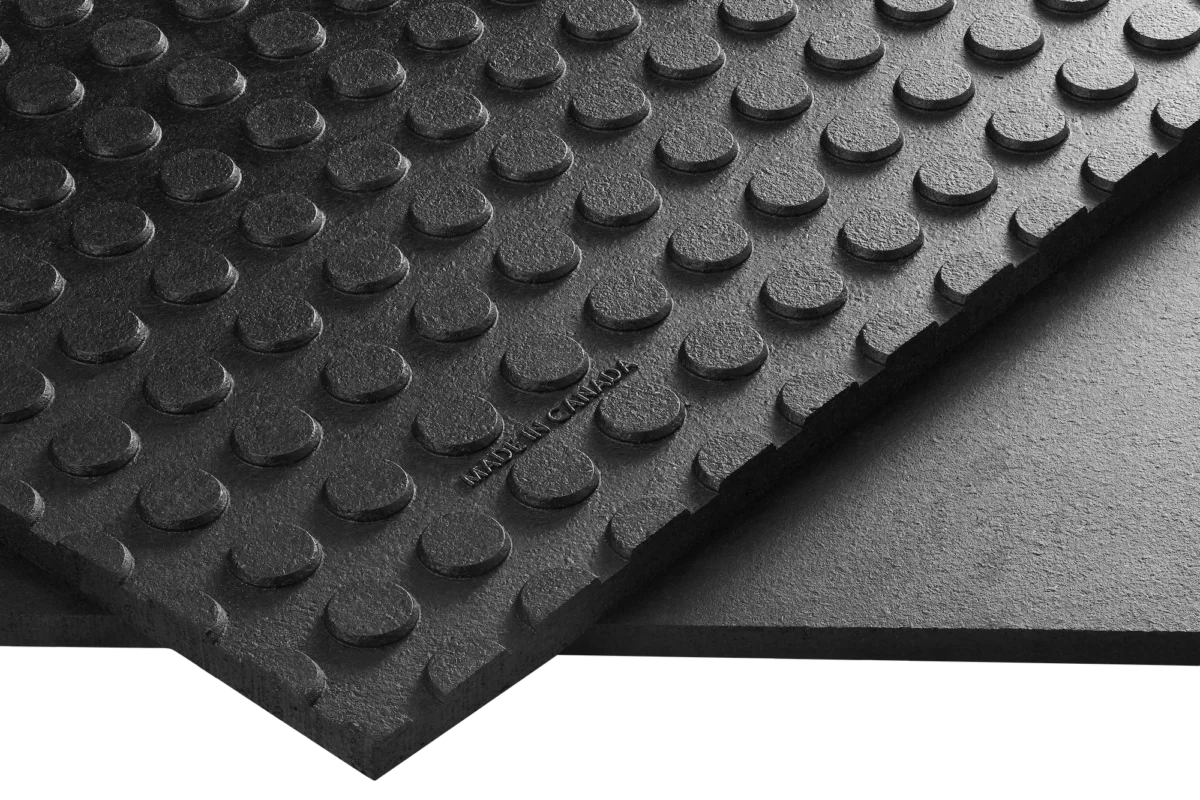
One of the most impactful uses of this recycled material is found in the agricultural sector through the brand Animat. For decades, livestock facilities used concrete flooring, which is hard on the joints of cattle and horses. By installing specialized mats made from recycled tire rubber, farmers can significantly improve animal welfare.
The benefits are quantifiable. Studies in the dairy industry have shown that cows standing on rubber mats rather than concrete experience lower rates of lameness and joint inflammation. Because comfortable cows spend more time standing and eating, and less time stressed by physical pain, there is a direct correlation between the use of rubber matting and increased milk production. This creates a rare "win-win" scenario where environmental sustainability directly contributes to agricultural profitability.
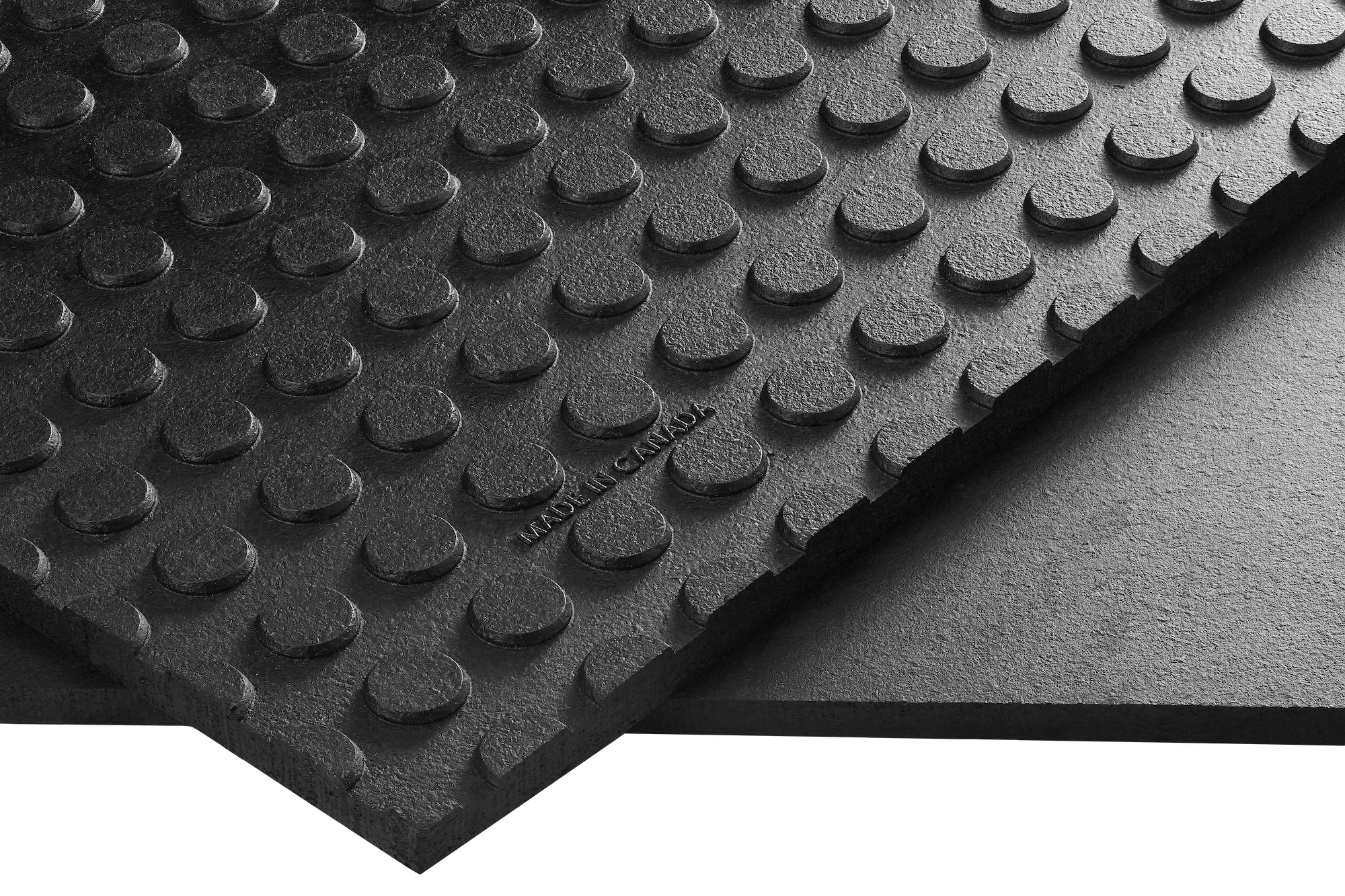
Beyond the barn, recycled rubber has become a staple in the sports and fitness industries. The "shock absorption" qualities of tire rubber make it the ideal material for weight room flooring and the underlayment of hockey rinks. In the realm of artificial turf, crumb rubber is used as "infill," providing the cushioning necessary to prevent injuries in soccer and American football.
The Economic and Environmental Implications
The transition to a circular tire economy has profound economic implications. By creating a market for scrap tires, jurisdictions like Ontario have turned a waste management cost into a manufacturing opportunity. The recycling industry creates local jobs in collection, transportation, and high-tech processing—jobs that cannot be easily outsourced because the "raw material" (waste) is generated locally.
From an environmental perspective, the use of recycled crumb rubber significantly reduces the carbon footprint of manufacturing. Producing virgin synthetic rubber is an energy-intensive process that relies on petroleum feedstocks. Natural rubber production, while renewable, is a leading driver of deforestation in Southeast Asia. By substituting recycled tire rubber for virgin materials, manufacturers can reduce energy consumption and greenhouse gas emissions.
Furthermore, the "beneficial reuse" of tires prevents the catastrophic environmental damage associated with tire fires. In Ontario, a tire is only legally considered "recycled" when it has been sold to a manufacturer for use in a new product. This strict definition prevents companies from simply shredding tires and stockpiling the crumbs, ensuring that the material actually returns to the economic stream.
Challenges on the Road to Full Circularity
Despite the successes of the IPR model and the innovations in crumb rubber manufacturing, the industry faces significant hurdles. The most prominent challenge is the "second-life" dilemma. While we have mastered turning tires into mats, we have not yet established a widespread system for recycling those mats once they reach the end of their useful life.
As David Pruim, CFO of Northwest Rubber, notes, the challenge is more logistical than technical. The technology exists to grind down an old rubber mat and turn it back into crumb rubber, but the infrastructure to collect, clean, and transport used mats from thousands of individual farms and gyms is not yet as robust as the system for collecting tires from auto shops.

Additionally, the dream of "closed-loop" recycling—turning an old tire back into a brand-new tire—remains elusive at a commercial scale. While companies are experimenting with "pyrolysis" (using heat in the absence of oxygen to break tires down into oil, gas, and carbon black) and "devulcanization" (chemically breaking the sulfur bonds), these processes are currently more expensive than mechanical shredding.
A Blueprint for Global Waste Management
The story of tire recycling is one of turning a structural failure of modern consumption into a triumph of industrial design. The Ontario experience serves as a blueprint for other regions, demonstrating that clear regulatory frameworks, combined with digital tracking and private-sector innovation, can solve even the most "indestructible" waste problems.
As the world shifts toward electric vehicles, which are heavier and tend to wear through tires faster than internal combustion engine vehicles, the volume of tire waste is expected to rise. The infrastructure established by organizations like eTracks and manufacturers like Northwest Rubber will be more critical than ever. By continuing to "follow the crumb trail," the industry is proving that the end of the road for a tire is merely the beginning of a new journey into the floors, fields, and facilities of the future.
