

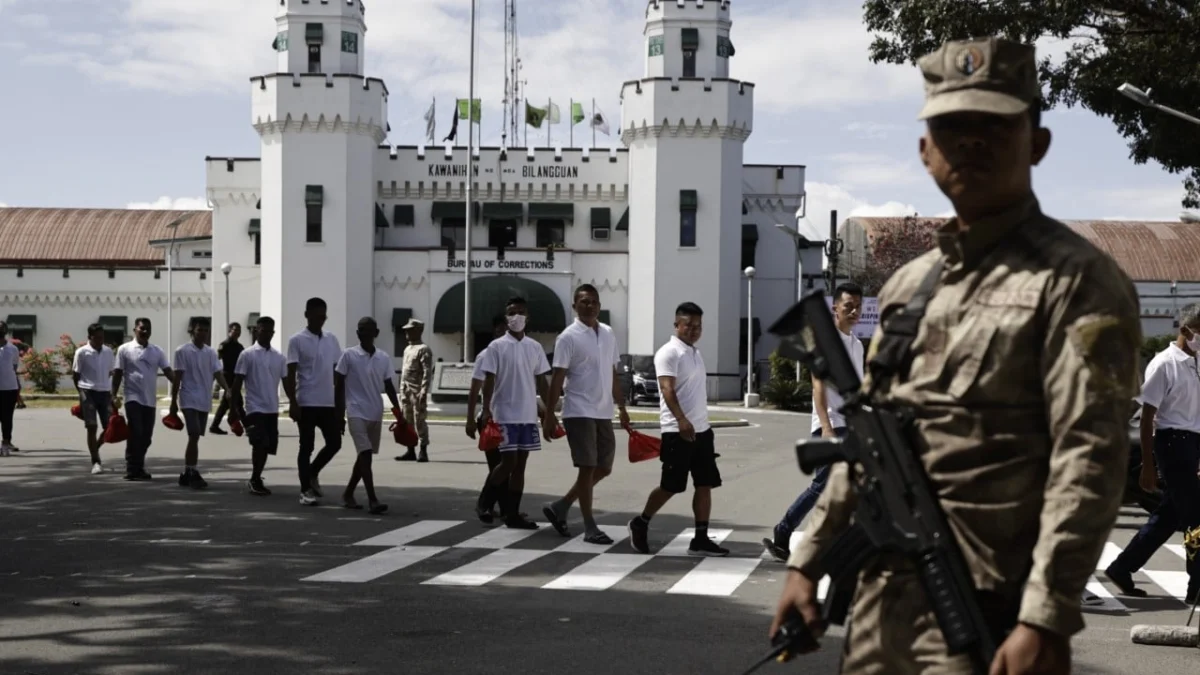
The legal ordeal of Tang Lung-wai, a Hong Kong national who has spent nearly a quarter of a century entangled in the Philippine judicial system, has taken a distressing new turn. Despite a court order mandating his immediate release and deportation, Tang has been returned to the maximum-security New Bilibid Prison in Muntinlupa City. This development follows a series of administrative failures exacerbated by severe weather conditions, leading his legal counsel to formally accuse Philippine authorities of "illegal detention." Tang, who has consistently maintained his innocence regarding a 2000 drug conviction, now finds himself back in the very facility he was legally sanctioned to leave, highlighting the systemic inefficiencies and procedural complexities that often plague the intersection of immigration and criminal justice in the Philippines.
According to Tang’s Philippine legal representative, Blessie Rose Carpena, prison authorities escorted the 53-year-old to the Bureau of Immigration (BI) last Friday. The transfer was intended to facilitate the final administrative steps for his deportation back to Hong Kong. However, the timing coincided with the onslaught of a powerful typhoon—identified locally as Carina—which prompted the Philippine government to suspend operations in public offices across Metro Manila. Because the Bureau of Immigration was unable to process his paperwork during the shutdown, Tang was not held in a temporary immigration facility but was instead transported back to the New Bilibid Prison.
Attorney Carpena characterized the situation as a grave violation of Tang’s rights. Speaking to the South China Morning Post, she noted that the delay in his release could constitute illegal detention under Philippine law, as the court had already ruled that his sentence was fully served. Carpena described her client as being in a state of "devastation and frustration," having come within hours of regaining a freedom that has eluded him for twenty-four years.
A Chronology of a Two-Decade Legal Battle
To understand the gravity of the current situation, it is necessary to examine the protracted timeline of Tang Lung-wai’s case, which has become a cause célèbre in Hong Kong and a point of contention regarding the fairness of the Philippine justice system.
The case began in July 2000, when Tang was arrested in Parañaque City. Philippine police alleged that Tang, along with two other men, was in possession of eight kilograms of methamphetamine hydrochloride, commonly known as "ice." From the moment of his arrest, Tang asserted that he was a victim of a "set-up" by local law enforcement. His primary defense rested on a critical piece of evidence: his travel records. Tang’s legal team argued that the police claim of having conducted surveillance on him in the days leading up to the arrest was physically impossible, as Hong Kong immigration records showed he had not even entered the Philippines on the dates the surveillance supposedly occurred.
Despite these discrepancies, the Philippine judicial process moved at a glacial pace. Tang remained in pre-trial detention for eleven years. It was not until 2011 that a regional trial court found him guilty and sentenced him to life imprisonment, which in the Philippines translates to a 40-year term. Tang’s appeals reached the Philippine Supreme Court, but his conviction was upheld in 2017.
The case gained significant momentum in 2018 when Tang published a book titled 18 Years in a Philippine Prison, written while behind bars. The book detailed the harsh conditions of his incarceration and the alleged corruption within the police force. The publication sparked a wave of public support in Hong Kong, leading to diplomatic inquiries from the Hong Kong government and the Chinese Embassy in Manila. With the help of Hong Kong legislator Paul Tse Wai-chun, Tang’s team secured official travel records from the Hong Kong Immigration Department, which they hoped would prove his innocence by showing he arrived in Manila on July 11, 2000—days after the police claimed they had started monitoring his activities.
The Path to Release: Good Conduct and Judicial Orders
The breakthrough in Tang’s case did not come from an overturned conviction, but rather through the application of the Republic Act No. 10592, more commonly known as the Good Conduct Time Allowance (GCTA) law. This law allows for the reduction of a prisoner’s sentence based on their behavior and participation in rehabilitation programs.
In late July 2024, a Manila court reviewed Tang’s record and determined that, with the inclusion of his GCTA credits, he had effectively completed his 40-year sentence. The court issued an order for his "immediate release" from the custody of the Bureau of Corrections (BuCor), contingent upon his deportation. Under Philippine law, a foreign national who completes a criminal sentence must be turned over to the Bureau of Immigration for summary deportation, as their presence in the country becomes illegal upon the expiration of their visa or the conclusion of their sentence.
The transition from the Bureau of Corrections to the Bureau of Immigration is a standard procedural step. However, the execution of this step failed on Friday. The suspension of government work due to the typhoon created a "procedural vacuum." Instead of placing Tang in the Bureau of Immigration’s detention center in Camp Bagong Diwa—which is the standard holding area for deportees—authorities opted to return him to New Bilibid Prison, a facility meant for convicted felons, not individuals who have served their time.
Supporting Data: Overcrowding and the GCTA Controversy
The detention of Tang Lung-wai highlights broader issues within the Philippine penal system. The New Bilibid Prison, where Tang has spent the majority of his adult life, is notorious for its extreme overcrowding. Designed to house approximately 6,000 inmates, the facility frequently holds upwards of 28,000 to 30,000 prisoners. This leads to a congestion rate of nearly 400%, creating an environment where health, safety, and administrative accuracy are constantly compromised.
Furthermore, the GCTA law itself has been a subject of intense national debate. In 2019, a scandal erupted when it was revealed that high-profile inmates convicted of heinous crimes were being considered for early release under the law. This led to a temporary suspension of the law’s application and a subsequent revision of its Implementing Rules and Regulations (IRR). For inmates like Tang, these shifting administrative goalposts have often meant years of additional uncertainty.
Data from the Bureau of Corrections suggests that thousands of inmates are currently eligible for release under GCTA, but the processing of these cases is often hindered by a lack of personnel and digitized records. In Tang’s case, the court’s recognition of his served time was a hard-won victory that took years of legal maneuvering and diplomatic pressure to finalize.
Official Responses and Diplomatic Context
The Hong Kong government has stated that it has been following Tang’s case closely through its Office of the Commissioner of the Ministry of Foreign Affairs of the People’s Republic of China in the Hong Kong Special Administrative Region and the Chinese Embassy in the Philippines. While the Hong Kong Immigration Department has provided "practicable assistance" in terms of documentation, the principle of judicial sovereignty limits the extent to which foreign governments can intervene in the domestic legal proceedings of the Philippines.
The Philippine Bureau of Immigration has not yet issued a detailed public statement regarding the specific reasons why Tang was returned to Bilibid rather than held at their own detention center during the typhoon. However, sources within the bureau often cite "logistical constraints" and "security protocols" when justifying the return of high-profile foreign nationals to BuCor custody during periods of administrative paralysis.
Legal experts in Manila suggest that the Bureau of Immigration may face a "Petition for Habeas Corpus" or a "Petition for Writ of Amparo" if Tang is not processed immediately upon the resumption of government services. Attorney Carpena has indicated that her team is prepared to file additional motions to compel the BI to fulfill the court’s order without further delay.
Broader Impact and Implications
The Tang Lung-wai case serves as a poignant example of the "limbo" that foreign prisoners often face in Southeast Asia. For Tang, the psychological impact of being told he is free, being physically removed from his cell, and then being returned to the same high-security environment is profound. His legal team argues that this "rollercoaster" treatment constitutes a form of psychological torture.
The implications of this event extend beyond Tang’s personal tragedy. It raises questions about the Philippine government’s "Force Majeure" protocols. While a typhoon is an act of God that necessitates the closure of offices for safety, the legal status of an individual whose freedom has been court-ordered should, in theory, take precedence over administrative convenience. The failure to have a contingency plan for the transfer of release-ordered individuals during weather emergencies suggests a gap in the protection of human rights within the bureaucratic framework.
Moreover, this incident may affect the diplomatic relationship between Hong Kong and the Philippines regarding judicial cooperation. There have been long-standing calls from Hong Kong activists for a "Transfer of Sentenced Persons" agreement that would allow Hong Kong nationals to serve their sentences in their home city, where conditions are more transparent and legal processes are faster.
As of the latest reports, Tang Lung-wai remains behind the bars of New Bilibid Prison, waiting for the skies to clear and for the Bureau of Immigration to reopen its doors. His supporters in Hong Kong continue to monitor the situation with bated breath, hoping that this latest "illegal detention" is merely a final, brief hurdle in a marathon of injustice that has spanned nearly a quarter of a century. The focus now shifts to the coming days, where the efficiency of the Philippine Bureau of Immigration will be under intense scrutiny, not just by Tang’s legal team, but by international observers and human rights advocates worldwide.
