

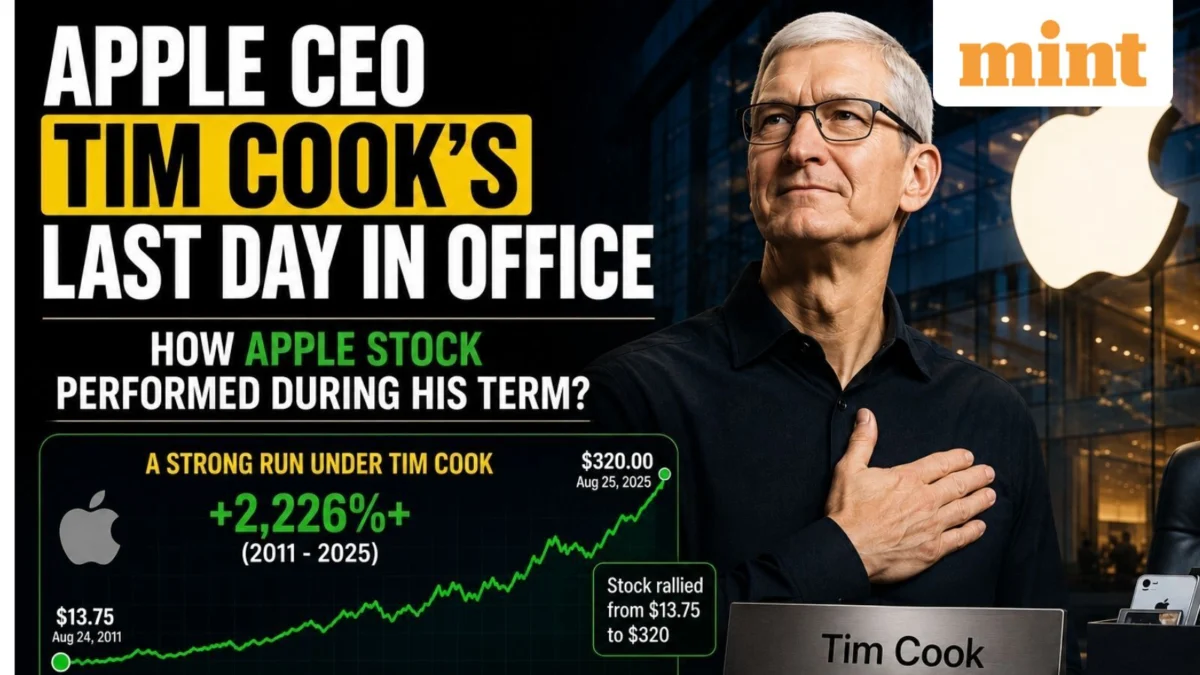
Apple Inc. has officially announced a definitive timeline for its first leadership transition in fifteen years, marking the conclusion of one of the most successful corporate tenures in modern history. Tim Cook, the executive who transformed the Silicon Valley icon from a hardware-centric innovator into a $4.67 trillion global services and ecosystem juggernaut, will step down as Chief Executive Officer on September 1, 2026. Following his departure from the top role, Cook will transition to the position of Executive Chairman of the Board. John Ternus, Apple’s current Senior Vice President of Hardware Engineering and a long-time veteran of the company, has been named as his successor.
The transition plan, which received unanimous approval from Apple’s Board of Directors earlier this year, is the culmination of what the company describes as a "thoughtful, long-term succession planning process." The announcement provides clarity to investors and employees alike, ensuring a structured handover as the company navigates an increasingly complex landscape of artificial intelligence, global regulation, and shifting supply chains.
The Cook Legacy: From Operational Excellence to Market Dominance
When Tim Cook was named CEO by Steve Jobs in August 2011, shortly before Jobs’ passing, the appointment was met with skepticism by some corners of the investment community. While Cook was recognized as an operational genius and a supply-chain maestro, critics questioned whether a "numbers man" could maintain the creative spark that defined the era of his predecessor.
Over the next decade and a half, Cook silenced those doubts by overseeing an era of financial and physical expansion that has few parallels in corporate history. Under his stewardship, Apple’s annual revenue surged from $108 billion in fiscal year 2011 to a projected $416 billion by fiscal year 2025. This growth was not merely the result of selling more iPhones; it was the product of a deliberate strategy to build a "walled garden" ecosystem where hardware, software, and services are inextricably linked.
Cook’s primary achievement was the diversification of Apple’s revenue streams. Recognizing that the smartphone market would eventually reach maturity, he pivoted the company toward Services. This division, which includes the App Store, iCloud, Apple Music, Apple Pay, and Apple TV+, has grown into a high-margin powerhouse that generates tens of billions of dollars every quarter. By 2026, Apple’s active installed base of devices has grown to more than 2.5 billion, providing a massive, captive audience for the company’s recurring revenue models.
A Financial Transformation: The Road to $4.67 Trillion
The most visible metric of Cook’s success is Apple’s market capitalization. When he took the helm in 2011, Apple was a highly successful company with a market value of approximately $350 billion. By August 2026, that figure has ballooned to approximately $4.67 trillion.
According to financial analysts, including Santosh Meena, Head of Research at Swastika Investmart, the stock’s performance during the Cook era has been nothing short of extraordinary. On a split-adjusted basis, Apple shares were trading at roughly $13.74 when Cook became CEO. As of late August 2026, the stock closed at $319.70, representing a total gain of approximately 2,226%.
For long-term shareholders, the returns have been transformative. Ross Maxwell, Global Operations Lead at VT Markets, noted that a $10,000 investment in Apple at the start of Cook’s tenure would now be worth approximately $238,000 based on share price appreciation alone. When factoring in Apple’s aggressive share buyback program—the largest in corporate history—and consistent dividend payments, the total shareholder return is estimated to be in the range of 2,700%.
Product Evolution Beyond the iPhone
While the iPhone remained the company’s flagship product throughout his tenure, Cook successfully launched three entirely new product categories that redefined their respective markets:
- Apple Watch: Launched in 2015, the device transitioned from a fashion accessory to a critical health and fitness tool, eventually dominating the global wearables market.
- AirPods: Released in 2016, AirPods revolutionized the wireless audio industry and became a multi-billion dollar business in their own right, often compared to the size of a Fortune 500 company.
- Apple Vision Pro: Representing Cook’s foray into spatial computing, the Vision Pro marked the company’s entry into augmented and virtual reality, setting the stage for the next decade of personal computing.
In addition to these new categories, Cook oversaw the transition to Apple Silicon. By replacing Intel processors with custom-designed M-series chips, Apple gained unprecedented control over its hardware performance and battery life, revitalizing the Mac lineup and further distancing itself from competitors.
Chronology of the Tim Cook Era (2011–2026)
- 2011: Tim Cook officially becomes CEO; Apple launches the iPhone 4S and Siri.
- 2012: The company introduces the iPhone 5 and the first iPad Mini, expanding its tablet footprint.
- 2014: Cook announces the Apple Watch and Apple Pay, marking a major push into wearables and fintech.
- 2015: The launch of Apple Music signals the company’s shift toward subscription-based services.
- 2016: Apple removes the headphone jack and introduces AirPods, sparking a new era of "hearables."
- 2018: Apple becomes the first U.S. company to reach a $1 trillion market capitalization.
- 2020: The transition to Apple Silicon begins with the M1 chip; Apple reaches a $2 trillion market cap despite the global pandemic.
- 2022: Apple hits the $3 trillion market cap milestone briefly; the company focuses on supply chain diversification outside of China.
- 2023: The Apple Vision Pro is unveiled, introducing the concept of "spatial computing."
- 2024–2025: Apple integrates "Apple Intelligence" across its ecosystem, embedding generative AI into the core user experience.
- 2026: Tim Cook announces his retirement as CEO; Apple’s market cap reaches $4.67 trillion.
Entering the Ternus Era: Who is John Ternus?
The appointment of John Ternus as the next CEO suggests a strategy of continuity rather than radical change. Ternus joined Apple in 2001 as a member of the Product Design team and rose through the ranks to become the Senior Vice President of Hardware Engineering in 2021.
Ternus has been a visible figure in Apple’s recent history, often appearing in keynote presentations to announce major hardware breakthroughs. He was instrumental in the development of every generation of iPad, the latest iPhone models, and the transition of the Mac to Apple Silicon. His deep technical background and long history within the company’s culture make him a "safe" and logical choice for a Board of Directors that prioritizes stability.
Industry analysts suggest that Ternus’s primary challenge will be navigating the "post-smartphone" world. While Cook mastered the art of scaling and services, Ternus will be expected to lead Apple through the maturation of spatial computing and the intensifying arms race in artificial intelligence. He will also inherit a company under intense regulatory scrutiny in both the United States and the European Union regarding its App Store practices and ecosystem exclusivity.
Global Infrastructure and Workforce Expansion
Under Cook’s leadership, Apple’s physical presence expanded as dramatically as its digital one. The company now operates more than 500 retail stores globally, having doubled its footprint in key international markets like India, Southeast Asia, and South America. These stores have become "town squares" for the brand, serving as both retail hubs and service centers that reinforce customer loyalty.
The workforce also grew significantly. During Cook’s 15-year tenure, Apple added more than 100,000 employees, bringing its total headcount to over 160,000. Cook’s management style, characterized by a focus on environmental sustainability and social responsibility, saw the company commit to becoming 100% carbon neutral across its entire supply chain by 2030—a goal that Ternus will now be responsible for finalizing.
Analysis of Implications: Stability vs. Innovation
The market’s reaction to the succession plan has been largely positive, reflecting the "thoughtful" nature of the multi-year planning process. By naming Ternus well in advance and keeping Cook on as Executive Chairman, Apple is following the playbook of successful corporate transitions, such as the one Cook himself underwent with Steve Jobs, albeit under much more planned circumstances.
However, the transition comes at a pivotal time. Apple is currently facing several headwinds:
- Regulatory Pressures: Antitrust lawsuits in the US and the Digital Markets Act (DMA) in Europe are threatening the lucrative "Apple Tax" on the App Store.
- AI Competition: While Apple Intelligence has been well-received, the company is in a fierce battle with Microsoft, Google, and Meta to define the future of AI.
- Supply Chain Resilience: The ongoing effort to shift manufacturing from China to India and Vietnam remains a multi-year logistical challenge.
John Ternus will need to balance the operational discipline established by Cook with the visionary hardware leaps that have historically been Apple’s hallmark.
Conclusion
As Tim Cook prepares to hand over the reins on September 1, 2026, he leaves behind a company that is fundamentally different from the one he inherited. He proved that a technology company could grow to a multi-trillion-dollar valuation by focusing on the "middle of the funnel"—retaining customers through an interlocking web of services and accessories.
The "Cook Era" will be remembered as a masterclass in corporate scaling, supply chain management, and shareholder value creation. For John Ternus, the task is now to ensure that the world’s most valuable company remains as relevant in the age of spatial computing and AI as it was in the age of the smartphone. With Cook remaining as Executive Chairman, the "Apple way" of doing business appears set to continue, even as a new face takes the lead at Apple Park.
