

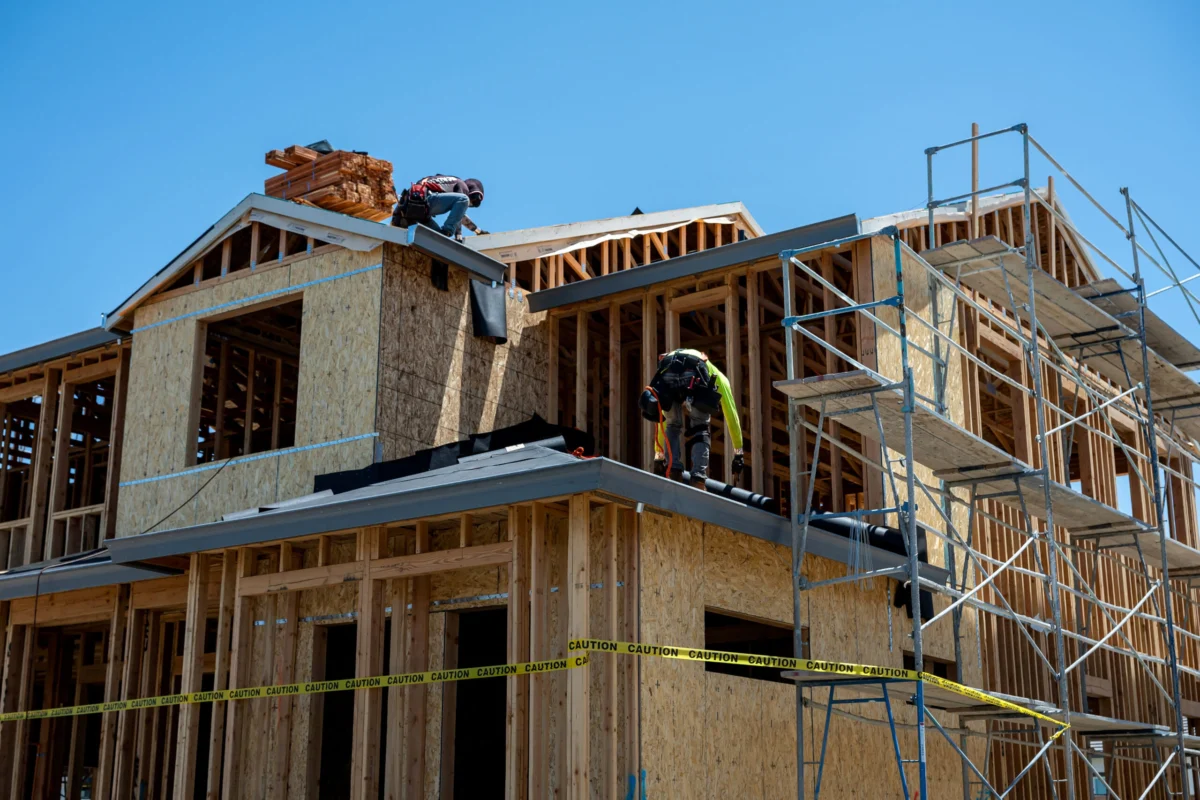
Despite the lingering pressures of elevated mortgage rates, rising energy costs, and persistent economic uncertainties stemming from geopolitical tensions, particularly concerning the Middle East involving Iran, homebuilders in the United States are expressing a cautiously improved outlook on their business prospects. This modest resurgence in confidence suggests a potential uptick in demand during the late spring season, offering a glimmer of optimism within an otherwise challenging housing market landscape.
The National Association of Home Builders/Wells Fargo Housing Market Index
The latest National Association of Home Builders (NAHB)/Wells Fargo Housing Market Index (HMI) for single-family homes registered a 3-point increase in May, reaching a readout of 37. This rise follows a notable dip in April and surpassed the expectations of housing economists, who had largely predicted the index to remain unchanged month-over-month. While any score below 50 on the HMI still indicates a predominantly negative sentiment among builders, the upward movement signals a marginal but significant shift from the nadir experienced earlier in the spring. For context, the index stood at 34 in May of the previous year (2023), a period when 30-year fixed mortgage rates were hovering near 7%. The current average rate on a 30-year fixed mortgage, according to Mortgage News Daily, is 6.65%, having seen incremental increases over recent weeks.
The HMI is a crucial barometer for the U.S. housing market, gauging builder perceptions of current single-family home sales and sales expectations for the next six months, as well as the traffic of prospective buyers. Its methodology involves a monthly survey sent to NAHB members, with responses categorized as "good," "fair," or "poor" for sales and "high to very high," "average," or "low to very low" for traffic. A diffusion index is created for each component, where the percentage of "good" or "high" responses is added to half the percentage of "fair" or "average" responses. The final HMI is an average of these three component indices. A reading above 50 signifies that more builders view conditions as good than poor, making the current 37 a clear indicator that challenges still outweigh opportunities for many in the sector.
Persistent Headwinds: Mortgage Rates, Inflation, and Geopolitical Concerns
The housing market continues to grapple with a formidable array of headwinds. Mortgage rates, though slightly lower than their peak in late 2023, remain significantly higher than the ultra-low rates seen during the pandemic-era boom. The Federal Reserve’s aggressive campaign to combat inflation, which saw the federal funds rate rise from near zero to over 5% in a relatively short period, has directly impacted long-term interest rates, including those for mortgages. Higher borrowing costs translate into substantially larger monthly payments for prospective homebuyers, severely eroding affordability, especially for first-time buyers and those in lower-income brackets. For instance, a 7% mortgage rate on a $400,000 home translates to a monthly payment approximately 60% higher than at a 3% rate, a stark reality for many.
Beyond interest rates, rising gas prices and broader inflationary pressures continue to strain household budgets. Consumers are facing increased costs for essentials, leaving less disposable income for large purchases like a home. This economic squeeze is exacerbated by the broader uncertainty fueled by geopolitical events. Concerns over potential escalations in the Middle East, trade disputes, and global supply chain vulnerabilities contribute to a cautious consumer sentiment, prompting many to delay significant investment decisions. Robert Dietz, NAHB’s chief economist, underscored these challenges in a recent release, stating, "Recent increases for long-term interest rates will continue to hold back home buyer demand. Although some regional markets, including parts of the Midwest, are showing relative strength, the housing market continues to face significant affordability challenges."

Builder Responses and Shifting Market Dynamics
Despite the overarching challenges, the internal components of the HMI reflect the nuanced improvement in builder sentiment. All three constituent indices recorded a 3-point increase month-over-month. The index for current sales conditions rose to 40, while buyer traffic, a crucial leading indicator, jumped to 25. Future sales expectations, looking ahead six months, also improved to 45. These gains, while modest, suggest that builders are observing a slight thawing in buyer hesitancy, perhaps driven by a combination of seasonal demand and a market that has somewhat adjusted to the "new normal" of higher rates.
In response to market conditions, builders have employed various strategies to attract buyers. The survey revealed a noticeable decrease in the percentage of builders cutting prices in May, dropping to 32% from 36% in April. This suggests that some builders may be feeling less pressure to discount their properties, possibly due to increased traffic or a perception that the market is stabilizing. Concurrently, the use of sales incentives saw a marginal uptick, with 61% of builders reporting offering incentives in May, up slightly from 60% in April. These incentives can range from mortgage rate buydowns and closing cost assistance to upgraded amenities or design center credits, providing a more flexible way to attract buyers without directly reducing the list price, thereby preserving perceived home values.
Regional variations remain a critical factor. While Dietz highlighted "parts of the Midwest" as showing relative strength, other regions, particularly the West Coast and Northeast, which typically have higher home prices, are likely experiencing more pronounced affordability issues. This divergence suggests that national averages can sometimes mask significant local differences in market health and builder confidence. Factors such as local job growth, population migration, and available land for development play a crucial role in these regional discrepancies.
Industry Insights and Forward-Looking Projections
The housing market has undergone a significant recalibration since the frenzied pace of 2020-2022. The period saw historically low interest rates ignite a buying spree, leading to rapid price appreciation and intense bidding wars. However, the subsequent rate hikes by the Federal Reserve brought that boom to an abrupt halt, pushing many potential buyers out of the market and leading to a sharp decline in transaction volumes. The current environment is one of cautious stabilization, where demand is present but highly sensitive to interest rate fluctuations and overall economic confidence.
From an industry perspective, builders are also contending with persistent supply-side challenges. Labor shortages remain a significant hurdle, driving up construction costs and extending build times. While some material costs have moderated from their pandemic peaks, others, such as concrete and certain lumber products, continue to see upward pressure. Regulatory burdens and a scarcity of fully developed lots also contribute to the high cost of new home construction, making it difficult for builders to offer homes at price points that align with current affordability constraints.
Looking ahead, analysts generally predict that the housing market will remain sensitive to the Federal Reserve’s monetary policy decisions. Should inflation continue to cool, paving the way for potential rate cuts later in the year or early next, it could provide a much-needed boost to buyer demand and builder confidence. However, any resurgence in inflation or unexpected economic shocks could quickly reverse these modest gains. The current environment is characterized by a delicate balance, where incremental improvements are celebrated, but the underlying structural challenges persist.

Broader Implications for Buyers, Sellers, and the Economy
For prospective homebuyers, the slight improvement in builder sentiment, coupled with a decrease in price cuts, suggests that while the market remains competitive, there may be more inventory coming online, particularly in regions where builders are more confident. The continued use of sales incentives indicates that builders are still keen to move inventory, potentially offering opportunities for buyers to negotiate favorable terms or secure a lower effective mortgage rate through buydowns. However, the overall affordability challenge means that many potential buyers will remain on the sidelines, waiting for either a significant drop in home prices or mortgage rates.
For existing homeowners considering selling, the market is less frenetic than in previous years but still robust in many areas due to historically low inventory levels. While the days of guaranteed multiple offers above asking price may be largely over, well-priced homes in desirable locations are still attracting interest. The slight improvement in builder sentiment may indirectly benefit sellers by fostering a more stable overall market environment, reducing fears of a sharp downturn.
From an economic standpoint, the health of the housing sector is a critical indicator. Residential construction contributes significantly to GDP, and a more confident builder community can lead to increased housing starts, job creation, and broader economic activity. The slight rebound in sentiment, therefore, provides a positive signal that the sector, while not fully recovered, is demonstrating resilience and adapting to the prevailing economic conditions. This resilience is vital for the broader economy, as housing market stability is often seen as a cornerstone of consumer wealth and confidence.
Navigating a Complex Landscape
In conclusion, the May HMI report paints a picture of a housing market slowly finding its footing amidst a complex interplay of economic forces. The unexpected improvement in homebuilder sentiment, driven by a perceived late spring surge in demand, offers a cautious ray of hope. Yet, the enduring weight of high mortgage rates, inflationary pressures, and geopolitical uncertainties means that the path forward remains challenging. Builders are adapting through strategic incentives and a more nuanced approach to pricing, but the fundamental issue of affordability continues to be the primary barrier for many aspiring homeowners. The market’s trajectory in the coming months will largely depend on the evolution of interest rates, the trajectory of inflation, and the overall stability of the global economic and political landscape.
