

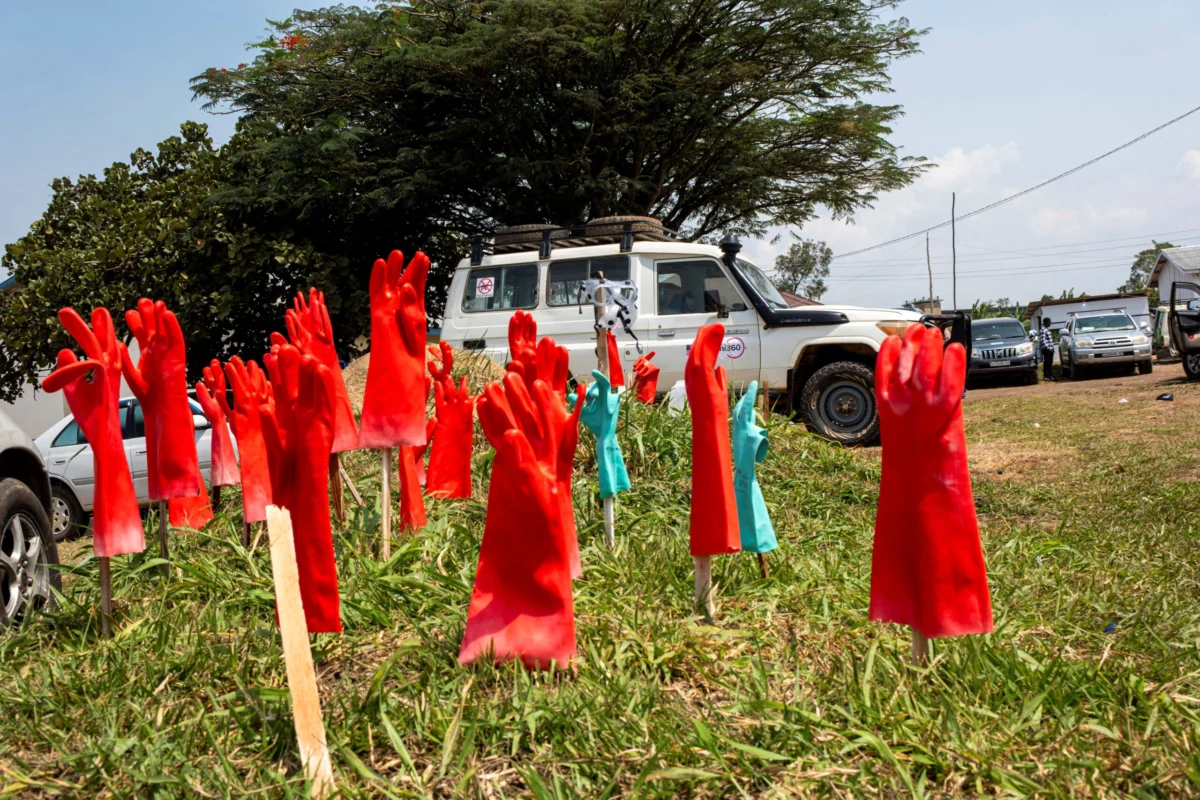
The Democratic Republic of the Congo (DRC) is facing a dual crisis as a burgeoning Ebola outbreak coincides with a significant labor uprising among the very personnel tasked with containing the virus. As of this week, the official count of confirmed Ebola cases has surpassed the grim milestone of 2,000, reaching 2,011 total infections. Within this cohort, the death toll has climbed to 754, a figure that international health authorities warn may only be a fraction of the true devastation. This escalating medical emergency reached a breaking point on Wednesday when healthcare workers at Bunia General Hospital in the northeastern province of Ituri initiated a strike, citing months of unpaid wages and hazardous working conditions that have left them unable to support their families or protect themselves effectively.
The labor action in Bunia began early Wednesday morning, with dozens of medical professionals, nurses, and administrative staff forming a human blockade at the hospital’s main entrance. The strikers, many of whom have been on the front lines since the outbreak was first declared in mid-May, expressed profound frustration over a lack of compensation. According to representatives for the striking workers, the government and partner health agencies have failed to deliver promised hazard pay and base salaries for several months, despite the high-risk nature of their work. The strikers argued that they are being asked to risk their lives against a lethal pathogen without the most basic financial security, a situation they described as untenable.
This strike is not an isolated incident but rather the latest in a series of work stoppages that have plagued the response efforts in the Ituri and North Kivu provinces. Earlier in the week, on Monday, a similar walkout occurred at Rwampara General Hospital. That protest involved a diverse group of essential workers, including epidemiologists responsible for contact tracing and grave diggers tasked with the "safe and dignified burial" protocols essential to breaking the chain of transmission. These workers also claimed they had been sidelined by the bureaucracy of the central government, receiving no pay for several months of grueling labor. The halt in these specific services—tracing and burials—poses an immediate and severe risk to public health, as unmonitored cases and traditional burial practices are known to be primary drivers of viral spread.
The current outbreak is uniquely challenging due to the specific strain of the virus involved. Unlike several recent outbreaks in Western and Central Africa caused by the Zaire strain, for which the Ervebo vaccine has proven highly effective, the current epidemic in the DRC is driven by the Bundibugyo ebolavirus (BVD). The Bundibugyo strain is historically rarer and, critically, currently lacks an approved vaccine or specialized therapeutic treatment. This biological reality places an even greater emphasis on traditional containment methods: early isolation, rigorous contact tracing, and the use of personal protective equipment (PPE). When healthcare workers strike, these manual interventions cease, effectively leaving the virus to propagate unchecked through the community.
The World Health Organization (WHO) has expressed grave concern regarding the accuracy of the data emerging from the region. On Tuesday, WHO officials cautioned that the official death toll of 754 is likely a significant undercount. Based on epidemiological modeling and reports from ground teams, the organization suggested that the actual number of fatalities could be two to four times higher than what is being officially recorded. This discrepancy is attributed to several factors, including the high number of "community deaths"—individuals who succumb to the virus in their homes without ever entering a treatment center. In many parts of Ituri and North Kivu, deep-seated mistrust of the government and international medical teams leads families to hide sick relatives or perform secret burials, further obscuring the true scale of the epidemic.
The medical charity Doctors Without Borders (Médecins Sans Frontières, or MSF) has categorized this outbreak as the third largest and fastest-growing in recorded history, surpassed only by the 2014-2016 West African epidemic and the 2018-2020 Kivu outbreak. MSF representatives have highlighted that the speed of transmission is being fueled not only by the nature of the virus but also by the collapse of the local healthcare infrastructure. The strike by healthcare workers essentially hollows out the last line of defense. Without functioning hospitals and motivated staff, the "ring fence" strategy—whereby cases are isolated and contacts are monitored—becomes impossible to maintain.
In response to the lack of specialized treatments for the Bundibugyo strain, WHO Director-General Tedros Adhanom Ghebreyesus announced a potential breakthrough on Tuesday. He confirmed the launch of the first clinical trial designed to test the efficacy of an antiviral drug in preventing infection among those who have been exposed to the virus. "If effective among high-risk contacts after exposure, this could mark a major step forward in Ebola BVD prevention," Tedros stated via social media. The trial aims to provide a "post-exposure prophylaxis" similar to treatments used for HIV or rabies, which could be a game-changer for healthcare workers and family members of the infected who are at the highest risk of contraction.
However, the success of such clinical trials depends heavily on a stable environment and the cooperation of local medical staff. The ongoing strikes threaten to derail these scientific efforts before they can produce meaningful results. If the hospitals are blocked and the epidemiologists are not in the field, identifying candidates for the trial becomes an insurmountable hurdle. Furthermore, the strikes exacerbate the existing "trust deficit" between the population and health responders. When local residents see that even the doctors and nurses are abandoned by the state, their willingness to comply with health directives diminishes, often leading to increased hostility toward medical interventions.
The socio-political context of the DRC’s northeastern provinces adds another layer of complexity to the crisis. Ituri and North Kivu have been embroiled in conflict for decades, with various armed groups vying for control of the region’s rich mineral resources. This insecurity has led to frequent attacks on Ebola Treatment Centers (ETCs) and health workers, whom some locals view as part of a foreign or government conspiracy. The failure to pay healthcare workers their wages not only demoralizes the staff but also lends credence to local rumors that the funds allocated for the Ebola response are being misappropriated by corrupt officials—a sentiment often referred to as the "Ebola Business."
From a financial perspective, the Ebola response in the DRC requires hundreds of millions of dollars in international funding. While the World Bank and various sovereign donors have pledged support, the translation of those funds into actual paychecks for workers on the ground has been sluggish. Bureaucratic bottlenecks in Kinshasa, combined with the logistical difficulties of transporting cash to conflict-ridden zones, have resulted in the current wage arrears. Analysts suggest that unless a transparent and direct payment system is established—perhaps through mobile money or direct international oversight—the cycle of strikes is likely to continue, providing the virus with more opportunities to spread.
The implications of a prolonged strike are catastrophic. In previous Ebola outbreaks, the suspension of health services for even a few days led to a "rebound" effect, where cases spiked in the weeks following the disruption. Because the incubation period for Ebola can be as long as 21 days, the true impact of this week’s strikes in Bunia and Rwampara may not be fully realized until late next month. If contact tracing is suspended, dozens of "chains of transmission" could go underground, leading to a massive surge in infections that could overwhelm the remaining health facilities.
Furthermore, there is the risk of regional spillover. Ituri province shares borders with Uganda and is in close proximity to South Sudan and Rwanda. With the movement of displaced persons and traders across these borders, an uncontained outbreak in the DRC is a direct threat to the health security of the entire Great Lakes region of Africa. Previous instances of Ebola crossing into Uganda have been successfully contained, but those successes relied on a robust and paid workforce in the DRC side to provide early warnings.
The international community now faces a critical juncture. There is an urgent need to bridge the funding gap and ensure that the workers at the heart of the response are compensated fairly and promptly. Without a motivated and present workforce, the most advanced antiviral drugs and clinical trials will remain ineffective. The striking workers in Bunia have made their position clear: they are willing to fight the virus, but they cannot do so while facing the double burden of a deadly pathogen and economic ruin. As the death toll continues to rise and the official numbers likely mask a much grimmer reality, the resolution of this labor dispute has become as vital to the survival of the region as the medical intervention itself. The coming days will be decisive in determining whether the DRC can stabilize its healthcare front or if the Bundibugyo strain will find a permanent foothold in the absence of a functional response.
