

In a significant legal rebuke to the White House’s intensified immigration enforcement strategy, U.S. District Court Judge Brian Murphy of Massachusetts ruled on Wednesday that the Trump administration acted in direct violation of a standing federal injunction. The ruling followed the controversial deportation of eight migrants, several of whom were reportedly transported toward South Sudan, a nation currently grappling with severe internal instability and a looming threat of renewed civil war. Judge Murphy’s decision underscores a growing judicial confrontation over the administration’s "third-country" deportation policy, which seeks to remove non-citizens to nations other than their country of origin.
The court’s findings center on a March injunction that mandated the federal government provide individuals with a "meaningful opportunity" to raise claims of potential persecution or torture before being sent to a third country. During a heated hearing on Wednesday, Judge Murphy stated that the Department of Homeland Security (DHS) had failed to adhere to these procedural safeguards, describing the department’s recent actions as "unquestionably violative" of the court’s prior orders.
The Circumstances of the Deportation Flight
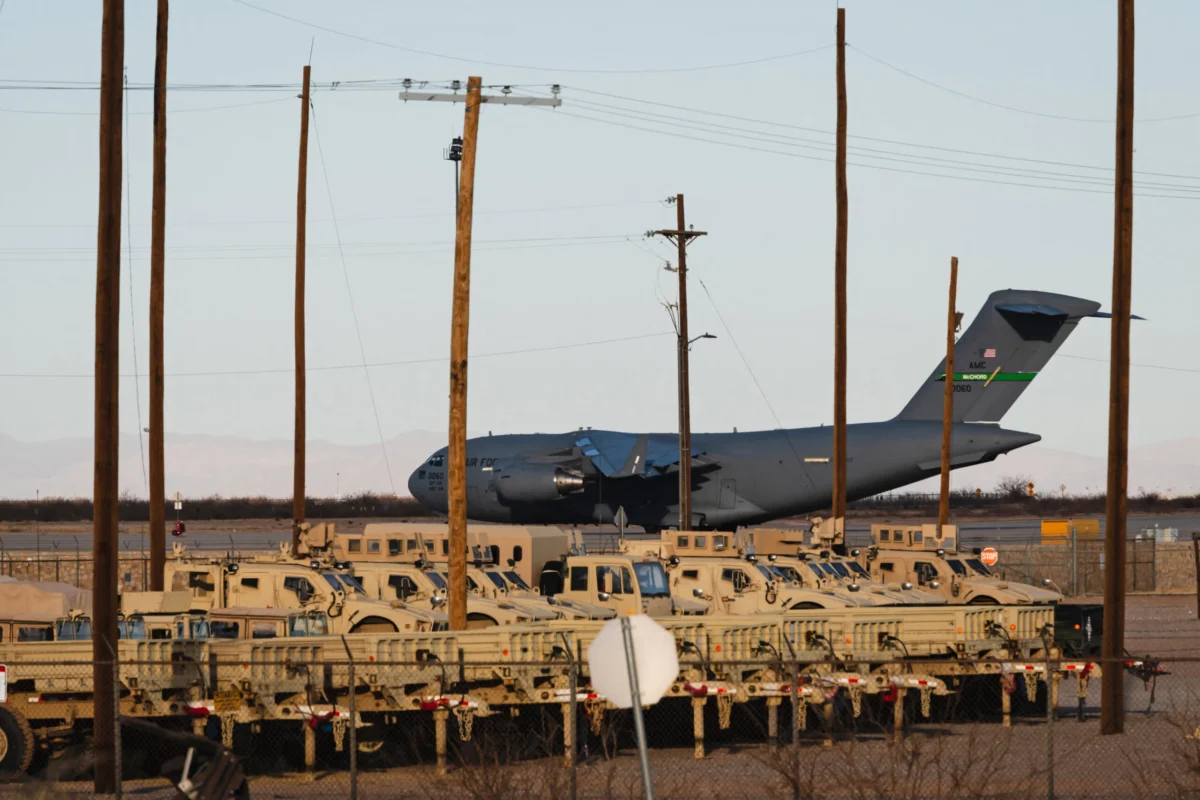
The legal firestorm was ignited after a United States Air Force Boeing C-17, a heavy-lift strategic transport aircraft typically reserved for military logistics, was spotted at Biggs Army Airfield in Fort Bliss, El Paso, Texas. The aircraft was utilized for a deportation mission involving eight individuals from diverse national backgrounds, including Myanmar, Laos, Vietnam, Cuba, Mexico, and South Sudan.
According to reports provided during the court proceedings, the migrants were notified of their final destination late Monday evening, well outside of standard business hours. By the following morning—between 9:00 a.m. and 10:00 a.m.—they were removed from Immigration and Customs Enforcement (ICE) custody and placed on the outbound flight. Judge Murphy noted that this narrow window made it "impossible" for the individuals to consult with legal counsel, notify their families, or file the necessary motions to object to their relocation to a third country.
While government attorneys confirmed that the plane has since landed and that the migrants remain in ICE custody, they have refused to disclose the exact coordinates of the final destination, citing security and operational concerns. This lack of transparency has drawn sharp criticism from immigration advocates and legal experts who argue that the government is effectively bypassing the constitutional right to due process.
Profiling the Deportees and DHS Justifications
The Department of Homeland Security defended the operation during a press briefing on Wednesday morning, emphasizing the criminal histories of the individuals involved. According to DHS officials, the group included persons with convictions for violent crimes, including murder and sexual assault. The administration has frequently cited the presence of "dangerous criminals" as a primary justification for expedited removals and the use of unconventional deportation destinations.
The eight individuals identified in the proceedings include Enrique Arias-Hierro, Jose Manuel Rodriguez-Quinones, Thongxay Nilakout, Jesus Munoz-Gutierrez, Dian Peter Domach, Kyaw Mya, Tuan Thanh Phan, and Nyo Myint. Among these, the case of Nyo Myint has become a focal point for critics. His attorney, Jonathan Ryan, based in San Antonio, expressed grave concerns regarding his client’s whereabouts. While there were suggestions that Myint might have been diverted to his home country of Myanmar (Burma), Ryan stated he has received no official confirmation and described his client as having been "disappeared" by the state.
"I have not heard from my client," Ryan told the court. "How am I supposed to take their word that they sent him to Burma? It is a problem when we stop doing due process for unpopular people."
The Geopolitical Context of South Sudan
The decision to utilize South Sudan as a destination for deportees from other nations—including those from Southeast Asia—has raised alarms within the international human rights community. South Sudan is currently classified under the highest level of travel warnings by the U.S. State Department. A standing advisory warns Americans against all travel to the country due to "crime, kidnapping, and armed conflict."
Furthermore, in March, the State Department ordered the departure of all non-emergency U.S. government employees from South Sudan, citing a deterioration in the security environment. The country’s political stability is currently precarious; while a 2018 power-sharing agreement between President Salva Kiir and Vice President Riek Machar ended five years of bloody civil war, recent months have seen a resurgence in factional violence. Analysts warn that the nation could be on the precipice of another full-scale conflict, making it a highly dangerous environment for individuals being forcibly relocated there without local ties or resources.
Under the United Nations Convention Against Torture (CAT), to which the United States is a signatory, the principle of non-refoulement prohibits the transfer of individuals to a country where there are substantial grounds for believing they would be in danger of being subjected to torture. Judge Murphy’s injunction was designed to ensure that the U.S. government assesses these risks before a flight departs, a step the court found was bypassed in this instance.
A Pattern of Legal Defiance
This week’s ruling is not the first time the Trump administration has faced judicial pushback regarding third-country removals. Earlier this month, Judge Murphy blocked a similar attempt to deport individuals from the Philippines, Vietnam, and Laos to Libya. In that case, the court reaffirmed that the government cannot use third countries as "dumping grounds" for migrants whose home countries refuse to accept them or with whom the U.S. lacks formal repatriation treaties.
The administration’s strategy appears to be a response to long-standing diplomatic hurdles. Countries like Vietnam, Laos, and Cambodia have historically had complex repatriation agreements with the U.S., often refusing to accept citizens who emigrated before certain dates or those who have committed crimes abroad. By attempting to send these individuals to countries like South Sudan or Libya, the administration is testing the limits of executive power in immigration enforcement.
Chronology of Recent Events
- March 2025: Judge Brian Murphy issues an injunction requiring the government to provide migrants with a "meaningful opportunity" to raise fears of persecution before being deported to a third country.
- Early April 2025: The administration attempts to deport migrants from Southeast Asia to Libya; the move is blocked by Judge Murphy.
- Monday Evening, April 14, 2025: Eight migrants are notified after business hours that they will be deported to a third country (reported as South Sudan).
- Tuesday Morning, April 15, 2025: Between 9:00 a.m. and 10:00 a.m., the migrants are loaded onto a C-17 aircraft at Biggs Army Airfield and flown out of the country.
- Wednesday Morning, April 16, 2025: DHS confirms the deportation of eight individuals, citing their criminal backgrounds. Immigration attorneys file an emergency motion.
- Wednesday Afternoon, April 16, 2025: Judge Murphy holds a hearing, including a 30-minute sealed proceeding, and rules that the administration violated the March injunction.
Legal and Policy Implications
The ruling by Judge Murphy sets the stage for a broader constitutional showdown. At the heart of the issue is the definition of "due process" for non-citizens. The administration argues that once a final order of removal is issued, the Executive Branch has broad discretion over how and where that removal is executed, especially when dealing with violent offenders. Conversely, the judiciary has maintained that the threat of torture or death in a destination country necessitates a final check to ensure international and domestic laws are not violated.
Legal analysts suggest that if the administration continues to bypass these judicial orders, it could lead to charges of contempt of court against high-ranking DHS officials. Furthermore, the use of military assets like the C-17 for domestic law enforcement missions marks a shift in the "militarization" of immigration policy, a move that is likely to face its own set of legal challenges regarding the Posse Comitatus Act and the appropriate use of Defense Department resources for civil immigration matters.
The "disappearance" of individuals like Nyo Myint also raises questions about the government’s duty of care. If a deportee is sent to a country where the U.S. cannot verify their safety or even their arrival, the government may be held liable for any harm that befalls them.
As of Wednesday evening, the Department of Justice has not indicated whether it will appeal Judge Murphy’s ruling or if it will comply with demands to provide the exact location and status of the eight individuals. For now, the ruling serves as a stark reminder of the judiciary’s role as a check on executive authority, even in the highly polarized arena of national security and border enforcement. The fate of the eight men remains uncertain, as they sit in ICE custody at an undisclosed location, caught between the mechanics of a determined administration and the protective mandates of a federal court.
