

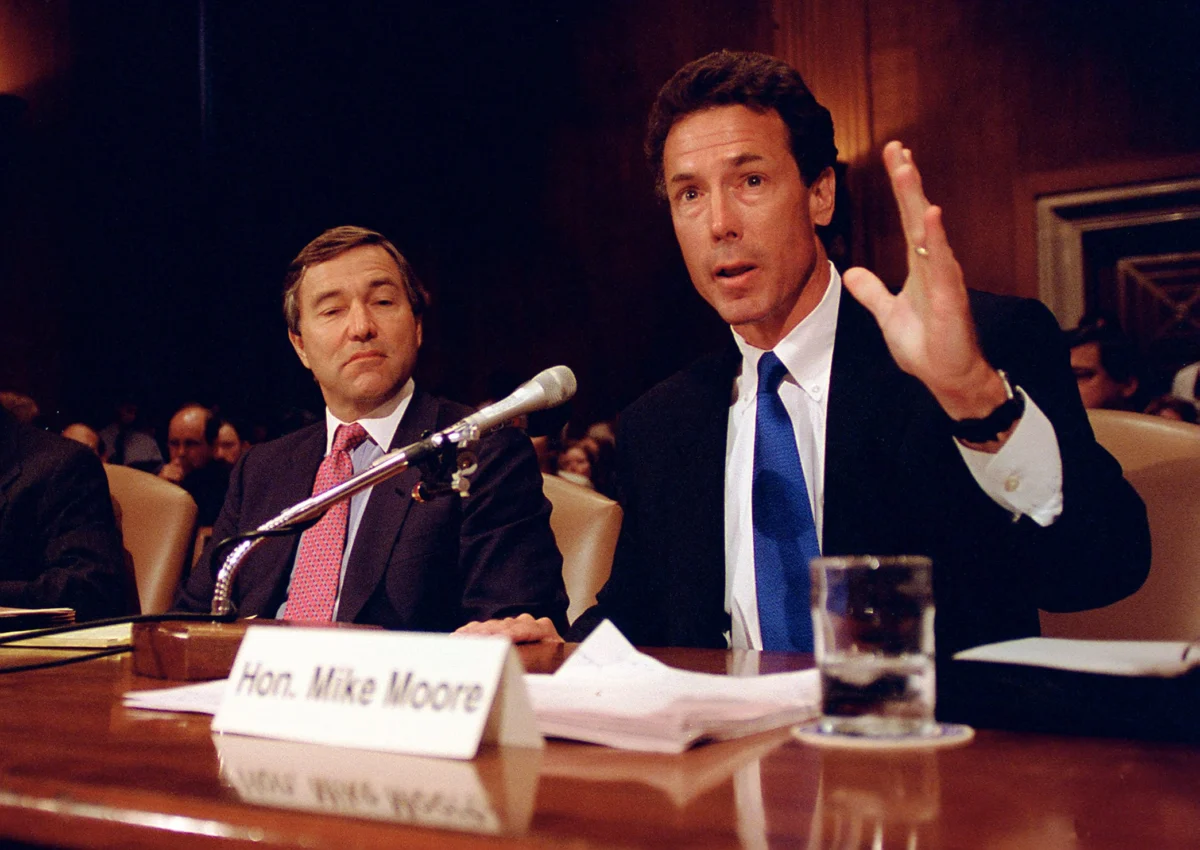
The landscape of corporate litigation in the United States is shifting toward a familiar horizon, guided by the same legal architects who brought the tobacco industry to its knees nearly three decades ago. Mike Moore, the former Mississippi Attorney General who spearheaded the historic $246 billion Master Settlement Agreement (MSA) in 1998, has re-emerged as a pivotal advisor in the escalating legal battle against Big Tech. Following Meta’s recent landmark agreement to pay nearly $17 billion to settle claims regarding the mental health impacts of its platforms on children, Moore and a coalition of legal experts suggest that this payout is merely the first chapter in what could become the largest corporate accountability movement in history.
The settlement, reached with a coalition of state attorneys general, addresses allegations that Meta—the parent company of Facebook and Instagram—knowingly designed features to foster addiction and misrepresented the psychological toll its platforms take on minors. While $17 billion represents a significant financial penalty, Moore views it as a "template" for a broader, industry-wide resolution that would eventually encompass TikTok, Google’s YouTube, and Snap. For Moore, the current trajectory of social media litigation mirrors the early days of the tobacco wars, where internal documents and a growing public health crisis eventually forced a recalcitrant industry to the negotiating table.
The Tobacco Blueprint: A Legacy of Corporate Accountability
To understand the gravity of the current legal climate for social media companies, one must look back at the 1990s. In 1994, Mike Moore became the first attorney general to sue the tobacco industry to recover state healthcare costs associated with smoking-related illnesses. At the time, the legal consensus was that such a feat was impossible; tobacco companies had never lost a product liability case. However, Moore’s strategy focused not on individual choice, but on the industry’s deceptive marketing and the targeting of minors.
This effort culminated in the 1998 Master Settlement Agreement, where the four largest U.S. tobacco companies agreed to pay $206 billion over 25 years to 46 states (four other states had already settled for $40 billion). The settlement did more than just transfer funds; it fundamentally altered the industry by banning billboard advertising, prohibiting the use of cartoon characters like "Joe Camel" in marketing, and funding the Truth Initiative, a nonprofit dedicated to tobacco prevention.
Today, Moore is applying that same philosophy to social media. Through the "Attention Initiative," a newly formed nonprofit, Moore is advising current state attorneys general on how to leverage the Meta settlement into a "grand settlement." This proposed master agreement would aim to create a permanent national public education fund designed to mitigate the "addiction and many harms" social media has allegedly caused to the American youth.
The Meta Settlement: Breaking Down the $17 Billion Deal
The recent $17 billion settlement emerged from a federal trial in Oakland, California, overseen by a coalition led by California Attorney General Rob Bonta. The litigation, initiated in 2023, accused Meta of violating the Children’s Online Privacy Protection Act (COPPA) and various state consumer protection statutes.
Beyond the financial component, the settlement mandates significant structural changes to Meta’s operations:
- Usage Restrictions: Implementation of daily usage limits and "nighttime blocks" specifically for teenage users.
- Age Assurance: Enhanced measures to prevent children under the age of 13 from accessing the platforms.
- Parental Oversight: The creation of more robust tools for parents and guardians to monitor and restrict their children’s activity.
- Independent Auditing: A five-year period of oversight by an independent monitor to ensure compliance with the settlement terms.
Attorney General Bonta has characterized the deal as a "floor, not a ceiling," signaling to the rest of the tech industry that the legal pressure will not subside. Meta, for its part, has indicated that a portion of the payout is contingent on its competitors, such as TikTok and YouTube, implementing similar safeguards, highlighting a desire for a level playing field in a highly competitive attention economy.
A Chronology of the Social Media Legal Crisis
The path to the current settlement has been paved by years of mounting evidence and public outcry:
- September 2021: The "Facebook Papers," leaked by whistleblower Frances Haugen, reveal internal research showing that Instagram was "toxic" for a significant percentage of teen girls, contributing to body image issues and depression.
- October 2023: Over 40 states file a joint lawsuit against Meta, alleging the company used "manipulative and harmful" features to hook young users.
- August 2025: Instagram head Adam Mosseri testifies in a California federal court, facing intense scrutiny over the platform’s impact on youth suicide and self-harm rates.
- August 2026: Meta enters into the $17 billion settlement agreement as the federal trial begins to reveal damaging internal communications.
Supporting Data: The Public Health Context
The legal push is underpinned by alarming data regarding youth mental health. According to the Centers for Disease Control and Prevention (CDC), the rate of suicide among young people aged 10 to 24 increased by 62% between 2007 and 2021. During the same period, emergency room visits for self-harm among adolescent girls nearly doubled.

While researchers debate the exact causal link between social media and these trends, the "internal research" cited in various lawsuits suggests that tech companies were aware of the correlation. A 2022 study published in Nature Communications indicated that there are specific "windows of vulnerability" in adolescence—around ages 11–13 for girls and 14–15 for boys—where high social media use predicts a decrease in life satisfaction one year later.
The Challenge of the Digital Frontier
Despite the parallels to the tobacco industry, experts warn that social media presents unique challenges that may complicate a "Master Settlement" approach. Jonathan Caulkins, a professor of public policy at Carnegie Mellon University, notes that unlike cigarettes, which are static products with no social utility, technology is "ever-evolving."
"Cigarettes are cigarettes," Caulkins remarked, pointing out that the line between beneficial communication and harmful addiction in social media is often blurred. Furthermore, the rapid advancement of Artificial Intelligence (AI) means that by the time a settlement is fully implemented, the technology it governs may have already transformed into something unrecognizable.
Another hurdle is the competitive nature of the tech industry. In the 1990s, the tobacco industry was an oligopoly of a few major players who could be brought to one table. In contrast, the social media landscape includes domestic giants like Meta and Google, alongside foreign entities like ByteDance (TikTok), and a burgeoning field of AI companion apps that currently operate outside traditional social media regulations.
Reactions from Stakeholders and Industry Experts
The "Attention Initiative," founded by 22-year-old Josh Jacobs, seeks to bridge the gap between legal strategy and youth experience. Jacobs, who cold-called Mike Moore after becoming disillusioned with the "perverse incentives" of the ad-tech industry, argues that the current generation is cynical about whether any real change will occur. "The assumption is that nothing will change," Jacobs said, emphasizing the need for a national remediation program rather than a "piece-by-piece" legal approach.
However, some in the tech sector express concern over regulatory overreach. Allison Ball, a venture capitalist and former Facebook product leader, warns of unintended consequences. She points to recent attempts in Australia to ban social media for those under 16, which reportedly led to an increase in the use of Virtual Private Networks (VPNs) as teenagers sought to bypass the law. "Where to limit freedoms and who to hold accountable, that’s super difficult for the government to get right," Ball noted.
Broader Impact and the Road Ahead
The Meta settlement is likely the first domino in a long line of legal resolutions. Steve Berman and Joe Rice, two other "architects" of the tobacco and opioid settlements, are currently involved in over 1,200 lawsuits brought by school districts across the United States. These districts allege that social media addiction has forced them to divert billions of dollars toward mental health services and disciplinary resources.
"They’re going to have to take care of this problem, or they’re just going to be litigated forever," Berman said, predicting that the school district cases will be the next major focus for Meta and its peers.
Additionally, specific harms are being litigated in state courts. In New Mexico, Attorney General Raul Torrez is pursuing a lawsuit against Snap Inc. regarding "sextortion" and child sexual exploitation on the platform. This follows a similar case that Meta lost in the same state earlier this year, which resulted in a $567 million fund for victims.
As Mike Moore and his colleagues continue to draft language for a potential master settlement, the message to Silicon Valley is clear: the era of self-regulation is over. The "tobacco playbook"—characterized by massive financial transfers, permanent oversight, and a fundamental shift in how products are marketed to children—is being updated for the digital age. Whether the tech giants will coalesce to reach a global resolution or continue to fight "city by city, county by county" remains the multi-billion-dollar question that will define the next decade of American jurisprudence.
