

The federal government of Canada, in a strategic partnership with the Federation of Canadian Municipalities (FCM), has initiated a transformative investment of $67.8 million aimed at expanding and fortifying urban forestry across the nation. This funding marks a significant shift in municipal planning, moving away from viewing trees as mere aesthetic enhancements toward recognizing them as critical "living infrastructure." The investment supports 165 distinct tree-planting and canopy-management projects, representing a major pillar of the broader "Growing Canada’s Community Canopies" (GCCC) initiative. Among the primary beneficiaries are the City of Vancouver, which has been allocated $4.9 million to mitigate heat risks in vulnerable neighborhoods through street tree planting, and the City of Mississauga, which will receive $2.2 million to focus on the reforestation of the Cooksville Creek watershed.
This $67.8-million commitment is a subset of a more comprehensive $291-million investment funnelled through the Green Municipal Fund. The overarching goal of the GCCC is to facilitate the planting of at least 1.2 million trees by 2031, targeting urban and peri-urban areas where the "heat-island effect" is most pronounced. Berry Vrbanovic, the Mayor of Kitchener, Ontario, and Chair of the Green Municipal Fund Council, emphasized that urban forests provide a multi-faceted return on investment that traditional "gray infrastructure"—such as concrete drainage and air conditioning systems—cannot match. According to Vrbanovic, trees offer simultaneous benefits in carbon sequestration, air purification, biodiversity support, and public health, making them essential assets for the resilient cities of the future.
The Climate Context: A Warming Canada
The urgency of these investments is underscored by the recent release of the 2026 Canada’s Changing Climate Report by Environment and Climate Change Canada. The report provides a sobering look at the nation’s environmental trajectory, noting that average temperatures across Canada have already risen by 2°C, a rate significantly higher than the global average. This warming trend is projected to intensify throughout the 21st century, placing immense pressure on urban centers to adapt. As cities become hotter, the demand for energy to cool buildings spikes, creating a feedback loop of increased fossil-fuel consumption and higher greenhouse gas emissions.
Urban forests serve as a natural cooling mechanism. Research conducted by the University of Ottawa has provided empirical evidence for the economic utility of the urban canopy. By analyzing aerial imagery alongside electricity consumption data from nearly 2,000 homes, researchers determined that trees located within 12.5 meters of a residence were associated with a 2.9% reduction in electricity use during the summer months. This reduction is primarily attributed to the shade provided by leaves and the process of evapotranspiration, which naturally lowers the surrounding air temperature. For municipal leaders, this data translates to lower peak demand on power grids and direct cost savings for residents.
A Global Movement: From Aesthetics to Infrastructure
Canada’s pivot toward urban forestry is part of a growing international trend where major metropolitan areas are re-evaluating their relationship with nature. Cities ranging from South America to Southeast Asia are now treating tree canopies with the same budgetary and engineering rigor as roads, bridges, and water treatment plants.
Medellín, Colombia: The Green Corridor Success
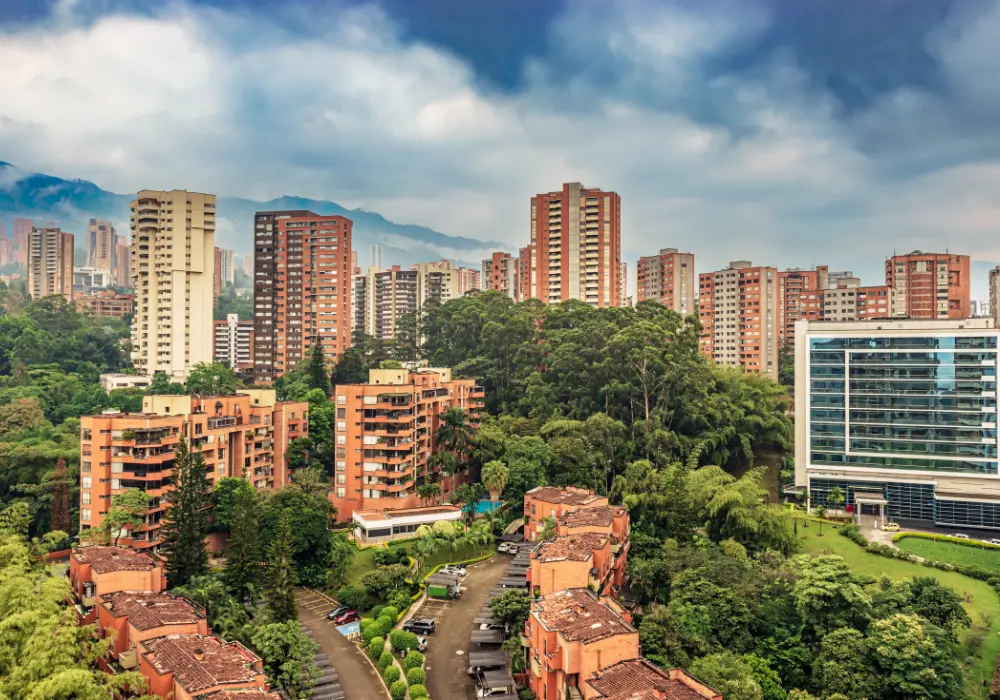
One of the most cited success stories in urban climate adaptation is Medellín. Following five decades of rapid, often unchecked urbanization, the city faced debilitating heat-island effects. In 2016, the municipal government launched a network of 56 green infrastructure projects, creating "green corridors" that cover over 1.3 million square meters. With an initial investment of approximately US$16.3 million, the city planted thousands of trees and tropical plants along major thoroughfares and former industrial zones.
The results have been measurable and immediate. These corridors have already reduced local temperatures by 2°C, with climate models predicting a further decrease of 4°C to 5°C over the next twenty years as the canopy matures. Medellín’s commitment earned it a place among the "Tree Cities of the World" in 2025, a prestigious designation managed by the Arbor Day Foundation and the United Nations Food and Agriculture Organization (FAO). To maintain this status, Medellín must demonstrate ongoing public responsibility for tree care and documented annual investments in forest health.
Sydney, Australia: Cooling the Southern Hemisphere
In Australia, the City of Sydney is grappling with extreme heat events that threaten public safety and infrastructure. The 2021 "Greening Sydney Strategy" outlines a massive AU$377 million (US$262 million) investment plan for parks, green roofs, walls, and streetscapes. The city currently manages roughly 34,500 street trees and 14,000 park trees, but the strategy aims to significantly increase this number, with a mandate to plant at least 700 new trees annually.
Clover Moore, the Lord Mayor of Sydney, has been a vocal advocate for the "infrastructure" label for urban greenery. She notes that extensive canopy cover can reduce ground-level temperatures by as much as 10°C during peak summer periods. This reduction is vital for maintaining the walkability of the city and reducing heat-related hospitalizations, which are a growing concern for Sydney’s aging population.
Stockholm, Sweden: The Innovation of the "Stockholm Model"
While many cities focus on the quantity of trees, Stockholm has gained international recognition for its focus on tree quality and longevity. In its 2025 budget, the Swedish capital allocated 10 million krona (US$1 million) specifically for tree planting, but the real innovation lies in the "Stockholm Model." In dense urban environments, trees often die prematurely due to soil compaction and lack of oxygen.
To solve this, Stockholm engineers developed a specialized planting-bed system that uses structural stone mixed with biochar—a porous, carbon-rich organic compost. This combination prevents soil compaction, allowing roots to grow freely while retaining water and nutrients. Furthermore, these beds act as stormwater management systems, allowing rainwater to infiltrate the ground rather than overwhelming the city’s drainage pipes. This makes the trees a functional part of the city’s flood-prevention strategy.
New York City, USA: Economic Benefits and Social Equity
New York City’s urban forest, which includes over seven million trees, covers roughly 23.4% of the city’s land area. The "MillionTreesNYC" initiative, launched in 2007, reached its namesake goal in 2017, providing a blueprint for large-scale urban reforestation. Analysis by the U.S. Forest Service indicates that NYC’s trees save residents an estimated US$17.1 million annually in energy costs.
However, the NYC experience also highlights the challenges of "tree equity." In historically disadvantaged neighborhoods, such as parts of eastern Queens, the canopy cover remains below 10%, compared to much higher percentages in affluent areas. Mayor Zohran Mamdani has emphasized that expanding the urban forest is not just an environmental goal but a social justice issue. Ensuring that all residents, regardless of income, have access to the cooling and health benefits of trees is a primary focus of the city’s current "Urban Forest Plan."
Singapore: The "City in Nature" Vision
Singapore has perhaps the most ambitious urban forestry goals in the world. As part of its "City in Nature" vision, the government aims to plant an additional one million trees by 2030 through the "OneMillionTrees" movement. Currently, the National Parks Board manages six million of the city’s seven million trees.
Singapore’s approach is unique in its level of community integration. The "Plant-A-Tree" program allows individuals and corporations to donate S$300 (US$234) to support the care of a tree, fostering a sense of civic ownership. By 2030, the city plans to have 170,000 trees in industrial areas alone, recognizing that these zones are often the hottest and most polluted parts of the urban landscape.
Implications for Canada’s Urban Future
The Canadian federal investment reflects a growing realization that climate adaptation requires a hybrid approach: combining technological innovation with nature-based solutions. As the $67.8 million is deployed across 165 projects, the focus will likely remain on three core pillars: climate resilience, economic efficiency, and public health.
The economic implications are particularly striking. As the University of Ottawa study suggests, the urban canopy acts as a passive cooling system that reduces the strain on the national energy grid. In an era where many provinces are struggling to meet rising electricity demands, "planting" energy efficiency through trees is increasingly seen as a cost-effective alternative to building new power plants.
Furthermore, the focus on specific watersheds, such as Cooksville Creek in Mississauga, demonstrates an understanding of the role trees play in flood mitigation. By absorbing groundwater and slowing runoff, urban forests reduce the risk of catastrophic urban flooding, which has cost Canadian insurers billions of dollars over the last decade.
The success of these projects will depend on long-term maintenance. Unlike concrete infrastructure, which begins to depreciate the moment it is built, an urban forest is a "living" asset that appreciates in value as it grows. However, this requires ongoing funding for pruning, pest management, and irrigation. By partnering with the FCM, the federal government is attempting to build the institutional capacity within municipalities to ensure that the 1.2 million trees planned for 2031 survive and thrive well into the next century.
As Canada moves forward, the "urban canopy" is no longer just a backdrop for city life; it is being repositioned as the frontline of the country’s defense against a warming world. The transition from seeing a tree as a "nice-to-have" park feature to an "essential community asset" marks a new chapter in Canadian urban planning, one where nature and the built environment are inextricably linked.
