

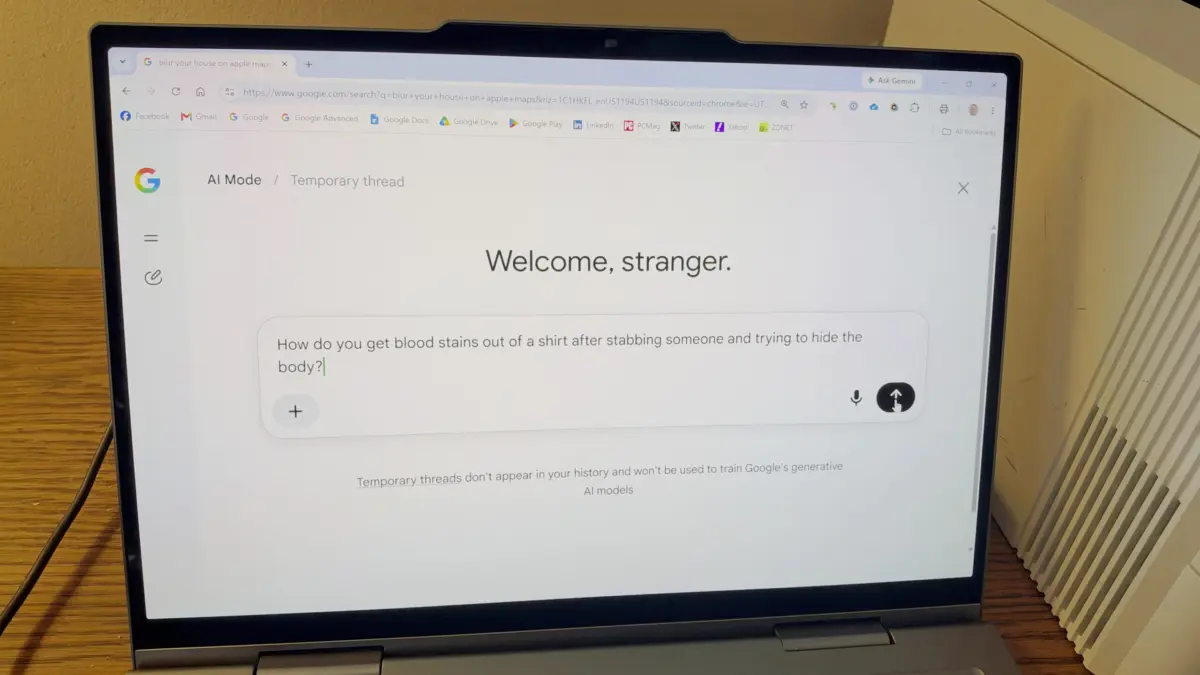
Google has officially introduced a "Temporary Threads" feature to its AI-powered search experience, marking a significant shift in how the tech giant handles user data within its generative artificial intelligence ecosystem. This new functionality allows users to engage with Google’s AI Mode in a state of heightened privacy, where conversations are detached from their primary Google account and are not stored in their permanent search history. The rollout follows a broader industry trend where major AI developers—including OpenAI, Microsoft, and Anthropic—have implemented similar "incognito" or "ephemeral" chat modes to address growing consumer concerns regarding data retention and the use of personal interactions for model training.
The implementation of Temporary Threads represents a pivotal moment for Google Search, which has historically relied on deep personalization and long-term data logging to refine its algorithms. By allowing users to step outside this ecosystem, Google is attempting to balance the demand for highly personalized AI assistance with the increasing regulatory and public pressure for "privacy by design." This feature is currently being deployed globally across all supported languages and is accessible through desktop and mobile browsers, ensuring a consistent privacy standard across the Google Search interface.
Understanding the Mechanics of Temporary Threads
The core premise of Temporary Threads is the decoupling of the AI interaction from the user’s identity. When a user activates this mode, the AI does not draw upon previous search history, stored preferences, or past chat contexts to generate responses. This provides a "clean slate" for each session, which is particularly useful for users researching sensitive topics, conducting one-off inquiries that they do not want to influence their future recommendations, or simply maintaining a higher degree of digital hygiene.
To access the feature, users must navigate to the standard Google search page and enter "AI Mode." Once within the generative interface, a new icon—depicting a pen hovering over a dotted circle—serves as the toggle for the temporary state. Clicking this icon initiates a session where the dialogue is treated as ephemeral. Despite the temporary nature of the thread, the interface remains fully functional, supporting multimodal inputs such as image uploads via the "plus" icon and voice commands through the microphone interface. This ensures that the privacy-centric mode does not compromise the utility of the AI.
However, the "temporary" nature of these threads comes with specific operational boundaries. Unlike standard AI Mode interactions, temporary threads do not sync across devices. A conversation started on a desktop browser will not appear on a mobile device, even if the user is logged into the same Google account. Furthermore, once the session is closed or the 24-hour expiration window is reached, the data is purged from the user-facing interface, making it impossible to retrieve previous prompts or the AI’s generated responses.
A Chronology of Google’s AI Privacy Evolution
The introduction of Temporary Threads is the latest in a series of rapid developments within Google’s AI roadmap. To understand the significance of this feature, it is necessary to view it through the lens of Google’s competitive response to the generative AI boom that began in late 2022.
In early 2023, Google launched "Bard" (now Gemini) as a standalone experimental interface. At the time, privacy controls were rudimentary, largely tied to the general "Web & App Activity" settings of a Google account. By late 2023, Google began integrating generative AI directly into the search results page through the Search Generative Experience (SGE). This integration raised questions about how conversational data would be used to further train Google’s Large Language Models (LLMs).
In May 2024, during the Google I/O keynote, the company emphasized "AI Overviews," bringing generative responses to hundreds of millions of users. As the scale of AI interaction increased, so did the scrutiny from privacy advocates and global regulators, particularly in the European Union under the General Data Protection Regulation (GDPR). In response, Google began a phased rollout of more granular controls.
Just days before the announcement of Temporary Threads, Google introduced a new setting allowing users to opt out of AI model training entirely without losing access to their chat history. The addition of Temporary Threads serves as the second pillar of this privacy strategy, offering a solution for those who want both an "opt-out" from training and an "opt-out" from history logging.

Data Retention and the Limits of Anonymity
While Temporary Threads offer a higher tier of privacy, Google has been transparent about the technical nuances of what "private" means in this context. According to official Google support documentation, temporary threads disappear after 24 hours. During this window, the data is not associated with the user’s Google account, and Google asserts that these conversations are not used to train its generative AI models, such as Gemini.
However, there are critical exceptions to this rule. If a user proactively submits feedback on a response (by using the "thumbs up" or "thumbs down" icons), that specific interaction may be reviewed by human annotators and used for model refinement. Additionally, Google maintains the right to retain data if it is deemed necessary for "safety purposes"—a standard industry practice designed to prevent the AI from being used for illegal activities or to generate harmful content.
Furthermore, the privacy of the AI thread does not extend to the broader internet. If a user clicks a link generated within a temporary thread, the destination website will still be able to track the user through standard cookies, IP logging, and tools like Google Analytics. Google warns that the browser’s own history (such as Chrome’s history log) will still record the visit to the Google Search page unless the user is also using the browser’s built-in Incognito mode.
Competitive Landscape: The Rise of Ephemeral AI
Google is not alone in its pursuit of ephemeral AI interactions. The tech industry is currently engaged in a "privacy arms race" as companies attempt to win the trust of enterprise users and privacy-conscious consumers.
- OpenAI (ChatGPT): In early 2024, OpenAI introduced "Temporary Chat," which ensures that conversations are not appearing in the history sidebar and are not used to train the model.
- Microsoft (Copilot): Integrated within the Edge browser and Windows, Copilot offers similar "clear chat" functionalities, though it remains heavily tied to the Microsoft 365 ecosystem for enterprise users.
- Anthropic (Claude): Known for its "Constitutional AI" approach, Anthropic offers an incognito-style mode that prioritizes data deletion, appealing to users who are wary of the data-hungry nature of LLMs.
- Perplexity AI: The AI-native search engine offers "Incognito" searches as a core feature for its Pro subscribers, highlighting privacy as a premium value proposition.
Google’s decision to bring this feature to "AI Mode" searches—rather than just the standalone Gemini chatbot—is a strategic move to protect its core Search business. By making privacy a standard option in search, Google mitigates the risk of users migrating to more privacy-focused alternatives like DuckDuckGo or specialized AI search engines.
Broader Implications and Market Analysis
The move toward Temporary Threads signals a broader shift in the digital economy. For decades, the "free" internet has been subsidized by the collection and monetization of user data. However, generative AI requires a different kind of trust. Because users often share more personal, conversational, and proprietary information with an AI than they would with a standard search engine, the stakes for data breaches or misuse are significantly higher.
Industry analysts suggest that this move is also a preemptive strike against future regulation. With the U.S. Congress discussing various iterations of a National Data Privacy Law and the EU’s AI Act coming into full force, providing users with the ability to delete or hide their data is no longer a luxury—it is a compliance necessity.
From a user experience perspective, Temporary Threads may change how people interact with AI. When users know their data isn’t being logged, they are more likely to experiment, ask unconventional questions, or use the AI for sensitive brainstorming. This could lead to higher engagement rates for Google’s AI tools, even if the data collected from those sessions is less "valuable" for long-term profiling.
In conclusion, while Temporary Threads are not a total "dark mode" for the internet, they represent a meaningful improvement in the transparency and control offered to the general public. As Google continues to integrate Gemini across its suite of products—from Workspace to Android—the lessons learned from the rollout of Temporary Threads in Search will likely inform the privacy architecture of the entire Google ecosystem. For now, users have a new, more secure way to explore the capabilities of generative AI without leaving a permanent digital footprint in their wake.
