

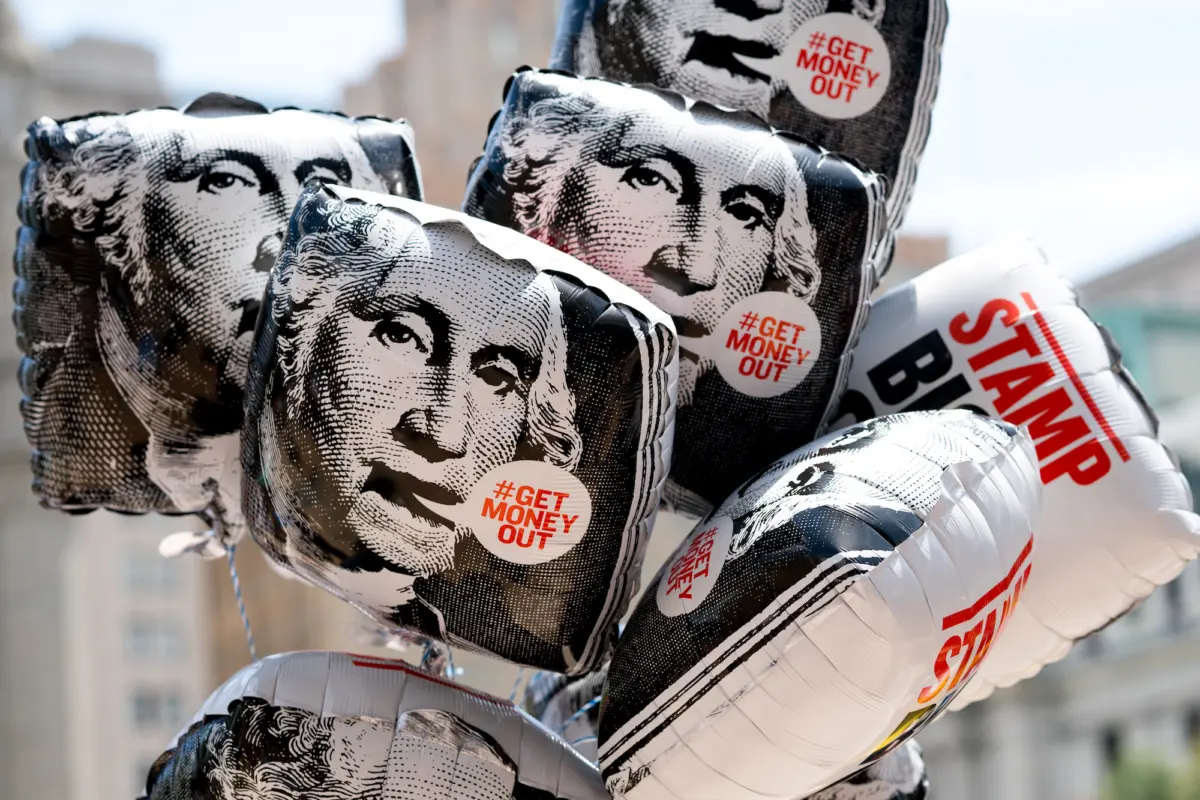
The 2026 midterm elections, which saw a significant shift in the balance of power within the United States Congress, also served as a historic referendum on the role of corporate interests in American democracy. In a direct challenge to the precedent established by the U.S. Supreme Court’s 2010 decision in Citizens United v. FEC, voters in several states approved landmark ballot measures aimed at curtailing the influence of "dark money" and corporate contributions. These results signal a growing grassroots movement to decouple financial power from political influence, even as the legal landscape remains fraught with constitutional challenges.
In Montana, a state with a long history of resisting corporate interference in governance, voters approved Initiative-194 by a decisive margin of nearly 2 to 1. Known as "The Montana Plan," the initiative represents one of the most aggressive attempts to date to circumvent the constraints of federal campaign finance law. The measure seeks to bar "artificial persons"—a definition encompassing corporations, trade associations, and certain nonprofits—from contributing to political campaigns or funding ballot measure advertisements.
The Montana Plan and the Legal Strategy of Artificial Persons
The passage of Initiative-194 in Montana is not merely a symbolic gesture; it is a calculated legal strategy designed to test the limits of corporate personhood. Proponents of the initiative argue that while the Supreme Court has granted corporations First Amendment rights regarding political spending, states retain the authority to define the scope of corporate charters. By categorizing corporations as "artificial persons" and restricting their powers to those "necessary or convenient" for business operations, the law attempts to exclude political campaigning from the list of protected corporate activities.
Jeff Mangan, the founder and president of the Transparent Election Initiative and a key architect of the Montana Plan, has stated that the measure was crafted specifically to withstand judicial scrutiny. "Montana voters overwhelmingly made their voices heard," Mangan said following the election. "We are confident in the legal foundation of this initiative and ready for the fight ahead."
However, the legal battle began even before the final tallies were confirmed. The Montana Republican State Central Committee, along with several advocacy groups, filed a lawsuit challenging the initiative. The plaintiffs argue that I-194 constitutes a violation of the First Amendment, asserting that it suppresses free speech by creating vague and arbitrary distinctions between different types of speakers. If the courts do not intervene, the law is scheduled to take effect on January 1, 2027.
Michigan Targets Government Contractors and Utilities
While Montana focused on a broad definition of artificial entities, Michigan voters took a more targeted approach to campaign finance reform. Proposition 2, also known as the "Money out of Politics" proposal, passed with a staggering 82 percent of the vote. This measure specifically prohibits utility companies and any corporation receiving more than $250,000 in government contracts from contributing to state political campaigns.
The rationale behind Proposition 2 is rooted in the prevention of "pay-to-play" schemes, where government contracts are seen as rewards for political donations. By restricting the financial involvement of those who stand to benefit directly from government spending, Michigan voters hope to restore public trust in the integrity of the state’s procurement and legislative processes.
Like the Montana initiative, Michigan’s Prop 2 faces immediate litigation. The Mackinac Center for Public Policy, represented by the Institute for Free Speech, has filed a challenge, arguing that the measure unfairly discriminates against specific sectors and infringes upon the rights of business owners to participate in the political process.
A Chronology of Campaign Finance and the Rise of Dark Money
To understand the significance of the 2026 midterms, one must examine the decade-long evolution of election spending in the United States. The current era of campaign finance was inaugurated in 2010 by two pivotal court rulings.
- January 2010: Citizens United v. FEC: The Supreme Court ruled 5-4 that the government could not restrict independent expenditures by corporations and unions for political communications, asserting that these entities possess First Amendment rights.
- March 2010: SpeechNow.org v. FEC: Building on the Citizens United precedent, the D.C. Circuit Court of Appeals ruled that limits on contributions to groups that only make independent expenditures are unconstitutional. This gave birth to the "Super PAC."
- 2012–2024: The Escalation of Spending: In the years following these rulings, the cost of elections skyrocketed. By the 2024 presidential cycle, total spending reached unprecedented levels, fueled by a surge in "dark money"—funds donated to 501(c)(4) nonprofits that are not required to disclose their donors.
- 2026: The Breaking Point: The 2026 midterm cycle became the most expensive in U.S. history, with nearly $12 billion spent on political advertising. This figure surpassed even the previous presidential election, leading to widespread voter fatigue and a renewed appetite for reform.
Data and Analysis: The Cost of the 2026 Midterms
The $12 billion price tag of the 2026 midterms has provided a wealth of data for analysts examining the efficacy of high-stakes spending. Despite the record-breaking influx of cash, research suggests that the return on investment for megadonors was remarkably low. In several high-profile races in Texas and Pennsylvania, candidates backed by tens of millions of dollars in Super PAC funding were defeated by opponents who ran on "No Corporate PAC" platforms.

According to the nonprofit group End Citizens United, at least 100 members of the incoming 120th Congress have pledged to reject corporate PAC money. This marks the largest coalition of such lawmakers in history. Notably, more than half of the Democrats who successfully flipped seats in the House of Representatives during the 2026 "blue wave" had made this commitment, suggesting that a "no-PAC" stance has become a viable, and perhaps even advantageous, campaign strategy.
The Brennan Center for Justice reported that while total spending increased, the diversity of donors decreased. A smaller number of ultra-wealthy individuals and corporate entities are now responsible for a larger percentage of the total funds in the system. This concentration of financial influence is precisely what voters in Montana, Michigan, and other states are attempting to dilute.
Mixed Results in Alaska and California
While Montana and Michigan saw clear victories for reform advocates, the results were more ambiguous in other parts of the country. In Alaska, voters were asked to decide on a measure that would repeal the state’s donor disclosure laws and its ranked-choice voting system. As of the latest count, the effort to repeal the disclosure requirements was narrowly trailing, with 52 percent of voters favoring the retention of the current transparency laws.
In California, Proposition 4, which proposed a move toward public campaign financing for state and local elections, faced a tight race. With approximately two-thirds of the ballots counted, the measure was trailing by a narrow margin of 51 percent to 49 percent. The opposition to Prop 4 centered largely on the cost to taxpayers, illustrating the challenges reform advocates face when proposing publicly funded alternatives to private donations.
Hawaii and the Bipartisan Push for Reform
The legal strategy employed by Montana was actually pioneered in Hawaii, where state legislators enacted a similar ban on "artificial persons" earlier in 2026. The Hawaii law was the result of a rare bipartisan effort, with both progressive Democrats and conservative Republicans expressing concern over the influence of outside money on the islands’ politics.
Hawaii State Representative Garner Shimizu, a Republican, noted that the legislation was an attempt to "bring back some sanity and sanctity to our voting process." The Hawaii law is also currently under challenge by the U.S. Chamber of Commerce and the Grassroot Institute of Hawaii, with a critical hearing scheduled for late November 2026.
Broader Implications and the Path to the Supreme Court
The wave of state-level campaign finance measures passed in 2026 represents a fundamental shift in tactics for the movement to overturn Citizens United. Rather than waiting for a change in the composition of the Supreme Court or a federal constitutional amendment, advocates are utilizing state sovereignty and the power of the ballot initiative to create a patchwork of regulations.
Legal experts suggest that these state laws are designed to force the Supreme Court to revisit its earlier rulings. By framing the issue as a matter of state corporate law rather than federal election law, proponents hope to present the Court with a novel legal question: Do states have the right to define the political limits of the entities they create?
If these cases reach the Supreme Court, the outcome will have profound implications for the future of American governance. A ruling in favor of the states could empower legislatures across the country to effectively neutralize the impact of Citizens United within their borders. Conversely, a ruling that strikes down these initiatives would solidify the current era of unlimited political spending, potentially leaving a constitutional amendment as the only remaining avenue for reform.
The 2026 midterms have demonstrated that despite the billions of dollars flowing through the political system, the American electorate remains a potent force. The "blue wave" was not only a shift in party control but a clear signal that voters across the political spectrum are increasingly weary of an election system dominated by the highest bidder. As the legal battles move through the courts, the tension between corporate free speech and the principle of "one person, one vote" will remain at the heart of the American political discourse.
