

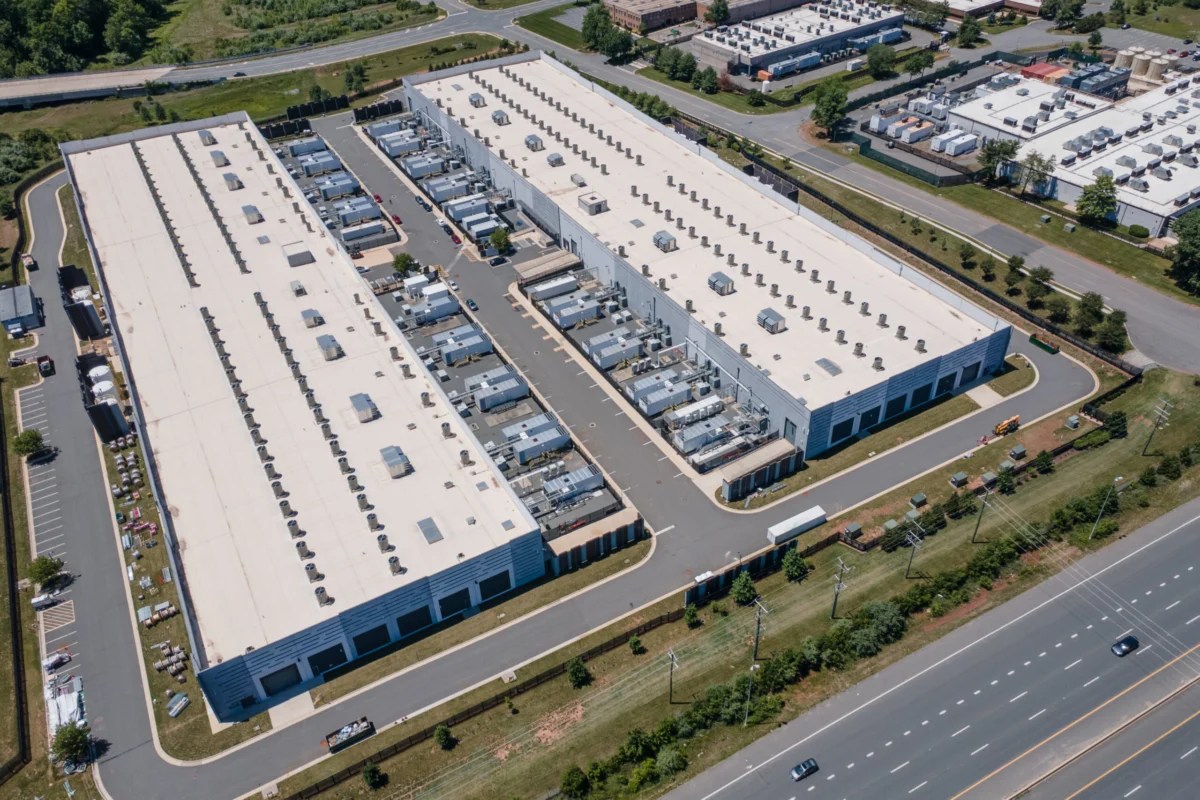
A significant majority of the world’s data center capacity, the indispensable backbone of the modern digital economy, faces substantial and escalating risks from acute climate hazards, according to a comprehensive study released Thursday by First Street, a leading climate risk analytics firm. The report highlights a critical vulnerability within global digital infrastructure, asserting that 79% of current data center capacity is exposed to severe, climate-induced events such as catastrophic flooding, extreme winds, and devastating wildfires. These events are not merely theoretical threats but increasingly common occurrences capable of severely disrupting operations, causing prolonged downtime, and dramatically escalating insurance and repair costs.
The study, which meticulously examined 97 global data center markets, underscores a profound disconnect between traditional risk assessment methodologies and the accelerating realities of climate change. Matthew Eby, CEO of First Street, articulated this challenge in a release, stating, "Most underwriting for real assets still uses historical data, but the climate is no longer behaving the way the historical record would predict. As heat, drought, and water stress increase, outdated models simply don’t offer a complete view of risk anymore." This sentiment points to a systemic flaw in how critical infrastructure investments are evaluated, potentially leaving trillions of dollars in digital assets vulnerable.
The Dual Threat: Acute Hazards and Chronic Stress
Beyond the immediate, dramatic impacts of acute hazards, the First Street study also revealed that just over half of all global data centers operate within markets exposed to chronic climate stress. This includes persistent challenges like extreme heat and prolonged drought, which, while less sudden than a hurricane or wildfire, exert a constant pressure on operational efficiency and financial viability. Chronic stressors can lead to reduced energy efficiency due to the increased need for cooling, higher electricity costs, and potential water scarcity issues, particularly for facilities relying on water-intensive cooling systems.
Jeremy Porter, Chief Economist at First Street, emphasized the insidious nature of this underestimation. "Ultimately, it’s just something that we’re underestimating," Porter noted, referring to the pervasive reliance on backward-looking models. He specifically criticized government models that often base predictions on past precipitation levels without adequately factoring in the profound effects of a warming planet. The scientific consensus is clear: as the Earth’s atmosphere warms, it can hold more moisture, leading to heavier and more intense rainfall events, a phenomenon that outdated models fail to incorporate, thus significantly understating flood risks.
Economic Implications for a Trillion-Dollar Industry
The findings carry significant implications for investors, developers, and operators in the rapidly expanding data center industry. Data centers are typically designed for a long operational lifespan, often 20 to 30 years, making long-term climate projections crucial for sustainable investment. The danger, as highlighted by the study, is that investment decisions are frequently made using traditional metrics that do not adequately account for how evolving climate conditions will impact long-term operating environments and asset resilience.
The global data center market was valued at approximately $250 billion in 2023 and is projected to surge to over $700 billion by 2030, driven by the insatiable demand for cloud computing, artificial intelligence (AI), and advanced data processing. This colossal investment flow, coupled with the critical role data centers play in virtually every sector—from banking and healthcare to communications and government—makes their vulnerability a matter of global economic stability.
"Investors who incorporate these factors into underwriting and capital allocation decisions will be better positioned to identify resilient markets and avoid mispriced risk," Eby urged, advocating for a paradigm shift in financial modeling that integrates forward-looking climate science. The potential for mispriced risk not only threatens individual investments but could also create systemic vulnerabilities across the digital economy if major data hubs become repeatedly compromised or financially unsustainable due to climate impacts.
Industry Adaptation and the Call for Systems-Level Resilience
While the challenge is immense, some developers and operators are already moving to integrate climate considerations into their design and operational strategies. Digital Realty, a global provider of data center, colocation, and interconnection solutions, exemplifies this proactive approach. Andrew Power, CEO of Digital Realty, discussed his company’s commitment to water conservation on the Property Play podcast earlier this year. "Almost all of our data centers today, 300 around the world, the global portfolio, are either a waterless system or closed-loop water," Power explained. "So think of it as there’s no evaporation. We make the investments and elect to do that." This focus on sustainable water management directly addresses chronic climate stressors like drought, which can impact cooling capabilities and operational costs.
However, mitigating climate risk extends beyond individual building envelopes—the physical barriers protecting a structure. Porter emphasized the need for a "systems-level thinking" approach. This holistic view considers not just the data center facility itself, but also the broader infrastructure that supports it: power grids, telecommunications networks, transportation routes for personnel and equipment (egress/access), and the resilience of the surrounding community. A state-of-the-art data center can be rendered inoperable if the power grid it relies on fails due to extreme weather, or if roads become impassable, preventing staff or emergency services from reaching the site.

"Acute climate risk can be mitigated with building adaptation, so that, that’s not a huge issue," Porter stated. "Then you start to think about the system, though, you start to think about the infrastructure, the egress, the access to the site, power access. There is a building mitigation process, but then there’s a community mitigation process." This highlights the interconnected nature of modern infrastructure and the necessity of regional planning and investment in climate resilience, rather than isolated efforts.
Geographic Hotspots and Disparities in Risk
The First Street study meticulously mapped geographic disparities in climate risk exposure, revealing stark differences across global regions. The Asia-Pacific (APAC) region emerged as the most vulnerable, with an alarming 89% of its data center capacity facing acute climate risk. This high exposure is attributed to a combination of dense coastal populations, susceptibility to monsoons, typhoons, and rising sea levels.
In contrast, the Americas face 50% exposure to acute climate hazards, while Europe, the Middle East, and Africa (EMEA) collectively show 46% exposure. These figures underscore that while the problem is global, its manifestations and intensity vary significantly by region, often correlating with areas already experiencing the pronounced effects of climate change.
Troublingly, some of the industry’s fastest-growing markets are also identified as the most exposed. This includes Northern Virginia in the U.S., a global hub for data centers often dubbed "Data Center Alley"; Johor in Malaysia, a rapidly developing tech hub; and Marseille, France, a critical internet exchange point. These regions attract massive investment due to strategic location, connectivity, and often lower operating costs, but their inherent climate vulnerabilities are increasingly becoming a major concern.
Conversely, Nordic markets, renowned for their naturally cool climates and access to renewable energy, were found to have the lowest climate risk. This has contributed to a growing trend of data center development in countries like Sweden, Norway, and Finland, leveraging environmental advantages for both operational efficiency and resilience.
Porter noted that while "the top 10 markets with acute climate risk across the globe, most of them are in the U.S. Most of them have wind and flood risk," the U.S. generally experiences less chronic climate risk compared to other parts of the world. This distinction highlights that different regions will face different primary climate threats, requiring tailored adaptation strategies.
The Broader Context: Climate Change and Digital Infrastructure
The findings from First Street arrive at a time when the nexus between climate change and critical infrastructure is gaining unprecedented attention. Data centers are enormous consumers of electricity, accounting for an estimated 1-1.5% of global electricity demand, a figure projected to rise significantly with the proliferation of AI and advanced computing. This energy footprint, predominantly powered by fossil fuels in many regions, contributes to the very climate change that now threatens their existence. The irony is stark: the infrastructure enabling our digital lives is both a contributor to and a victim of environmental degradation.
Recent extreme weather events around the world offer a grim preview of the study’s warnings. The Texas power grid failures during a severe winter storm in 2021, intense heatwaves across Europe and Asia straining energy systems, and widespread flooding in regions like Pakistan and parts of the U.S. Midwest have all demonstrated the fragility of interconnected infrastructure in the face of escalating climate impacts. While not always directly impacting data centers, these events illustrate the systemic risks to power supply, cooling resources, and physical access that could cripple digital operations.
Furthermore, increasing regulatory pressure, such as climate-related disclosure requirements from entities like the U.S. Securities and Exchange Commission (SEC) and various European Union directives, are pushing companies to explicitly account for and report on climate risks to their assets and operations. Studies like First Street’s provide critical data for these disclosures, transforming what was once a fringe concern into a core component of financial and operational planning.
The digital future, powered by an ever-growing network of data centers, is inextricably linked to the planet’s climate future. As the First Street study emphatically demonstrates, neglecting the escalating risks posed by climate hazards to this critical infrastructure is not merely an oversight but a profound threat to global economic stability and the seamless functioning of modern society. A fundamental shift towards forward-looking, climate-informed investment and development strategies is no longer optional but an urgent imperative.
